
Add real ambiance to your Bertie County home—no chimney required.
With mild coastal-plain winters and only a short, mild heating season each year, Bertie County homes from Windsor to Colerain rarely need a whole-house wood or gas setup. Find the right electric fireplace or insert, and connect with a trusted local dealer.
Every Project Starts From One of These Five Situations
Mild winters, modest heating needs—electric fits the bill.
Bertie County sits along the Albemarle Sound and Roanoke River in North Carolina's northeastern coastal plain, with the county seat in Windsor and smaller communities scattered across Aulander, Colerain, Kelford, Lewiston Woodville, and Powellsville. Climate zone 4A and a winter low average around 33°F mean this is nothing like the deep-cold heating loads of Duluth or Burlington, VT—with a winter about as mild as they come, Bertie County winters are short, mild, and rarely demand a primary combustion heat source. That's exactly the situation where an electric fireplace earns its keep: real flame-look ambiance and supplemental warmth for the handful of genuinely cold nights, without a chimney, gas line, or wood supply to manage.
A lot of Bertie County's housing stock is older farmhouses and manufactured or mobile homes, many without existing masonry chimneys or natural gas service—propane and cordwood (oak, hickory, maple, pine are all common locally) fill that gap for primary heat, but electric fireplaces solve a different problem well: a zone-heat boost in a bedroom or den, a low-maintenance upgrade for a rental property, or a mantel-style unit that works inside Windsor's historic district where altering an existing chimney isn't practical. Power comes through Roanoke Electric Cooperative across most of the county, and a plug-in electric unit needs nothing more than a standard outlet—a hardwired built-in is a straightforward job for a licensed electrician, with a permit through the Bertie County Inspections Department when the work requires one.
Three steps. No salesperson until you're ready.
Tell us about your project
Your zip code, your situation, and the fuel you're leaning toward—or let the answers point you to one.
See what's actually available
The brands dealers within 100 miles genuinely carry—real options, never a catalog mirage.
Get your dealer & Project Guide
A trusted local dealer, plus the free Project Guide & Parts List that names every component of the job.
Frequently Asked Questions
How much does an electric fireplace installation cost in Bertie County?
A plug-in electric insert or freestanding unit that uses an existing outlet typically runs $300 to $1,200 installed, including the unit and basic setup. A hardwired built-in wall unit or a full mantel-and-surround package runs higher—usually $1,200 to $2,800—once you factor in a licensed electrician to run a dedicated 120V or 240V circuit and any carpentry to frame the surround. Because electric units don't need venting or a chimney, Bertie County installs are almost always cheaper and faster than a comparable wood or gas project, and local dealers can usually turn around a straightforward install in a day.
Will an electric fireplace actually heat my Bertie County home?
Most electric fireplaces are built for supplemental or zone heat, not whole-house heating—a typical unit puts out around 4,600 to 5,000 BTU (roughly 1,500 watts), enough to comfortably warm a single room of 400 to 1,000 square feet. Given Bertie County's mild winter average of 33°F and a short, mild winter season overall, that's usually plenty for the bedrooms, dens, or additions where homeowners install them, especially paired with an existing propane furnace or heat pump for the coldest nights. If you're trying to heat an entire manufactured home with electric alone, talk to a local dealer about a larger insert or a secondary unit rather than relying on one fireplace for the whole footprint.
Do I need a permit or an electrician to install an electric fireplace?
A basic plug-in electric fireplace that runs off an existing 120V outlet generally doesn't require a permit—it's treated like any other appliance. A built-in or wall-mounted unit that needs a new dedicated circuit does require a licensed electrician, and depending on the scope of the work, an electrical permit through the Bertie County Inspections Department. Local dealers who handle installation will typically coordinate the electrical work and any required inspection as part of the job, so you're not left tracking down a separate contractor.
Insert, wall-mount, or mantel package—which is right for my home?
An electric insert drops into an existing masonry fireplace opening and is the easiest fit for older Bertie County farmhouses that already have a hearth but no working chimney liner. A wall-mounted electric fireplace hangs like a large flat-panel screen and works well in newer construction or additions where there's no existing fireplace at all. A mantel package combines an electric insert with a surround and mantel shelf, giving you a traditional look without any masonry—a popular choice for homes in Windsor's historic district where changing the exterior chimney isn't an option. A local dealer can look at your room and existing structure and steer you toward the right format.
Can I install an electric fireplace in a manufactured or mobile home?
Yes—electric fireplaces are one of the few heating-adjacent upgrades that work well in manufactured housing, which makes up a meaningful share of homes across rural Bertie County. Because there's no venting, chimney, or combustion air requirement, there's no structural modification needed the way there would be with a wood stove or gas insert. The main consideration is electrical capacity: older mobile homes sometimes have limited panel capacity, so a unit requiring a dedicated 240V circuit may need a panel check by an electrician before installation. Plug-in models sidestep that issue entirely.
How much does it cost to run an electric fireplace with Roanoke Electric Cooperative?
Most electric fireplaces draw around 1,500 watts on the heat setting, which costs roughly 15 to 20 cents per hour to run at typical Roanoke Electric Cooperative residential rates—a few dollars for an evening of use. Because Bertie County's mild climate means these units are usually run for a few hours in the evening rather than around the clock, they're inexpensive to operate compared to running a whole-home electric furnace. Flame effects with the heater switched off use only a few watts, so you can run the ambiance year-round without a noticeable bump on your bill.
Electric vs. wood—which makes more sense for my Bertie County home?
Wood heat has deep roots in this part of the coastal plain, with oak, hickory, maple, and pine all commonly available locally, and it works without electricity—a real advantage during storm-related outages along the Albemarle Sound. But wood requires a chimney, ongoing fuel supply, and cleaning that many homeowners would rather skip, especially for a supplemental heat source in a room that's only occasionally used. Electric wins on convenience, zero maintenance, and installation simplicity, and it's a better fit when you want ambiance and a modest heat boost rather than a primary heat source. Many Bertie County homes end up with propane or wood for primary heat and an electric fireplace for the den or master bedroom.
Electric vs. gas—which is the better fit here?
Most of Bertie County doesn't have natural gas service, so a gas fireplace here typically means propane, with a tank, gas line work, and venting to plan for. Electric skips all of that—no fuel to buy, no venting, no annual gas appliance inspection—which makes it the simpler and usually cheaper option for supplemental heat or ambiance. Gas still has an edge in raw heat output and can run during a power outage with the right battery-backup ignition, which matters more if you're relying on it as a backup heat source. For a den, bedroom, or rental unit where the goal is ambiance plus a little warmth, electric is generally the more practical choice for county homeowners.
What maintenance does an electric fireplace need?
Very little. There's no chimney to sweep, no ash to clean, and no annual gas line inspection. Basic upkeep is dusting the glass front, occasionally checking the fan for lint buildup, and replacing the LED light strip if the flame effect dims after years of use—most last well over a decade. If a unit stops heating but the flame effect still runs, it's usually a simple thermostat or heating element issue that a local dealer or handyman can diagnose quickly, without the safety concerns that come with venting or combustion appliances.
Can I put a TV above my fireplace?
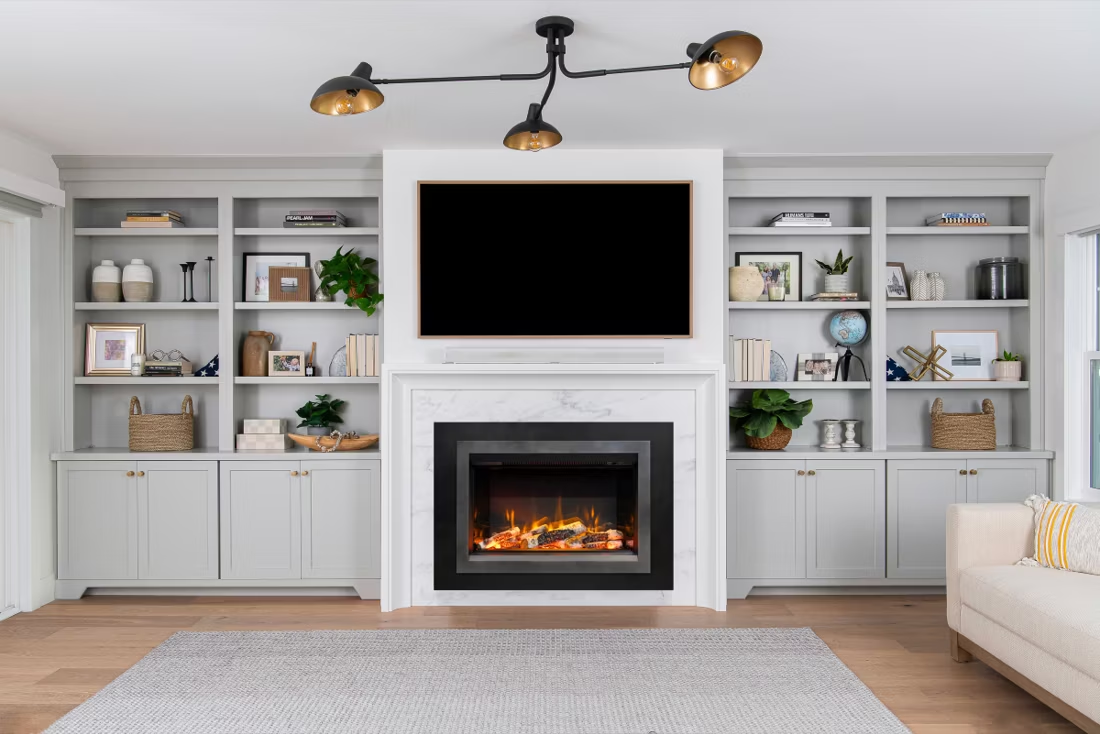
Yes—with an asterisk. Fireplaces are hot and TVs don't like heat. Either put a mantel between them to deflect rising warmth, or choose a fireplace with heat-management technology that creates a cool zone on the wall above—the wall stays around 125 degrees, barely warm, while the room still gets full heat. If you like clean lines and don't want a mantel, heat management is the answer.
Does an electric fireplace need a vent or chimney?
No—that's its superpower. An electric fireplace needs a wall and an outlet, period. No vent pipe, no gas line, no clearances to design around, which is why it works in bedrooms, offices, apartments, and walls where venting a gas or wood unit would be impractical or impossible. Installation is typically the simplest and least expensive of any fireplace type.
Can I install a fireplace myself?
If you're putting a fire in your house on purpose, it's best to work with an expert. Unless you're genuinely experienced in framing, gas line, vent pipe, and the national code on clearances to combustibles, have a professional do it—and ideally the same company that sells you the fireplace, so warranty, service, and liability all live under one roof.
What is an in-home preview and do I need one?
It's a visit where a hearth professional measures your space, confirms the model you picked actually works in your home, and walks the specs—framing, gas line, venting, finish work—before anything is ordered. Some details you just can't know until you see the house. Never make a down payment without one; it's the single most-skipped step that burns buyers.
Find your electric fireplace in Bertie County.
Tell us a bit about your home and we'll put together a free Project Guide & Parts List for your Bertie County electric fireplace project—the right unit, the wiring it needs, and a trusted local dealer to install it.
Find Your Fireplace →