
Set-it-and-forget-it heat for Inner Banks winters.
Automated, thermostat-controlled warmth for Beaufort County homes along the Pamlico River—from Washington to Belhaven and Bath. Find the right pellet stove or insert, and connect with a trusted local dealer.
Every Project Starts From One of These Five Situations
Consistent warmth, without the wood pile.
Beaufort County sits low along the Pamlico River in North Carolina's Inner Banks, with the county seat of Washington and smaller communities like Chocowinity, Bath, and Belhaven spread across the flat coastal plain. Climate zone 3A keeps winters mild by national standards—an average winter low near 34°F and about 2,913 heating degree days a year, a fraction of what a place like Duluth, Minnesota sees. That means most Beaufort County homes never need a heating appliance running around the clock; they need something that takes the edge off a cold front, keeps a den or sunroom comfortable, and costs less to run than flipping the whole-house heat pump into strip-heat mode.
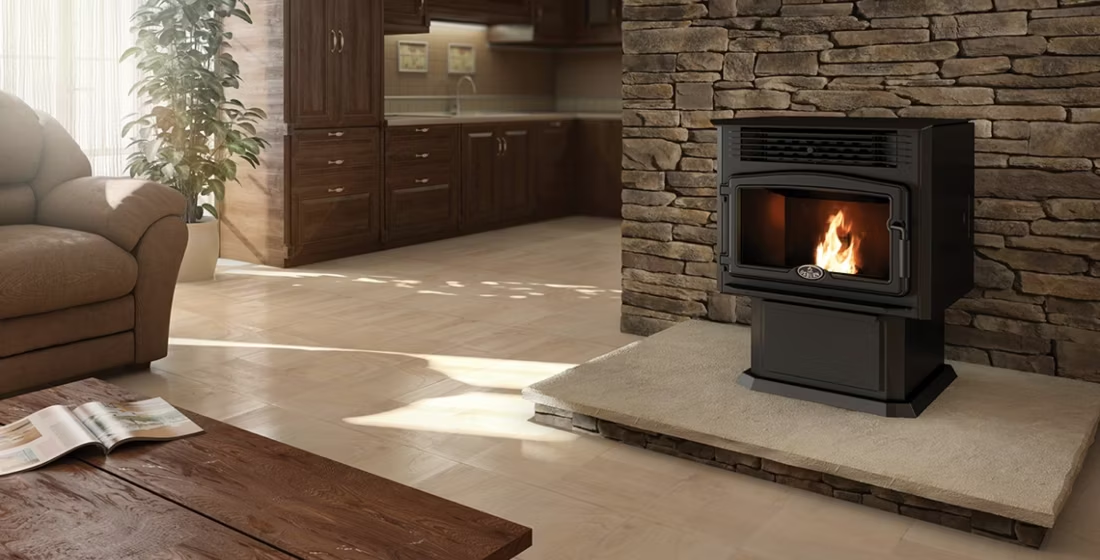
Pellet stoves fit that niche well. Load the hopper, set the thermostat, and the auger feeds itself for a day or more without tending—a real advantage for retirees and second-home owners along the river who want heat without the daily wood-hauling. Regional pellet brands like Lignetics, Hamer Pellet Fuel, and Greenway Renewable Energy are sold through hearth dealers and farm supply stores throughout the region, so fuel is easy to keep stocked. One honest tradeoff worth knowing up front: pellet stoves run on electricity to power the auger and combustion blower, so during the extended outages that follow a hurricane moving through the Inner Banks, a pellet stove won't function unless it's paired with a battery backup or generator—something a local dealer can help you plan for.
Three steps. No salesperson until you're ready.
Tell us about your project
Your zip code, your situation, and the fuel you're leaning toward—or let the answers point you to one.
See what's actually available
The brands dealers within 100 miles genuinely carry—real options, never a catalog mirage.
Get your dealer & Project Guide
A trusted local dealer, plus the free Project Guide & Parts List that names every component of the job.
Frequently Asked Questions
How much does a pellet stove installation cost in Beaufort County?
A freestanding pellet stove with a simple through-wall PL vent typically runs $3,000 to $5,500 installed in Beaufort County, since the region's mild climate and lack of masonry-chimney retrofits usually keep venting straightforward. A pellet insert going into an existing wood fireplace—reusing the firebox opening but running a liner and vent kit through the chimney—tends to land closer to $4,500 to $6,500 depending on the model and any surround work. Homes on outer parts of the county, like Belhaven or Pantego, may see a modest travel charge added by installers based out of Washington or Greenville.
What size pellet stove do I need for my Beaufort County home?
Because Beaufort County's heating season is short and mild compared to colder parts of the country, most homes here do fine with a small to mid-size pellet stove used for supplemental heat in a den, sunroom, or main living area, rather than a large unit sized to carry a whole house through winter. Older farmhouses and larger homes near the Pamlico River waterfront sometimes add a second unit in a detached wing or bonus room instead of oversizing a single stove. A local dealer can walk your square footage and layout before recommending a model—oversizing a pellet stove in a mild climate like this one just means more cycling and wasted fuel.
Where can I buy pellet fuel in Beaufort County?
Bagged hardwood and softwood pellets from regional producers like Lignetics, Hamer Pellet Fuel, and Greenway Renewable Energy are available through local hearth dealers, farm supply stores, and home improvement retailers serving Washington and the surrounding towns. Buying by the ton ahead of the winter season, rather than by the bag as needed, is usually the more economical route for anyone running a stove regularly. Because Beaufort County has no winter air quality restrictions or burn advisories, there's no seasonal curtailment to plan fuel deliveries around—pellets can be stocked and burned whenever the weather calls for it.
Will my pellet stove work if the power goes out during a hurricane?
Not without backup power. Pellet stoves rely on an electric auger to feed fuel and an electric blower to move combustion air and distribute heat—cut the power and the stove stops, full stop. For Beaufort County homeowners in a region that regularly deals with tropical-system outages, that's worth planning around: a small battery backup or a portable generator sized to run the stove's low draw (usually under 100 watts) will keep it operating through most outages. If reliable off-grid heat during storm season is the priority, a wood stove or a battery-backed direct-vent gas fireplace is worth comparing against pellet before you decide.
Do I need a permit to install a pellet stove in Beaufort County?
Yes—new pellet stove and insert installations generally require a building permit through Beaufort County Planning & Inspections, covering the appliance clearances and the through-wall or through-roof vent termination. Most established hearth dealers handle the permit application and inspection scheduling as part of the installation, so it's rarely something a homeowner has to navigate solo. Because Beaufort County has no air quality non-attainment designation, there are no additional emissions-related permitting hurdles beyond standard EPA-certification requirements on the appliance itself.
What's the best pellet stove for Beaufort County's climate?
Since Beaufort County's heating demand is comparatively light, efficiency-chasing high-BTU units matter less here than they would somewhere with a Duluth-style winter. A mid-size EPA-certified pellet stove with a reliable thermostat and quiet blower operation—brands like Harman, Lopi, or Englander are common regionally—tends to be the better fit for a den, living room, or sunroom that just needs to stay comfortable on the coldest nights of a mild season. If you want the stove to double as a hurricane-season backup, ask your local dealer about models with lower standby wattage that are easier to run on a small battery system.
What kind of venting does a pellet stove need?
Most pellet stoves use a simple PL (pellet vent) pipe that runs horizontally through an exterior wall, which is often easier and less expensive than the vertical Class A chimney a wood stove requires. For a pellet insert going into an existing wood-burning fireplace, the vent typically runs up through the existing masonry chimney with a stainless liner sized for pellet exhaust. Either way, Beaufort County's mild climate and typically single-story ranch and farmhouse construction usually make for straightforward, lower-cost venting compared to homes with steep rooflines or multiple stories.
How often does a pellet stove need to be cleaned and serviced?
Plan on cleaning the burn pot and ash pan weekly during regular use, a full interior cleaning monthly, and a professional annual service that checks the auger motor, blower, gaskets, and vent for a full inspection before each heating season. Pellet stoves produce far less creosote than wood stoves, so the maintenance burden is lighter, but the mechanical components—auger motor, igniter, blowers—are what tend to need attention over time. Local hearth dealers that sell pellet stoves in Beaufort County typically also offer annual service plans.
Pellet stove vs. gas fireplace—which is right for my Beaufort County home?
Gas fireplaces offer instant on-off heat at the flip of a switch and, with the right ignition system, can keep running on battery backup during a power outage—a real plus during hurricane season. Pellet stoves offer a more traditional flame appearance and the ability to run on a renewable, often locally sourced fuel, but they need electricity for the auger and blower, making them more vulnerable during extended outages unless backed up with a generator. For a primary living space where storm-season reliability matters most, gas often wins in Beaufort County; for a den or sunroom where ambiance and lower fuel cost matter more, pellet is a strong option. A local dealer can walk through both given your specific outage risk and living space.
What's the difference between an insert and a zero-clearance fireplace?
An insert is a fireplace that slides into a pre-existing wood-burning fireplace—if you don't have one, there's nothing to insert it into. A zero-clearance fireplace is built into a framed wall, which makes it the answer for remodels and new construction. Simple test: existing masonry fireplace means insert; blank or framed wall means zero-clearance.
Why is my open fireplace making my house colder?
Open fireplaces suck—literally. As the fire burns, it consumes air your furnace already paid to heat and pulls it out through the chimney, so the house is actually colder after the fire goes out than before you lit it. An insert fixes this: it seals the chimney, puts fixed glass across the front, and turns that hole in your house into a real heat source.
How much should I budget for a fireplace?
For an average home—covering the fireplace, the vent pipe, and basic installation—a budget between $3,900 and $5,500 gives you a lot of options across wood, gas, and pellet. By the time you add finish work, gas line, and electrical, the average complete installation lands between $5,000 and $12,000 all-in. In a remodel or new build, a good rule is to put about 2.5% of the total project cost toward the fireplace.
Can I install a fireplace myself?
If you're putting a fire in your house on purpose, it's best to work with an expert. Unless you're genuinely experienced in framing, gas line, vent pipe, and the national code on clearances to combustibles, have a professional do it—and ideally the same company that sells you the fireplace, so warranty, service, and liability all live under one roof.
Pellet Brands Stocked Around Beaufort County
Manufacturers will point you to the nearest stocking dealer.
Find your pellet stove in Beaufort County.
Tell us a bit about your home and we'll put together a free Project Guide & Parts List—the right pellet stove or insert, the vent kit it needs, and a trusted local dealer in Beaufort County to install it.
Find Your Fireplace →