
The easiest fireplace upgrade for Beaufort County homes.
No chimney, no venting, no fuel delivery—just plug-in warmth and ambiance for the mild winters along the Pamlico River. Find the right unit and connect with a trusted local dealer.
Every Project Starts From One of These Five Situations
Ambiance and zone heat, without the chimney.
Beaufort County sits in North Carolina's coastal plain along the Pamlico River, from the county seat of Washington down through Bath, Belhaven, Chocowinity, and Aurora. Climate zone 3A means winters here are mild by national standards—the average winter low sits around 34 degrees and the county logs roughly 2,913 heating degree days a year, a fraction of what a place like Duluth, MN or Burlington, VT sees. Most homes don't need a whole-house heating overhaul; they need a way to take the chill off a living room or den on the handful of genuinely cold nights, and to add a real focal point to a room the rest of the year.
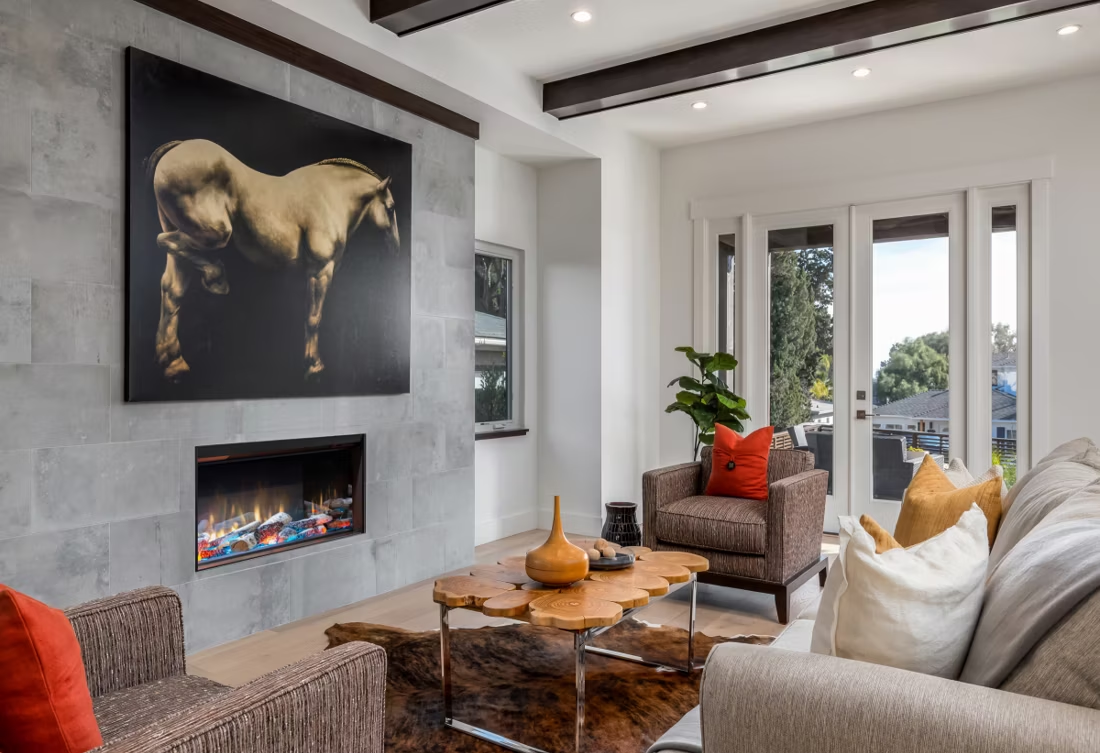
That's exactly the gap electric fireplaces fill. There's no chimney to build, no gas line to run, and no combustion byproducts to vent—which matters in a humid coastal climate where moisture management is already a concern for older homes near the river. Electric runs on the same power that already serves the house, through Duke Energy Progress in and around Washington or Tideland EMC in the more rural stretches of the county, so there's no propane delivery schedule to manage and no wood to split and stack. For historic homes in Bath or downtown Washington with existing but unused masonry fireplace openings, an electric insert is often the simplest way to bring a fireplace back into daily use without touching the original chimney structure at all.
Three steps. No salesperson until you're ready.
Tell us about your project
Your zip code, your situation, and the fuel you're leaning toward—or let the answers point you to one.
See what's actually available
The brands dealers within 100 miles genuinely carry—real options, never a catalog mirage.
Get your dealer & Project Guide
A trusted local dealer, plus the free Project Guide & Parts List that names every component of the job.
Frequently Asked Questions
How much does an electric fireplace installation cost in Beaufort County?
Most electric fireplace projects in Beaufort County run somewhere between $400 and $2,500. A plug-in freestanding unit or a simple insert that drops into an existing fireplace opening sits at the low end and typically needs no electrical work beyond an existing outlet. Wall-mounted units, built-in mantel packages, and larger inserts that call for a dedicated 20-amp circuit run higher, since that means bringing in a licensed electrician. Waterfront homes and older construction in Bath or Washington sometimes need panel capacity checked before a larger unit goes in, which can add a modest amount to the project.
Electric vs. gas fireplace—which makes more sense in Beaufort County?
It depends on what's already running to the house. Natural gas service is limited mostly to in-town areas around Washington, so much of rural Beaufort County—Aurora, Pantego, the outskirts of Belhaven—relies on propane for gas appliances, which means a tank and a delivery schedule. Electric fireplaces skip that entirely; they run on the same Duke Energy Progress or Tideland EMC service every home already has, which makes them a popular choice for rental cottages, waterfront properties, and homeowners who don't want to manage a fuel tank. Gas still wins on raw heat output for homes that want a fireplace to do real heavy lifting; electric wins on simplicity and low upfront cost for ambiance and light supplemental warmth.
Do I need a permit to install an electric fireplace in Beaufort County?
Usually not for a plug-in freestanding unit or an insert that uses an existing outlet—those are just an appliance, no different than plugging in a space heater. If you're adding a wall-mounted unit or built-in that requires a new dedicated circuit, that electrical work does need a permit through the Beaufort County Planning & Inspections Department, and it should be pulled by a licensed electrician. Local dealers who install built-ins typically coordinate that permit as part of the job.
Will an electric fireplace actually heat a room in Beaufort County?
Most electric fireplaces are built around a 1,500-watt heater, roughly 5,000 BTU, which is designed as supplemental zone heat rather than a whole-home furnace replacement. Given Beaufort County's mild climate zone 3A winters—average lows around 34 degrees and only about 2,913 heating degree days a year—that's usually enough to comfortably carry a single living room or den on the coldest nights without leaning on central heat at all. It's not meant to replace a furnace or heat pump on a hard freeze, but for the way most Beaufort County homeowners actually use a fireplace, it holds up well.
What's the best option for a historic home in Bath or downtown Washington?
Homes in Bath—the oldest town in North Carolina—and the historic districts of Washington often have original masonry fireplace openings that haven't been used for wood burning in decades, sometimes because the flue was never properly lined for current use. An electric insert is usually the cleanest fix: it slides into the existing opening, needs no chimney work, and doesn't touch the original masonry or mantel. That preserves the historic character of the room while giving the fireplace a real, usable purpose again—something a lot of preservation-minded owners in these neighborhoods appreciate.
How much does it cost to run an electric fireplace in Beaufort County?
A typical 1,500-watt electric fireplace running on high costs somewhere around 15 to 20 cents an hour depending on your rate with Duke Energy Progress in the Washington area or Tideland EMC out in the more rural parts of the county. Most units also run on a lower flame-only setting with no heat at all, which draws only a few watts—useful if you want the visual without the electric bill of a space heater. Compared to filling a propane tank or ordering firewood, it's a predictable, low-maintenance cost that shows up on your existing utility bill.
What types of electric fireplaces are available for my home?
There are four main formats: freestanding plug-in units you can place almost anywhere without any installation, wall-mounted units that hang like a flat-screen TV and need a nearby outlet or a dedicated circuit, built-in mantel packages designed to look like a traditional fireplace with surrounding cabinetry, and inserts sized to slide into an existing wood-burning fireplace opening. For Beaufort County's mix of older river-town homes and newer construction along the outskirts of Washington and Chocowinity, inserts and built-in mantel packages tend to be the most requested, since they replace or dress up an existing hearth rather than adding a new feature from scratch.
Will my electric fireplace work during a power outage?
No—electric fireplaces need electricity to run, full stop, which is worth thinking through in a coastal county. Beaufort County sits in an active hurricane corridor, and outages tied to tropical storms and hurricanes between June and November aren't rare here. If backup heat during a multi-day outage matters to you, an electric fireplace shouldn't be your only plan—a wood stove, a propane heater, or a whole-home generator covers that gap. Plenty of homeowners here run electric for daily ambiance and everyday supplemental warmth, and keep a separate backup plan for storm season.
Electric vs. wood—which is right for my Beaufort County home?
Wood burning still has real appeal here—local oak, hickory, maple, and pine are all readily available, and a wood stove or fireplace keeps working when the power goes out during a hurricane, which is a genuine consideration on the coast. Electric can't do that; it depends entirely on the grid. What electric offers instead is simplicity: no ash, no smoke, no chimney to maintain, and a fireplace you can install in an apartment, a rental cottage, or a room with no existing chimney at all. Many Beaufort County homeowners split the difference—electric for the everyday convenience in a main living space, with a wood-burning option elsewhere in the house as a genuine backup heat source.
Do electric fireplaces actually produce heat?
Yes—most put out around 4,800–5,000 BTUs from a standard outlet, which comfortably warms a bedroom, office, or den as a comfort-zone heater. What they won't do is carry a whole house the way wood, gas, or pellet can. Think of electric as ambiance-first with honest supplemental heat: flames on with no heat in July, flames plus warmth in January.
Can I put a TV above my fireplace?
Yes—with an asterisk. Fireplaces are hot and TVs don't like heat. Either put a mantel between them to deflect rising warmth, or choose a fireplace with heat-management technology that creates a cool zone on the wall above—the wall stays around 125 degrees, barely warm, while the room still gets full heat. If you like clean lines and don't want a mantel, heat management is the answer.
What is an in-home preview and do I need one?
It's a visit where a hearth professional measures your space, confirms the model you picked actually works in your home, and walks the specs—framing, gas line, venting, finish work—before anything is ordered. Some details you just can't know until you see the house. Never make a down payment without one; it's the single most-skipped step that burns buyers.
Can a fireplace actually lower my heating bill?
Yes—by creating a comfort zone. A furnace heats every square foot of the house just to warm the one room you're in; a gas fireplace on low burns roughly a sixth of the gas a typical furnace does. Set the furnace around 55–60 degrees as a baseline, then heat the rooms your family actually uses. Families who heat this way commonly save $20–$60 a month.
Find your electric fireplace in Beaufort County.
Tell us a bit about your home and we'll put together a free Project Guide & Parts List for your electric fireplace project—the exact unit, any electrical work needed, and a trusted local dealer to install it.
Find Your Fireplace →