
Instant Warmth, No Chimney Required, for Syracuse Homes.
Real flame look and supplemental zone heat for Syracuse's long, gray, lake-effect winters—without venting, gas lines, or masonry work. Find the right unit and connect with a trusted local dealer.
Every Project Starts From One of These Five Situations
Zone heat that keeps up with lake-effect winters.
Syracuse sits in climate zone 5A at just 403 feet of elevation, but Lake Ontario's lake-effect belt still delivers roughly 6,588 heating degree days a year and an average winter low around 16°F—not far off Buffalo's numbers to the west. In neighborhoods like Eastwood, Strathmore, and Tipperary Hill, plenty of homes were built decades before central air or gas lines were standard, which means an electric fireplace is often the most realistic way to add supplemental warmth and a real flame look to a room without opening a wall or running new fuel lines.
Electricity in Syracuse runs through Niagara Mohawk (National Grid), with residential rates around 16.7 cents per kWh—higher than the national average, which is why most homeowners here treat electric fireplaces as zone heat and ambiance rather than a whole-house heating plan. Where they earn their keep is retrofit flexibility: an electric insert drops into an old, unlined masonry firebox that isn't rated for a gas or wood conversion, and a wall-mount or built-in unit works in condos and upper-floor apartments downtown where venting simply isn't an option. No chimney, no gas permit, no combustion byproducts—just a plug or a dedicated circuit.
Three steps. No salesperson until you're ready.
Tell us about your project
Your zip code, your situation, and the fuel you're leaning toward—or let the answers point you to one.
See what's actually available
The brands dealers within 100 miles genuinely carry—real options, never a catalog mirage.
Get your dealer & Project Guide
A trusted local dealer, plus the free Project Guide & Parts List that names every component of the job.
Frequently Asked Questions
How much does an electric fireplace installation cost in Syracuse?
Plug-in electric fireplaces and freestanding stoves are the cheapest path—often $300 to $1,200 with no installation labor beyond setting the unit in place. Wall-mount units run $500 to $2,000 once you add professional mounting and, in many older Syracuse homes, a dedicated 120V or 240V circuit run by a licensed electrician. Built-in units and inserts sized to fit an existing masonry firebox in a Strathmore or Sedgwick Farm colonial typically land between $1,500 and $4,000 installed. Because there's no chimney work, no gas line, and no venting to size, electric installs stay well below what a wood or gas conversion costs in the same house.
Do I need a permit for an electric fireplace in Syracuse?
Most plug-in and wall-mount electric fireplaces need no permit at all—they draw from a standard outlet like any other appliance. If your unit requires a new dedicated circuit or a 240V line, that electrical work typically needs a permit through the City of Syracuse or your local town building department (Onondaga County towns like DeWitt and Camillus handle their own), and it should be pulled by a licensed electrician regardless of paperwork. There's no combustion involved, so unlike a wood stove or gas insert, there's no venting inspection or clearance-to-combustibles review required.
How much does it cost to run an electric fireplace in Syracuse?
At Niagara Mohawk's residential rate of roughly 16.7 cents per kWh, a typical 1,500-watt electric fireplace running on heat mode costs about 25 cents an hour. Run it four to five hours a night through a Syracuse winter and you're looking at roughly $30 to $50 a month for supplemental heat in one room. Switch to flame-only ambiance mode with the heater off and draw drops to 40-150 watts, which costs pennies an hour—a common choice on the milder shoulder-season evenings before the lake-effect snow really sets in.
What's the best electric fireplace option for Syracuse's older homes?
A lot of housing stock in neighborhoods like Eastwood, Westcott, and Tipperary Hill has an existing fireplace opening with a masonry firebox that was never lined for gas and hasn't been used for wood in years. An electric insert is built to slide directly into that opening, using the existing surround and mantel without touching the flue or chimney at all. For homes without any fireplace opening—a lot of postwar ranches and duplexes around the city—a built-in or wall-mount unit set into a stud wall is the more common route, and it can go into a room that never had a hearth to begin with.
Can an electric fireplace actually heat a room during a Syracuse winter?
Most electric fireplaces are rated for 5,000 to 9,000 BTU (around 1,500 watts), which is enough to noticeably warm a single room, but it's not sized to replace your furnace or boiler on a single-digit January night when Syracuse is pulling close to 6,600 heating degree days for the season. The realistic use case is zone heating: close the door on a home office or den, run the electric unit, and turn down the thermostat for the rest of the house. It's a good supplement to central heat, not a substitute for it, especially once temperatures drop into the teens.
What happens to my electric fireplace during a Niagara Mohawk power outage?
It shuts off, same as any other electric appliance in the house. That's the tradeoff worth knowing before you buy: electric fireplaces have no battery backup or standby ignition, so during an ice storm or a heavy lake-effect event that knocks out National Grid service, the unit goes dark along with your lights. If backup heat during outages is a priority for your household, that's a point in favor of a vented gas fireplace with battery-backed ignition for at least one room in the house, with electric handling the rest of your ambiance and zone-heat needs.
Are electric fireplaces a good fit for Syracuse apartments and condos?
Often the best fit, honestly. Downtown loft conversions around Hanover Square and Franklin Square, plus older multi-family buildings citywide, frequently can't add gas lines or venting without major structural work and landlord approval. A plug-in or wall-mount electric fireplace sidesteps all of that—no permit, no venting, no modification to shared chimneys or exterior walls—which is why property managers tend to approve them readily where a gas or wood installation would be a nonstarter.
What's the difference between an electric fireplace, insert, and mantel package?
A built-in electric fireplace is framed into a wall like a TV niche, usually as part of a remodel. An electric insert is sized to slide into an existing masonry firebox, reusing your current surround and mantel. A mantel package combines a freestanding or wall-mount electric unit with a matching cabinet or mantel shelf, giving you a fireplace look with zero construction—popular in rental units and homes where the buyer doesn't want to touch the walls. For most Syracuse homeowners without an existing firebox, the mantel package or wall-mount route is the simplest starting point.
Electric vs. gas—which makes more sense for my Syracuse home?
Gas fireplaces put out real heat you can rely on during a cold snap and, with the right ignition system, keep working through a power outage—a real consideration given how often lake-effect squalls knock out lines here. But gas requires a fuel line, venting, and permitting through your local building department, which adds cost and isn't always possible in an apartment or a home without existing service. Electric skips all of that: no venting, no gas permit, lower upfront cost, but it depends entirely on Niagara Mohawk's grid staying up and it won't carry the heating load on the coldest nights. Many Syracuse homeowners end up with gas or a solid-fuel option in the main living space and electric units in bedrooms, offices, or a converted upstairs sunroom.
Can I put a TV above my fireplace?
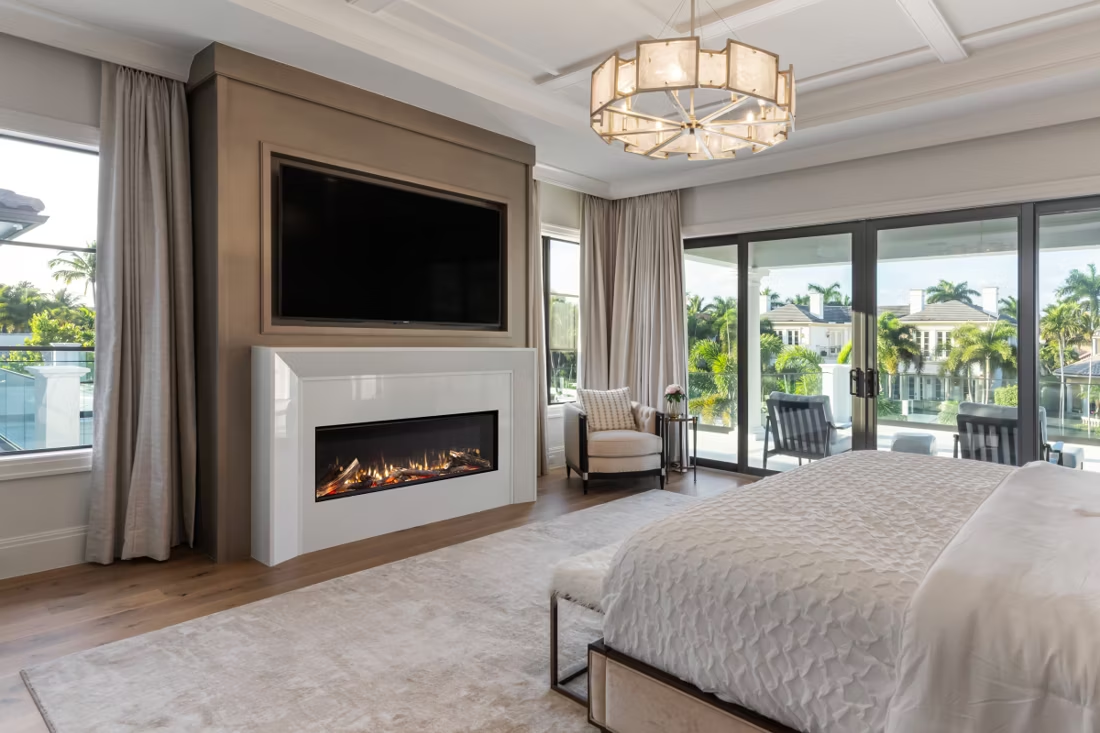
Yes—with an asterisk. Fireplaces are hot and TVs don't like heat. Either put a mantel between them to deflect rising warmth, or choose a fireplace with heat-management technology that creates a cool zone on the wall above—the wall stays around 125 degrees, barely warm, while the room still gets full heat. If you like clean lines and don't want a mantel, heat management is the answer.
Does an electric fireplace need a vent or chimney?
No—that's its superpower. An electric fireplace needs a wall and an outlet, period. No vent pipe, no gas line, no clearances to design around, which is why it works in bedrooms, offices, apartments, and walls where venting a gas or wood unit would be impractical or impossible. Installation is typically the simplest and least expensive of any fireplace type.
Can I install a fireplace myself?
If you're putting a fire in your house on purpose, it's best to work with an expert. Unless you're genuinely experienced in framing, gas line, vent pipe, and the national code on clearances to combustibles, have a professional do it—and ideally the same company that sells you the fireplace, so warranty, service, and liability all live under one roof.
What is an in-home preview and do I need one?
It's a visit where a hearth professional measures your space, confirms the model you picked actually works in your home, and walks the specs—framing, gas line, venting, finish work—before anything is ordered. Some details you just can't know until you see the house. Never make a down payment without one; it's the single most-skipped step that burns buyers.
Nearby Dealers
Hearth shops serving Syracuse and the surrounding area.
Electric Service in Syracuse
An electric fireplace's heater draws about 1,500 watts—pennies per hour at local rates.
Niagara Mohawk Power Corp.
Find your electric fireplace in Syracuse.
Tell us about your Syracuse home and we'll match you with a trusted local dealer and send a free Project Guide & Parts List—the exact electric insert, built-in, or wall-mount unit for your space, plus the mounting and circuit specs your electrician will need.
Find Your Fireplace →