
Electric warmth that fits Onondaga County's long, snowy winters.
From Syracuse to Baldwinsville, Manlius to Camillus—a no-vent way to add real heat and ambiance to any room, without the chimney or flue work a wood or gas unit requires.
Every Project Starts From One of These Five Situations
Zone heat and ambiance, without the venting.
Onondaga County sits in climate zone 5A with roughly 6,588 heating degree days and average winter lows near 16°F—a heating season in the same range as Burlington, Vermont. Add the lake-effect snow that rolls off Lake Ontario and gives Syracuse its reputation as one of the snowiest large cities in the country, and it's a long stretch from October through April where homes need reliable heat. The county's housing stock is a mix of older city neighborhoods—Westcott, Eastwood, Strathmore—where many homes have a fireplace opening but no active chimney use, and newer suburban construction in DeWitt, Camillus, Liverpool, and Manlius where there's no masonry at all. An electric fireplace fits both situations without the structural work a wood or gas install requires.
National Grid serves electric accounts across Onondaga County, and running an electric fireplace as whole-home primary heat through a 6,588-HDD winter gets expensive fast on resistance-heat rates. That's why electric units here mostly do the job they're best at: zone heat and ambiance in a den, bedroom, or finished basement, while a furnace or boiler carries the main heating load. The county's hearth market still leans heavily wood and pellet—regional pellet brands like Energex, Hamer Pellet Fuel, and Greene Team Pellet Fuel are widely stocked—but electric fills a real gap for condos, apartments, additions, and any room where running a flue just isn't practical.
Three steps. No salesperson until you're ready.
Tell us about your project
Your zip code, your situation, and the fuel you're leaning toward—or let the answers point you to one.
See what's actually available
The brands dealers within 100 miles genuinely carry—real options, never a catalog mirage.
Get your dealer & Project Guide
A trusted local dealer, plus the free Project Guide & Parts List that names every component of the job.
Frequently Asked Questions
How much does an electric fireplace installation cost in Onondaga County?
A plug-in wall-mounted unit or insert typically runs $300 to $1,800 installed, since there's no venting or masonry work involved—most of the cost is the unit itself plus a standard outlet. A built-in electric fireplace with a framed opening, trim kit, and a dedicated 20-amp circuit run by a licensed electrician runs closer to $1,500 to $4,000, depending on the surround and any custom mantel work. Either way, expect the total to land well below a comparable wood or gas project in Onondaga County, since there's no chimney, gas line, or flue liner to account for.
Can an electric fireplace serve as my primary heat source in Onondaga County's climate?
Not realistically. With average winter lows near 16°F and roughly 6,588 heating degree days a year, running electric resistance heat as your whole-home heat source gets expensive fast under National Grid's rates. Most Onondaga County homeowners use an electric fireplace for zone heating—warming a den, bedroom, or finished basement—while a furnace, boiler, or heat pump handles the main heating load through the winter. Think of it as supplemental comfort and ambiance rather than a replacement for central heat.
Do I need a permit or an electrician to install an electric fireplace?
Most plug-in electric fireplaces under about 1,500 watts just need a standard 120V outlet—no permit required. Built-in models wired to a dedicated 20-amp circuit, or larger 240V units, need a licensed electrician, and depending on the scope may require an electrical permit through your local municipality—Syracuse, DeWitt, Camillus, and Manlius each handle their own permitting rather than routing through a single county office. Since there's no combustion involved, you skip the masonry and venting inspections that come with wood or gas installs.
What's the difference between an electric insert, a wall-mounted unit, and a built-in?
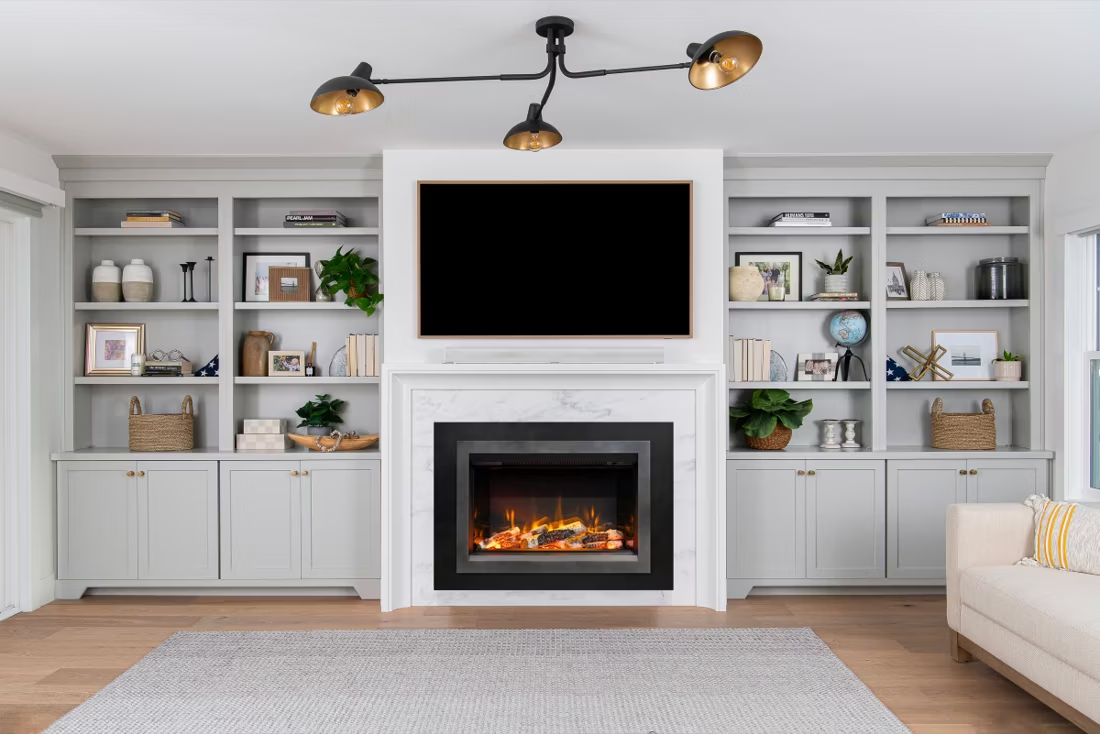
An electric insert is sized to slot into an existing masonry fireplace opening—a common fit for older Syracuse-area homes with a fireplace that's no longer used for wood burning. A wall-mounted unit hangs directly on a wall like a flat-screen TV and needs no existing opening at all. A built-in requires a framed enclosure, similar in footprint to a zero-clearance gas fireplace, and usually gets dressed out with a custom mantel or surround. For homes without any existing fireplace, wall-mounted units are the simplest and least expensive path.
Will my electric fireplace work during a power outage?
No. Electric fireplaces need power to run both the heater and the flame effect, so during an ice storm or a heavy lake-effect snow event—the kind that periodically knocks out power in Onondaga County—the unit goes dark along with everything else in the house. If backup heat during outages matters to you, pair the electric fireplace with a wood or pellet stove elsewhere in the home, or plan for a generator, rather than relying on electric as your only heat source.
How much does it cost to run an electric fireplace in Onondaga County?
A typical 1,500-watt electric fireplace costs roughly $0.20 to $0.30 per hour to run at National Grid's residential electric rates, depending on your plan and time of year. Used for a few hours a day for ambiance and supplemental warmth in one room, that's a modest add to the electric bill—far cheaper than trying to heat the whole house on electric resistance through a Syracuse winter, which is exactly why zone heating is the practical use case here.
Electric vs. gas—which is right for my Onondaga County home?
Gas fireplaces put out more heat and are better suited to actually contributing to a home's heating load through a 6,588-HDD winter, and battery-backed IPI models still work in a power outage. Electric fireplaces install almost anywhere—including condos, apartments, and interior walls with no flue access—cost less upfront, and need no gas line or venting. Most Onondaga County hearth dealers still lean on wood, pellet, and gas as primary heat options, so electric tends to be the right call specifically for rooms or units where running a flue isn't an option.
Electric vs. wood—which is right for my home?
Local firewood species like oak, maple, birch, and ash burn hot and long, and a wood stove or insert can genuinely carry heating load through an Onondaga County winter—but it means a chimney, wood handling, and ash cleanup. Electric needs none of that upkeep and installs in places wood physically can't go, but it won't match wood's heat output or its ability to keep a room warm with the power out. Many homeowners here use wood or pellet as real heat and add electric elsewhere purely for convenience and ambiance.
Can I install an electric fireplace in a condo or apartment in downtown Syracuse?
Yes—because electric fireplaces need no venting, chimney, or gas line, they're one of the few fireplace options generally allowed in Onondaga County multi-family buildings, including downtown Syracuse high-rises and loft conversions in neighborhoods like Armory Square. Check with your building's HOA or landlord about electrical load limits and any restrictions on wall-mounted units before you install one, but in most cases it's a straightforward add.
Do electric fireplaces actually produce heat?
Yes—most put out around 4,800–5,000 BTUs from a standard outlet, which comfortably warms a bedroom, office, or den as a comfort-zone heater. What they won't do is carry a whole house the way wood, gas, or pellet can. Think of electric as ambiance-first with honest supplemental heat: flames on with no heat in July, flames plus warmth in January.
Can I put a TV above my fireplace?
Yes—with an asterisk. Fireplaces are hot and TVs don't like heat. Either put a mantel between them to deflect rising warmth, or choose a fireplace with heat-management technology that creates a cool zone on the wall above—the wall stays around 125 degrees, barely warm, while the room still gets full heat. If you like clean lines and don't want a mantel, heat management is the answer.
Can I install a fireplace myself?
If you're putting a fire in your house on purpose, it's best to work with an expert. Unless you're genuinely experienced in framing, gas line, vent pipe, and the national code on clearances to combustibles, have a professional do it—and ideally the same company that sells you the fireplace, so warranty, service, and liability all live under one roof.
Can a fireplace actually lower my heating bill?
Yes—by creating a comfort zone. A furnace heats every square foot of the house just to warm the one room you're in; a gas fireplace on low burns roughly a sixth of the gas a typical furnace does. Set the furnace around 55–60 degrees as a baseline, then heat the rooms your family actually uses. Families who heat this way commonly save $20–$60 a month.
Stove and Fireplace Dealers in Onondaga County
Find your electric fireplace in Onondaga County.
Tell us about your room and we'll match you with the right electric fireplace, insert, or wall-mounted unit—plus a free Project Guide & Parts List and a trusted local dealer to install it.
Find Your Fireplace →