
Find pellet heat built for Schuyler County's long, cold winters.
With over 7,400 heating degree days a year and lake-effect winters off Seneca Lake, Schuyler County homes need heat that holds steady without daily wood-splitting. Find the right pellet stove or insert and connect with a trusted local dealer.
Every Project Starts From One of These Five Situations
Set-and-forget heat without the wood-splitting labor.
Schuyler County is one of New York's smallest counties by population, tucked into the hills above Seneca Lake around Watkins Glen and Montour Falls. Winters here run long—average lows near 14°F and roughly 7,444 heating degree days a year put the county in the same cold-climate tier as Burlington, Vermont. Plenty of local households heat with oak, maple, birch, and ash cut from their own woodlots, but splitting and stacking cordwood every fall isn't for everyone, especially in older farmhouses and lake cottages where a hands-off heat source makes more sense.
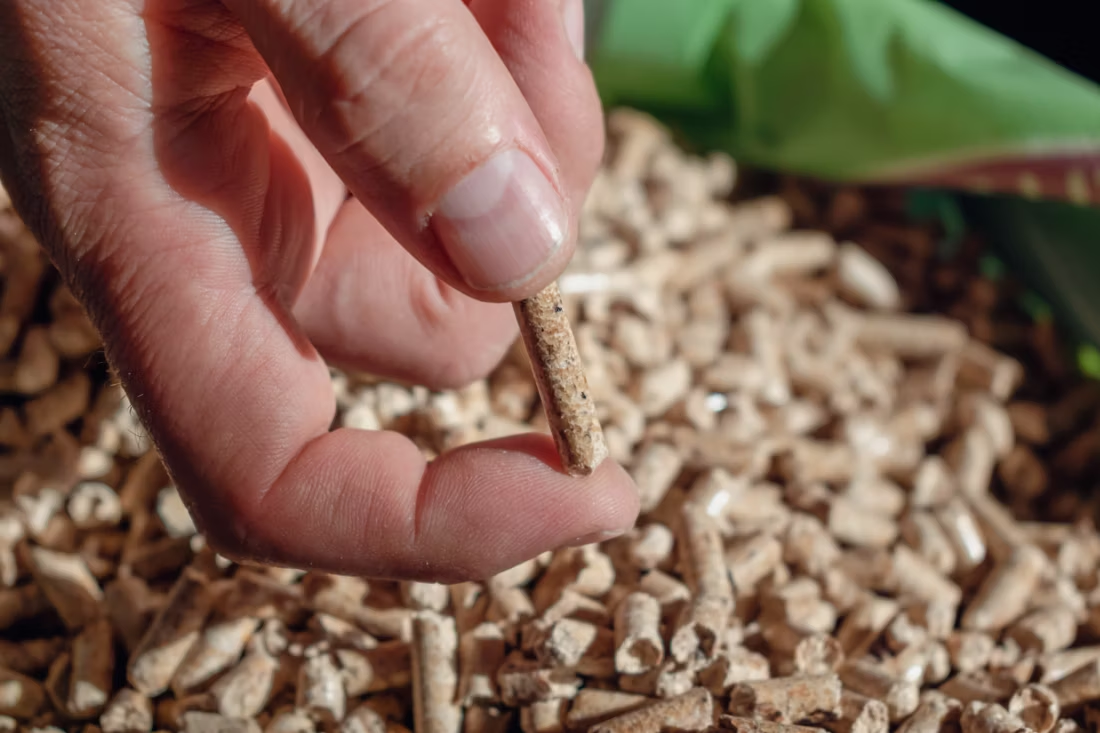
That's where pellet stoves fit in. Regional brands like Energex, Hamer Pellet Fuel, and Greene Team Pellet Fuel are sold through hearth shops and farm-supply stores across the Finger Lakes, so fuel is easy to source without long drives or bulk cordwood storage. Schuyler County has no air quality non-attainment concerns or wood-smoke advisories, so pellet appliances run without the burn-curtailment issues homeowners face in denser parts of the Northeast. A thermostatically controlled pellet stove or insert delivers steady, adjustable heat through a Seneca Lake winter—with a lot less physical labor than a wood stove and a lot less mess than most people expect.
Three steps. No salesperson until you're ready.
Tell us about your project
Your zip code, your situation, and the fuel you're leaning toward—or let the answers point you to one.
See what's actually available
The brands dealers within 100 miles genuinely carry—real options, never a catalog mirage.
Get your dealer & Project Guide
A trusted local dealer, plus the free Project Guide & Parts List that names every component of the job.
Frequently Asked Questions
How much does a pellet stove installation cost in Schuyler County?
Most pellet stove and insert installations in Schuyler County run in the $3,000 to $6,500 range, depending on whether the unit is freestanding or being installed into an existing masonry fireplace, and whether new venting needs to be run through an exterior wall. A freestanding pellet stove with a straightforward through-wall vent kit tends to land on the lower end; a pellet insert conversion in an older Watkins Glen or Montour Falls home with a masonry chimney that needs a liner adapter runs higher. Local dealers will give a firm number after seeing the space, but pellet installs are generally simpler and less expensive than wood stove installs since venting requirements are less demanding.
What's the difference between a pellet stove and a wood stove?
A wood stove burns split cordwood—oak, maple, birch, or ash are the common local species—and needs to be fed and tended by hand, but it works with no electricity, which matters during the ice storms that periodically knock out power in the hills around Schuyler County. A pellet stove burns compressed wood pellets fed automatically from a hopper by an auger, giving you thermostat-like control and a burn that can run 24 to 48 hours between refills depending on hopper size. Pellet stoves need electricity to run the auger, igniter, and combustion blower, so they're not a stand-alone backup heat source unless paired with a battery backup or generator. For homeowners who want set-it-and-forget-it heat and don't want to cut, split, or stack wood, pellet is usually the better fit.
What size pellet stove do I need for my Schuyler County home?
Sizing depends on square footage, ceiling height, and how drafty the home is—a real consideration in the county's older farmhouses and lake cottages. As a general guide: smaller units (rated around 40,000 BTU) suit a single large room or open living area up to roughly 1,200 square feet, while larger units (50,000+ BTU) can handle whole-home heating in a 2,000+ square foot house with decent insulation. Given the county's roughly 7,444 heating degree days, err on the larger side rather than undersized—a stove that's working near its max output all winter wears down faster and burns through pellets quicker. A local dealer can size your space properly during an in-home visit, factoring in whether the stove is your primary heat or backing up an oil or propane furnace.
Do I need a permit to install a pellet stove in Schuyler County?
Yes, most pellet stove and insert installations require a building permit, but Schuyler County doesn't run a single centralized permitting office for this—permits are handled at the town level. Homes in and around Watkins Glen typically go through the Town of Dix Code Enforcement Office, while homes in Hector, Reading, Orange, Catharine, or Tyrone go through their respective town code enforcement offices. Most established local dealers know exactly which office to contact for your address and will handle the permit application as part of the installation, so you generally don't need to track it down yourself.
Where can I buy wood pellets in Schuyler County?
Regional pellet brands including Energex, Hamer Pellet Fuel, and Greene Team Pellet Fuel are widely stocked at hearth shops and farm-supply retailers throughout the Finger Lakes and central New York, typically sold in 40-pound bags or by the ton. Expect to pay somewhere in the $250 to $320 per ton range depending on brand and whether you buy by the pallet (usually 50 bags, one ton) versus individual bags. Buying a full ton or more before winter, and storing it somewhere dry—a garage or mudroom works better than a damp basement—keeps pellets from clumping and burning inefficiently.
Will my pellet stove work during a power outage?
Not on its own. Pellet stoves rely on electricity to run the auger that feeds pellets, the igniter, and the combustion blower, so a power outage shuts the unit down even with a full hopper. This matters in Schuyler County, where winter storms off Seneca Lake and the surrounding hills can knock out power for hours or, occasionally, days. Some homeowners pair a pellet stove with a small battery backup or a portable generator sized to run the stove's low-wattage components. If uninterrupted heat during outages is a priority and you don't want to manage a generator, a wood stove—which needs no electricity—is worth considering as either your primary unit or a backup alongside the pellet stove.
How much maintenance does a pellet stove need?
Pellet stoves need more routine attention than a gas unit but less structural maintenance than a wood-burning chimney system. Plan on emptying and brushing the burn pot every few days during heavy use, a deeper cleaning of the exhaust passages and heat exchanger tubes every few weeks, and an annual professional service that checks the auger motor, combustion blower, gaskets, and vent pipe. Because pellet stoves vent through a smaller-diameter pipe than wood stoves, buildup can restrict airflow faster than people expect if cleaning gets skipped—a local dealer or stove shop can walk you through the maintenance schedule for your specific model.
Pellet stove vs. wood stove—which is right for my Schuyler County home?
Wood stoves work without electricity, burn cordwood many county residents already cut from oak, maple, birch, or ash on their own property, and hold heat through the coldest nights when power might be unreliable. Pellet stoves trade that off-grid resilience for convenience—thermostatic control, longer unattended burns, easier loading, and less mess than splitting and stacking cordwood. For a primary residence in town where the electric service is reliable and convenience matters most, pellet is often the better fit. For a rural property, camp, or anyone who wants guaranteed heat during a multi-day outage, wood—sometimes paired with a pellet stove for daily convenience—tends to win out. Both fuels are readily available through local dealers in the county.
What's the best pellet stove for a cold climate like Schuyler County's?
Look for EPA-certified units with a large hopper capacity (40+ pounds) if you want a long unattended burn through a cold overnight, since Schuyler County's average winter lows hover around 14°F and can dip well below that during arctic outbreaks off the lake. Higher-BTU models with a strong combustion blower will keep pace better in older, less-insulated farmhouses common in the county's rural towns. Ask a local dealer about hopper size relative to your typical overnight temperatures and how the stove performs at its lowest thermostat setting—a unit that's oversized for the space will short-cycle, while an undersized one will run flat-out and burn through pellets faster than expected.
How often does a pellet stove need cleaning?
A clean pellet stove is a happy pellet stove. Plan on cleaning the burn pot about once a week when you're burning regularly—ash and clinkers gum up the air holes just like a pellet barbecue. Most pellet stove problems trace back to skipped cleaning that nobody explained up front. Some designs make it easy with a trapdoor burn pot: pull a lever and the gunk drops into the ash pan.
What does it take to replace an existing fireplace?
Fireplaces are like icebergs—bigger behind the wall than in front of it. Replacement means removing the surrounding tile or stone (the finish material laps onto the fireplace face), pulling the old unit, setting the new one in the same enclosure, and re-finishing the wall. A hearth professional can determine what's behind your wall without demolition during an in-home preview.
Can a fireplace actually lower my heating bill?
Yes—by creating a comfort zone. A furnace heats every square foot of the house just to warm the one room you're in; a gas fireplace on low burns roughly a sixth of the gas a typical furnace does. Set the furnace around 55–60 degrees as a baseline, then heat the rooms your family actually uses. Families who heat this way commonly save $20–$60 a month.
Can I install a fireplace myself?
If you're putting a fire in your house on purpose, it's best to work with an expert. Unless you're genuinely experienced in framing, gas line, vent pipe, and the national code on clearances to combustibles, have a professional do it—and ideally the same company that sells you the fireplace, so warranty, service, and liability all live under one roof.
Stove and Fireplace Dealers in Schuyler County
Pellet Brands Stocked Around Schuyler County
Manufacturers will point you to the nearest stocking dealer.
Find your pellet stove in Schuyler County.
Tell us about your home and we'll match you with a trusted local dealer and send over a free Project Guide & Parts List—the exact parts, including the vent kit, for your pellet project in Schuyler County.
Find Your Fireplace →