
Steady heat for Finger Lakes winters that run 7,444 degree-days long.
Between Seneca and Cayuga lakes, Schuyler County's winters stack up degree-days on par with Duluth, MN—lake-effect snow, long stretches below 20°F, and older farmhouses that need heat they can count on. I'll match you with a trusted local dealer who knows whether your address sits on a NYSEG gas main or needs a propane setup, and who can size the install right the first time.
Every Project Starts From One of These Five Situations
Heat that works whether you're on the gas line or not.
Schuyler County is one of the smallest and most rural counties in New York, centered on Watkins Glen at the southern tip of Seneca Lake and stretching out through Montour Falls, Burdett, Hector, and Tyrone. With 7,444 heating degree days and winter lows averaging 14°F, the heating season here is long and the lake-effect snow bands off Seneca and Cayuga can knock out power for a day or more at a stretch. Older farmhouses built around oak and maple timber frames still lean on wood heat and masonry fireplaces, but for daily, thermostatically controlled warmth, gas has become the default choice for remodels and new builds throughout the county.
Natural gas service through NYSEG reaches Watkins Glen and Montour Falls and the corridors immediately around them, but step out into Hector, Tyrone, Orange, or the hillsides above Seneca Lake and there's no gas main—propane delivery from a regional supplier is the standard fuel out there. Either way, a properly sized direct-vent gas fireplace or insert gives you real heat during a winter power outage (with the right ignition system), no ash or creosote to manage, and steady output through a season where 7,444 heating degree days means the appliance is working hard for six months straight.
Three steps. No salesperson until you're ready.
Tell us about your project
Your zip code, your situation, and the fuel you're leaning toward—or let the answers point you to one.
See what's actually available
The brands dealers within 100 miles genuinely carry—real options, never a catalog mirage.
Get your dealer & Project Guide
A trusted local dealer, plus the free Project Guide & Parts List that names every component of the job.
Frequently Asked Questions
How much does a gas fireplace installation cost in Schuyler County?
Most gas fireplace installs in Schuyler County run roughly $4,500 to $10,000. A direct-vent insert going into an existing masonry firebox—common in the older farmhouses around Hector and Tyrone—tends to land toward the lower end if a gas line is already nearby. New construction or a full fireplace build-out with fresh venting and gas line work runs higher. If you're outside the NYSEG service area and need a new propane tank set and line run out to the house, budget toward the top of that range, and expect a modest travel charge if you're well out from Watkins Glen or Montour Falls.
Can I convert my existing wood fireplace to gas?
Yes, and it's a common project in Schuyler County's older housing stock, especially farmhouses built with oak, maple, or ash timber and a stone or brick fireplace as the original heat source. A gas insert drops into that existing firebox and vents through a stainless liner run up the current chimney, so you keep the masonry look while gaining controllable heat. Expect $4,500 to $9,000 depending on whether you're on NYSEG natural gas or need to switch to propane, and whether the chimney needs relining before the insert goes in.
Do I need natural gas, or does propane work just as well?
Either fuel works fine in a modern gas fireplace once it's configured with the correct orifice and regulator. NYSEG runs natural gas service through Watkins Glen and Montour Falls, so homes there with an existing gas water heater or furnace can usually add a fireplace to that same line. Most of the rest of the county—Hector, Tyrone, Orange, and the lake hillsides—isn't on a gas main, so propane from a local bulk supplier, off either an existing tank or a new one your propane company sets, is the standard setup.
Will my gas fireplace still work if the power goes out?
Most modern gas fireplaces are built to keep running through an outage. Units with intermittent pilot ignition (IPI) carry a battery backup that kicks in automatically when the power drops, so the fireplace still lights on demand. Valor fireplaces take it a step further—the pilot assembly generates its own electricity through the thermocouple, so there's no battery at all to maintain. That matters in Schuyler County, where lake-effect storms off Seneca and Cayuga can take out power to rural stretches like Hector or Tyrone for a day or longer. Ask your local dealer about the ignition system on any model you're considering.
What's the difference between a gas fireplace, gas insert, and gas stove?
A gas fireplace is a fully built-in unit framed into a wall, which is the right call for new construction or a major remodel. A gas insert slides into an existing masonry firebox and uses your current chimney as the vent path—a good fit for the older farmhouse fireplaces common around Montour Falls and Burdett. A gas stove is a freestanding cabinet unit that vents like a wood stove but runs on gas, useful in a room with no existing chimney or in a manufactured home. A local dealer can walk your space and tell you which configuration actually fits.
Do I need a permit to install a gas fireplace in Schuyler County?
Yes. Installations require both a building permit and a gas line permit through the local code enforcement office covering your municipality—Watkins Glen, Montour Falls, and each surrounding town in Schuyler County handles this through its own code enforcement officer, so your installer will confirm the right office for your address. The gas line work itself has to be done by a licensed gas-fitter, which is one reason to go through a full-service hearth dealer rather than a standalone handyman—they coordinate the gas work, venting, and inspection sign-off as one job.
What's the difference between vented and vent-free gas fireplaces, and can I use either here?
Vented, or direct-vent, gas fireplaces pull combustion air from outside and exhaust it back outside through sealed pipe, keeping everything out of the living space. Vent-free units burn directly into the room and are permitted under New York code within strict room-size and appliance-rating limits. Schuyler County doesn't carry the air quality restrictions some regions do, so both types are workable here, but most local dealers still steer homeowners toward direct-vent for primary living spaces since it heats just as well without adding any combustion byproducts to the room during the long six-month heating season.
How often should a gas fireplace be serviced in Schuyler County?
Plan on an annual inspection, ideally before the heating season really sets in around October. A technician checks the burner, pilot assembly, gas connections, and venting, and cleans the glass and interior. With 7,444 heating degree days, many Schuyler County households run their gas fireplace daily for the better part of six months, so a fall service call—usually $150 to $250—catches wear before it becomes a mid-January no-heat call.
Gas vs. wood—which makes more sense for a Schuyler County home?
Wood—split from the oak, maple, birch, and ash common on Schuyler County woodlots—offers lower fuel cost and heat that works even without power, which matters when a lake-effect storm knocks out electricity for a day. Gas offers instant, thermostat-controlled heat with no splitting, stacking, or ash to manage, and it runs cleanly whether you're on NYSEG natural gas in Watkins Glen or propane out in Hector or Tyrone. A lot of county homes run both: gas in the main living space for daily convenience, a wood stove or fireplace elsewhere as backup heat when a storm takes the power down.
Why is my open fireplace making my house colder?
Open fireplaces suck—literally. As the fire burns, it consumes air your furnace already paid to heat and pulls it out through the chimney, so the house is actually colder after the fire goes out than before you lit it. An insert fixes this: it seals the chimney, puts fixed glass across the front, and turns that hole in your house into a real heat source.
Are new gas fireplaces really better than old ones?
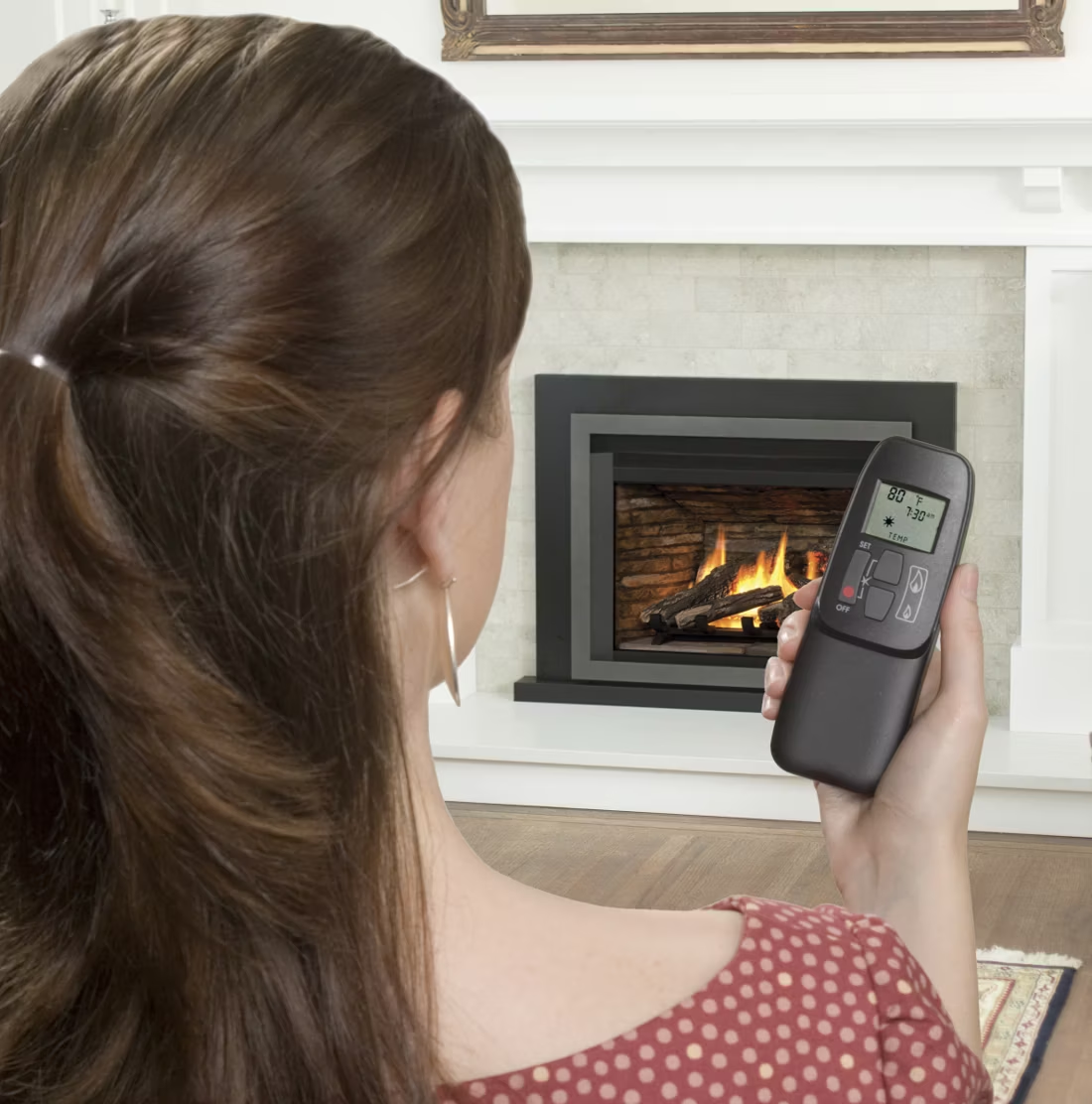
Two ways, and they're both big. Looks: modern gas fireplaces are realistic enough that it's hard to believe they aren't burning wood. Cost: old units burn a standing pilot year-round (roughly $200 a year), while new ones use pilot-on-demand ignition and modern burners. Add remote controls and thermostat operation, and the day-to-day experience isn't close.
What is an in-home preview and do I need one?
It's a visit where a hearth professional measures your space, confirms the model you picked actually works in your home, and walks the specs—framing, gas line, venting, finish work—before anything is ordered. Some details you just can't know until you see the house. Never make a down payment without one; it's the single most-skipped step that burns buyers.
How much should I budget for a fireplace?
For an average home—covering the fireplace, the vent pipe, and basic installation—a budget between $3,900 and $5,500 gives you a lot of options across wood, gas, and pellet. By the time you add finish work, gas line, and electrical, the average complete installation lands between $5,000 and $12,000 all-in. In a remodel or new build, a good rule is to put about 2.5% of the total project cost toward the fireplace.
Stove and Fireplace Dealers in Schuyler County
Get your free Project Guide & Parts List for a gas fireplace in Schuyler County.
Tell me about your home, whether you're near a NYSEG gas line or running on propane, and I'll match you with a trusted local dealer and send over a free Project Guide & Parts List—the exact equipment, vent kit, and recommended installer for your gas fireplace project, no big-box guesswork.
Find Your Fireplace →