
Find Out If Pellet Heat Still Makes Sense in Schenectady.
Pellet stoves are a minority choice in a city built on natural gas and grid electricity—but for the right home, they still make sense. We'll help you find out, and match you with a trusted local dealer if they do.
Every Project Starts From One of These Five Situations
A City Already Wired for Gas and Electric Heat.
Schenectady sits at 343 feet along the Mohawk River, with a climate zone 5A profile, 6,357 heating degree days, and average winter lows around 16°F—cold enough that supplemental heat matters, but not so remote that residents lack other options. Unlike rural parts of upstate New York where firewood and pellets fill a real gap, Schenectady's dense grid of Stockade-district row houses, GE Plot bungalows, and Niagara Mohawk-served neighborhoods mean most homes already have natural gas or reliable electric service running to them.
That's why pellet stoves show up here less often than in more rural counties—most homeowners simply default to a gas insert or an electric-resistance option tied into Niagara Mohawk service. Still, a handful of Schenectady homeowners choose pellet each year: those in homes without a gas line, those who want a hedge against Niagara Mohawk outages during ice storms, or those drawn to the lower ash and easier loading pellet stoves offer over cordwood. Regional pellet brands like Energex, Hamer Pellet Fuel, and Greene Team Pellet Fuel are all sold within reach of the Capital Region, so fuel supply isn't the limiting factor—it's simply that most Schenectady homes have an easier, more established alternative already installed.
Three steps. No salesperson until you're ready.
Tell us about your project
Your zip code, your situation, and the fuel you're leaning toward—or let the answers point you to one.
See what's actually available
The brands dealers within 100 miles genuinely carry—real options, never a catalog mirage.
Get your dealer & Project Guide
A trusted local dealer, plus the free Project Guide & Parts List that names every component of the job.
Frequently Asked Questions
Are pellet stoves actually a good fit for a Schenectady home?
For most Schenectady homes, no—not as a primary heat source. With natural gas lines running through most of the city and Niagara Mohawk providing dependable grid electricity at roughly $0.1667 per kWh, gas inserts and electric options are simpler to install and require far less day-to-day attention. Pellet stoves make more sense in specific situations: homes without a gas hookup, detached workshops or garages, camps near the Adirondacks that some Schenectady residents own as second properties, or as a resilience play in neighborhoods that lose power during ice storms. If none of those describe your situation, a gas insert is probably the more practical choice—but if one does, a pellet stove can still be a smart, efficient heat source.
How much does a pellet stove installation cost in Schenectady?
Because pellet stoves are a niche request in Schenectady, pricing varies more than it would for gas or electric work. Expect somewhere in the $3,000–$6,000 range for a freestanding pellet stove with through-wall venting, including the unit, a stainless steel vent kit, and labor. Pellet inserts that fit into an existing masonry fireplace tend to run a bit higher once the liner and venting adapter are factored in. Because so few Schenectady dealers stock pellet units regularly, get a firm, itemized quote before committing—parts availability and lead times can affect total cost more here than in areas where pellet heat is standard.
Will a pellet stove work in an older Stockade district or GE Plot home?
Many of Schenectady's older neighborhoods—the Stockade district, the GE Plot, Mont Pleasant—have solid masonry or plaster-and-lath walls that make running a pellet vent pipe more involved than in newer construction. It's usually done by coring through an exterior wall for direct venting, similar to how a gas insert would vent, rather than using an existing chimney. A local installer will need to assess wall thickness, clearances to combustibles, and whether the electrical outlet needed to run the stove's auger and blower is close enough, or needs to be added by an electrician.
Where can I buy pellets in the Schenectady area?
Regional brands including Energex, Hamer Pellet Fuel, and Greene Team Pellet Fuel are distributed through hardware stores and hearth shops across the Capital Region, though because pellet stoves are uncommon here, not every home center keeps a deep stock through the winter. Expect to pay somewhere in the neighborhood of $250–$300 per ton for a bagged, premium hardwood pellet, and plan to buy your season's supply—typically 2 to 3 tons for a home relying on a stove as secondary heat—early, before cold snaps drive up local demand.
Do pellet stoves work during a power outage?
No, not without a backup power source—and this is worth knowing before you buy. Pellet stoves rely on an electric auger to feed fuel and a blower to circulate heat, so when Niagara Mohawk service drops during an ice storm or high-wind event, the stove shuts down. Some homeowners pair a pellet stove with a small battery backup or portable generator specifically to keep it running through outages. If uninterrupted heat during a power outage is a priority for your Schenectady home, a vented gas fireplace with a standing pilot is more reliable.
Do I need a permit to install a pellet stove in Schenectady?
Yes—pellet stove installations in Schenectady go through the city's building department, or the Schenectady County building office if you're outside city limits, and the unit needs to meet current EPA emissions standards. Because pellet installs are less common here than gas work, ask your installer whether they've pulled permits for pellet appliances before; most hearth and HVAC contractors who do gas work regularly can handle the paperwork, but it's worth confirming upfront rather than assuming.
Pellet stove vs. gas fireplace—which makes more sense for my Schenectady home?
For the vast majority of homes in Schenectady, gas wins on practicality: with natural gas lines already serving most of the city, a gas insert or fireplace gives you instant, thermostat-controlled heat with no fuel deliveries, no hopper to fill, and no ash to empty. Pellet stoves counter with lower fuel costs per BTU in a lot of winters and the ability to burn a renewable, domestically produced fuel—but they need a dedicated outlet, a hopper refill every day or two in cold stretches, and periodic ash removal. Unless you specifically lack a gas hookup or want a backup-heat option that doesn't depend on your furnace's gas line, gas is the more common—and often more convenient—choice here.
How often does a pellet stove need to be cleaned and serviced?
Pellet stoves need more frequent attention than a gas appliance but less than a wood stove. Plan on scraping the burn pot and emptying the ash pan every few days during regular use, a deeper cleaning of the exhaust passages every few weeks, and a full annual service—inspecting the auger motor, gaskets, and venting—before each heating season starts. Given how few pellet stoves are in service around Schenectady compared to gas appliances, it's worth confirming with your installer that they service pellet units specifically, since some regional technicians focus mainly on gas and oil equipment.
If wood and pellet are both uncommon here, what do most Schenectady homeowners actually install?
Most Schenectady homeowners choose a gas insert or fireplace, taking advantage of the natural gas lines already running through most of the city, or an electric fireplace tied into Niagara Mohawk service for supplemental zone heat. Solid-fuel options like wood and pellet stoves are a minority here—Schenectady doesn't have the winter air-quality restrictions or rural fuel-access pressures that push some upstate New York towns toward wood or pellet heat, and the region's dense natural gas infrastructure makes gas the default. Pellet still has a place for specific situations—camps, detached buildings, homes without gas access, or backup heat during Niagara Mohawk outages—but for a typical single-family home inside city limits, gas or electric is where most homeowners land.
How often does a pellet stove need cleaning?
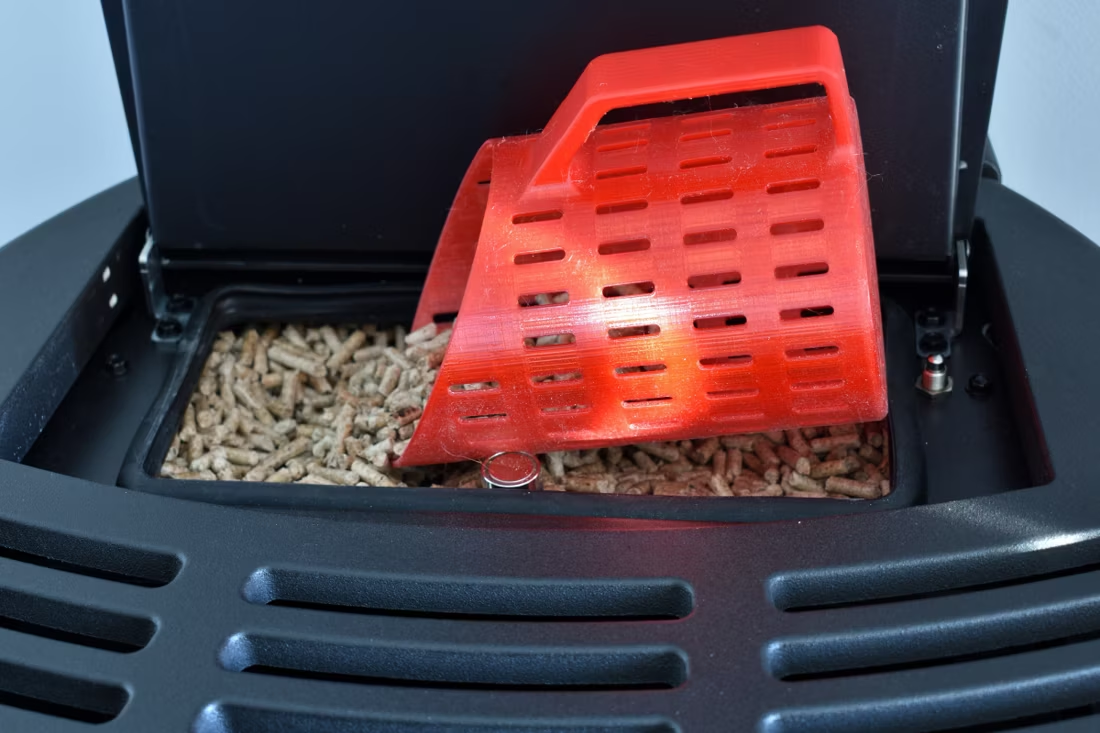
A clean pellet stove is a happy pellet stove. Plan on cleaning the burn pot about once a week when you're burning regularly—ash and clinkers gum up the air holes just like a pellet barbecue. Most pellet stove problems trace back to skipped cleaning that nobody explained up front. Some designs make it easy with a trapdoor burn pot: pull a lever and the gunk drops into the ash pan.
Why is a fireplace insert so efficient?
An insert does two things: it seals the chimney completely, so you stop losing air you already paid to heat, and it radiates warmth into the room through the firebox and glass. Most add a heat-exchange fan that pulls cool room air underneath, wraps it around the hot firebox, and pushes it back out warm. Your home is more efficient before you've even lit the first fire.
Can a fireplace actually lower my heating bill?
Yes—by creating a comfort zone. A furnace heats every square foot of the house just to warm the one room you're in; a gas fireplace on low burns roughly a sixth of the gas a typical furnace does. Set the furnace around 55–60 degrees as a baseline, then heat the rooms your family actually uses. Families who heat this way commonly save $20–$60 a month.
What is an in-home preview and do I need one?
It's a visit where a hearth professional measures your space, confirms the model you picked actually works in your home, and walks the specs—framing, gas line, venting, finish work—before anything is ordered. Some details you just can't know until you see the house. Never make a down payment without one; it's the single most-skipped step that burns buyers.
Nearby Dealers
Hearth shops serving Schenectady and the surrounding area.
Pellet Brands Stocked Around Schenectady
Manufacturers will point you to the nearest stocking dealer.
Find your pellet stove in Schenectady.
Tell us about your home and situation, and we'll help you figure out whether pellet heat makes sense—then match you with a trusted local dealer and send over a free Project Guide & Parts List with the exact parts, including the vent kit, for your project.
Find Your Fireplace →