
Pellet heat built for Schenectady County's long winters.
With a long, cold winter season and lows averaging 16°F, Schenectady County homes need heat that runs steady for months at a time. Find the right pellet stove or insert and get matched with a trusted local dealer.
Every Project Starts From One of These Five Situations
Consistent, low-maintenance heat for a long Northeast winter.
Schenectady County sits in climate zone 5A, with a long, cold winter season and lows that average around 16°F—a season not far off from what homes in Burlington, VT deal with each year. From the city of Schenectady out through Scotia, Niskayuna, Rotterdam, Glenville, and Duanesburg, homeowners are heating through a genuinely long cold season, and pellet stoves have become a popular answer for households that want steady, thermostat-like heat without the daily work of tending a wood fire.
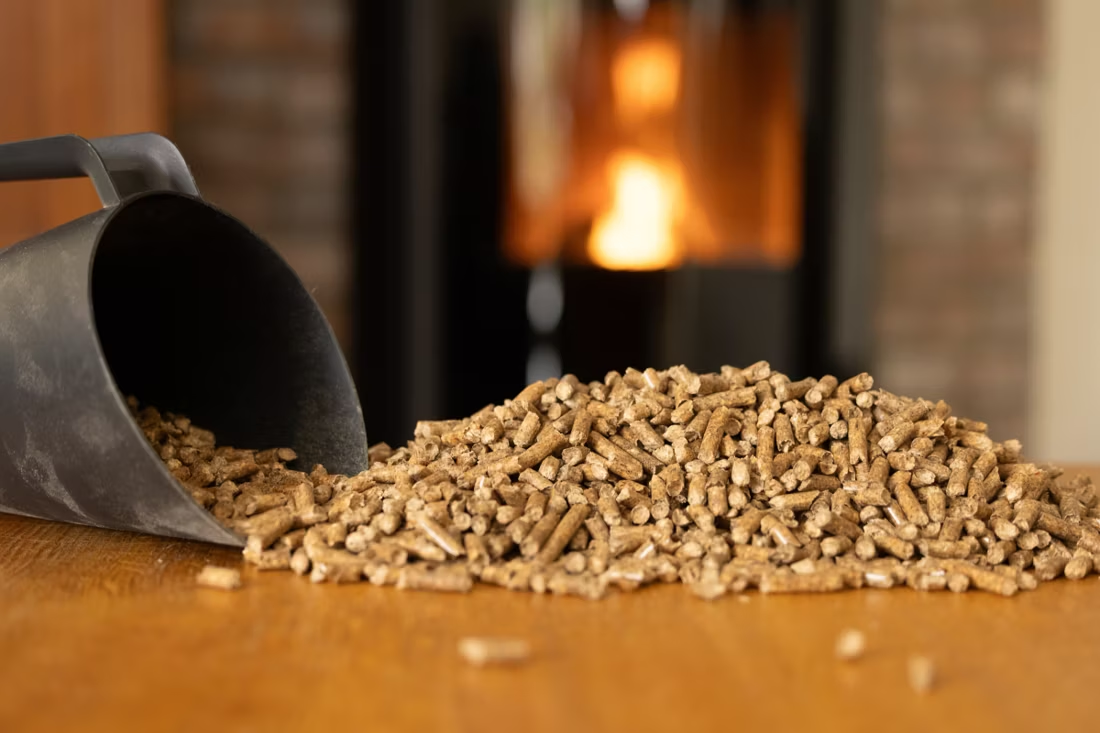
Regional pellet brands including Energex, Hamer Pellet Fuel, and Greene Team Pellet Fuel are milled from the same Northeast hardwoods that grow throughout the county—oak, maple, birch, and ash—so fuel is produced close to home rather than shipped in from out of state. Unlike wood heat, which in this region often means seasoning your own cordwood or pulling a cutting permit (the Green Mountain & Finger Lakes National Forest issues permits from May through October at $20 per cord), pellet fuel arrives bagged, dry, and ready to burn—a real advantage for anyone managing a busy household through a six-month heating season.
Three steps. No salesperson until you're ready.
Tell us about your project
Your zip code, your situation, and the fuel you're leaning toward—or let the answers point you to one.
See what's actually available
The brands dealers within 100 miles genuinely carry—real options, never a catalog mirage.
Get your dealer & Project Guide
A trusted local dealer, plus the free Project Guide & Parts List that names every component of the job.
Frequently Asked Questions
How much does a pellet stove installation cost in Schenectady County?
Pellet stove installations generally cost less than a comparable wood stove install because the venting is simpler—most units vent through a 3- or 4-inch PL pipe run through an exterior wall rather than a full masonry chimney. Your total will depend on whether you're installing a freestanding stove or an insert into an existing fireplace, how far the unit sits from an exterior wall, and whether a dedicated electrical circuit is needed for the auger and combustion blower. A local dealer serving Schenectady, Scotia, Niskayuna, or Rotterdam can give you a firm number after seeing your space, but expect the electrical and venting work—not the appliance itself—to be the main cost driver.
What size pellet stove do I need for my Schenectady County home?
Sizing depends on square footage, ceiling height, insulation, and whether the stove is your primary heat source or supplemental. As a rough guide for this climate—comparable in severity to Burlington, VT—small units (up to around 1,000 sq ft) suit a single room or add-on, mid-size stoves (1,000–2,000 sq ft) cover most main living areas, and larger units handle open-concept or whole-home heating in better-insulated houses. Older homes in the city of Schenectady with less insulation and higher ceilings often need to size up compared to newer construction in Niskayuna or Glenville with the same square footage. A local dealer will walk your home before recommending a specific model.
Where can I find certified pellet stove installers near me?
Look for installers with NFI (National Fireplace Institute) pellet-specialist certification, which covers the specific venting, electrical, and clearance requirements pellet appliances have. Local hearth retailers serving Schenectady County typically cover the whole county—from the city of Schenectady out to Duanesburg and Princetown—and most handle the installation themselves rather than subcontracting, which keeps your warranty and code compliance in one hand. Because pellet stoves need a powered circuit for the auger and blower, it's worth confirming your installer coordinates directly with a licensed electrician if new wiring is required.
What's the difference between a pellet stove and a pellet insert?
A pellet stove is a freestanding unit that sits on the floor and vents through a wall or existing chimney chase—it can go almost anywhere with proper clearances. A pellet insert is built to slide into an existing masonry fireplace opening, using a vent liner run up through your current chimney. For Schenectady County's older housing stock—plenty of homes in the city and in Rotterdam still have original masonry fireplaces—an insert is often the more cost-effective route since it reuses the chimney you already have. Homes without an existing fireplace are better suited to a freestanding stove.
Do I need a permit to install a pellet stove in Schenectady County?
Yes—a building permit is required through your local town or city building department (Schenectady, Scotia, Niskayuna, Rotterdam, Glenville, or Duanesburg, depending on where you live), and any new electrical circuit for the auger and blower typically needs its own electrical permit and inspection. Most hearth retailers handle this paperwork as part of the installation. On the air quality side, Schenectady County currently has no burn restrictions or non-attainment designations affecting wood-burning or pellet appliances, so there's no curtailment schedule to plan around here the way there is in some other parts of the country.
What's the best pellet stove for Schenectady County's climate?
With winter lows averaging 16°F and a long, demanding heating season, look for a stove with a large hopper capacity so you're not refilling multiple times a day during a January cold snap—some models hold 60+ pounds and can run 24+ hours on a load at a moderate feed rate. Regional pellet brands like Energex, Hamer Pellet Fuel, and Greene Team Pellet Fuel produce premium, low-ash hardwood pellets from local oak, maple, birch, and ash—low-ash fuel matters for pellet stoves because it keeps the auger and burn pot running clean over a long, continuous heating season instead of clogging mid-winter. Ask a local dealer which stove pairs best with the pellet supply you plan to use.
How often does a pellet stove need to be cleaned and serviced?
Pellet stoves need more frequent light cleaning than wood stoves but far less structural maintenance than a chimney sweep. Plan on emptying and vacuuming the burn pot and ash pan every few days during heavy winter use, wiping the glass weekly, and scheduling a full annual service—cleaning the exhaust vent, checking the auger motor and combustion blower, and inspecting gaskets—ideally before the season starts in fall. Given how many months a Schenectady County stove runs each year, staying ahead of this schedule keeps the auger feeding reliably through the coldest stretches.
Where can I buy pellet fuel in Schenectady County?
Regional brands milled from Northeast hardwoods—Energex, Hamer Pellet Fuel, and Greene Team Pellet Fuel—are the most common options carried by local hearth shops and hardware stores throughout the county, sold by the bag or by the ton. Buying local hardwood pellets rather than softwood blends shipped in from farther away is generally the more reliable choice for consistent burn quality and lower ash. Most retailers recommend buying your season's supply early in the fall before demand picks up with the first hard freeze.
Pellet stove vs. wood stove—which is right for my home?
Wood stoves burn cordwood—often local oak, maple, birch, or ash—and keep working during a power outage, which matters during winter storms when Schenectady County can lose power for extended stretches. But they require cutting, splitting, seasoning, or buying wood, and if you're cutting on national forest land, a Green Mountain & Finger Lakes National Forest permit runs $20 per cord and is only issued May through October. Pellet stoves are far more hands-off—load the hopper, set the thermostat, and the auger does the rest—but they need electricity to run the auger and combustion blower, so they go dark in an outage unless paired with a battery backup. For a primary heat source in a household that values convenience over daily upkeep, pellet usually wins; for backup heat during outages, wood has the edge.
What's the difference between an insert and a zero-clearance fireplace?
An insert is a fireplace that slides into a pre-existing wood-burning fireplace—if you don't have one, there's nothing to insert it into. A zero-clearance fireplace is built into a framed wall, which makes it the answer for remodels and new construction. Simple test: existing masonry fireplace means insert; blank or framed wall means zero-clearance.
How often does a pellet stove need cleaning?
A clean pellet stove is a happy pellet stove. Plan on cleaning the burn pot about once a week when you're burning regularly—ash and clinkers gum up the air holes just like a pellet barbecue. Most pellet stove problems trace back to skipped cleaning that nobody explained up front. Some designs make it easy with a trapdoor burn pot: pull a lever and the gunk drops into the ash pan.
Can I install a fireplace myself?
If you're putting a fire in your house on purpose, it's best to work with an expert. Unless you're genuinely experienced in framing, gas line, vent pipe, and the national code on clearances to combustibles, have a professional do it—and ideally the same company that sells you the fireplace, so warranty, service, and liability all live under one roof.
Can a fireplace actually lower my heating bill?
Yes—by creating a comfort zone. A furnace heats every square foot of the house just to warm the one room you're in; a gas fireplace on low burns roughly a sixth of the gas a typical furnace does. Set the furnace around 55–60 degrees as a baseline, then heat the rooms your family actually uses. Families who heat this way commonly save $20–$60 a month.
Stove and Fireplace Dealers in Schenectady County
Pellet Brands Stocked Around Schenectady County
Manufacturers will point you to the nearest stocking dealer.
Find your pellet stove in Schenectady County.
Tell us about your home and heating goals, and we'll match you with a trusted local dealer and send over a free Project Guide & Parts List—sized and specced for your Schenectady County home.
Find Your Fireplace →