
The fireplace solution built for Queens apartments, co-ops, and rowhouses.
No chimney, no gas line, no co-op board fight over venting—just plug-in or simple hardwire warmth for homes from Astoria to Bayside. Find the right unit and connect with a trusted local dealer.
Every Project Starts From One of These Five Situations
Where chimneys and gas lines aren't an option, electric is.
Queens County's housing stock runs from prewar co-ops in Forest Hills and Rego Park to attached rowhouses in Ridgewood and Sunnyside to postwar apartment towers along Northern Boulevard. Very few of these buildings have a working masonry chimney, and even where a decorative fireplace opening exists, NYC fire code and co-op or condo board rules routinely prohibit new solid-fuel installations in multi-family structures. With winters that bring a moderate heating season and lows near 28°F—noticeably milder than upstate cities like Buffalo, which face a much longer, harsher heating season—Queens homes need supplemental warmth more than they need a primary wood-burning heat source anyway.
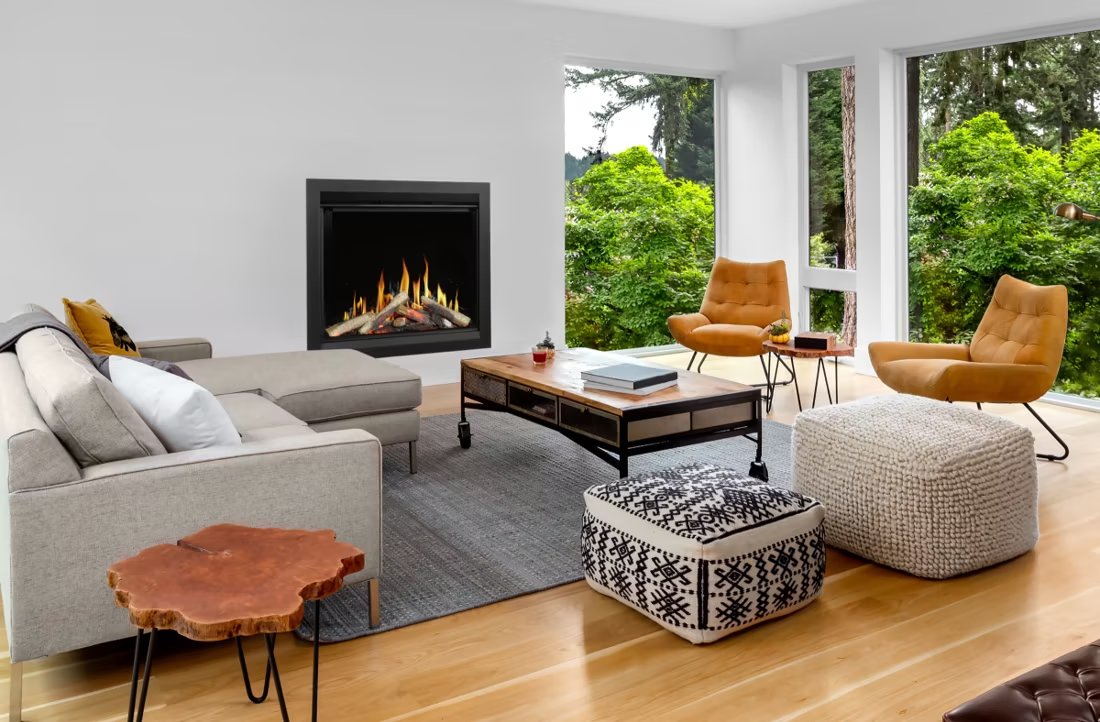
That's the gap electric fills. An electric fireplace insert can drop into an existing brownstone firebox in Astoria, mount flush on a wall in a Long Island City high-rise, or slide into a media console in a Jamaica rowhouse—no venting, no gas line, no combustion byproducts to worry about under NYC air quality rules. Most units run on a standard outlet; larger built-ins may need a simple hardwire connection, which a licensed electrician can handle in an afternoon. For renters and co-op owners alike, it's often the only fireplace-style heat source a building will actually allow.
Three steps. No salesperson until you're ready.
Tell us about your project
Your zip code, your situation, and the fuel you're leaning toward—or let the answers point you to one.
See what's actually available
The brands dealers within 100 miles genuinely carry—real options, never a catalog mirage.
Get your dealer & Project Guide
A trusted local dealer, plus the free Project Guide & Parts List that names every component of the job.
Frequently Asked Questions
How much does an electric fireplace cost to install in Queens?
Most electric fireplace inserts and wall units run $300 to $1,500 for the unit itself, with installation adding another $150 to $600 depending on whether it's a simple plug-in or requires a dedicated circuit and hardwire connection. Built-in units set into an existing brownstone or rowhouse fireplace opening in neighborhoods like Ridgewood or Sunnyside typically land in the middle of that range once trim and surround work are included. Because most electric units don't require venting or gas line work, installs in Queens are generally faster and less expensive than gas or wood projects—often completed in a single visit.
Will my co-op or condo board allow an electric fireplace?
In most cases, yes—electric fireplaces are the fuel type least likely to run into building restrictions in Queens County's co-ops and condos, precisely because they don't involve venting, gas piping, or open flame. Buildings in Forest Hills, Rego Park, and Kew Gardens that flatly prohibit wood-burning or gas installations under their proprietary lease terms will typically still permit a plug-in or hardwired electric unit. That said, always check your building's alteration agreement before ordering anything—some boards require sign-off on any electrical work that adds a new circuit, even for a fireplace.
What's the best electric fireplace for an existing brownstone or rowhouse fireplace opening?
An electric insert sized to match your existing firebox opening is usually the right call for the classic brownstone and rowhouse stock found throughout Ridgewood, Sunnyside, and Jackson Heights. These inserts slide into the masonry opening you already have, use no venting, and are available in widths from about 23 inches up to 50-plus inches for larger openings. For homes without an existing fireplace, a wall-mount or built-in linear electric unit gives the same visual effect in a bedroom, living room, or basement rec room without any masonry work at all.
Do I need a permit to install an electric fireplace in Queens?
A simple plug-in electric fireplace typically doesn't require a permit—it's treated like any other appliance. If your unit requires a new dedicated circuit or panel work, that electrical work falls under NYC Department of Buildings jurisdiction and needs to be pulled by a licensed electrician, though it's a straightforward electrical permit rather than the combustion-appliance permitting that comes with gas or wood installs. Co-op and condo buildings often layer their own approval process on top of city permitting, so check with your building management before scheduling work.
Can an electric fireplace actually heat a room, or is it just for looks?
Most electric fireplaces put out around 4,600–5,000 BTUs—enough to comfortably heat a single room of 400 to 600 square feet as supplemental or zone heat, which fits how most Queens homes actually use them. Given the borough's moderate winter lows (averaging around 28°F) and heating load of roughly 4,553 degree days, an electric unit can meaningfully cut down on central heating use in the room where you spend the most time, even if it's not sized to heat an entire apartment or house on its own.
Can I install a wood-burning fireplace or stove in Queens instead?
Technically in a small number of detached single-family homes—Bayside, Douglaston, and parts of Jamaica Estates have some older houses with working chimneys—but wood-burning installations are uncommon across Queens County overall. Most co-ops, condos, and attached multi-family buildings prohibit new solid-fuel appliances outright, and many buildings never had a functioning chimney to begin with. If you're set on real wood heat, expect a much narrower set of eligible properties and a local installer who can confirm your chimney is structurally sound before quoting anything.
What about pellet stoves—are those an option in Queens?
Pellet stoves are essentially a non-starter for the vast majority of Queens housing. They require both venting and on-site storage for bags of pellets, neither of which is realistic in a co-op apartment, a rowhouse without basement access, or most rental units. The handful of single-family homes in the borough with the space and venting access to support one are the exception, not the rule—electric or gas units cover the vast majority of Queens households far more practically.
Electric vs. gas—which is right for my Queens home?
Gas fireplaces are common in Queens where a home already has natural gas service through Con Edison or National Grid and where venting to the exterior is feasible—they put out more real heat and can run during a power outage with the right ignition system. Electric fireplaces win where venting isn't possible at all, which describes most co-op and condo units, many rowhouses without existing chimneys, and any rental where you can't alter the building's gas or venting systems. If your building already restricts gas appliances or you're not interested in a permitting process involving a licensed gas-fitter, electric is the simpler, faster path.
Where can I find a local dealer who installs electric fireplaces across Queens?
Coverage varies block by block in a borough this dense—a dealer comfortable wiring a unit into a Kew Gardens co-op may not be the right fit for a built-in linear fireplace in a new Long Island City condo. Rather than guessing from a big-box listing, tell us about your building type and neighborhood and we'll match you with a trusted local dealer who already works in your part of Queens, knows what your building type typically allows, and can size the unit correctly for the space.
Do electric fireplaces actually produce heat?
Yes—most put out around 4,800–5,000 BTUs from a standard outlet, which comfortably warms a bedroom, office, or den as a comfort-zone heater. What they won't do is carry a whole house the way wood, gas, or pellet can. Think of electric as ambiance-first with honest supplemental heat: flames on with no heat in July, flames plus warmth in January.
Can I put a TV above my fireplace?
Yes—with an asterisk. Fireplaces are hot and TVs don't like heat. Either put a mantel between them to deflect rising warmth, or choose a fireplace with heat-management technology that creates a cool zone on the wall above—the wall stays around 125 degrees, barely warm, while the room still gets full heat. If you like clean lines and don't want a mantel, heat management is the answer.
Does a fireplace add value to my home?
On average, a fireplace adds back to the home about the same amount you spent installing it. Add the monthly savings from heating the rooms you actually use instead of the whole house—often hundreds of dollars a year—and the value case is strong before you even count what a fire does for how your family uses the room.
How much should I budget for a fireplace?
For an average home—covering the fireplace, the vent pipe, and basic installation—a budget between $3,900 and $5,500 gives you a lot of options across wood, gas, and pellet. By the time you add finish work, gas line, and electrical, the average complete installation lands between $5,000 and $12,000 all-in. In a remodel or new build, a good rule is to put about 2.5% of the total project cost toward the fireplace.
Stove and Fireplace Dealers in Queens County
Find your electric fireplace in Queens County.
Tell us about your home—co-op, rowhouse, or apartment—and we'll match you with a trusted local dealer and send you a free Project Guide & Parts List for your electric fireplace project in Queens.
Find Your Fireplace →