
The fireplace option that works where a chimney can't.
No flue, no gas line, no co-op board fight—just plug in and go. Find the right electric fireplace or insert for your Queens home, and connect with a trusted local dealer.
Every Project Starts From One of These Five Situations
Built for buildings without chimneys.
Queens is home to 2.4 million people packed into pre-war co-ops, attached rowhouses in neighborhoods like Ridgewood and Woodhaven, and high-rise condos rising along the Long Island City waterfront—most of which were never built with a working flue. At 41 feet of elevation with winter lows averaging 29°F and roughly 4,376 heating degree days, Queens sits in a moderate coastal climate (zone 4A) that rarely demands the kind of brute-force heat a wood stove or gas furnace is built for. What it does demand is a fireplace that works within the real constraints of apartment living: no exterior venting, no combustion byproducts, and no renovation a co-op board is going to reject.
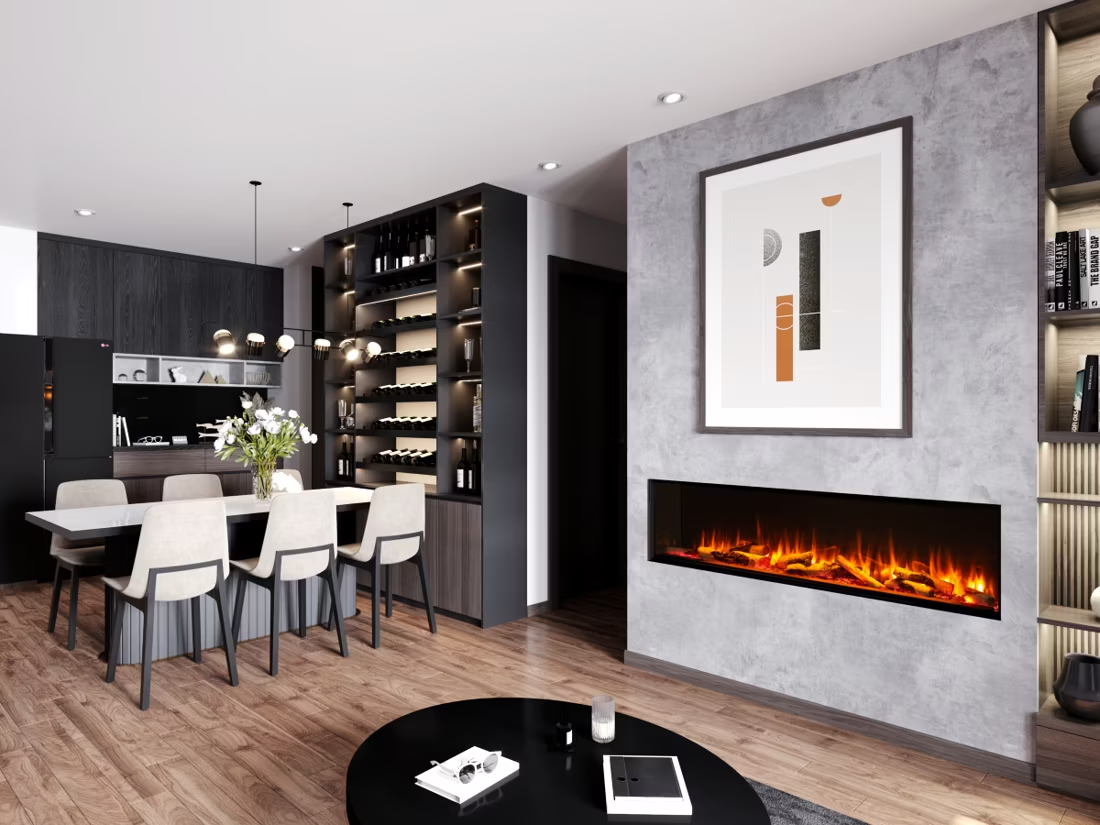
Con Edison serves virtually every household in the borough, and at roughly $0.3424 per kWh—among the highest residential electric rates in the country—most homeowners use an electric fireplace the way it's meant to be used: as supplemental zone heat and ambiance for a den or bedroom, not as a whole-home heating system. A typical 1,500-watt insert runs about $0.51 an hour on the heat setting, or costs almost nothing running flame-only with the heater off. For Queens homes with sealed or decorative fireplace openings left over from a building's original construction, an electric insert is often the only legal, board-approved way to bring that fireplace back to life.
Three steps. No salesperson until you're ready.
Tell us about your project
Your zip code, your situation, and the fuel you're leaning toward—or let the answers point you to one.
See what's actually available
The brands dealers within 100 miles genuinely carry—real options, never a catalog mirage.
Get your dealer & Project Guide
A trusted local dealer, plus the free Project Guide & Parts List that names every component of the job.
Frequently Asked Questions
How much does it cost to install an electric fireplace in Queens?
Plug-in electric fireplaces and stoves—the kind that slide into an existing mantel or sit freestanding—typically cost $200 to $1,500 for the unit itself and need nothing more than a standard 120-volt outlet. Built-in wall units or inserts that require a dedicated circuit run higher, generally $800 to $2,500, once a licensed electrician runs new wiring and, in older Queens buildings with dated breaker panels, potentially upgrades a circuit to handle the load. Because there's no venting, chimney work, or gas line involved, electric installs are consistently the least expensive fireplace option in the borough.
Do I need a permit to install an electric fireplace in Queens?
A plug-in unit that uses an existing outlet doesn't require a permit. If your installer adds a new dedicated circuit or does any panel work, that job needs to be done by a licensed electrician and typically requires a permit filed with the NYC Department of Buildings. The bigger hurdle for most Queens residents isn't the city—it's the building. Co-op and condo boards often have their own approval process for in-unit electrical work, so it's worth checking your proprietary lease or condo bylaws before scheduling install day.
What's the best type of electric fireplace for a Queens apartment versus a house?
In apartments and co-ops, wall-mounted or recessed electric units are popular because they don't take up floor space and typically just need an outlet behind the unit. In Queens's rowhouses and detached homes—many of which have a decorative fireplace opening with a capped or unused flue—an electric insert built to slide into that existing opening is often the better fit, since it restores the look of a working fireplace without touching the chimney at all. Freestanding electric stoves are a third option that work in either setting and can be relocated if you move.
How much does it cost to run an electric fireplace with Con Edison rates?
At Con Edison's residential rate of roughly $0.3424 per kWh, a typical 1,500-watt electric fireplace running on its heat setting costs about $0.51 per hour, or a little over $4 for an eight-hour evening of use. Running the unit in flame-only mode with the heater switched off draws a fraction of that—often under 100 watts—so most Queens homeowners keep the ambiance on for hours without meaningfully moving their electric bill. It's one of the few fireplace fuel types where the running cost is genuinely predictable.
Does NYC's gas ban affect fireplace choices in Queens?
It does, and it's a big part of why electric fireplace demand has grown in the borough. Local Law 154 prohibits combustion of fossil fuels for space heating and hot water in most new construction and major renovations in New York City, phasing in for buildings under seven stories now and expanding to taller buildings by 2027. That means new-build condos and gut renovations across Long Island City, Astoria, and other fast-developing parts of Queens increasingly can't install a new gas fireplace at all—electric is the compliant option. Existing gas fireplaces in older buildings aren't affected, but any new installation in qualifying construction needs to go electric.
I have an old, sealed fireplace opening in my Queens rowhouse—can I still use it?
Yes, and this is one of the most common projects for electric fireplace dealers in the borough. Many attached homes in neighborhoods like Ridgewood, Glendale, and Addisleigh Park have a decorative fireplace opening where the original flue was capped or removed decades ago. An electric insert sized to that opening restores the look and adds real supplemental heat without touching the masonry, without a chimney inspection, and without any of the permitting a wood or gas conversion into the same opening would require.
Will an electric fireplace actually keep a room warm during a Queens winter?
It'll comfortably heat a single room. Most electric fireplace inserts and stoves put out around 5,000 BTU (roughly 1,500 watts), which is enough to noticeably warm a bedroom, den, or living room on a 29°F night—Queens's average winter low—but it isn't designed to replace your building's boiler or central heat across an entire home. Think of it as zone heat: a way to warm the room you're actually sitting in without running the whole system, plus a backup source of heat and light if the building's heat ever goes out.
Electric vs. gas or wood fireplace—why is electric so common in Queens specifically?
Wood-burning appliances are heavily restricted in New York City's multi-family buildings under the fire code, and most co-op and condo boards won't approve one regardless. Gas fireplaces remain an option in existing buildings with gas service, but Local Law 154 is closing that door for new construction, and running a new gas line into an apartment often requires board approval, a licensed plumber, and inspections that can take months. Electric fireplaces sidestep nearly all of that—no combustion, no venting, no gas line, and in most cases no permit—which is exactly why they've become the default fireplace upgrade across Queens's co-ops, condos, and rental buildings.
How do I find a local dealer who installs electric fireplaces in Queens?
Look for a hearth or electrical dealer who regularly works inside co-op and condo buildings in the borough—they'll already know how to navigate board approval paperwork and building-specific electrical requirements, which a generalist contractor from outside Queens often won't. A local dealer can also size the unit correctly for your specific room and existing fireplace opening, which matters more than it seems: an undersized insert in a large prewar living room will look and feel underwhelming, while an oversized wall unit in a small bedroom can overheat the space fast.
Can I put a TV above my fireplace?
Yes—with an asterisk. Fireplaces are hot and TVs don't like heat. Either put a mantel between them to deflect rising warmth, or choose a fireplace with heat-management technology that creates a cool zone on the wall above—the wall stays around 125 degrees, barely warm, while the room still gets full heat. If you like clean lines and don't want a mantel, heat management is the answer.
Does an electric fireplace need a vent or chimney?
No—that's its superpower. An electric fireplace needs a wall and an outlet, period. No vent pipe, no gas line, no clearances to design around, which is why it works in bedrooms, offices, apartments, and walls where venting a gas or wood unit would be impractical or impossible. Installation is typically the simplest and least expensive of any fireplace type.
What is an in-home preview and do I need one?
It's a visit where a hearth professional measures your space, confirms the model you picked actually works in your home, and walks the specs—framing, gas line, venting, finish work—before anything is ordered. Some details you just can't know until you see the house. Never make a down payment without one; it's the single most-skipped step that burns buyers.
Can a fireplace actually lower my heating bill?
Yes—by creating a comfort zone. A furnace heats every square foot of the house just to warm the one room you're in; a gas fireplace on low burns roughly a sixth of the gas a typical furnace does. Set the furnace around 55–60 degrees as a baseline, then heat the rooms your family actually uses. Families who heat this way commonly save $20–$60 a month.
Nearby Dealers
Hearth shops serving Queens and the surrounding area. Every listing shows whether it is a WhyFire partner, a dealer we have verified as authorized for the brands we recommend, or a local business carrying hearth products. No manufacturer pays for placement. How we verify dealers →
Big Apple Fireplaces
Costello's Hearth & Spa - Garden City Park
All Shore Appliance
L&r Fireplace & Barbecue
The Valley Fireplace
D & D Design Center
The Fireplace Store
Harris Hearth And Home
Flue Tech
Costello Hearth & Spa - Farmingdale
Hot Shots Hot Tubs & Spas
County Woodstoves Inc
Village Fireplace
Hearth Healers
Westchester Fireplace
Electric Service in Queens
An electric fireplace's heater draws about 1,500 watts—pennies per hour at local rates.
Consolidated Edison Co-Ny Inc
Find your electric fireplace in Queens.
Tell us about your home—apartment, co-op, or rowhouse—and we'll match you with a trusted local dealer and send over a free Project Guide & Parts List with the exact unit and parts for your space.
Find Your Fireplace →