
Add real, working heat to any room in Putnam County—no chimney, no gas line.
From finished basements in Mahopac to converted garages in Kent and Patterson, electric fireplaces bring zone heat to the rooms your boiler or furnace never quite reaches. Tell us about your space and we'll match you with a trusted local dealer.
Every Project Starts From One of These Five Situations
Warmth for the rooms your heating system doesn't reach.
Putnam County sits in the Hudson Highlands, a hilly, wooded stretch of climate zone 5A where winter lows average 17°F and the county sees a real six-month heating season, October through April, though not as brutal as places like Burlington, VT or Madison, WI. Housing stock across the county reflects its age and terrain: older farmhouses in Kent and Patterson, mid-century ranches around Mahopac and Carmel, restored stone colonials near Cold Spring and Philipstown. Many of these homes have additions, finished walkout basements, or garage-turned-home-offices—spaces the original heating system was never sized to cover.
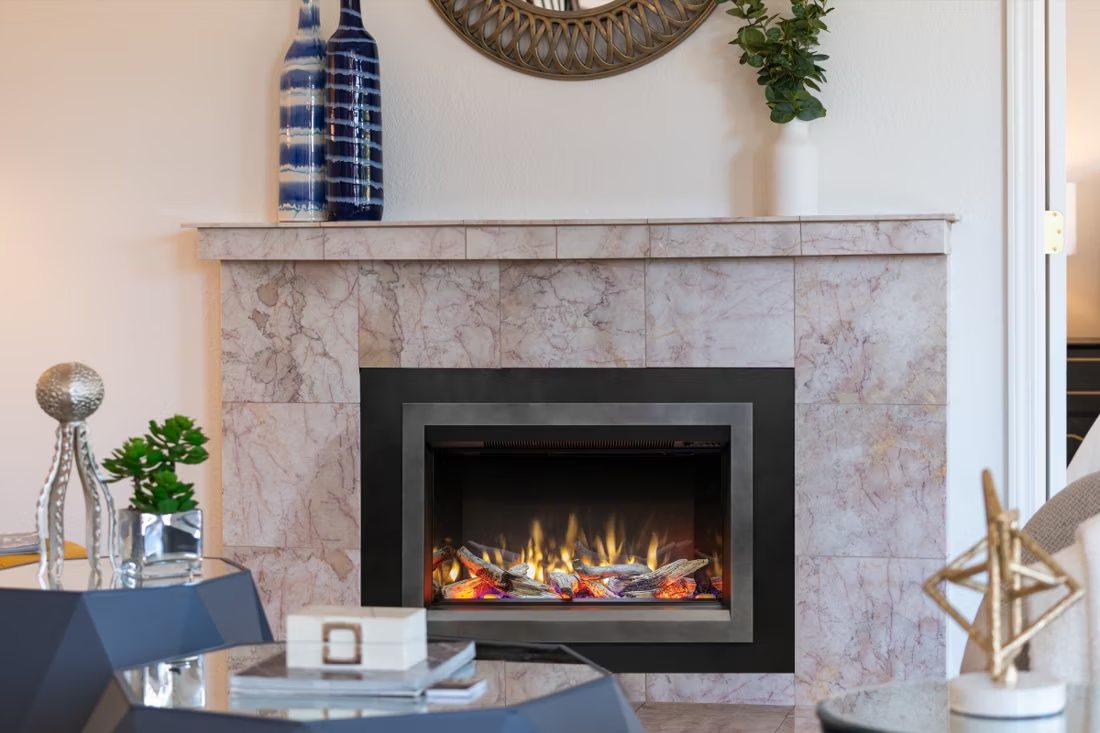
That's where electric fireplaces earn their place. There's no chimney, no gas line, and no venting to run, which matters in a county where natural gas service doesn't reach every town and oil or propane still heats a lot of Putnam homes. A plug-in unit runs off a standard outlet; larger built-ins typically need a dedicated 240V circuit, which an electrician can add regardless of whether you're on NYSEG service in the eastern towns or Central Hudson Gas & Electric around Philipstown and Cold Spring. For renters, condo owners around the Mahopac lake communities, or anyone who just wants a cold room warmed up without construction, it's the simplest upgrade on this site.
Three steps. No salesperson until you're ready.
Tell us about your project
Your zip code, your situation, and the fuel you're leaning toward—or let the answers point you to one.
See what's actually available
The brands dealers within 100 miles genuinely carry—real options, never a catalog mirage.
Get your dealer & Project Guide
A trusted local dealer, plus the free Project Guide & Parts List that names every component of the job.
Frequently Asked Questions
How much does an electric fireplace installation cost in Putnam County?
Plug-in freestanding or wall-mount units typically run $500 to $1,500 including mounting and a basic outlet check—no electrician usually required if you're using an existing 120V outlet. Built-in electric fireplaces or inserts set into a wall or an existing masonry firebox (common in older Cold Spring and Kent farmhouses) run $1,200 to $4,500 depending on the trim kit, surround work, and framing. If the unit needs a dedicated 240V circuit, add roughly $300 to $600 for the electrical work. Local dealers can size the job accurately after seeing your room and your existing panel capacity.
Do I need a permit to install an electric fireplace in Putnam County?
A simple plug-in unit on an existing outlet generally doesn't trigger a permit—there's no gas line or venting involved. Where it changes is with hardwired installs on a new dedicated circuit: most of Putnam's towns handle building and electrical permits locally rather than through a single county office, so a hardwired install in Carmel goes through the Town of Carmel Building Department, while one in Philipstown or Cold Spring goes through the Town of Philipstown Building Department. Your electrician or installer will usually know which office to file with and can pull the permit as part of the job.
What size electric fireplace do I need for my room?
Most standard units draw 1,500 watts, which comfortably heats a well-insulated 400 to 500 square foot room as supplemental heat. Larger built-ins with higher-output elements can cover 600 to 1,000 square feet. Putnam's hillside homes often have open-concept additions or finished walkout basements that run larger than that—in those cases, plan on either a bigger unit, two zones, or treating the electric fireplace as a heat boost alongside your existing furnace or baseboard system rather than the sole heat source for the space.
What's the difference between an electric fireplace, insert, and stove?
A freestanding electric fireplace is a self-contained mantel or wall unit you plug in and place. An electric insert is built to slide into an existing masonry firebox—a good fit for the unused wood fireplaces in a lot of older Cold Spring and Kent homes that no longer get burned but still have a functioning chimney opening. An electric stove is a freestanding cast-look unit styled after a traditional wood stove, popular for cabins and camps near Fahnestock State Park where the look matters as much as the heat.
Will my electric fireplace work during a power outage?
No, and this is worth being direct about: an electric fireplace needs grid power to run its heating element, fan, and flame effect, so it goes dark the moment the power does. Putnam County's wooded, hilly terrain means ice storms and downed limbs regularly knock out NYSEG and Central Hudson service for a day or more in winter. If backup heat during an outage is a priority for your household, a wood or pellet stove is the appliance that actually delivers on that—electric is best thought of as convenient daily zone heat, not storm insurance.
What's the best electric fireplace for supplemental heat in a Putnam County home?
Look for a unit with a true 1,500-watt heating element and a thermostat rather than a simple high/low switch—a thermostat cycles the heater on and off to hold a set temperature, which matters over Putnam's long, roughly six-month heating season instead of running full blast constantly. Brands like Dimplex, Napoleon, and Amantii are commonly stocked by Hudson Valley hearth dealers and offer realistic flame effects alongside the heat. For a finished basement or an addition with poor insulation, prioritize higher wattage and a larger footprint over flame styling.
Electric fireplace vs. space heater—what's the difference?
Functionally, both use resistive or infrared elements to warm a room, and the wattage ceiling is often similar. The real difference is in the details: electric fireplaces add a built-in mantel or insert look, a more realistic flame display, and typically better safety features like cool-touch glass and automatic tip-over shutoff. A space heater is cheaper and portable but looks like an appliance sitting in the corner. If you want the room to actually look finished—say, a converted garage office or a basement family room—the fireplace format does double duty as heat and as a design feature.
How much does it cost to run an electric fireplace in Putnam County?
At typical regional electric rates under NYSEG or Central Hudson—combined supply and delivery often lands somewhere around $0.24 to $0.30 per kWh—running a 1,500-watt unit on its heat setting costs roughly $0.35 to $0.45 an hour. Most owners run the flame effect alone for ambiance the majority of the time, which draws only a few watts and costs pennies per hour, and switch on the heater only when the room actually needs it.
Electric vs. wood or gas—which is right for my Putnam County home?
If you want heat that keeps working when the power doesn't, wood is the honest answer—Putnam's oak, maple, birch, and ash are all common locally and burn well in a properly installed stove or insert. Gas is a strong option where a home already has natural gas or propane, especially for a primary living space that gets daily use. Electric wins for the specific problem it solves best: a room that needs supplemental warmth without construction, permitting headaches, fuel storage, or venting—which describes a lot of Putnam's finished basements and remote-work home offices that showed up in the last several years.
Can I put a TV above my fireplace?
Yes—with an asterisk. Fireplaces are hot and TVs don't like heat. Either put a mantel between them to deflect rising warmth, or choose a fireplace with heat-management technology that creates a cool zone on the wall above—the wall stays around 125 degrees, barely warm, while the room still gets full heat. If you like clean lines and don't want a mantel, heat management is the answer.
Do electric fireplaces actually produce heat?
Yes—most put out around 4,800–5,000 BTUs from a standard outlet, which comfortably warms a bedroom, office, or den as a comfort-zone heater. What they won't do is carry a whole house the way wood, gas, or pellet can. Think of electric as ambiance-first with honest supplemental heat: flames on with no heat in July, flames plus warmth in January.
Can a fireplace actually lower my heating bill?
Yes—by creating a comfort zone. A furnace heats every square foot of the house just to warm the one room you're in; a gas fireplace on low burns roughly a sixth of the gas a typical furnace does. Set the furnace around 55–60 degrees as a baseline, then heat the rooms your family actually uses. Families who heat this way commonly save $20–$60 a month.
Does a fireplace add value to my home?
On average, a fireplace adds back to the home about the same amount you spent installing it. Add the monthly savings from heating the rooms you actually use instead of the whole house—often hundreds of dollars a year—and the value case is strong before you even count what a fire does for how your family uses the room.
Stove and Fireplace Dealers in Putnam County
Find your electric fireplace in Putnam County.
Tell us about the room you're trying to heat and we'll match you with a trusted local dealer, plus send over a free Project Guide & Parts List—the exact unit, mounting or trim kit, and any electrical work your Putnam County project needs.
Find Your Fireplace →