
Heat Your Home Right, Wherever You Are in Putnam County.
Wood, gas, pellet, and electric fireplace resources for every town in Putnam County—from Cold Spring and Garrison in Philipstown to Carmel, Brewster, Kent, Southeast, Patterson, and Putnam Valley. Find the right unit and connect with a trusted local hearth retailer.
Every Project Starts From One of These Five Situations
Hudson Valley heating in Putnam County, New York.
Putnam County sits in the lower Hudson Valley between the river and the Connecticut border, with terrain running from the Hudson's edge near Cold Spring up into the Hudson Highlands and Fahnestock State Park above 1,600 feet. Climate zone 5A puts winters here on the colder edge of the Northeast—average winter lows around 17°F and a heating season on the milder, shorter side compared with places like Burlington, VT, but still cold enough that a heating system running October through April is standard, not optional. The county's hardwood forests—oak, maple, birch, and ash—supply the cordwood that's kept farmhouses and Colonials warm here for generations, and those same species remain the default for wood stove and insert customers today.
What you'll find on this hub: hearth retailers, service technicians, and fuel suppliers covering every corner of the county—the Route 6 corridor through Carmel and Brewster, the Taconic Parkway towns of Kent and Patterson, Philipstown's river villages of Cold Spring and Garrison, and Putnam Valley to the west. Pick your fuel below to get into specifics—local dealers, installation costs, recommended units, and next steps. Whether you're heating a Hudson Highlands farmhouse or a commuter Colonial near the Metro-North line, this is the starting point.
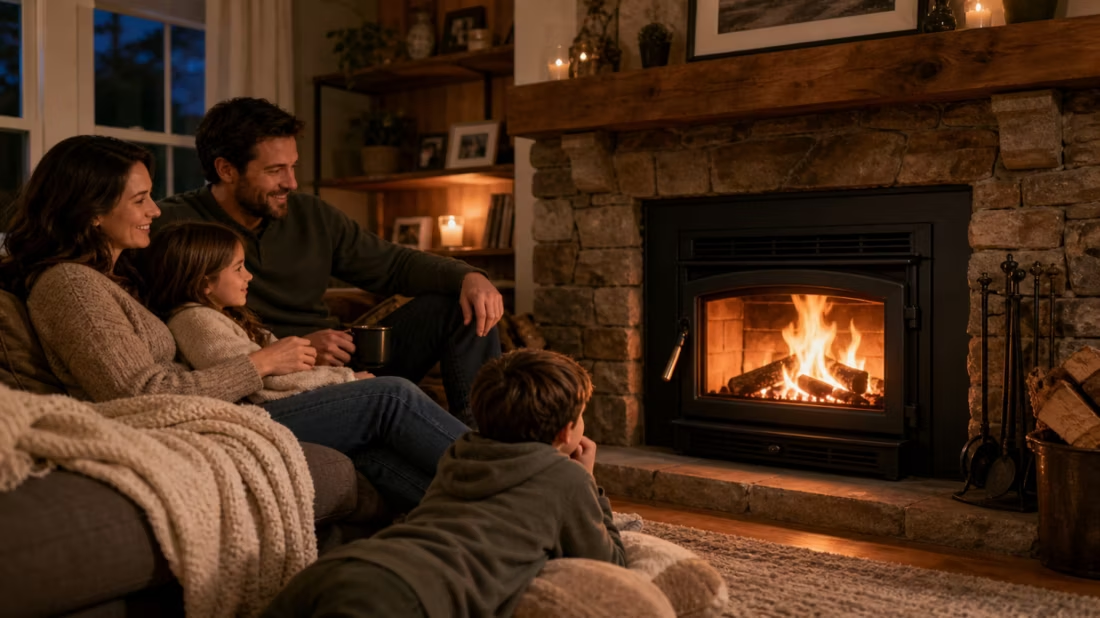
Four fuels. One honest answer for Putnam County.
Three steps. No salesperson until you're ready.
Tell us about your project
Your zip code, your situation, and the fuel you're leaning toward—or let the answers point you to one.
See what's actually available
The brands dealers within 100 miles genuinely carry—real options, never a catalog mirage.
Get your dealer & Project Guide
A trusted local dealer, plus the free Project Guide & Parts List that names every component of the job.
Frequently Asked Questions
Which fuel works best in Putnam County?
It depends on the home and the property. Wood is a strong fit here—the county's oak, maple, birch, and ash forests keep cordwood affordable and plentiful, and a lot of older farmhouses in Kent and Putnam Valley were built around a wood-burning hearth from the start. Gas is the convenience pick for hamlet-center homes in Carmel or Brewster with access to Central Hudson's gas mains; outside those pockets, propane fills the same role for instant-heat, no-labor operation. Pellet is a strong middle ground for anyone who wants wood-style ambiance without splitting and stacking—Energex, Hamer, and Greene Team pellets are all sold locally, so supply isn't a concern. Electric works well as a supplemental unit in newer construction or condos around Southeast and Brewster where running a chimney isn't practical. Most Putnam County homes end up with a primary wood or pellet unit and a secondary gas or electric unit in a bedroom or den.
Do I need a permit to install a fireplace in Putnam County?
Yes, in almost every case. Putnam County doesn't run a unified county building department—permitting happens at the town level, so a wood stove installation in Kent goes through the Town of Kent building department, while a project in Philipstown goes through Philipstown's, and so on for Carmel, Southeast, Patterson, and Putnam Valley. New wood stoves and inserts need to meet current EPA 2020 NSPS emissions standards regardless of town. Gas installations require a separate gas line permit and licensed gas-fitter for the connection work. Electric fireplaces are usually permit-free for plug-in units, but a hardwired built-in with a new circuit needs an electrical permit. Most local retailers pull these permits as part of the installation, so it's rarely something the homeowner has to file themselves.
Are there air quality restrictions on wood burning in Putnam County?
No—Putnam County isn't a designated non-attainment area and there are no mandatory wood-burning curtailment days here, unlike parts of the West with winter inversion problems. That said, federal EPA 2020 NSPS certification still applies to any new wood stove or insert sold and installed, regardless of local air quality status. In denser subdivisions around Brewster or Carmel hamlet, it's still worth being a considerate neighbor about smoke on still winter nights, but there's no regulatory burn-ban system to navigate the way there is in some non-attainment basins.
Can one local hearth retailer handle all four fuel types?
Many can, but not all. Multi-fuel dealers serving Putnam County typically carry wood, gas, and pellet as a matter of course—those three fuels see steady demand across the county's mix of older farmhouses and newer construction. Electric fireplace lines are increasingly common at the same dealers but sometimes handled by a separate specialist, especially for built-in wall units that need electrical work. If you're cross-shopping fuels, ask a retailer directly which lines they stock and install rather than assuming—coverage varies dealer to dealer even within the same town.
How does service work in the more rural parts of Putnam County?
Most technicians serving Putnam County are based along the Route 6 corridor near Carmel and Brewster and travel out from there—to the Fahnestock highlands, the river villages of Cold Spring and Garrison in Philipstown, and the more spread-out properties in Putnam Valley and Kent. Expect a modest travel charge for outlying calls, and know that pre-season scheduling (September–October) is far easier to book than a mid-January emergency when every chimney sweep in the Hudson Valley is slammed. If you're on a larger rural parcel, it's worth scheduling annual service early and keeping a backup heat source—propane or electric—in case a January storm delays a wood or pellet repair.
What's the typical cost range for fireplace installation across all fuel types in Putnam County?
Costs run higher here than in much of the country, reflecting Hudson Valley labor rates and proximity to New York City. Wood stove or insert installation: roughly $5,000–$10,000 for a typical job, more for new-construction chimney work in a Philipstown or Putnam Valley property. Gas fireplace, insert, or stove: $5,000–$12,000 depending on whether you're tying into an existing gas line or running new propane service. Pellet stove or insert: $4,500–$8,000 for most installs. Electric fireplace: $200–$3,000 for the unit itself, plus $400–$1,200 in labor for anything beyond a simple plug-in, which covers most wall-mount and insert jobs. See the county + fuel pages above for retailer-specific pricing.
How much should I budget for a fireplace?
For an average home—covering the fireplace, the vent pipe, and basic installation—a budget between $3,900 and $5,500 gives you a lot of options across wood, gas, and pellet. By the time you add finish work, gas line, and electrical, the average complete installation lands between $5,000 and $12,000 all-in. In a remodel or new build, a good rule is to put about 2.5% of the total project cost toward the fireplace.
Can I install a fireplace myself?
If you're putting a fire in your house on purpose, it's best to work with an expert. Unless you're genuinely experienced in framing, gas line, vent pipe, and the national code on clearances to combustibles, have a professional do it—and ideally the same company that sells you the fireplace, so warranty, service, and liability all live under one roof.
Does a fireplace add value to my home?
On average, a fireplace adds back to the home about the same amount you spent installing it. Add the monthly savings from heating the rooms you actually use instead of the whole house—often hundreds of dollars a year—and the value case is strong before you even count what a fire does for how your family uses the room.
Can a fireplace actually lower my heating bill?
Yes—by creating a comfort zone. A furnace heats every square foot of the house just to warm the one room you're in; a gas fireplace on low burns roughly a sixth of the gas a typical furnace does. Set the furnace around 55–60 degrees as a baseline, then heat the rooms your family actually uses. Families who heat this way commonly save $20–$60 a month.
Stove and Fireplace Dealers in Putnam County
Listings include WhyFire partner dealers, dealers we have verified as authorized for the brands we recommend, and established local businesses that carry hearth products. Every listing shows which one it is. The ones marked Preferred run on WhyFire's software, so they can show you real pricing and book your appointment right here. No manufacturer pays for placement. How we verify dealers →
Action Chutes
Fire Glow Distributors, Inc.
Aida Design Build
Leahy’s Metered Gas Service
Route 52 Supplies
Westfair Pool & Spa Inc
House Of Warmth Stove & Fireplace Shop
The Trading Post
Black Swan Fireside Hearth & Home
Agi Supply Inc
Firescapes Fireplace And Patio Corp
F & G Pools & Stoves
Best In Backyards
Fireplace And Outdoor Living
Get matched with a Putnam County fireplace dealer.
Tell us your fuel and your town—Carmel, Cold Spring, Brewster, or anywhere in between—and we'll match you with a trusted local dealer and send a free Project Guide & Parts List for your project, including the vent kit and the dealer we recommend for your home.
Find Your Fireplace →