
Steady, thermostat-easy heat for Onondaga County's long lake-effect winters.
With 6,588 heating degree days and average winter lows around 16°F, Onondaga County homes heat for the better part of six months. A pellet stove or insert delivers even, automated warmth through it—and we'll connect you with a trusted local dealer who can size and install it right.
Every Project Starts From One of These Five Situations
Convenience heat for a county that heats a long season.
Onondaga County—anchored by Syracuse and spread across more than 500,000 residents in towns like Liverpool, North Syracuse, Manlius, Fayetteville, DeWitt, Camillus, and Baldwinsville—sits in climate zone 5A with 6,588 heating degree days a year. Lake-effect snow off Lake Ontario stacks up through the winter, and average lows near 16°F mean furnaces and supplemental heat sources both get real work from October into April. Pellet stoves have found a solid foothold here because they offer something wood can't: thermostat control and a hopper that runs for a day or more without tending, which matters when you're shoveling out after a lake-effect band and don't want to also be splitting kindling.
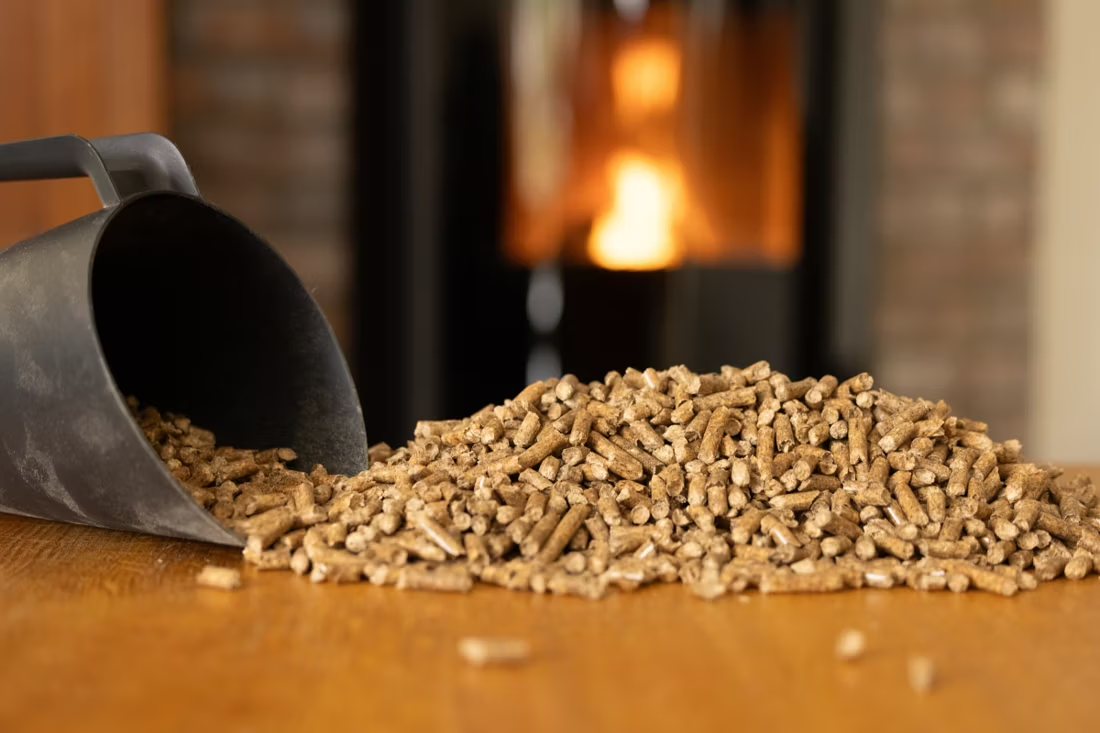
Fuel is easy to come by locally. Brands like Energex, Hamer Pellet Fuel, and Greene Team Pellet Fuel are sold at hearth shops and farm stores throughout the county, typically running in the $250 to $320 per ton range depending on the season and how early you buy. Onondaga County has no air quality non-attainment designation and no winter burn curtailment periods, so pellet appliances here are chosen for convenience and efficiency rather than to get around smoke regulations—unlike some western counties where pellet stoves are the only option left burning during inversions. For county residents who still burn cordwood from the region's oak, maple, birch, and ash, a pellet stove often ends up as the easy-mode unit that runs when nobody has time to feed a firebox.
Three steps. No salesperson until you're ready.
Tell us about your project
Your zip code, your situation, and the fuel you're leaning toward—or let the answers point you to one.
See what's actually available
The brands dealers within 100 miles genuinely carry—real options, never a catalog mirage.
Get your dealer & Project Guide
A trusted local dealer, plus the free Project Guide & Parts List that names every component of the job.
Frequently Asked Questions
How much does a pellet stove installation cost in Onondaga County?
Pellet stove and insert installations in Onondaga County typically run in the $3,000 to $6,500 range, depending on the unit, whether you need a new hearth pad, and how much vent pipe run is required through an exterior wall. Because pellet stoves vent horizontally through a small-diameter pipe rather than a full masonry chimney, installs are usually simpler and less expensive than wood stove installs—but you'll need a dedicated electrical outlet nearby to power the auger and combustion blower, which some older Syracuse-area homes don't have without an electrician's help. A local dealer will quote a firm number after seeing your wall layout and electrical situation.
What size pellet stove do I need for my Onondaga County home?
With 6,588 heating degree days and winter lows that regularly sit in the mid-teens, Onondaga County homes need more heating capacity than milder parts of the Northeast. As a rough guide: a small pellet stove (under 1,500 sq ft) suits an addition, a single large room, or a well-insulated ranch; a medium stove (1,500–2,500 sq ft) covers most Syracuse-area colonials and split-levels used as primary heat; and larger units handle bigger or older, less-insulated homes common in towns like Manlius or Camillus. Homes relying on the stove as primary heat rather than a supplement should size up rather than down—a stove running near its max output constantly during a January cold snap won't have anything left in reserve. A local dealer will size your specific home for free.
Where can I find certified pellet stove installers near me?
Look for dealers whose technicians carry NFI (National Fireplace Institute) pellet-specific certification—it's a different credential than wood or gas certification, since pellet appliances involve electrical and auger components that wood stoves don't. Certified dealers serving Onondaga County generally cover Syracuse proper as well as the surrounding towns—Liverpool, North Syracuse, Cicero, Fayetteville, DeWitt, Baldwinsville, and Camillus. Because pellet stoves need a code-compliant electrical outlet as well as proper venting, installs that mix electrical and hearth work are best left to a dealer who handles both rather than splitting the job between an electrician and a handyman.
What's the difference between a pellet stove and a pellet insert?
A pellet stove is a freestanding unit that sits on a hearth pad and vents through a wall or existing chimney chase—it can go almost anywhere with a nearby outlet. A pellet insert is built to slide into an existing masonry fireplace opening, which is common in older housing stock around Syracuse's historic neighborhoods and in towns like Fayetteville and Manlius. For a home with an existing but rarely-used wood fireplace, an insert is usually the more efficient upgrade because it reuses the chimney chase and finishes flush with the existing mantel. Homes without an existing fireplace opening are generally better matched to a freestanding stove.
Do I need a permit to install a pellet stove in Onondaga County?
In most cases, yes—a building permit is required for a new pellet stove or insert installation, but Onondaga County doesn't issue one countywide permit; each city, town, or village handles its own. That means permitting runs through Syracuse's Department of Codes Enforcement if you're inside city limits, or through your local town or village building department if you're in Manlius, Camillus, Baldwinsville, Cicero, or elsewhere in the county. Most established hearth dealers handle the permit application as part of the installation, so you generally don't have to track down the right office yourself—but it's worth confirming with your dealer which jurisdiction applies to your address.
What's the best pellet stove for Onondaga County's climate?
For a climate with 6,588 heating degree days and stretches of single-digit wind chill off Lake Ontario, look for a pellet stove with a strong continuous BTU rating and a hopper large enough to run 24+ hours without a refill during a cold snap—a real consideration when a lake-effect band shuts down travel for a day. Established brands with a solid service network in Central New York, combined with locally available fuel from Energex, Hamer Pellet Fuel, or Greene Team Pellet Fuel, make ongoing operation straightforward. A local dealer can match a specific model to your home's square footage and insulation level, and confirm which pellet brands they stock or recommend for reliable feed and low ash output.
How often does a pellet stove need cleaning and maintenance?
Pellet stoves need more frequent attention than wood stoves, but it's lighter-duty work. Plan on emptying the ash pan every few days during regular winter use, cleaning the burn pot weekly to keep the auger feed and combustion air flowing properly, and scheduling a full professional cleaning—including the exhaust venting and hopper—at least once a year, typically before the heating season starts in October. Onondaga County's long six-month-plus heating season means heavier cumulative use than milder regions, so homeowners running a pellet stove as primary heat should lean toward the more frequent end of that maintenance schedule.
Where can I buy pellet fuel in Onondaga County?
Pellet fuel is widely available through hearth shops and farm supply stores across the county, with regional brands like Energex, Hamer Pellet Fuel, and Greene Team Pellet Fuel commonly stocked. Prices typically run $250 to $320 per ton, and buying early in the fall—before the first cold snap drives demand up—is the standard local strategy for locking in a lower price and making sure supply doesn't run short mid-winter. A ton of pellets generally lasts a typical Onondaga County home several weeks to a couple months depending on how hard the stove is run and whether it's primary or supplemental heat.
Pellet stove vs. wood stove—which is right for my home?
Wood stoves burn cordwood—locally, that's mostly oak, maple, birch, and ash—and keep working during a power outage, which matters in a county that sees ice and lake-effect snow events capable of knocking out power for a day or more. Pellet stoves run on compressed hardwood pellets, need only a weekly cleaning rather than daily fire-tending, and burn more consistently and cleanly—but the auger and blower run on electricity from National Grid, so a pellet stove goes cold in an outage unless it's paired with a battery backup or generator. For an Onondaga County home used as a full-time residence with reliable power, pellet often wins on convenience. For a home where storm-driven outages are a real concern, wood—or a pellet stove backed by a small battery system—is the safer bet.
What's the difference between an insert and a zero-clearance fireplace?
An insert is a fireplace that slides into a pre-existing wood-burning fireplace—if you don't have one, there's nothing to insert it into. A zero-clearance fireplace is built into a framed wall, which makes it the answer for remodels and new construction. Simple test: existing masonry fireplace means insert; blank or framed wall means zero-clearance.
How often does a pellet stove need cleaning?
A clean pellet stove is a happy pellet stove. Plan on cleaning the burn pot about once a week when you're burning regularly—ash and clinkers gum up the air holes just like a pellet barbecue. Most pellet stove problems trace back to skipped cleaning that nobody explained up front. Some designs make it easy with a trapdoor burn pot: pull a lever and the gunk drops into the ash pan.
Can a fireplace actually lower my heating bill?
Yes—by creating a comfort zone. A furnace heats every square foot of the house just to warm the one room you're in; a gas fireplace on low burns roughly a sixth of the gas a typical furnace does. Set the furnace around 55–60 degrees as a baseline, then heat the rooms your family actually uses. Families who heat this way commonly save $20–$60 a month.
Can I install a fireplace myself?
If you're putting a fire in your house on purpose, it's best to work with an expert. Unless you're genuinely experienced in framing, gas line, vent pipe, and the national code on clearances to combustibles, have a professional do it—and ideally the same company that sells you the fireplace, so warranty, service, and liability all live under one roof.
Stove and Fireplace Dealers in Onondaga County
Pellet Brands Stocked Around Onondaga County
Manufacturers will point you to the nearest stocking dealer.
Find your pellet stove in Onondaga County.
Tell us about your home and heating goals, and we'll match you with a trusted local dealer and send over a free Project Guide & Parts List—sized for your space, with the vent kit and installation details spelled out.
Find Your Fireplace →