
Pellet heat is uncommon in North Tonawanda—but not impossible.
Most homes here run on natural gas, but a pellet stove can still make sense for a garage, sunroom, or backup heat during a Niagara Mohawk outage. Here's an honest look at the fit.
Every Project Starts From One of These Five Situations
Natural gas dominates, but pellet still has a role for the right home.
North Tonawanda sits in Niagara County at 575 feet, with winters that push average lows to around 17°F and rack up roughly 6,622 heating degree days a year—a legitimate cold climate, closer in feel to Madison, WI than to a mild Northeast suburb. But unlike a rural, forested county where wood and pellet heat are the default, most North Tonawanda homes were built with natural gas as the primary system, and that infrastructure is well established across the city. As a result, pellet stoves aren't a common retrofit here the way they are in more rural, off-grid-leaning parts of upstate New York.
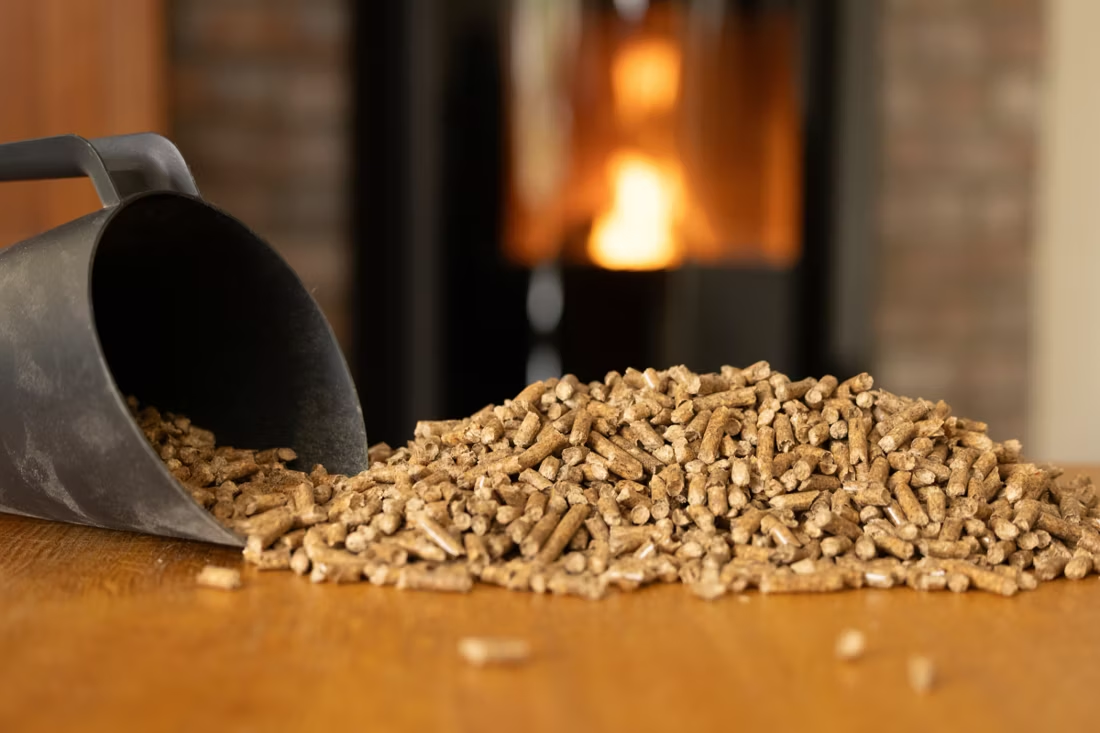
That said, pellet fuel isn't hard to find. Regional brands like Energex, Hamer Pellet Fuel, and Greene Team Pellet Fuel are sold throughout the broader Buffalo–Niagara region, sourced from the hardwood stands (oak, maple, birch, ash) common to this part of New York. Homeowners who do install a pellet stove in North Tonawanda are usually solving a specific problem—heating a detached garage or workshop, adding zone heat to a sunroom, or wanting a hedge against a Niagara Mohawk outage during an ice storm. It's a niche choice here, not the default, and that's worth knowing before you shop for one.
Three steps. No salesperson until you're ready.
Tell us about your project
Your zip code, your situation, and the fuel you're leaning toward—or let the answers point you to one.
See what's actually available
The brands dealers within 100 miles genuinely carry—real options, never a catalog mirage.
Get your dealer & Project Guide
A trusted local dealer, plus the free Project Guide & Parts List that names every component of the job.
Frequently Asked Questions
How much does a pellet stove installation cost in North Tonawanda?
Nationally, a pellet stove installation with proper venting and a hearth pad typically runs $3,000 to $6,000 installed, and North Tonawanda homes generally fall in that range since there's no unusual local factor driving costs higher. Because pellet stoves aren't a high-volume install here the way they are in more rural counties, it's worth getting a quote from a dealer who actually stocks and services pellet units regularly rather than one who installs them occasionally as a side offering—service history matters more than usual in a market this small.
Is a pellet stove actually a good fit for my North Tonawanda home?
It depends on what you're trying to solve. If you're looking to replace your primary heat source, a pellet stove is a harder sell here—natural gas is widely available in North Tonawanda, cheaper to run appliance-for-appliance, and doesn't require hopper loading or ash removal. Where a pellet stove does make sense: heating a detached garage or workshop that isn't on the gas line, adding supplemental zone heat to a room your furnace struggles to reach, or having a heat source that doesn't depend entirely on the electric grid staying up during a winter storm. Be honest about which of those applies before committing.
Where can I buy pellets locally?
Energex, Hamer Pellet Fuel, and Greene Team Pellet Fuel are the three brands most commonly stocked by hearth and hardware retailers across the Buffalo–Niagara region, including outlets that serve North Tonawanda. Premium hardwood pellets in this region typically run in the $250-$300 per ton range, though pricing can shift with hardwood pellet demand in a cold winter. Because pellet stoves are a smaller market here, it's smart to confirm a dealer keeps pellets in stock year-round rather than special-ordering by the pallet.
Pellet stove vs. gas—which makes more sense in North Tonawanda?
For most North Tonawanda homes, gas wins on convenience and running cost: it's piped in, ignites instantly, needs no fuel storage, and the local infrastructure is already built out. Pellet stoves win in narrower situations—no gas line to a detached structure, a desire for a visible flame with more control than a gas insert, or wanting a heat source that isn't tied to a single utility. If your home already has gas service, that's usually the simpler and cheaper path; a pellet stove is more often the answer for an outbuilding or a specific supplemental-heat problem.
Do I need a permit to install a pellet stove in North Tonawanda?
Yes—a freestanding pellet stove or insert is a building permit item through the City of North Tonawanda Building Department, since it involves venting through an exterior wall or existing chimney and, in some cases, a dedicated electrical circuit for the hopper motor and igniter. Most established hearth dealers handle the permit application and inspection scheduling as part of the installation, which is one more reason to work with a dealer who installs these regularly rather than infrequently.
What happens to my pellet stove if the power goes out?
This is the tradeoff people in North Tonawanda often don't expect: pellet stoves rely on an electric auger to feed fuel and a blower to distribute heat, so a standard unit shuts down the moment Niagara Mohawk power drops—unlike a wood stove, which keeps burning with no electricity at all. If backup heat during outages is your main goal, ask a local dealer about models compatible with a small battery backup or inverter setup, or size a generator that can run the stove's electrical draw. Otherwise, a pellet stove should be thought of as convenience heat, not storm-proof heat.
What size pellet stove do I need?
Pellet stoves are commonly rated for anywhere from 500 to 2,500 square feet depending on the model, hopper capacity, and BTU output. For a North Tonawanda garage or workshop, a smaller unit in the 40,000-60,000 BTU range is usually plenty. For supplemental heat in a larger living space, sizing should account for the home's existing insulation and how much of the load the gas furnace is still carrying—a dealer can size this correctly during an in-home visit rather than by square footage alone.
Why don't more people in North Tonawanda burn wood or pellets instead of gas?
Both wood and pellet heat are genuinely uncommon as primary heat here, and it comes down to infrastructure: North Tonawanda is built out with natural gas service, unlike more rural stretches of upstate New York where gas lines don't reach every home and wood or pellet heat fills that gap out of necessity. There's no air quality restriction pushing people away from either fuel—it's simply that gas is already the path of least resistance for most homeowners in this city. Pellet and wood stoves still show up here, just usually for a specific secondary reason rather than as the main heat source.
How much maintenance does a pellet stove need?
Plan on emptying the ash pan every few days of regular use, a deeper cleaning of the burn pot and heat exchanger tubes every couple of weeks, and an annual professional service that checks the auger motor, blower, and venting. Compared to a wood stove, there's no chimney sweep required in the traditional sense, but the mechanical components (auger, igniter, blower) are what typically need attention over time. Because pellet stoves are a smaller share of the local market, confirm your dealer offers ongoing service before you buy—parts and service availability matter more when the installed base nearby is small.
How often does a pellet stove need cleaning?
A clean pellet stove is a happy pellet stove. Plan on cleaning the burn pot about once a week when you're burning regularly—ash and clinkers gum up the air holes just like a pellet barbecue. Most pellet stove problems trace back to skipped cleaning that nobody explained up front. Some designs make it easy with a trapdoor burn pot: pull a lever and the gunk drops into the ash pan.
What's the difference between an insert and a zero-clearance fireplace?
An insert is a fireplace that slides into a pre-existing wood-burning fireplace—if you don't have one, there's nothing to insert it into. A zero-clearance fireplace is built into a framed wall, which makes it the answer for remodels and new construction. Simple test: existing masonry fireplace means insert; blank or framed wall means zero-clearance.
Can a fireplace actually lower my heating bill?
Yes—by creating a comfort zone. A furnace heats every square foot of the house just to warm the one room you're in; a gas fireplace on low burns roughly a sixth of the gas a typical furnace does. Set the furnace around 55–60 degrees as a baseline, then heat the rooms your family actually uses. Families who heat this way commonly save $20–$60 a month.
Should the dealer who sells my fireplace also install it?
Ideally, yes. A fireplace project involves vent pipe, gas line, electrical, and often tile or stone. Hire three or four separate trades and you own the liability and the game of telephone between them. One company selling and installing means one accountable party, start to finish—ask about factory training, on-time completion records, and what happens if an inspection fails.
Nearby Dealers
Hearth shops serving North Tonawanda and the surrounding area.
Pellet Brands Stocked Around North Tonawanda
Manufacturers will point you to the nearest stocking dealer.
Find your pellet stove in North Tonawanda.
Tell us about your home, your garage, or the specific gap you're trying to heat, and we'll match you with a local dealer who actually stocks and services pellet stoves—plus a free Project Guide & Parts List with the exact venting and parts your install needs.
Find Your Fireplace →