
No-vent warmth for North Tonawanda's long heating season.
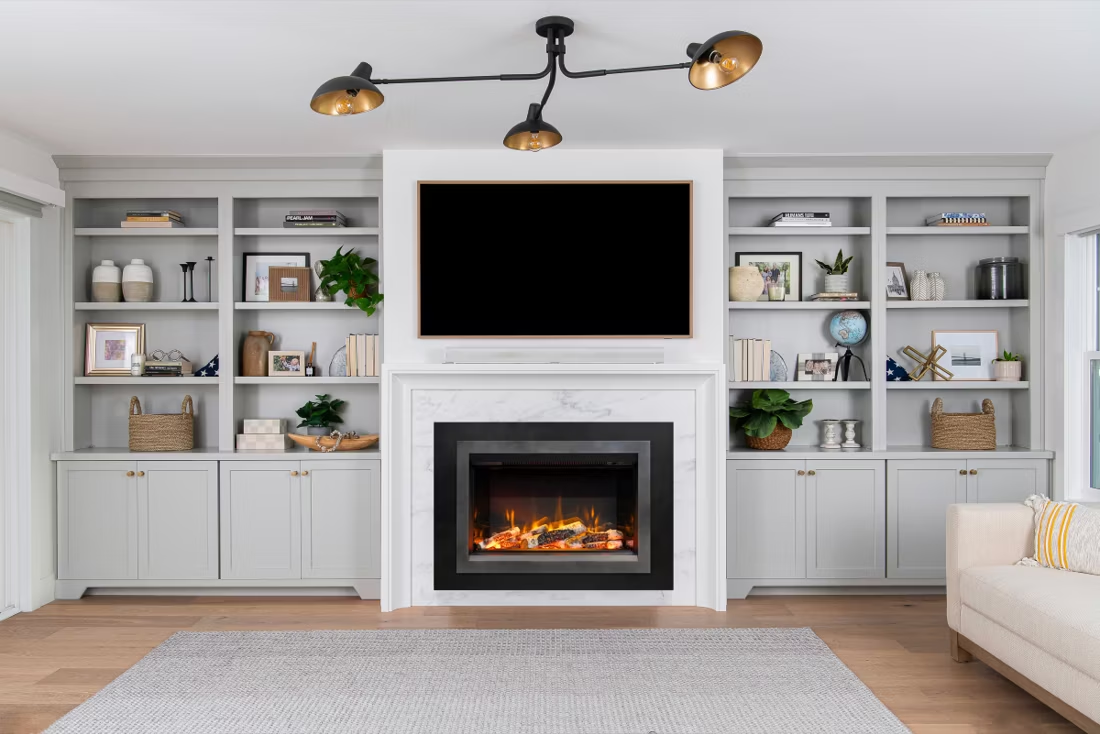
With 6,622 heating degree days a year and winter lows averaging 17°F, North Tonawanda homes need heat for a long stretch of the calendar. An electric fireplace adds zone heat and real ambiance with no chimney, no gas line, and no venting—I'll match you with a local dealer who can install it right.
Every Project Starts From One of These Five Situations
A practical fit for older homes without a chimney to spare.
North Tonawanda sits where the Niagara and Erie Canal meet, a few miles upriver from the Niagara Falls corridor, in a Zone 5A climate that runs cold and stays cold—6,622 heating degree days a year and winter lows averaging 17°F, with lake-effect bursts off Erie and Ontario adding to the snow tally most winters. Known historically as the Lumber City for the sawmills that once lined its waterfront, the city's housing stock is heavy on early-1900s wood-frame foursquares and bungalows, many of which were never built around a masonry chimney. That makes wood stoves and pellet stoves a rare sight here—installing one means adding a chimney system from scratch—while an electric fireplace drops into an existing wall, mantel opening, or finished basement with no venting at all.
Niagara Mohawk Power Corp. (National Grid) serves electric accounts across the city at a residential rate around $0.1667 per kWh, which is a fair price for running a fireplace a few hours an evening but adds up fast as a whole-house heat source. That's why most North Tonawanda homeowners treat an electric fireplace as supplemental heat and ambiance in a den, primary bedroom, sunroom, or basement rec room, while central gas or forced-air handles the bulk of the load through the long winter. For condos, rentals, and older homes where running new gas line or building a chimney chase isn't realistic, electric is often the only fireplace option that makes sense at all.
Three steps. No salesperson until you're ready.
Tell us about your project
Your zip code, your situation, and the fuel you're leaning toward—or let the answers point you to one.
See what's actually available
The brands dealers within 100 miles genuinely carry—real options, never a catalog mirage.
Get your dealer & Project Guide
A trusted local dealer, plus the free Project Guide & Parts List that names every component of the job.
Frequently Asked Questions
How much does it cost to install an electric fireplace in North Tonawanda?
A plug-in insert or mantel unit that fits an existing opening can run as little as $300 to $1,200 installed, since there's no venting and often no new wiring needed. A built-in wall unit or a larger fireplace that requires a dedicated 20-amp circuit run by an electrician typically lands between $1,500 and $4,000, with cost driven mostly by how far the unit sits from your electrical panel and whether drywall or framing work is involved. Because there's no chimney or gas line to deal with, electric installs are usually the fastest and least invasive fireplace project a North Tonawanda homeowner can take on.
What does it cost to actually run an electric fireplace here?
At Niagara Mohawk's residential rate of about $0.1667 per kWh, a typical 1,500-watt electric fireplace running on its heater setting costs roughly 25 cents an hour. Run it three or four hours a night through a North Tonawanda winter and you're looking at somewhere around $25 to $35 a month in added electric cost—reasonable for supplemental heat in one room, but not something most homeowners here use to heat an entire house given how long the heating season runs.
Do I need a permit to install an electric fireplace in North Tonawanda?
A simple plug-in unit that uses an existing outlet doesn't require a permit. If your installer needs to run a new dedicated circuit or add a junction box for a built-in wall unit, that electrical work should be pulled through the City of North Tonawanda Building Department and done by a licensed electrician. Unlike a wood stove or gas insert, there's no venting inspection or chimney clearance to worry about—the permit, when one's needed, is strictly about the wiring.
Electric or gas—which makes more sense for my North Tonawanda home?
Gas generally wins if you're trying to heat a room reliably through a full Niagara County winter, since combustion heat is cheaper per BTU than electric resistance heat at Niagara Mohawk's rates. Electric wins on installation simplicity—no gas line, no venting, no permit for a plug-in unit—and it's often the only realistic option in a condo, an upper-floor apartment, or an older wood-frame home with no chimney and no easy path to run gas. A lot of homeowners here end up choosing electric specifically for a bedroom, den, or basement where a gas line just isn't practical.
Will my electric fireplace still work if the power goes out?
No—and this is worth planning around given how often Niagara County sees winter storms and lake-effect events that strain the grid. An electric fireplace draws power to run both its heater and its flame effect, so a Niagara Mohawk outage takes it offline along with everything else in the house. If backup heat during outages is a priority, that's a reason to pair an electric fireplace with a battery backup, a generator circuit, or a separate combustion heat source rather than relying on it alone.
What size electric fireplace do I need?
Most electric fireplace heaters top out around 5,000 to 5,200 BTU regardless of the unit's physical size, since they're built to supplement rather than replace central heat. That's enough to comfortably warm a 400 to 1,000 square foot room in a North Tonawanda home, which covers most dens, bedrooms, and finished basement spaces. For anything larger, or for a drafty older foursquare with higher ceilings, plan on the fireplace working alongside your existing furnace rather than carrying the room on its own.
What's the difference between an electric insert, a mantel unit, and a wall-mounted fireplace?
An electric insert is built to slide into an existing fireplace opening—common in the older homes near downtown that have a decorative but unused masonry firebox. A mantel package pairs a freestanding electric unit with a surround and is popular where there's no existing opening at all. A wall-mounted or built-in unit is framed into new construction or a remodel, similar to how a linear gas fireplace would be installed, and usually needs that dedicated circuit run by an electrician. Which one fits depends mostly on whether you're retrofitting an old firebox or starting from a blank wall.
How much maintenance does an electric fireplace need?
Very little compared to a wood or gas unit—there's no chimney to sweep and no burner to service. Periodically dust or vacuum the vent grille where the heater draws and exhausts room air, and check the LED light strip or ember bed every few years since those components can dim or fail over time. Most manufacturers rate the heating element for 20,000-plus hours of use, so for a supplemental-use fireplace in a North Tonawanda home, that can mean well over a decade before anything needs replacing.
Can I put an electric fireplace in a room with no existing chimney or gas line?
Yes—that's the main reason electric is popular in North Tonawanda's older housing stock. Because the city's early-1900s wood-frame homes were rarely built with a chimney chase suited for a new wood or gas appliance, adding either fuel type from scratch usually means significant construction work. An electric fireplace sidesteps that entirely: it only needs a nearby outlet or a new circuit, which makes it the practical choice for a converted attic room, a basement rec room, or any space where running venting simply isn't in the budget.
Can I put a TV above my fireplace?
Yes—with an asterisk. Fireplaces are hot and TVs don't like heat. Either put a mantel between them to deflect rising warmth, or choose a fireplace with heat-management technology that creates a cool zone on the wall above—the wall stays around 125 degrees, barely warm, while the room still gets full heat. If you like clean lines and don't want a mantel, heat management is the answer.
Does an electric fireplace need a vent or chimney?
No—that's its superpower. An electric fireplace needs a wall and an outlet, period. No vent pipe, no gas line, no clearances to design around, which is why it works in bedrooms, offices, apartments, and walls where venting a gas or wood unit would be impractical or impossible. Installation is typically the simplest and least expensive of any fireplace type.
How much should I budget for a fireplace?
For an average home—covering the fireplace, the vent pipe, and basic installation—a budget between $3,900 and $5,500 gives you a lot of options across wood, gas, and pellet. By the time you add finish work, gas line, and electrical, the average complete installation lands between $5,000 and $12,000 all-in. In a remodel or new build, a good rule is to put about 2.5% of the total project cost toward the fireplace.
What is an in-home preview and do I need one?
It's a visit where a hearth professional measures your space, confirms the model you picked actually works in your home, and walks the specs—framing, gas line, venting, finish work—before anything is ordered. Some details you just can't know until you see the house. Never make a down payment without one; it's the single most-skipped step that burns buyers.
Nearby Dealers
Hearth shops serving North Tonawanda and the surrounding area.
Electric Service in North Tonawanda
An electric fireplace's heater draws about 1,500 watts—pennies per hour at local rates.
Niagara Mohawk Power Corp.
Get your free Project Guide & Parts List for an electric fireplace in North Tonawanda.
Tell me about your room and your electrical setup, and I'll match you with a trusted local dealer and send a free Project Guide & Parts List—sized right for supplemental heat through a long Niagara County winter, with the exact parts your installer will need.a
Find Your Fireplace →