
A Niche Fit for Lindenhurst's Mild South Shore Winters.
Pellet stoves aren't the default heat source in this Suffolk County village, but for finished basements, workshops, and backup ambiance, a small number of homeowners still make it work. We'll help you figure out if it's right for your house.
Every Project Starts From One of These Five Situations
Natural gas, not pellets, heats most homes here.
Lindenhurst sits at just 20 feet of elevation on Long Island's South Shore, in a Climate Zone 4A pocket with about 5,087 heating degree days and an average winter low near 25°F. That's a meaningfully milder heating season than places like Burlington, VT or Duluth, MN, where pellet and wood stoves function as genuine primary heat for months at a stretch. In Lindenhurst, most of the housing stock—tight village lots, attached garages, older Cape and colonial-style homes—was built out around natural gas service, and that's still where the vast majority of local heating dollars go.
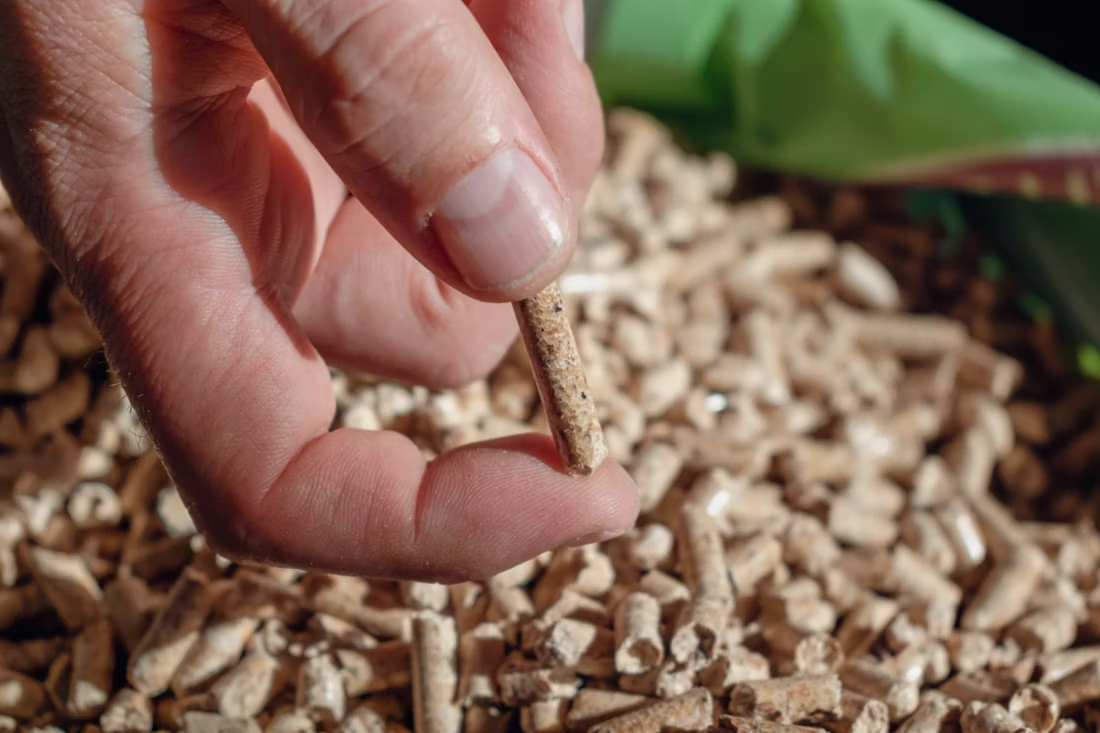
That said, pellet fuel isn't absent from the region. Brands like Energex, Hamer Pellet Fuel, and Greene Team Pellet Fuel are sold through hearth dealers and hardware stores across Suffolk County, and a small subset of Lindenhurst homeowners do install freestanding pellet stoves—usually in a finished basement, a detached garage or workshop, or a waterfront bungalow where a second heat source adds real value. If that describes your situation, it's worth understanding both the upside (steady, thermostatically controlled heat and cleaner burns than cordwood) and the tradeoff (pellet stoves run on electricity, which matters here given how LIPA's grid performs during South Shore nor'easters).
Three steps. No salesperson until you're ready.
Tell us about your project
Your zip code, your situation, and the fuel you're leaning toward—or let the answers point you to one.
See what's actually available
The brands dealers within 100 miles genuinely carry—real options, never a catalog mirage.
Get your dealer & Project Guide
A trusted local dealer, plus the free Project Guide & Parts List that names every component of the job.
Frequently Asked Questions
Are pellet stoves a common heating choice in Lindenhurst?
Not really, and it's worth being upfront about that. Lindenhurst is a densely built Suffolk County village with natural gas infrastructure already in most streets, and the vast majority of homes here heat with gas furnaces or boilers. Pellet stoves show up occasionally as a secondary or supplemental unit—in a finished basement, a converted garage, or a detached workshop—but they're not the default choice the way they are in colder, more rural parts of the country. If you're considering one, you're likely in the minority of local homeowners doing it for a specific reason rather than because it's the obvious local option.
Why don't more homes in Lindenhurst use pellet stoves?
Two practical reasons. First, natural gas service reaches most of the village, and gas furnaces or boilers already handle whole-home heating without anyone needing to load a hopper or store fuel. Second, Lindenhurst's lot sizes and housing stock—attached garages, modest square footage, close-set homes—don't leave much room or need for a standalone solid-fuel appliance. Where pellet stoves do show up locally, it's almost always as a supplemental unit rather than a replacement for the existing gas system.
If pellet stoves are uncommon here, why would anyone in Lindenhurst still want one?
A few scenarios come up regularly: heating a finished basement that the central system doesn't reach well, warming a detached garage or workshop that was never plumbed for gas, or adding ambiance and a secondary heat source to a South Shore waterfront cottage. Some homeowners also like that pellet stoves burn cleaner than cordwood and don't require splitting or stacking firewood. It's a legitimate niche use case—just not a mainstream one in this village.
Will a pellet stove keep working during a power outage on Long Island?
Not on its own, and this is the single most important thing to understand before buying one here. Pellet stoves rely on an electric auger to feed fuel and a blower to distribute heat, so when LIPA power drops—which happens during South Shore nor'easters and tropical storm remnants more often than most people expect—the stove stops running. Some owners pair a pellet stove with a small battery backup or portable generator specifically to keep it operating through an outage. If backup heat during a power failure is your main goal, a vented gas fireplace with battery-backed ignition is usually a more reliable fit for Lindenhurst.
What does a pellet stove installation typically cost in Lindenhurst?
Because pellet stoves are a niche install here rather than a routine one, pricing varies more by project than by a standard local range. Nationally, a freestanding pellet stove with a direct-vent through an exterior wall, hearth pad, and standard hookup typically runs in the $3,000–$6,000 range installed; a pellet insert into an existing masonry fireplace can run higher once venting and a liner are factored in. A local hearth dealer familiar with Suffolk County wall construction and clearance requirements will give you a firm number after seeing the space.
Where can I buy pellet fuel near Lindenhurst?
Regional brands including Energex, Hamer Pellet Fuel, and Greene Team Pellet Fuel are carried by hearth and hardware retailers across Suffolk County, though selection in Lindenhurst itself may be thinner than in areas with more pellet stoves in service. Premium hardwood pellets from these brands typically run in the $260–$320 per ton range in the Northeast, and most owners buy by the pallet (about a ton) ahead of the heating season since local stock can run low once cold weather sets in.
Do I need a permit to install a pellet stove in Lindenhurst?
Yes—a new pellet stove installation requires a building permit through the Village of Lindenhurst Building Department, and the appliance needs to meet current EPA emissions standards. The good news is that pellet stove venting is generally simpler than wood stove chimney work: most units vent directly through an exterior wall with PL-vent pipe rather than requiring a full masonry chimney, which keeps the permitting and inspection process relatively quick. A local dealer who's pulled permits in the village before can walk you through what the inspector will want to see.
Pellet stove vs. gas fireplace—which makes more sense for a Lindenhurst home?
For most homes here, gas wins on convenience: if you already have natural gas service, a direct-vent gas fireplace or insert gives you instant on-off heat with no fuel storage, no hopper to refill, and—with the right ignition system—the ability to run during a power outage. Pellet stoves require buying and storing bagged fuel, regular hopper loading, and electricity to operate at all. Where pellet still makes sense is a space without gas service, like a detached garage or a home addition on propane, or for homeowners who specifically want the pellet-burning experience. For a primary living space already plumbed for gas, gas is usually the simpler call.
What size pellet stove would I need if I decided to install one?
It depends on what you're heating and how. A small pellet stove (under 1,000 sq ft of output capacity) is plenty for a finished basement, a single large room, or a detached garage workshop. A medium unit can supplement a main living area on the coldest days when the gas system is working overtime. Given Lindenhurst's relatively mild winter lows—averaging around 25°F—most local installs lean toward smaller supplemental units rather than whole-home primary heaters. A local dealer can size the unit correctly based on your specific space and insulation.
What's the difference between an insert and a zero-clearance fireplace?
An insert is a fireplace that slides into a pre-existing wood-burning fireplace—if you don't have one, there's nothing to insert it into. A zero-clearance fireplace is built into a framed wall, which makes it the answer for remodels and new construction. Simple test: existing masonry fireplace means insert; blank or framed wall means zero-clearance.
Why is my open fireplace making my house colder?
Open fireplaces suck—literally. As the fire burns, it consumes air your furnace already paid to heat and pulls it out through the chimney, so the house is actually colder after the fire goes out than before you lit it. An insert fixes this: it seals the chimney, puts fixed glass across the front, and turns that hole in your house into a real heat source.
How much should I budget for a fireplace?
For an average home—covering the fireplace, the vent pipe, and basic installation—a budget between $3,900 and $5,500 gives you a lot of options across wood, gas, and pellet. By the time you add finish work, gas line, and electrical, the average complete installation lands between $5,000 and $12,000 all-in. In a remodel or new build, a good rule is to put about 2.5% of the total project cost toward the fireplace.
What is an in-home preview and do I need one?
It's a visit where a hearth professional measures your space, confirms the model you picked actually works in your home, and walks the specs—framing, gas line, venting, finish work—before anything is ordered. Some details you just can't know until you see the house. Never make a down payment without one; it's the single most-skipped step that burns buyers.
Nearby Dealers
Hearth shops serving Lindenhurst and the surrounding area.
Pellet Brands Stocked Around Lindenhurst
Manufacturers will point you to the nearest stocking dealer.
Find your pellet stove in Lindenhurst.
Tell us about your space and how you plan to use it, and we'll match you with a trusted local dealer and put together a free Project Guide & Parts List—the exact parts, including the vent kit, needed to get a pellet stove installed correctly in your Lindenhurst home.
Find Your Fireplace →