
Warm, reliable heat for Lindenhurst homes—without the woodpile.
Instant, controllable heat for South Shore homes near Great South Bay—the kind that keeps running when a Nor'easter takes down the power. Find the right gas fireplace or insert and connect with a trusted local dealer.
Every Project Starts From One of These Five Situations
Reliable heat, without the hassle of firewood.
Lindenhurst sits at sea level on Long Island's South Shore, in the Town of Babylon, with mild-by-comparison winters—average lows around 25°F and roughly 5,087 heating degree days a year, nowhere near the brutal totals of a place like Duluth or Burlington, but still enough to run a heating appliance most of the year. Lot sizes here are tight, homes are close together, and the village's older Cape Cods and ranches were mostly built without any real wood-supply infrastructure nearby. That's a big part of why wood and pellet heat never took hold in Lindenhurst the way gas has.
National Grid provides natural gas service through most of the village, and a gas fireplace or insert is a natural fit for homes already piped for a furnace, water heater, or range. A handful of properties tucked along the canals and closer to Great South Bay sit off the main gas lines and rely on propane instead. Either way, gas delivers instant, thermostat-controlled heat—and with PSEG Long Island residential electric rates running around 24.6 cents per kWh, a gas unit is often the more economical choice for zone heating a den or living room rather than leaning on electric baseboard or space heaters.
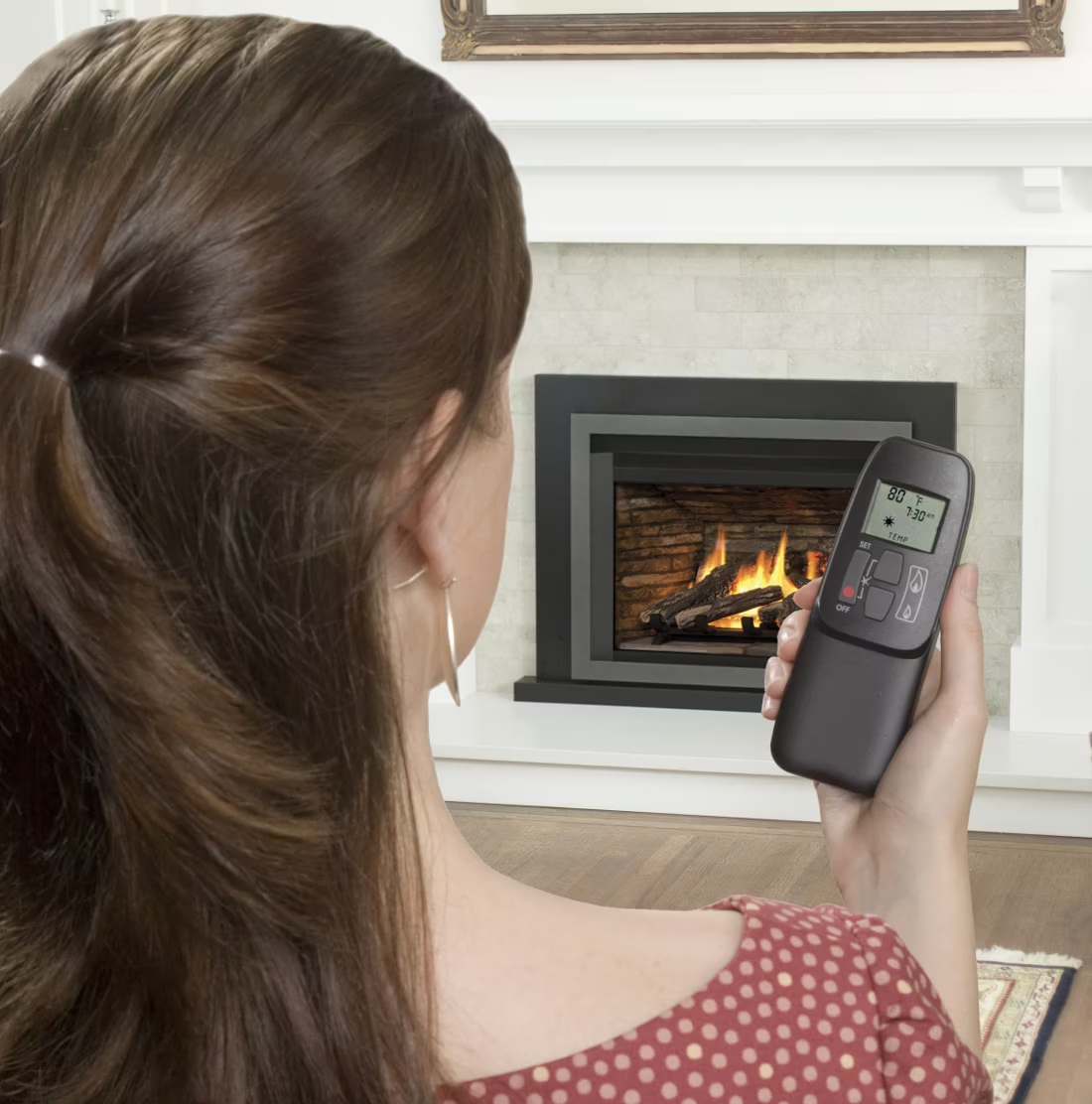
Three steps. No salesperson until you're ready.
Tell us about your project
Your zip code, your situation, and the fuel you're leaning toward—or let the answers point you to one.
See what's actually available
The brands dealers within 100 miles genuinely carry—real options, never a catalog mirage.
Get your dealer & Project Guide
A trusted local dealer, plus the free Project Guide & Parts List that names every component of the job.
Frequently Asked Questions
How much does a gas fireplace installation cost in Lindenhurst?
Most gas fireplace and insert installations in Lindenhurst run between $5,000 and $12,000, depending on the unit, the venting path, and whether new gas line work is needed. A direct-vent insert dropped into an existing masonry fireplace with a gas line already nearby sits toward the lower end. A new built-in gas fireplace for an addition or finished basement—with framing, venting through an exterior wall, and a fresh gas line run from the meter—lands toward the higher end. The Village of Lindenhurst Building Department requires a permit for the installation, and most local dealers handle that paperwork as part of the job.
Can I convert my existing wood fireplace to gas?
Yes, and it's a common project here. A lot of Lindenhurst's older Capes and ranches came with a masonry wood fireplace that rarely gets used—tight lot lines, close neighbors, and village nuisance-smoke concerns make wood burning impractical for most households. Converting that fireplace to a gas insert typically runs $5,000 to $9,000, using your existing chimney with a stainless steel liner run down to the new unit. If your home is already on the National Grid system, the gas hookup is usually straightforward; homes on propane need a tank sized for the added appliance.
Do I need natural gas, or can I run a fireplace on propane?
Both work fine. National Grid serves natural gas to most of Lindenhurst, and if your home already has a gas furnace, water heater, or range, adding a fireplace is usually a simple tap into the existing line. Some properties near the canals and closer to Great South Bay sit outside the main gas distribution and run on propane instead, supplied by a regional propane company with a tank on the property. Most gas fireplace models can be set up for either fuel—your installer just configures the correct orifice and regulator for whichever you have.
Will my gas fireplace still work if the power goes out?
Most modern gas fireplaces will, which matters on the South Shore where Nor'easters and coastal storms have knocked out the PSEG Long Island grid for days at a stretch. Units with IPI (intermittent pilot ignition) run on a small battery backup that kicks in automatically when power drops, so the fireplace lights and operates normally off batteries. Valor's gas fireplaces skip batteries altogether—their pilot generates its own electricity through the thermocouple, so the unit works during an outage indefinitely. Worth asking about specifically if storm resilience matters to you, which it does for a lot of Lindenhurst homeowners.
What's the difference between a gas fireplace, gas insert, and gas stove?
A gas fireplace is a fully built-in unit framed into a wall—the right call for additions, finished basements, or new construction. A gas insert is built to slide into an existing masonry fireplace opening, which describes a large share of Lindenhurst's Cape Cod and ranch housing stock built in the mid-20th century. A gas stove is a freestanding cast-iron or steel unit that sits on the floor and vents like an insert but doesn't require an existing fireplace opening. For most Lindenhurst homeowners with an old, rarely-used wood fireplace, an insert is the straightforward upgrade.
Do I need a permit to install a gas fireplace in Lindenhurst?
Yes. As an incorporated village within the Town of Babylon, Lindenhurst requires a building permit through the Village of Lindenhurst Building Department for any new gas fireplace or insert, plus a separate gas line permit if new piping is involved. The gas line work itself needs to be done by a licensed gas fitter—one more reason it pays to work with an established local hearth dealer who coordinates the gas trade, the venting, and the village inspection together rather than leaving you to juggle multiple contractors.
What's the difference between vented and vent-free gas fireplaces?
Vented (direct-vent) fireplaces pull combustion air from outside and exhaust it back outside through a sealed pipe—they're the standard, code-compliant choice almost everywhere, including Lindenhurst. Vent-free units burn gas directly into the room with no outside venting; New York's Uniform Fire Prevention and Building Code places tight restrictions on where they can be installed, and many local jurisdictions on Long Island don't allow them in bedrooms or small, tightly sealed rooms at all. Given how close together homes are built in Lindenhurst and the humidity that comes off Great South Bay, a direct-vent unit is almost always the better call—it won't add moisture or combustion byproducts to the indoor air. A local dealer can tell you definitively what the village permits for your specific room.
How often should my gas fireplace be serviced?
Plan on an annual inspection, ideally before the heating season starts each fall. A certified technician checks the burner, pilot assembly, venting, and gas connections, and cleans the glass and interior—this typically runs $150 to $250 locally. It's worth staying on schedule in Lindenhurst specifically because the salt air off Great South Bay can accelerate corrosion on venting components and exterior terminations faster than it would further inland.
Should I consider wood heat instead of gas in Lindenhurst?
For most homes here, no—and it's worth being upfront about that. Lindenhurst's tight suburban lots, close-set housing, and village nuisance ordinances make wood burning impractical for the vast majority of homeowners, and there's no nearby public forest land or cutting-permit system the way there is upstate or out west. The oaks, maples, birches, and ash trees around the village are landscaping, not a firewood supply chain. A handful of homeowners still run a wood stove for ambiance or a vacation property elsewhere, but as a primary heat source in Lindenhurst proper, gas is overwhelmingly the more practical and more common choice—instant heat, no permitting for the fuel itself, and no smoke to manage with neighbors a few feet away.
Can I put a TV above my fireplace?
Yes—with an asterisk. Fireplaces are hot and TVs don't like heat. Either put a mantel between them to deflect rising warmth, or choose a fireplace with heat-management technology that creates a cool zone on the wall above—the wall stays around 125 degrees, barely warm, while the room still gets full heat. If you like clean lines and don't want a mantel, heat management is the answer.
What's the difference between an insert and a zero-clearance fireplace?
An insert is a fireplace that slides into a pre-existing wood-burning fireplace—if you don't have one, there's nothing to insert it into. A zero-clearance fireplace is built into a framed wall, which makes it the answer for remodels and new construction. Simple test: existing masonry fireplace means insert; blank or framed wall means zero-clearance.
Can I install a fireplace myself?
If you're putting a fire in your house on purpose, it's best to work with an expert. Unless you're genuinely experienced in framing, gas line, vent pipe, and the national code on clearances to combustibles, have a professional do it—and ideally the same company that sells you the fireplace, so warranty, service, and liability all live under one roof.
What is an in-home preview and do I need one?
It's a visit where a hearth professional measures your space, confirms the model you picked actually works in your home, and walks the specs—framing, gas line, venting, finish work—before anything is ordered. Some details you just can't know until you see the house. Never make a down payment without one; it's the single most-skipped step that burns buyers.
Nearby Dealers
Hearth shops serving Lindenhurst and the surrounding area.
Find your gas fireplace in Lindenhurst.
Tell us about your home and we'll match you with a trusted local Lindenhurst-area dealer and send you a free Project Guide & Parts List—the exact parts, including the vent kit, for your gas fireplace project.
Find Your Fireplace →