
Find your pellet stove in Lewis County.
Hands-off, hopper-fed heat for the lake-effect winters of the Tug Hill Plateau—from Lowville to Croghan to Harrisville. Find the right unit and connect with a trusted local dealer.
Every Project Starts From One of These Five Situations
Steady heat for Tug Hill Plateau winters.
Lewis County sits square in the Tug Hill Plateau's lake-effect snowbelt, where moisture pulled off Lake Ontario can dump well over 200 inches of snow in a hard winter. The county falls in climate zone 6A—genuinely cold, with long stretches where the wood lot outside your window (oak, maple, birch, ash—the same hardwoods that keep the region's sawmills and dairy farms running) sits under snow for weeks at a stretch. It's a rural county with a small, spread-out population across towns like Lowville, Croghan, Copenhagen, Turin, Glenfield, and Beaver Falls, and for a lot of households here, keeping heat simple and reliable matters more than keeping it fancy.
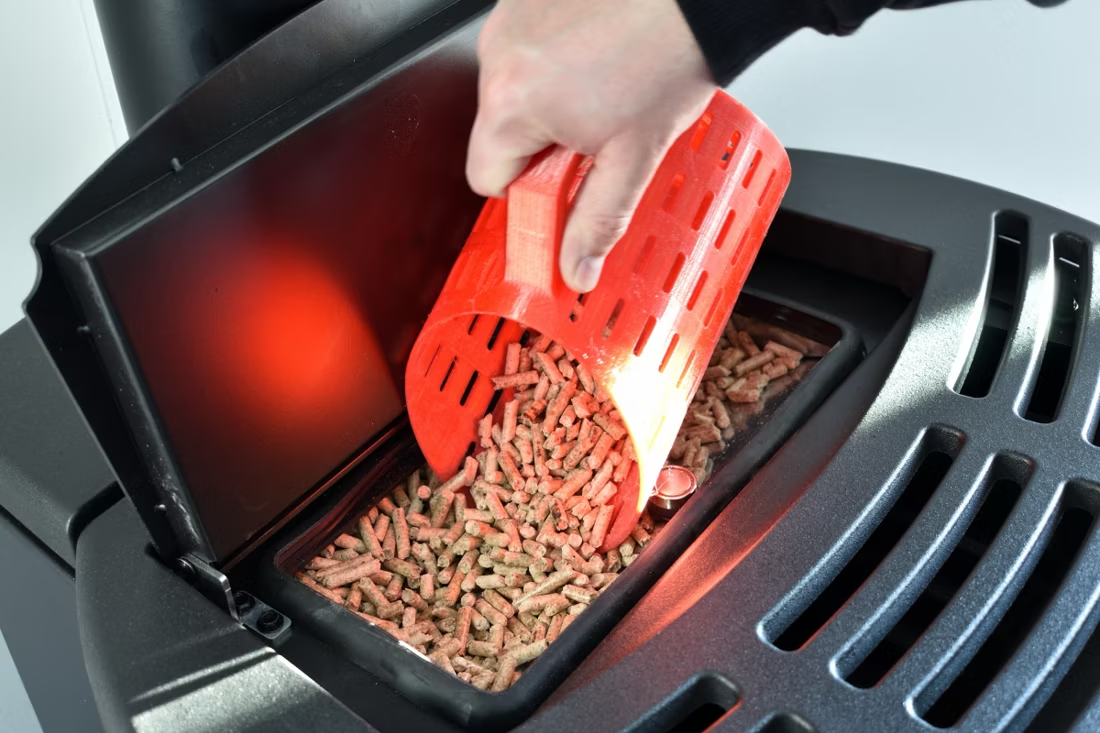
Pellet stoves fit that need well. Load the hopper, set the thermostat, and the auger does the rest—no splitting, stacking, or hauling cordwood, and none of the daily fire-tending that wood demands. Lewis County has no air quality non-attainment issues or winter inversion advisories, so there's no burn-ban complexity to navigate; pellet appliances here are simply a clean, efficient heat source. Regional pellet brands including Energex, Hamer Pellet Fuel, and Greene Team Pellet Fuel are all produced from the same upstate New York hardwood supply chain the county sits in, which helps keep pellets available and reasonably priced even in a low-population rural market like this one.
Three steps. No salesperson until you're ready.
Tell us about your project
Your zip code, your situation, and the fuel you're leaning toward—or let the answers point you to one.
See what's actually available
The brands dealers within 100 miles genuinely carry—real options, never a catalog mirage.
Get your dealer & Project Guide
A trusted local dealer, plus the free Project Guide & Parts List that names every component of the job.
Frequently Asked Questions
How much does a pellet stove installation cost in Lewis County?
Across rural upstate New York markets like Lewis County, a typical pellet stove or insert installation runs roughly $3,500 to $6,500, depending on the unit, whether you're venting through an existing masonry chimney or running new wall-thimble venting, and whether any electrical work is needed for the hopper and blower circuit. Because Lewis County is sparsely populated with no large hearth retailers based in-county, expect installers based out of Lowville or nearby Jefferson and Oneida County shops to include a modest travel charge in more remote parts of the county—Harrisville, Croghan, and the eastern towns closer to the Adirondack Park boundary.
What size pellet stove do I need for my Lewis County home?
Zone 6A winters and older farmhouse construction—common throughout Lewis County's rural towns—mean sizing tends to run a notch larger than milder-climate guidance would suggest. A small pellet stove (rated for roughly 1,000 sq ft) suits a single room or a tight, well-insulated home; a medium unit (1,000–2,000 sq ft) covers most main living areas in the county's older two-story farmhouses; larger homes or drafty older construction near the Tug Hill snowbelt often do better sized up rather than down, since a stove working at its max output constantly wears out faster and won't recover heat quickly after a cold snap. A local dealer can size your home properly during an in-home visit—worth doing given how much variation there is between a tight newer build and a century-old farmhouse in this part of the county.
Where can I find a certified pellet stove installer near me?
Lewis County's low population means you likely won't find a hearth retailer inside the county itself—most homeowners in Lowville, Copenhagen, and Turin work with installers based in neighboring Jefferson County (Watertown) or Oneida County (Boonville), who regularly service Lewis County as part of their route. Look for NFI (National Fireplace Institute) certification specifically for pellet appliances, and confirm the installer will handle the venting and any required electrical work rather than just dropping off the stove. Given the travel distances involved in this rural county, it's worth confirming service and warranty response times up front—a stove that needs a house call in February shouldn't mean a multi-hour wait during a lake-effect storm.
What's the difference between a pellet stove and a pellet insert?
A pellet stove is a freestanding, hopper-fed unit that sits on its own hearth pad and vents through a wall thimble or existing chimney—it can go almost anywhere with proper clearances, which makes it a common retrofit choice in Lewis County's older farmhouses that lack a masonry fireplace. A pellet insert is built to slide into an existing masonry fireplace opening, using the chimney (with a proper liner) as its vent path and converting an old, inefficient open hearth into a controlled, thermostat-driven heat source. For homes in the county with an existing fireplace, an insert usually makes more sense; for homes without one, a freestanding stove is the simpler install.
Do I need a permit to install a pellet stove in Lewis County?
Most likely yes, though Lewis County doesn't run a single unified county building permit office—permitting for a wood- or pellet-burning appliance is typically handled at the town or village level (Lowville, Croghan, Turin, and the other towns each have their own code enforcement officer). A local installer who regularly works in the county will already know which office to file with for your specific town and can usually handle the paperwork as part of the installation. It's worth confirming with your specific town's code enforcement office before work begins, since requirements can vary slightly town to town.
What's a good pellet stove for a Lewis County winter?
For genuinely cold, snow-heavy winters like Lewis County's, look for a unit with a large hopper capacity—40 to 80 pounds—so you're not refilling constantly during multi-day storms when travel to a stove shop or fuel supplier isn't practical. Brands like Harman and Englander are widely serviced across upstate New York and hold up well to daily heating-season use. For pellets themselves, regional producers Energex, Hamer Pellet Fuel, and Greene Team Pellet Fuel all supply the upstate New York market and are worth comparing for consistency and ash content—lower-ash hardwood pellets mean less frequent cleaning during the long burn season this climate zone demands.
How much maintenance does a pellet stove need?
Pellet stoves need less day-to-day attention than a wood stove but aren't maintenance-free. Plan on emptying the ash pan every few days during regular use, cleaning the burn pot weekly to keep the flame consistent, and scheduling a full professional cleaning and inspection of the venting, auger, and exhaust fan once a year—typically before the heating season starts in late fall. In a county where a service call may mean a technician driving in from Watertown or Boonville, staying ahead of the annual service appointment matters more here than in areas with a local shop just down the road.
Where can I buy pellets in Lewis County?
Regional producers Energex, Hamer Pellet Fuel, and Greene Team Pellet Fuel all distribute through farm supply stores, hardware stores, and fuel dealers across upstate New York, and Lewis County residents typically source pellets through those same regional channels rather than a dedicated pellet retailer in-county. Expect to pay in the neighborhood of $250 to $320 per ton for hardwood pellets, with better pricing on multi-ton or full-season orders—a practical move in a rural county where a mid-winter run to restock isn't always convenient once the Tug Hill snowbelt gets going.
Pellet stove vs. wood stove—which is right for my Lewis County home?
Wood stoves work without electricity, which matters in a lake-effect snowbelt county where extended power outages happen during heavy storm systems—and Lewis County's oak, maple, birch, and ash woodlots make self-cut or locally purchased firewood genuinely practical. Pellet stoves need power to run the auger and blower, so they go down in an outage unless paired with a battery backup or generator, but they offer more consistent, thermostat-controlled heat and far less daily tending—appealing for an older or more remote household that wants reliable heat without the physical work of processing cordwood. Plenty of Lewis County homes end up with both: pellet for daily convenience, wood as the storm-proof backup.
Why is a fireplace insert so efficient?
An insert does two things: it seals the chimney completely, so you stop losing air you already paid to heat, and it radiates warmth into the room through the firebox and glass. Most add a heat-exchange fan that pulls cool room air underneath, wraps it around the hot firebox, and pushes it back out warm. Your home is more efficient before you've even lit the first fire.
Why is my open fireplace making my house colder?
Open fireplaces suck—literally. As the fire burns, it consumes air your furnace already paid to heat and pulls it out through the chimney, so the house is actually colder after the fire goes out than before you lit it. An insert fixes this: it seals the chimney, puts fixed glass across the front, and turns that hole in your house into a real heat source.
How much should I budget for a fireplace?
For an average home—covering the fireplace, the vent pipe, and basic installation—a budget between $3,900 and $5,500 gives you a lot of options across wood, gas, and pellet. By the time you add finish work, gas line, and electrical, the average complete installation lands between $5,000 and $12,000 all-in. In a remodel or new build, a good rule is to put about 2.5% of the total project cost toward the fireplace.
What is an in-home preview and do I need one?
It's a visit where a hearth professional measures your space, confirms the model you picked actually works in your home, and walks the specs—framing, gas line, venting, finish work—before anything is ordered. Some details you just can't know until you see the house. Never make a down payment without one; it's the single most-skipped step that burns buyers.
Pellet Brands Stocked Around Lewis County
Manufacturers will point you to the nearest stocking dealer.
Find your pellet stove in Lewis County.
Tell us a bit about your home and we'll match you with the right pellet stove or insert—plus a free Project Guide & Parts List with the exact parts, vent kit, and a recommended local dealer for your Lewis County installation.
Find Your Fireplace →