
Steady, Automated Heat for Hudson Valley Winters.
Consistent, thermostat-controlled heat for Kingston's cold Hudson Valley winters. Find the right pellet stove or insert, and connect with a trusted local dealer.
Every Project Starts From One of These Five Situations
Set it, forget it: heat that keeps up with a Hudson Valley winter.
Kingston sits at 186 feet along the Hudson River in Ulster County, in climate zone 6A, where roughly 6,718 heating degree days and winter lows averaging 11°F put it in the same cold-climate territory as Burlington, VT, just up the valley. The region's forests are thick with oak, maple, birch, and ash, and wood heat has deep roots here—but a growing number of Kingston homeowners are choosing pellet stoves instead, drawn by the tradeoff of automated, hands-off heat over splitting and stacking cordwood.
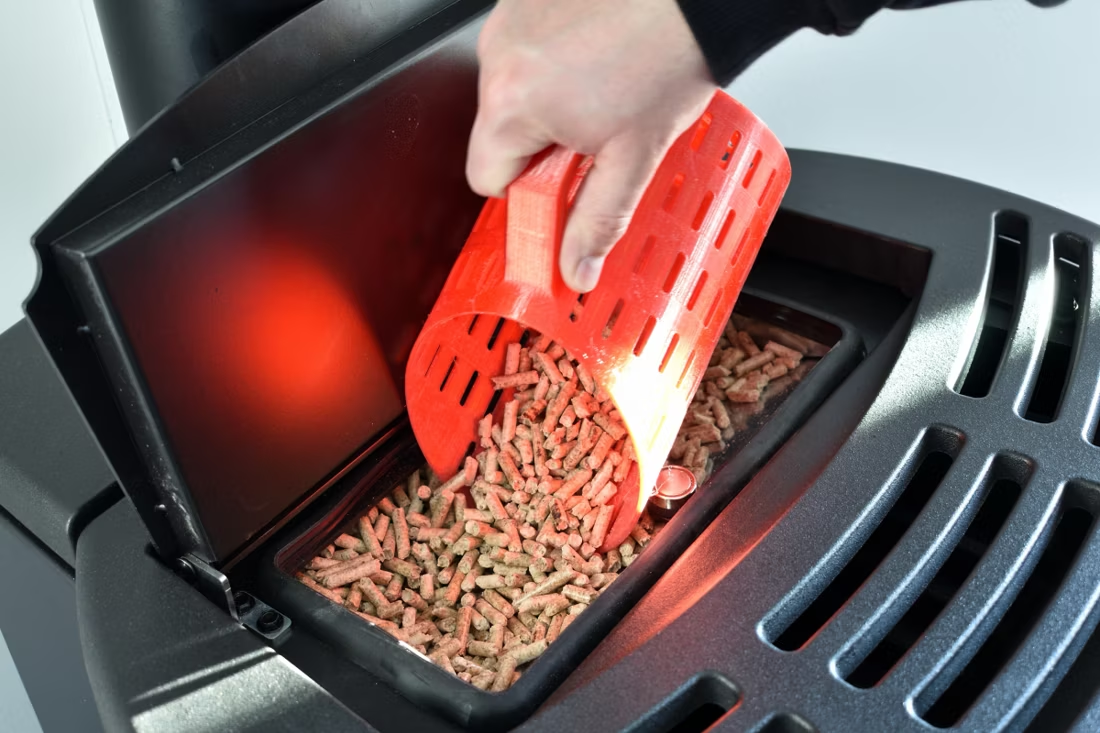
Regional pellet brands like Energex, Hamer Pellet Fuel, and Greene Team Pellet Fuel—the last produced just across the county line in Greene County—are stocked widely at Hudson Valley hearth shops and hardware stores, so fuel sourcing is straightforward. Kingston has no wood-smoke air quality restrictions or non-attainment designations, so the appeal here isn't emissions compliance the way it is in some Western cities—it's convenience. A pellet stove loads once, runs on a thermostat, and holds a steady output through a January cold snap without a 2 a.m. reload.
Three steps. No salesperson until you're ready.
Tell us about your project
Your zip code, your situation, and the fuel you're leaning toward—or let the answers point you to one.
See what's actually available
The brands dealers within 100 miles genuinely carry—real options, never a catalog mirage.
Get your dealer & Project Guide
A trusted local dealer, plus the free Project Guide & Parts List that names every component of the job.
Frequently Asked Questions
How much does a pellet stove installation cost in Kingston?
A typical pellet stove installation in Kingston runs $3,000 to $6,000, including the unit, direct-vent piping through an exterior wall, and any hearth pad work needed for clearance. Because pellet stoves vent horizontally through a small-diameter pipe rather than a full masonry chimney, installs are usually simpler and less costly than wood stove or open-fireplace conversions. Converting an existing wood-burning fireplace to a pellet insert often lands in a similar range, since the existing chimney can typically be lined rather than rebuilt. The City of Kingston Building Department requires a permit for the work, and most local hearth dealers handle that paperwork as part of the install.
What size pellet stove do I need for my Kingston home?
Kingston's climate zone 6A profile—about 6,700 heating degree days and winter lows averaging 11°F—means undersizing leaves rooms cold on the worst nights. For a well-insulated single room or open floor plan up to roughly 1,300 square feet, a small-to-medium stove with a 40-pound hopper and 40,000-50,000 BTU output is usually enough. Larger or older homes, common in Kingston's historic neighborhoods and often less insulated, tend to need a 60,000+ BTU stove with a bigger hopper to avoid multiple refills a day during a stretch of single-digit weather. A local dealer will size the unit to your square footage and insulation during an in-home visit.
What happens to my pellet stove during a power outage?
Pellet stoves depend on an electric auger, igniter, and combustion blower, so a power outage stops the stove unless you have a backup power source. Central Hudson Gas & Electric serves the Kingston area, and ice storms occasionally knock out power along the Hudson Valley in winter, so some homeowners pair their pellet stove with a small battery backup unit or keep a generator on hand specifically to ride out outages. Wood stoves need no electricity at all. If outage-proof backup heat is a priority, ask your dealer about battery backup accessories, or consider a wood-burning unit elsewhere in the home as a fallback.
Where can I buy pellet fuel in Kingston?
Pellet fuel is easy to find in the Kingston area, with regional brands like Energex, Hamer Pellet Fuel, and Greene Team Pellet Fuel—the latter made just across the county line in Greene County—stocked at Hudson Valley hearth shops, hardware stores, and farm supply retailers. Premium hardwood pellets, often milled from the same oak, maple, and ash that fill Ulster County's forests, typically run $250 to $320 per ton, and an average Kingston home burns 2 to 3 tons over a full heating season. Buying before the fall rush usually beats mid-winter, per-bag pricing.
Do I need a permit to install a pellet stove in Kingston?
Kingston has no wood-smoke air quality restrictions or non-attainment designation, so there's no burn-ban season to plan around the way there is in some Western cities. You will still need a building permit through the City of Kingston Building Department (or the Ulster County building office if you're outside city limits) covering venting placement and clearance-to-combustible requirements. Most hearth dealers pull this permit as part of the installation, so it's rarely something you have to manage yourself.
What's the best pellet stove for Kingston's climate?
For Kingston's cold, damp Hudson Valley winters, look for a stove with a larger hopper—60 to 80 pounds—so you're not reloading every few hours during a run of single-digit nights. Brands like Harman, Enviro, and Quadra-Fire build stoves rated for 24+ hour burns on a full hopper, which matters when a January cold snap settles into the valley. If you're heating one of Kingston's older, less-insulated historic homes, ask your dealer about a model rated for whole-home heating rather than a smaller supplemental unit.
How much maintenance does a pellet stove need?
Pellet stoves need more frequent light upkeep than wood stoves but far less heavy cleaning. Plan on emptying the ash pan every few days during regular use, wiping down the burn pot weekly so the auger feeds evenly, and vacuuming the hopper and exhaust passages every few weeks. A full professional cleaning and inspection—covering the venting and combustion blower—once a year, typically at the end of burn season, keeps the stove running efficiently and catches wear on the igniter or auger motor before it fails mid-winter.
Pellet stove vs. pellet insert—which fits my Kingston home?
A pellet stove is a freestanding unit that vents through a wall or existing chimney chase and can go almost anywhere in the home. A pellet insert is built to slide into an existing masonry fireplace opening, running a liner up the original chimney—a natural fit for Kingston's many older homes with existing wood-burning fireplaces that owners want to keep using, just with less mess and better efficiency. Inserts typically cost somewhat more than a freestanding stove of similar output because of the liner work, but they preserve the look of the original fireplace surround.
Pellet vs. wood—which is right for my home?
Wood stoves burn low-cost or free split cordwood—oak, maple, birch, and ash are all common in Ulster County forests—and need no electricity, which matters if a Hudson Valley ice storm knocks out power. Pellet stoves cost more per BTU in fuel but are far more convenient: load the hopper, set the thermostat, and the stove regulates itself for hours without tending. Running the auger and blower adds a bit to your electric bill—Central Hudson's residential rate runs about 23.85 cents per kWh, above the national average—but that draw is modest next to the heat delivered. For Kingston homeowners who want hands-off convenience, pellet often wins. For those with easy access to cordwood who want outage-proof backup heat, wood remains the better fit.
How often does a pellet stove need cleaning?
A clean pellet stove is a happy pellet stove. Plan on cleaning the burn pot about once a week when you're burning regularly—ash and clinkers gum up the air holes just like a pellet barbecue. Most pellet stove problems trace back to skipped cleaning that nobody explained up front. Some designs make it easy with a trapdoor burn pot: pull a lever and the gunk drops into the ash pan.
Why is my open fireplace making my house colder?
Open fireplaces suck—literally. As the fire burns, it consumes air your furnace already paid to heat and pulls it out through the chimney, so the house is actually colder after the fire goes out than before you lit it. An insert fixes this: it seals the chimney, puts fixed glass across the front, and turns that hole in your house into a real heat source.
Can a fireplace actually lower my heating bill?
Yes—by creating a comfort zone. A furnace heats every square foot of the house just to warm the one room you're in; a gas fireplace on low burns roughly a sixth of the gas a typical furnace does. Set the furnace around 55–60 degrees as a baseline, then heat the rooms your family actually uses. Families who heat this way commonly save $20–$60 a month.
Can I install a fireplace myself?
If you're putting a fire in your house on purpose, it's best to work with an expert. Unless you're genuinely experienced in framing, gas line, vent pipe, and the national code on clearances to combustibles, have a professional do it—and ideally the same company that sells you the fireplace, so warranty, service, and liability all live under one roof.
Nearby Dealers
Hearth shops serving Kingston and the surrounding area.
Pellet Brands Stocked Around Kingston
Manufacturers will point you to the nearest stocking dealer.
Find your pellet stove in Kingston.
Tell us a bit about your home and we'll match you with the right pellet stove or insert, plus a free Project Guide & Parts List—the exact parts, including the vent kit, and our recommended local Kingston-area dealer.
Find Your Fireplace →