
Heat built for Catskills winters, matched to your Ulster County home.
Wood, gas, pellet, and electric fireplace resources for every city and hamlet in Ulster County—from Kingston and New Paltz to Woodstock and Phoenicia in the high Catskills. Find the right unit and connect with a trusted local hearth dealer.
Every Project Starts From One of These Five Situations
Hudson Valley winters, from river flats to Catskill peaks.
Ulster County stretches from the Hudson River at roughly 100 feet in Kingston and Saugerties up into the Catskill High Peaks, where Slide Mountain tops out above 4,180 feet. That elevation range matters for heating: Climate Zone 6A and 6,718 heating degree days put the county in company with Burlington, Vermont, for winter severity, and average lows near 11°F are typical by January. Oak, maple, birch, and ash are the wood species most local suppliers stock, and cordwood heating has deep roots in both Catskill mountain cabins and Hudson Valley farmhouses.
This hub covers hearth retailers, service technicians, and fuel suppliers across the whole county—Kingston, New Paltz, Saugerties, Woodstock, Ellenville, Rosendale, Marlboro, Highland, Gardiner, and the smaller Catskill hamlets like Phoenicia and Shandaken. Pick your fuel below to see local dealers, typical installation costs, and the units that make sense for your address, whether that's a river-valley colonial in Highland or a seasonal cabin above Big Indian.
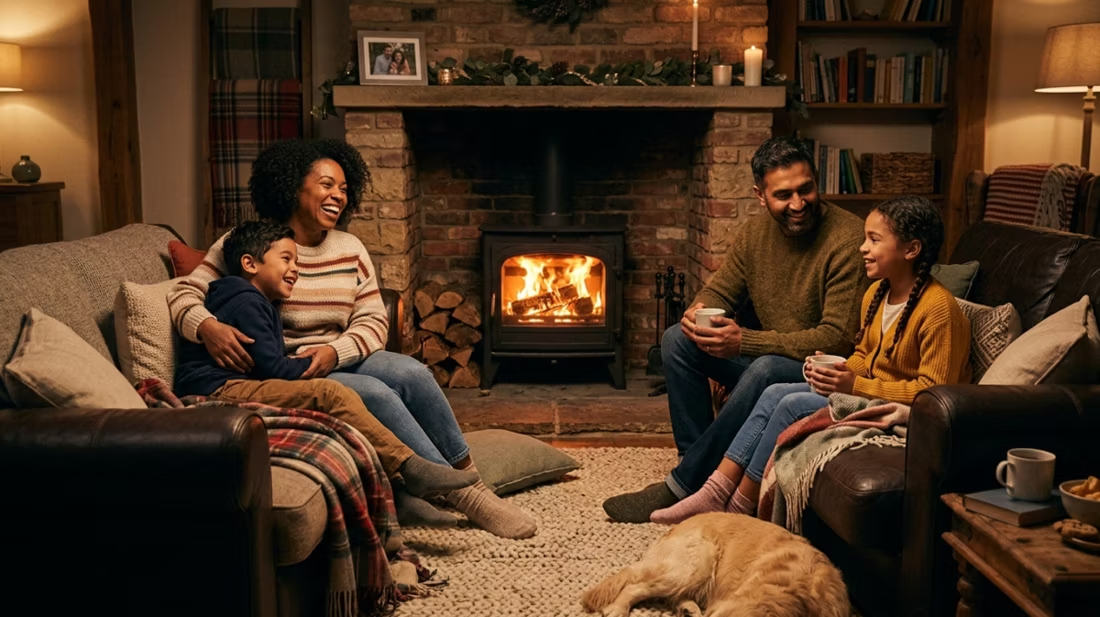
Four fuels. One honest answer for Ulster County.
Three steps. No salesperson until you're ready.
Tell us about your project
Your zip code, your situation, and the fuel you're leaning toward—or let the answers point you to one.
See what's actually available
The brands dealers within 100 miles genuinely carry—real options, never a catalog mirage.
Get your dealer & Project Guide
A trusted local dealer, plus the free Project Guide & Parts List that names every component of the job.
Frequently Asked Questions
Which fuel works best in Ulster County?
It depends on where you are in the county and what you need from a heating system. Wood is well-suited to Ulster's cold winters—oak, maple, birch, and ash are the species most local firewood suppliers and tree services sell, and a properly sized wood stove can carry a Catskill farmhouse through a 6,718-heating-degree-day winter on its own. Gas is the convenience fuel for homes along the Route 9W corridor and in Kingston with natural gas service through Central Hudson Gas & Electric, and propane fills the same role for rural addresses without gas mains. Pellet is a strong middle option here—Energex, Hamer Pellet Fuel, and Greene Team Pellet Fuel are all regionally produced or distributed, so supply stays local even in a hard winter. Electric works well as a secondary heat source or for ambiance in a bedroom or finished basement, but it's rarely the primary heater once temperatures drop into the single digits, which happens most winters. Many Ulster County homes end up running two fuels—wood or pellet for primary heat, gas or electric for convenience rooms.
Do I need a permit to install a fireplace in Ulster County?
Yes, in nearly every case. Ulster County doesn't issue a single countywide hearth permit—instead, each city, town, and village handles its own building permits. In the City of Kingston, that's the Kingston Building Department; in New Paltz, Saugerties, Woodstock, Marlboro, and the county's other towns, permits go through that town's building department. New wood stove and insert installations need to meet current EPA emissions standards, gas installations require a separate gas-line permit and licensed gas-fitter, and pellet stoves generally follow the same permitting path as wood appliances. Electric fireplaces usually skip the permit process unless the installation involves new wiring or a dedicated circuit. Most established hearth retailers in the county handle the permit paperwork as part of the installation, so you're rarely filing it yourself.
Are there air quality or wood-burning restrictions in Ulster County?
Ulster County doesn't have the kind of winter inversion problems or non-attainment designation you'd see in a mountain basin—there's no mandatory curtailment program here. That said, it's still worth installing an EPA-certified stove: newer catalytic and non-catalytic wood stoves burn 60-80% cleaner than pre-1990s units, which matters in tighter Catskill valleys like the Esopus Creek corridor where smoke can settle on cold, still nights. Open burning of yard waste and debris is regulated separately by New York DEC rules and is unrelated to indoor wood heat. If you're replacing an older stove, ask your local retailer about current EPA certification requirements before you buy—it affects both performance and resale.
Can one local hearth retailer handle all four fuel types?
Several Ulster County retailers carry three or four fuel types under one roof, which is useful if you're comparing options before committing. A full-line Kingston-area dealer will typically show working displays of wood, gas, and pellet units and stock at least a few electric models; smaller shops closer to the Catskill hamlets often specialize in wood and pellet, since that's what most mountain cabins and seasonal homes run. If you're not sure which fuel fits your home, a multi-fuel dealer is worth the drive—they can walk you through real trade-offs, like cordwood storage and stacking versus a pellet hopper and electricity dependence, using units they actually stock and install locally.
How does service work in the more rural parts of Ulster County?
Most chimney sweeps and gas techs are based near Kingston or the Route 9W towns and travel out to the Catskill hamlets—Phoenicia, Big Indian, Shandaken, Olivebridge—as part of their regular routes. Expect a modest travel charge, often $40-$75, for service calls further into the mountains. Because winters here run long, booking your annual chimney sweep or gas inspection in September or October—before the first hard frost—gets you an appointment well ahead of the rush; waiting until January for a wood stove problem can mean a multi-week wait. If you're in a seasonal cabin above Big Indian or along Route 28, it's worth asking your technician about winterizing service for the off-season too.
What's the typical cost range for fireplace installation across all fuel types in Ulster County?
Costs vary by fuel and by how much existing infrastructure you have. Wood stove or insert installation typically runs $4,000-$9,000, more for new full masonry chimney construction in a Catskill new-build. Gas fireplace, insert, or stove installation runs roughly $4,000-$10,000, with cost driven mainly by how far the gas line has to run and whether Central Hudson service is already at the house. Pellet stove or insert installs typically land between $4,000-$7,000. Electric fireplace units run from $200 for a small plug-in insert up to $3,000 for a built-in, plus $300-$1,200 in labor if it needs a dedicated circuit or custom surround. See the county + fuel pages above for retailer-specific pricing.
How much should I budget for a fireplace?
For an average home—covering the fireplace, the vent pipe, and basic installation—a budget between $3,900 and $5,500 gives you a lot of options across wood, gas, and pellet. By the time you add finish work, gas line, and electrical, the average complete installation lands between $5,000 and $12,000 all-in. In a remodel or new build, a good rule is to put about 2.5% of the total project cost toward the fireplace.
Does a fireplace add value to my home?
On average, a fireplace adds back to the home about the same amount you spent installing it. Add the monthly savings from heating the rooms you actually use instead of the whole house—often hundreds of dollars a year—and the value case is strong before you even count what a fire does for how your family uses the room.
Should the dealer who sells my fireplace also install it?
Ideally, yes. A fireplace project involves vent pipe, gas line, electrical, and often tile or stone. Hire three or four separate trades and you own the liability and the game of telephone between them. One company selling and installing means one accountable party, start to finish—ask about factory training, on-time completion records, and what happens if an inspection fails.
I know I want a fireplace—where do I actually start?
Do two things today: snap a photo of the wall or fireplace you want to transform, and take a tape measure to the space—width, height, depth. Those two artifacts answer most of a hearth professional's first questions. Then settle fuel (wood, gas, pellet, or electric) and set a realistic budget: $3,900–$5,500 covers fireplace, vent, and basic install for most homes.
Stove and Fireplace Dealers in Ulster County
Listings include WhyFire partner dealers, dealers we have verified as authorized for the brands we recommend, and established local businesses that carry hearth products. Every listing shows which one it is. The ones marked Preferred run on WhyFire's software, so they can show you real pricing and book your appointment right here. No manufacturer pays for placement. How we verify dealers →
Heat Survival, Inc.
Ashleigh’s Hearth & Home Inc.
Jp Chimney Services
Cracker Mill Hearth & Emporium
F & G Pools & Stoves
Firescapes Fireplace And Patio Corp
Route 52 Supplies
Find your fireplace in Ulster County.
Tell us your fuel and address, and we'll match you with a trusted local Ulster County dealer and send a free Project Guide & Parts List—the exact parts, vent kit included, and the dealer who can install it right.
Find Your Fireplace →