
Keep Your Family Warm and Safe—No Matter What
Brooklyn is one of the densest counties in the country, and most housing stock—attached rowhouses, brownstones, co-ops—was never built for a wood-burning appliance. For the minority of homes with a real chimney and some breathing room, we can still connect you with a dealer who knows the DOB and FDNY process cold.
Every Project Starts From One of These Five Situations
Wood heat is the exception, not the rule, in Kings County.
Kings County—Brooklyn—is home to 2.7 million people packed into 71 square miles, and the overwhelming majority live in attached rowhouses, brownstones, or multi-family buildings with shared walls and no side-yard access for Class A chimney pipe. Winters here are moderate by national standards—average lows around 28°F and a winter heating season closer in length and severity to Philadelphia than to the Adirondacks—so wood was never the primary heat source for most of the borough the way it is in colder, more rural counties. Con Edison natural gas and electric baseboard or heat pumps handle the vast majority of Kings County heating load.
That said, a small number of Kings County homeowners—mostly in the detached and semi-detached pockets of Midwood, Bay Ridge, Mill Basin, and Marine Park where original masonry chimneys survive—do install EPA-certified wood stoves or inserts, usually for supplemental heat or the ambiance of a real fire rather than as a primary heat source. Firewood itself typically arrives by delivery from upstate and Hudson Valley suppliers, with oak, maple, birch, and ash the most common species sold into the city. Any installation in Kings County has to clear both the NYC Department of Buildings and FDNY, and the flue condition on a 100-year-old brownstone chimney is rarely something you can assume is sound—a licensed chimney professional needs to inspect and often reline before a stove or insert goes in.
Three steps. No salesperson until you're ready.
Tell us about your project
Your zip code, your situation, and the fuel you're leaning toward—or let the answers point you to one.
See what's actually available
The brands dealers within 100 miles genuinely carry—real options, never a catalog mirage.
Get your dealer & Project Guide
A trusted local dealer, plus the free Project Guide & Parts List that names every component of the job.
Frequently Asked Questions
Can I even install a wood stove in a Brooklyn brownstone?
Sometimes, but it depends heavily on the specific building. A freestanding wood stove needs floor space, code-compliant clearances to combustibles, and a vent path to the outside—all of which are in short supply in a narrow rowhouse. A wood-burning insert into an existing masonry fireplace is usually the more realistic path if your brownstone has an original chimney, but many Brooklyn chimneys haven't been used in decades and need inspection and often a stainless liner before anything is installed. If you're in a co-op or condo, check your building's alteration agreement first—many boards restrict or prohibit new wood-burning appliances outright, separate from any city permit question.
Do I need a permit to install a wood stove in Kings County?
Yes. Any new wood-burning appliance installation in Kings County requires a permit through the NYC Department of Buildings, and the work needs FDNY sign-off given the fire code implications of solid-fuel appliances in attached and multi-family housing. This is a more involved process than a typical suburban county permit—expect the local installer to handle DOB filing as part of the job, since navigating it yourself without a licensed professional is genuinely difficult in NYC.
How much does a wood stove installation cost in Kings County?
There's no standard local price because so few installations happen here, but expect costs to run well above what you'd see in a typical suburban or rural county due to DOB filing fees, FDNY inspection requirements, chimney relining on older brownstone flues, and the general difficulty of moving equipment through a narrow rowhouse. A straightforward insert into an already-sound masonry chimney will cost far less than a full stove installation requiring new venting through a party wall or roof. Get a firm quote from a local installer who has actually pulled DOB permits in Brooklyn before—this is not a project to price off national averages.
Is wood heat even worth it given Brooklyn's winters?
For most Kings County homes, no—not as a primary heat source. With average winter lows around 28°F and a winter heating season that's meaningfully milder than the wood-heating counties of upstate New York or New England, the vast majority of homes here already run on Con Edison gas or electric heat. Where wood does make sense is as supplemental heat or ambiance in the relatively rare Kings County home with a functioning chimney and some detached square footage—think a Mill Basin or Bay Ridge house with a yard, not a Park Slope brownstone floor-through.
What's the difference between a wood stove and a wood insert for a Brooklyn home?
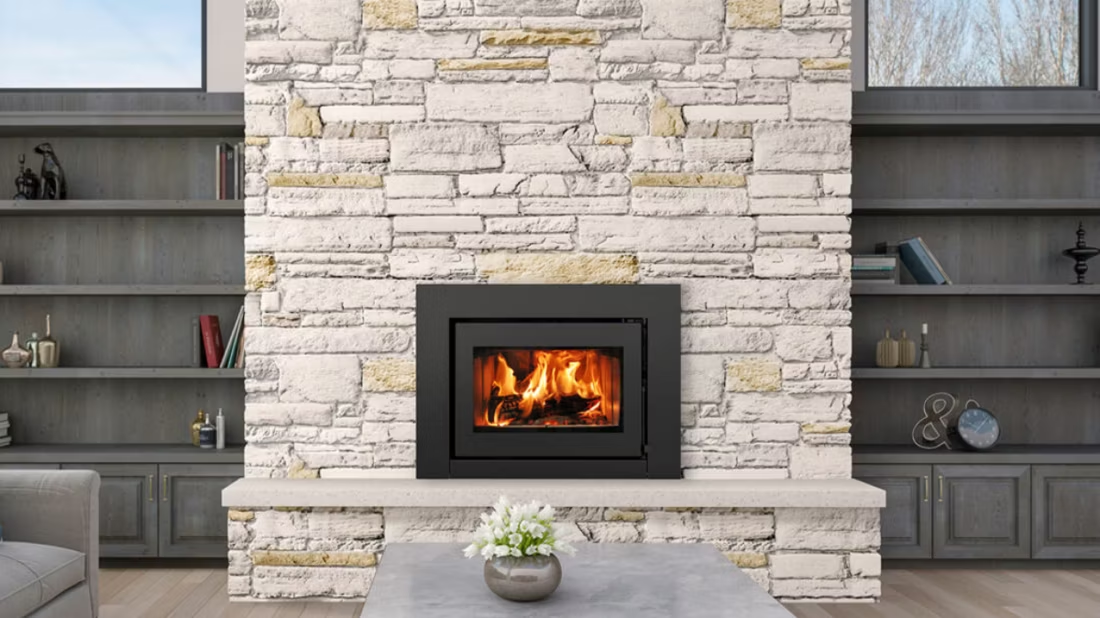
A freestanding wood stove sits on its own hearth pad and vents through new Class A pipe—it needs floor space and a clear path to the exterior, which is hard to come by in an attached rowhouse. A wood insert drops into an existing masonry fireplace opening and uses the existing chimney (usually with a new stainless liner) as its vent. For the handful of Kings County homes with an old, unused fireplace and chimney still standing, an insert is almost always the more practical option since it doesn't require cutting new venting through walls or a roof shared with neighbors.
Where does firewood for Brooklyn homes actually come from?
Because Kings County isn't a wood-producing area, firewood for the borough's handful of wood-burning households is delivered commercially, typically sourced from suppliers in the Hudson Valley or upstate New York. Oak, maple, birch, and ash are the species most commonly sold into the city—all good, dense hardwoods that season well and burn efficiently. Expect to buy by the face cord or half cord given typical Brooklyn storage constraints rather than the full cord quantities common in rural counties.
Are there air quality restrictions on wood burning in Kings County?
Kings County doesn't carry the same non-attainment or winter-inversion designations you'd see in a mountain basin, so there's no seasonal burn-ban system here. That said, NYC's air pollution control code does regulate new solid-fuel appliance installations, and any new wood stove or insert needs to meet current EPA emissions standards. Given how few wood-burning households exist in a borough of 2.7 million people, city regulators are mainly focused on the installation and appliance certification itself rather than day-to-day burning restrictions.
What are the alternatives to wood heat in Kings County?
Given the building stock and permitting realities here, most Kings County homeowners looking for supplemental or backup heat end up considering a direct-vent gas fireplace or insert—Con Edison natural gas service covers most of the borough, and gas venting is far more workable in an attached rowhouse than a wood chimney retrofit. Electric fireplaces and inserts are another common choice, especially in co-ops and condos where any solid-fuel or open-flame appliance faces board restrictions—they need no venting at all and no DOB filing for the appliance itself in most cases.
How do I find an installer who actually knows Brooklyn's permitting process?
This matters more here than almost anywhere else. Look for an installer who can speak specifically to NYC Department of Buildings filing and FDNY sign-off for solid-fuel appliances, not just general chimney or hearth experience from outside the five boroughs. A contractor unfamiliar with the DOB process can stall a project for months. We match Kings County homeowners with trusted local dealers who've actually pulled these permits in Brooklyn before, so you're not the one figuring out city bureaucracy from scratch.
Why is a fireplace insert so efficient?
An insert does two things: it seals the chimney completely, so you stop losing air you already paid to heat, and it radiates warmth into the room through the firebox and glass. Most add a heat-exchange fan that pulls cool room air underneath, wraps it around the hot firebox, and pushes it back out warm. Your home is more efficient before you've even lit the first fire.
Do I have to leave the stove door cracked open to start a fire?
On many stoves, yes—a new fire needs extra air, and cracking the door a couple inches is how most stoves get it. But some modern stoves offer an automatic startup air system: engage it when you light, and timed air jets feed the fire for the first 20 minutes with the door fully shut, then close automatically. It's mechanical—like an egg timer, no electricity—and it means you can load it, light it, and walk away.
Does a fireplace add value to my home?
On average, a fireplace adds back to the home about the same amount you spent installing it. Add the monthly savings from heating the rooms you actually use instead of the whole house—often hundreds of dollars a year—and the value case is strong before you even count what a fire does for how your family uses the room.
How much should I budget for a fireplace?
For an average home—covering the fireplace, the vent pipe, and basic installation—a budget between $3,900 and $5,500 gives you a lot of options across wood, gas, and pellet. By the time you add finish work, gas line, and electrical, the average complete installation lands between $5,000 and $12,000 all-in. In a remodel or new build, a good rule is to put about 2.5% of the total project cost toward the fireplace.
Stove and Fireplace Dealers in Kings County
Find out if a wood stove works for your Kings County home.
Tell us about your home—brownstone, rowhouse, or detached—and we'll match you with a trusted local dealer who knows Brooklyn's permitting realities, plus a free Project Guide & Parts List if wood heat is actually a fit.
Find Your Fireplace →