
Real fireplace warmth, no chimney required.
From Park Slope brownstones to Bed-Stuy walk-ups, electric is the fireplace option that clears co-op boards, skips the Landmarks Preservation fight, and plugs into the outlet you already have. Find the right unit and connect with a trusted local dealer.
Every Project Starts From One of These Five Situations
Built for buildings that can't burn anything.
Kings County packs 2.7 million people into 71 square miles, and most of that housing stock—prewar walk-ups, row houses, co-op conversions—was never built to accommodate a working chimney, let alone a new one. Plenty of Brooklyn brownstones still have their original marble or wood mantels framing a firebox that was sealed decades ago. Winters here aren't brutal by national standards (winter lows average 28°F, a moderate heating season, climate zone 4A), but they're cold enough that a supplemental heat source in the front parlor or bedroom makes a real difference on a February night—and for most Kings County residences, that source has to be electric.
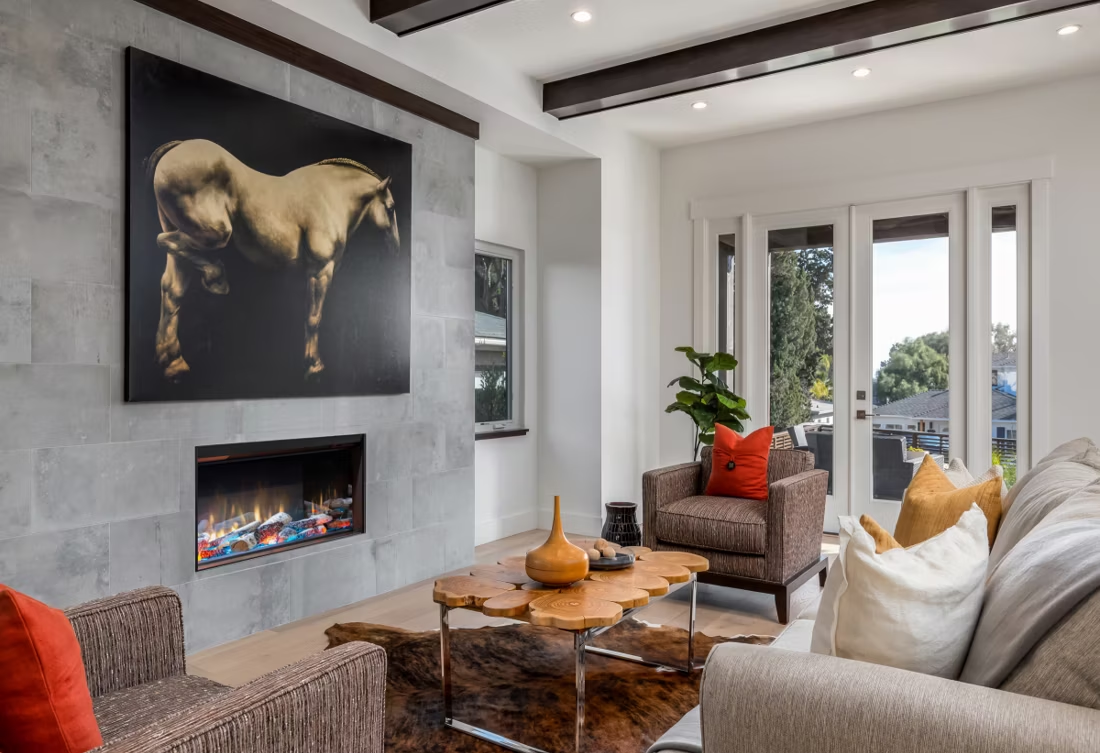
Electric fireplaces solve the problem that gas and wood can't: no venting, no gas line, no flue inspection, and in most cases no permit fight with a co-op board or the NYC Department of Buildings. A cord-connected insert can go straight into that old brownstone firebox behind the mantel you already have. A hardwired 240V unit needs an electrician and a dedicated circuit, but still skips the structural and code hurdles that come with anything requiring combustion venting in a shared building. Con Edison delivers the power either way—no separate fuel account, no delivery truck, no storage.
Three steps. No salesperson until you're ready.
Tell us about your project
Your zip code, your situation, and the fuel you're leaning toward—or let the answers point you to one.
See what's actually available
The brands dealers within 100 miles genuinely carry—real options, never a catalog mirage.
Get your dealer & Project Guide
A trusted local dealer, plus the free Project Guide & Parts List that names every component of the job.
Frequently Asked Questions
How much does it cost to install an electric fireplace in Kings County?
It depends almost entirely on whether the unit plugs into a standard outlet or needs new electrical work. A cord-connected insert or wall-mount unit that runs on a standard 120V circuit can often go in for the cost of the unit itself plus a few hours of labor to mount it and finish the surround—many renters and co-op owners choose this route specifically to avoid touching the building's electrical system. A hardwired 240V insert with a higher heat-output rating requires a licensed electrician to run a dedicated circuit, which adds real cost, especially in older Brooklyn buildings where panel capacity is already tight. Get a firm number from a local dealer once they've seen your panel and the wall or firebox you're working with.
Do I need a permit from the NYC Department of Buildings for an electric fireplace?
A cord-connected, plug-in electric fireplace generally doesn't trigger a DOB permit—it's treated like any other appliance. Once you add new electrical work, like a dedicated 240V circuit or a new outlet run through a wall, that work needs to be done by a licensed electrician, and depending on scope may require an electrical permit filed with DOB. If you're in a landmarked district—Park Slope, Fort Greene, Clinton Hill, and parts of Bedford-Stuyvesant all have Landmarks Preservation Commission oversight—that layer applies to exterior work, not interior electric fireplace installs, so it's rarely a factor here. A local dealer who's done Brooklyn installs before will know exactly what triggers a filing and what doesn't.
Can I put an electric insert into my Brooklyn brownstone's existing non-working fireplace?
Yes, and it's one of the most common projects in Kings County's older housing stock. Most Brooklyn brownstones and row houses have a decorative firebox behind the original mantel that was sealed off from the chimney generations ago. An electric insert sized to fit that opening restores the visual of a working fireplace—flame effect, glow, sometimes heat—without touching the masonry or the flue. Measuring the firebox opening correctly matters here, since older Brooklyn fireboxes vary widely in size and depth from house to house, block to block, even within the same row. A local dealer will size the insert to your actual opening rather than a generic template.
Will my co-op or condo board actually approve an electric fireplace?
Almost always, and far more easily than gas or any combustion appliance. Kings County co-op and condo boards routinely prohibit wood-burning units and heavily restrict gas line work, but electric fireplaces don't involve combustion, venting, or a gas line, so most alteration agreements treat them like any other electrical appliance. The one thing boards do sometimes flag is a new dedicated circuit, since that involves building electrical infrastructure—worth checking your proprietary lease or alteration policy before committing to a hardwired 240V unit versus a simpler plug-in model.
Do I need a dedicated circuit, or can I just plug it in?
Most electric fireplaces sold for supplemental heat in a single room run on a standard 120V outlet and don't need any new wiring—this covers the majority of wall-mount and insert models used in Kings County apartments and brownstone parlors. Higher-output built-in units, especially larger linear models meant to be a room's primary heat source, often call for a dedicated 240V circuit to run efficiently and safely. In prewar Brooklyn buildings where panels are already carrying a lot of load, a dedicated circuit is usually the safer call even for a 120V unit if you're running it for hours at a time—ask your electrician to check actual panel capacity before you commit to a unit.
Why don't more Kings County homes use wood stoves?
Wood heat just doesn't fit most of Kings County's housing stock. The borough is almost entirely multi-family—row houses, brownstones, prewar apartment buildings—and the vast majority don't have a functioning chimney rated for solid-fuel burning, let alone the clearances a wood stove needs. NYC Fire Code and most co-op and condo governing documents prohibit wood-burning installations outright in shared buildings. There are a small number of detached or semi-detached homes in neighborhoods like Mill Basin, Bergen Beach, and Gerritsen Beach where a real wood-burning setup with oak or maple firewood is technically feasible, but even there it's the exception rather than the norm. For nearly all of Kings County, electric is the practical substitute for that fireplace look and feel.
What about pellet stoves—are they an option in Brooklyn?
Pellet fuel itself is available in the region—brands like Energex, Hamer Pellet Fuel, and Greene Team Pellet Fuel supply the broader New York market—but pellet stoves are rare in Kings County for the same reasons wood stoves are: most buildings lack suitable venting, and bag storage is a nonstarter in a 700-square-foot apartment or a shared brownstone basement. A pellet stove also needs a dedicated exterior vent, which runs into the same co-op board and Fire Code restrictions as a wood-burning unit. If you want the fireplace experience without the venting and storage problem, electric is almost always the workable answer here.
How much heat can I actually expect from an electric fireplace in a Brooklyn apartment?
A standard electric fireplace puts out roughly 5,000 BTU, which is enough to comfortably warm a single room—a parlor, bedroom, or home office—as supplemental heat, not a replacement for your building's central heat or radiators. Given Kings County's climate (winter lows averaging 28°F, a moderate heating season), that's usually exactly the role it plays: taking the edge off a drafty prewar room or extending comfortable evenings in a converted parlor floor without cranking the building's boiler. If you're trying to heat a larger open loft-style space, talk to a local dealer about a higher-output linear unit on its own 240V circuit.
What's the lifespan and maintenance on an electric fireplace or insert?
Electric fireplaces are low-maintenance by design—no chimney to sweep, no gas line to service, no soot or ash. Most quality units last well over a decade with nothing more than occasional dusting of the heater vents and replacing the LED light source down the road, which on most modern units is rated for tens of thousands of hours. The main point of failure over time is usually the heating element or blower fan rather than the flame-effect display, and most manufacturers cover those parts for several years. For a rental or co-op unit, that low-maintenance profile is part of the appeal—nobody wants to coordinate a chimney sweep visit through a building's freight elevator schedule.
Can I put a TV above my fireplace?
Yes—with an asterisk. Fireplaces are hot and TVs don't like heat. Either put a mantel between them to deflect rising warmth, or choose a fireplace with heat-management technology that creates a cool zone on the wall above—the wall stays around 125 degrees, barely warm, while the room still gets full heat. If you like clean lines and don't want a mantel, heat management is the answer.
Does an electric fireplace need a vent or chimney?
No—that's its superpower. An electric fireplace needs a wall and an outlet, period. No vent pipe, no gas line, no clearances to design around, which is why it works in bedrooms, offices, apartments, and walls where venting a gas or wood unit would be impractical or impossible. Installation is typically the simplest and least expensive of any fireplace type.
Can I install a fireplace myself?
If you're putting a fire in your house on purpose, it's best to work with an expert. Unless you're genuinely experienced in framing, gas line, vent pipe, and the national code on clearances to combustibles, have a professional do it—and ideally the same company that sells you the fireplace, so warranty, service, and liability all live under one roof.
How much should I budget for a fireplace?
For an average home—covering the fireplace, the vent pipe, and basic installation—a budget between $3,900 and $5,500 gives you a lot of options across wood, gas, and pellet. By the time you add finish work, gas line, and electrical, the average complete installation lands between $5,000 and $12,000 all-in. In a remodel or new build, a good rule is to put about 2.5% of the total project cost toward the fireplace.
Stove and Fireplace Dealers in Kings County
Find your electric fireplace in Kings County.
Tell us about your building, your firebox or wall space, and your co-op or condo rules—we'll match you with a trusted local dealer and a free Project Guide & Parts List for your Kings County installation.
Find Your Fireplace →