
Find your pellet stove in Jefferson County.
Automated, thermostat-controlled heat for the long lake-effect winters of Watertown, Fort Drum, and the Tug Hill Plateau. Find the right pellet stove or insert, and get matched with a trusted local dealer.
Every Project Starts From One of These Five Situations
Steady, thermostat-controlled heat through the lake-effect belt.
Jefferson County sits along the eastern edge of Lake Ontario, and it includes a slice of the Tug Hill Plateau, one of the snowiest places in the eastern United States. With 7,293 heating degree days and average winter lows around 11°F, the heating season here runs long—roughly on par with Burlington, Vermont—and it starts well before Halloween in the higher, snowier townships east of Watertown. Between the county seat, the Fort Drum military community, and rural towns like Adams, Carthage, and Alexandria Bay, households here need heat they can count on through months of gray, snow-loaded weather.
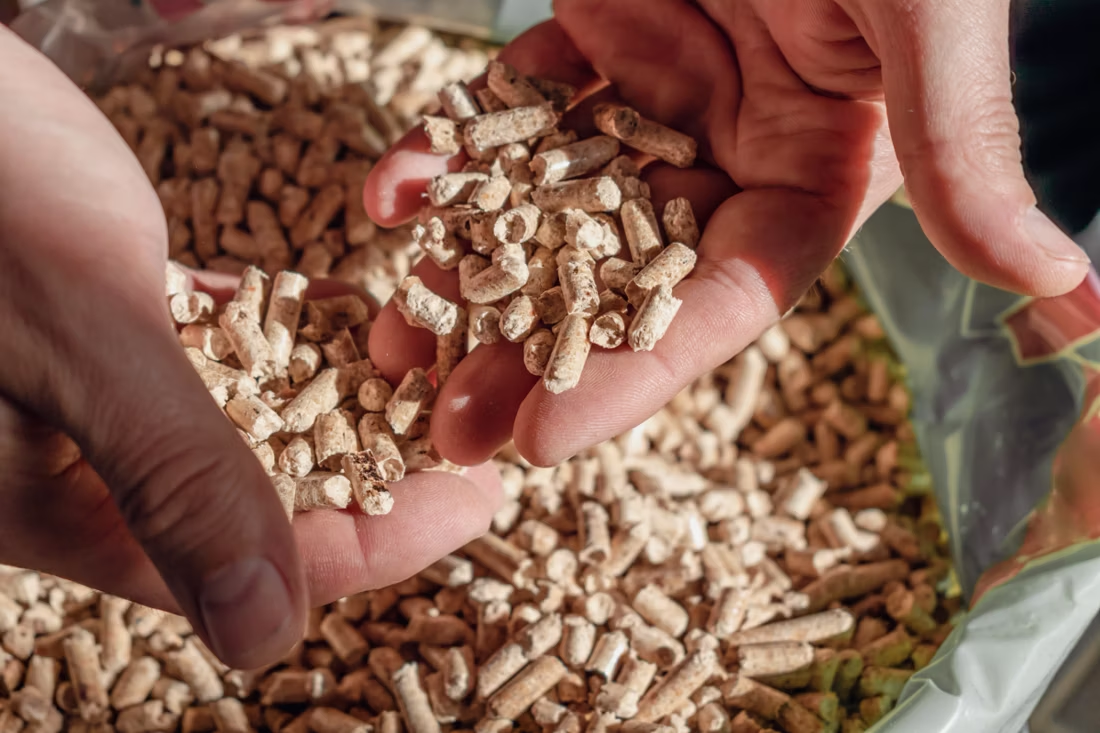
Pellet stoves have become a mainstay in this part of the county because they solve a problem wood alone doesn't: consistent, set-it-and-forget-it heat without daily wood splitting or overnight fire tending—a real advantage for Fort Drum families juggling deployment schedules and PCS moves, and for anyone managing a long Tug Hill winter without wanting to become a full-time wood processor. Regional pellet brands including Energex, Hamer Pellet Fuel, and Greene Team Pellet Fuel are readily available throughout the county, and the region's abundant oak, maple, birch, and ash forests support a healthy local hardwood pellet supply chain. A properly sized pellet stove or insert, matched by a local dealer who understands lake-effect snow loads and Tug Hill delivery logistics, keeps a home warm through the coldest, snowiest stretch of the year.
Three steps. No salesperson until you're ready.
Tell us about your project
Your zip code, your situation, and the fuel you're leaning toward—or let the answers point you to one.
See what's actually available
The brands dealers within 100 miles genuinely carry—real options, never a catalog mirage.
Get your dealer & Project Guide
A trusted local dealer, plus the free Project Guide & Parts List that names every component of the job.
Frequently Asked Questions
How much does a pellet stove installation cost in Jefferson County?
Most pellet stove installations run in the range typical across upstate New York—generally a few thousand dollars for a straightforward side-wall vented unit, more if you're converting an existing masonry fireplace into a pellet insert or running venting through an exterior wall with masonry or siding work involved. Jefferson County municipalities, including Watertown, typically require a building permit for a new solid-fuel appliance installation, and most local dealers handle that paperwork as part of the install. Rural installations out toward the Tug Hill towns or Alexandria Bay may carry a modest travel charge, since technician drive time adds up across the county's geography.
What size pellet stove do I need for my home in Jefferson County?
With 7,293 heating degree days and winter lows averaging 11°F, Jefferson County sits solidly in climate zone 6A—a long, cold heating season that runs from October well into April in the higher Tug Hill townships. Small pellet stoves suit a single room or a well-insulated cabin; mid-size units handle most main living areas in a typical Watertown or Carthage home; larger units are worth considering for older farmhouses or homes near the Tug Hill snowbelt where drafts and elevation both push heating demand higher. A local dealer will size based on your square footage, insulation, and how much of your heat load the pellet stove needs to carry versus a furnace or boiler.
Where can I find certified pellet stove installers near Watertown?
Look for dealers with NFI (National Fireplace Institute) certified technicians, which indicates formal training on venting, clearances, and appliance-specific installation requirements. Local hearth retailers serving Jefferson County generally cover Watertown, Fort Drum, Carthage, and the Thousand Islands corridor, with some willing to travel farther into Tug Hill communities for an added fee. Because pellet stoves rely on a powered auger, hopper, and combustion blower, proper venting and electrical setup matter as much as clearance-to-combustibles—this isn't a project suited to a general handyman install.
What's the difference between a pellet stove and a pellet insert?
A pellet stove is a freestanding, self-contained unit that sits on a hearth pad and vents through a wall or roof—it can go almost anywhere in a room with the right clearances. A pellet insert is built to slide into an existing masonry fireplace opening, turning a drafty open hearth into a sealed, thermostat-controlled heat source. For Jefferson County homes with an existing fireplace—common in the county's older farmhouses and lake-area cottages—an insert often makes the most sense, since it reuses the chimney chase for venting. Homes without an existing fireplace typically go with a freestanding stove instead.
Do I need a permit to install a pellet stove in Jefferson County?
Yes—new solid-fuel appliance installations generally require a building permit through the local municipality, whether that's the City of Watertown or one of the county's towns. Most local dealers fold the permitting into the installation process. On the air-quality side, Jefferson County has no reported air-quality nonattainment or winter-inversion concerns, so unlike some western states there are no curtailment periods or burn-ban restrictions to plan around here—pellet stoves are already among the cleanest-burning solid-fuel appliances available, and that holds true in this county without added local regulation.
What's the best pellet stove for Jefferson County's climate?
For a heating season this long—7,293 HDD, with sustained cold and heavy snow in the Tug Hill towns—look for units with a larger hopper capacity so you're not refilling constantly during multi-day snow events when roads may be tough to travel. Higher-BTU pellet stoves rated for continuous cold-climate use hold up well here, and a battery backup or small inverter setup is worth discussing with your dealer, since pellet stoves depend on electricity to run the auger and combustion blower—a real consideration when Tug Hill ice and lake-effect storms occasionally knock out power. A local dealer familiar with Jefferson County conditions can match hopper size and BTU output to your home and your risk tolerance for storm-season outages.
How often should my pellet stove be serviced and cleaned?
Plan on a full annual service—typically before the heating season ramps up in the fall—covering the burn pot, auger, exhaust fan, and venting. Given the length of the Jefferson County heating season, ash removal from the burn pot is usually needed every few days during steady winter use, and the hopper and auger area benefit from a deeper cleaning every few weeks. Households running the stove as a primary heat source through a full Tug Hill winter should expect more frequent attention than a home using it for supplemental heat only.
Where can I buy pellets in Jefferson County?
Regional brands including Energex, Hamer Pellet Fuel, and Greene Team Pellet Fuel are commonly stocked at hardware stores, farm supply outlets, and hearth dealers throughout the county. Given how long and demanding the heating season is here, many local households buy their pellet supply in late summer or early fall before demand—and prices—climb with the first hard freeze. Buying a full season's supply ahead of the Tug Hill snow also avoids the hassle of hauling pallets home during a lake-effect storm.
Pellet stove vs. wood stove—which is right for my Jefferson County home?
Wood stoves work without electricity, which matters in Tug Hill and lakeshore areas where ice storms and heavy lake-effect snow occasionally cause multi-day outages—and the county's abundant oak, maple, birch, and ash makes self-supplied or locally-sourced firewood practical. Pellet stoves offer more consistent, thermostat-set heat and far less daily labor, but they need electricity to run the auger and blower, so they're not a stand-alone backup during an outage unless paired with a generator or battery system. Many Jefferson County households land on pellet for daily convenience in the main living space and keep a wood stove or fireplace elsewhere in the home as a storm-season backup.
Why is a fireplace insert so efficient?
An insert does two things: it seals the chimney completely, so you stop losing air you already paid to heat, and it radiates warmth into the room through the firebox and glass. Most add a heat-exchange fan that pulls cool room air underneath, wraps it around the hot firebox, and pushes it back out warm. Your home is more efficient before you've even lit the first fire.
How often does a pellet stove need cleaning?
A clean pellet stove is a happy pellet stove. Plan on cleaning the burn pot about once a week when you're burning regularly—ash and clinkers gum up the air holes just like a pellet barbecue. Most pellet stove problems trace back to skipped cleaning that nobody explained up front. Some designs make it easy with a trapdoor burn pot: pull a lever and the gunk drops into the ash pan.
What is an in-home preview and do I need one?
It's a visit where a hearth professional measures your space, confirms the model you picked actually works in your home, and walks the specs—framing, gas line, venting, finish work—before anything is ordered. Some details you just can't know until you see the house. Never make a down payment without one; it's the single most-skipped step that burns buyers.
How much should I budget for a fireplace?
For an average home—covering the fireplace, the vent pipe, and basic installation—a budget between $3,900 and $5,500 gives you a lot of options across wood, gas, and pellet. By the time you add finish work, gas line, and electrical, the average complete installation lands between $5,000 and $12,000 all-in. In a remodel or new build, a good rule is to put about 2.5% of the total project cost toward the fireplace.
Stove and Fireplace Dealers in Jefferson County
Pellet Brands Stocked Around Jefferson County
Manufacturers will point you to the nearest stocking dealer.
Find your pellet stove in Jefferson County.
Tell us about your home and heating goals, and we'll match you with a trusted local dealer and put together a free Project Guide & Parts List—the exact stove, vent kit, and parts recommended for your Jefferson County installation.
Find Your Fireplace →