
Heat that holds through Tug Hill winters.
Wood, gas, pellet, and electric fireplace resources for every community in Jefferson County—from Watertown and Fort Drum to Cape Vincent and Alexandria Bay. Find the right unit and connect with a trusted local hearth retailer.
Every Project Starts From One of These Five Situations
Lake-effect winters across Jefferson County, New York.
Jefferson County sits at the northern edge of the Tug Hill Plateau, where moisture off Lake Ontario dumps some of the heaviest snowfall totals east of the Rockies. With a long, demanding heating season and an average winter low around 11°F, the climate here runs close to Buffalo, NY—long heating seasons, deep snowpack, and stretches of hard cold that test any heating system. Hardwood is abundant and cheap to source locally: oak, maple, birch, and ash are the dominant species split and burned across the county, and a wood stove loaded with dense oak or maple can hold overnight heat through a Tug Hill cold snap far better than softwood alone.
What you'll find on this hub: hearth retailers, service technicians, and fuel suppliers serving every community in the county—from Watertown and the Fort Drum area down to Adams and Carthage, and out to the river towns of Cape Vincent, Clayton, and Alexandria Bay along the St. Lawrence. Pick your fuel below to drill into specifics—local dealers, installation costs, recommended units, and the resources that match your project. Whether you're heating a farmhouse near Adams or a camp on the river, this is the starting point.
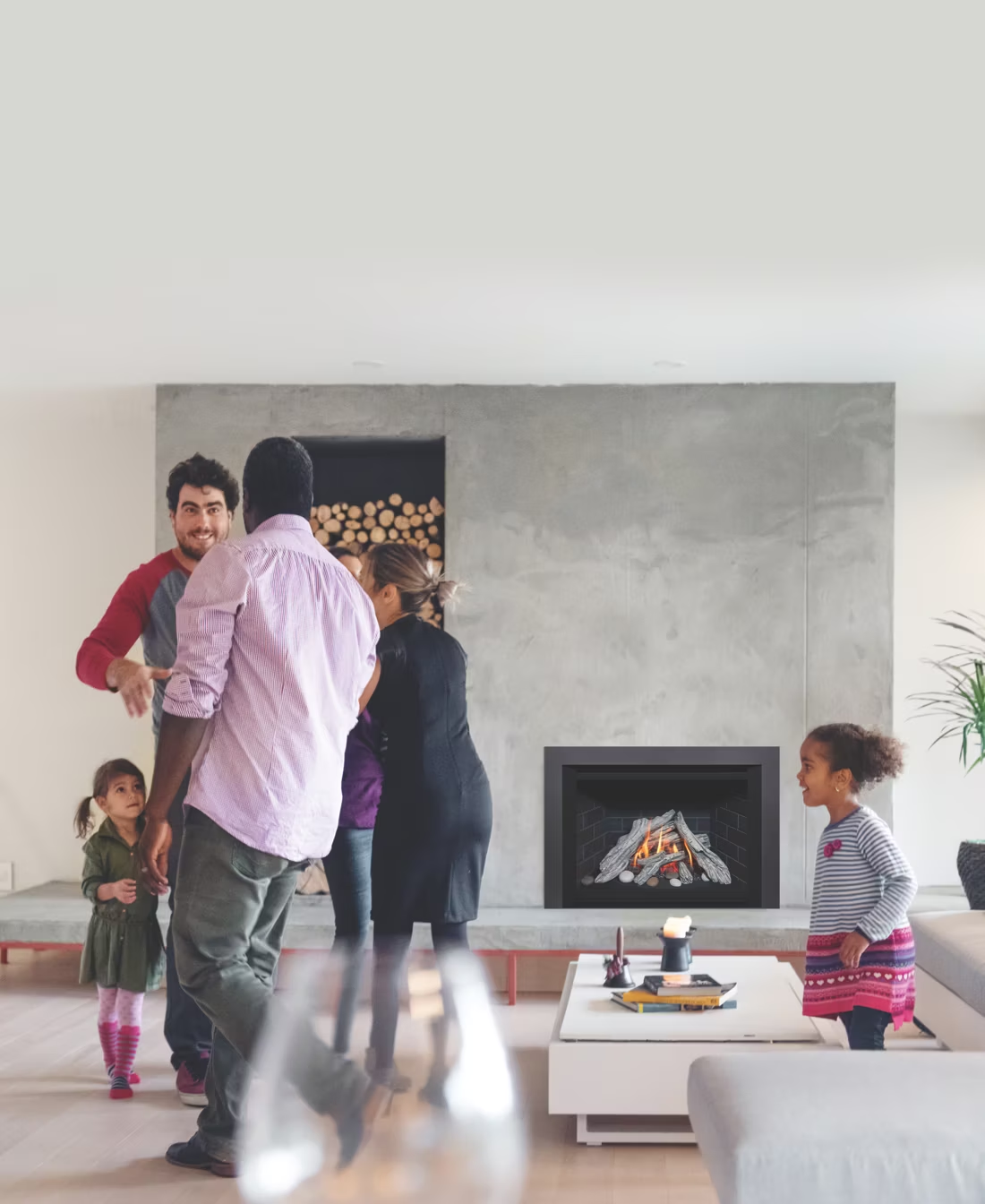
Four fuels. One honest answer for Jefferson County.
Three steps. No salesperson until you're ready.
Tell us about your project
Your zip code, your situation, and the fuel you're leaning toward—or let the answers point you to one.
See what's actually available
The brands dealers within 100 miles genuinely carry—real options, never a catalog mirage.
Get your dealer & Project Guide
A trusted local dealer, plus the free Project Guide & Parts List that names every component of the job.
Frequently Asked Questions
Which fuel works best in Jefferson County?
It depends on your home and situation. Wood is a strong fit here—oak, maple, birch, and ash are all locally abundant and split cheap or free from your own woodlot, and a catalytic or non-cat wood stove loaded with dense hardwood can carry a home through an 11°F overnight low without much trouble. Gas is the convenience choice for Watertown-area homes on National Grid's natural gas network, and for rural homes running on propane—no wood-splitting, no ash, instant heat. Pellet fits homeowners who want wood-style ambiance without the labor; Energex, Hamer, and Greene Team pellets are all readily available in this region, so supply isn't a concern. Electric is best treated as supplemental—good for a bedroom, den, or apartment unit, but not the primary heat source through a Tug Hill winter. Most Jefferson County homes end up running a combination: wood or pellet as primary, gas or electric to cover secondary rooms.
Do I need a permit to install a fireplace in Jefferson County?
In most cases, yes, but permitting in Jefferson County runs through your local town, village, or city building department rather than a single county office—Watertown, Carthage, and each of the county's towns issue their own building permits. New wood stoves, inserts, gas fireplaces, gas inserts, and pellet stoves generally require a permit and inspection; gas installations also need a licensed gas-fitter for the line connection. Electric fireplaces are usually permit-free unless the install involves new wiring or a dedicated circuit for a built-in unit. Most local hearth retailers handle the permitting paperwork as part of the installation, so you typically don't have to track down the right office yourself.
Is wood heat still practical in Jefferson County with modern homes and codes?
Yes—wood remains a genuinely practical primary or backup heat source here, and there are no air quality non-attainment issues or burn-curtailment programs in Jefferson County the way there are in some western basins, so wood burning isn't restricted by local air quality rules. New installs need to be EPA-certified units, which is standard practice at any reputable local dealer. With oak, maple, birch, and ash all common in county woodlots, fuel cost is often the lowest of any heating option once you're set up with a few cords of seasoned hardwood—the tradeoff is the labor of splitting, stacking, and feeding the stove through a long Tug Hill heating season.
Can one local hearth retailer handle all four fuel types?
Many Jefferson County hearth retailers carry at least three of the four fuel types, and some carry all four—wood, gas, pellet, and electric—which is worth asking about directly if you want to compare options side by side before committing. Retailers closer to Watertown tend to have the broadest showroom selection across fuels; dealers in smaller river towns may focus more narrowly on wood and pellet, since propane and electric installs are often simpler and don't require the same showroom investment. If you're cross-shopping fuels, a multi-fuel dealer can show you working displays and walk through the tradeoffs for your specific home and heating goals.
How does service work in the rural and river-town parts of Jefferson County?
Most service technicians serving Jefferson County are based around Watertown and travel out to the river towns—Cape Vincent, Clayton, Alexandria Bay—and inland communities like Adams, Antwerp, and Carthage. Lake-effect snow off Lake Ontario can shut down roads for a day or two at a time in the Tug Hill snowbelt, so scheduling ahead matters more here than in most places. Expect a modest travel fee for calls outside the immediate Watertown area, and book pre-season chimney sweeps and gas inspections in September or October—mid-winter emergency calls during a lake-effect event can mean a longer wait. Homes relying on wood as a backup heat source for power outages should have that stove serviced and ready before the first big snow, not after.
What's the typical cost range for fireplace installation across all fuel types in Jefferson County?
Ranges vary by fuel. Wood stove or insert installation: roughly $4,000–$9,500 for a typical install, climbing toward $15,000 for new construction with full chimney and hearth work. Gas fireplace, insert, or stove: about $4,500–$11,000 depending on whether new gas line work is needed, with conversions on the lower end where gas service already reaches the home. Pellet stove or insert: typically $4,000–$7,500. Electric fireplace: $200–$3,000 for the unit itself, plus $400–$1,200 in labor for anything beyond a simple plug-and-play setup. For local pricing tied to specific retailers, see the county + fuel pages above.
Wood, gas, pellet, or electric—how do I choose?
Match the fuel to your life, not the other way around. Wood: lowest fuel cost and total power-outage independence, but you're hauling and stacking. Gas: press a button, set a thermostat, no maintenance to speak of. Pellet: wood economics with automatic feeding, in exchange for weekly cleaning and a need for electricity. Electric: plugs in anywhere with honest supplemental heat. Nobody regrets the fuel that fits how they actually live.
What is an in-home preview and do I need one?
It's a visit where a hearth professional measures your space, confirms the model you picked actually works in your home, and walks the specs—framing, gas line, venting, finish work—before anything is ordered. Some details you just can't know until you see the house. Never make a down payment without one; it's the single most-skipped step that burns buyers.
Can I install a fireplace myself?
If you're putting a fire in your house on purpose, it's best to work with an expert. Unless you're genuinely experienced in framing, gas line, vent pipe, and the national code on clearances to combustibles, have a professional do it—and ideally the same company that sells you the fireplace, so warranty, service, and liability all live under one roof.
How much should I budget for a fireplace?
For an average home—covering the fireplace, the vent pipe, and basic installation—a budget between $3,900 and $5,500 gives you a lot of options across wood, gas, and pellet. By the time you add finish work, gas line, and electrical, the average complete installation lands between $5,000 and $12,000 all-in. In a remodel or new build, a good rule is to put about 2.5% of the total project cost toward the fireplace.
Stove and Fireplace Dealers in Jefferson County
Listings include WhyFire partner dealers, dealers we have verified as authorized for the brands we recommend, and established local businesses that carry hearth products. Every listing shows which one it is. The ones marked Preferred run on WhyFire's software, so they can show you real pricing and book your appointment right here. No manufacturer pays for placement. How we verify dealers →
North Country Hearth
Equipment Rentals, Inc.
Sharp's Bulk Foods Grocery Store
Moose River Hearth & Home
Find your fireplace project in Jefferson County.
Pick your fuel below and I'll match you with a trusted local dealer and send over a free Project Guide & Parts List—the exact parts, including the vent kit, for your project and home.
Find Your Fireplace →