
Pellet heat built for Adirondack winters and Essex County homes.
With a long, demanding heating season and winter lows averaging 10°F across the High Peaks, Essex County homes need heat that runs steady from November through April. Find the right pellet stove or insert and get matched with a trusted local dealer.
Every Project Starts From One of These Five Situations
A steady, hopper-fed alternative to hauling cordwood.
Essex County sits almost entirely inside the Adirondack Park, from the High Peaks around Keene and Lake Placid down to the Lake Champlain shoreline at Westport and Willsboro. At Zone 6A with a long, hard winter heating season—colder than Burlington, VT, just across the lake—and winter lows that average around 10°F, the heating season here is long and the terrain is remote enough that a lot of homeowners want a heat source that doesn't depend on someone plowing a driveway to deliver oil or propane on schedule. With a year-round population of under 8,000 spread across small towns and a heavy load of seasonal camps and vacation homes, pellet stoves have become a common fit—compact, thermostatically controlled, and easy to run in a home that sits empty for stretches of the winter.
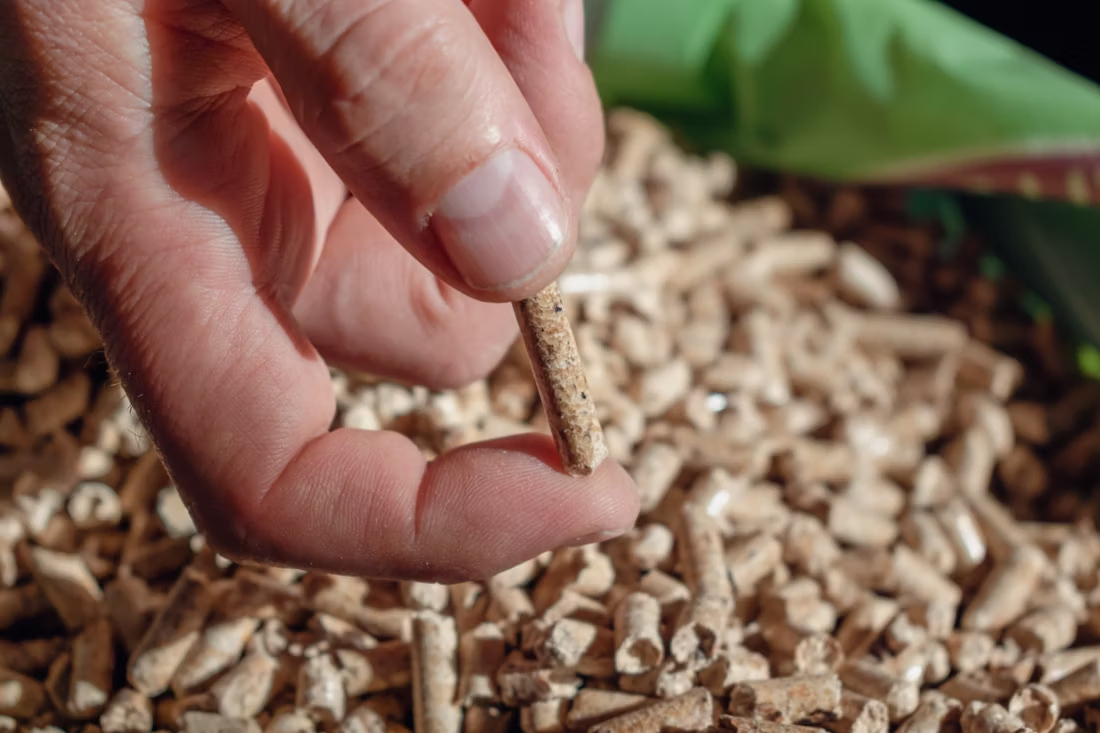
Essex County has no air quality non-attainment status and no winter burn curtailment periods, so pellet stoves here run without the seasonal restrictions homeowners deal with in some western states—you can run a pellet appliance daily through the coldest months without checking an advisory first. Regional brands like Energex, Hamer Pellet Fuel, and Greene Team Pellet Fuel are sold through feed stores, farm supply outlets, and hardware stores across the North Country, so ton bags are generally easier to source here than in more urban parts of the state. Because much of the county sits outside natural gas service territory, pellet stoves compete directly with propane and fuel oil as a primary or supplemental heat source—often winning on lower fuel cost and the appeal of a local, renewable fuel supply chain.
Three steps. No salesperson until you're ready.
Tell us about your project
Your zip code, your situation, and the fuel you're leaning toward—or let the answers point you to one.
See what's actually available
The brands dealers within 100 miles genuinely carry—real options, never a catalog mirage.
Get your dealer & Project Guide
A trusted local dealer, plus the free Project Guide & Parts List that names every component of the job.
Frequently Asked Questions
How much does a pellet stove installation cost in Essex County?
A freestanding pellet stove installation in Essex County typically runs $3,500 to $6,500, depending on the model, whether new wall-through PL venting is needed, and hearth pad requirements for code clearance. Converting an existing masonry fireplace to a pellet insert usually runs a bit higher, around $4,500 to $7,500, since it involves fitting the insert into the firebox and running vent pipe through the flue liner. Costs can run toward the higher end for camps and seasonal properties in the more remote parts of the county—around Newcomb, Long Lake, or the Keene Valley—where travel time adds to the install quote. Local dealers will give a firm number after an in-home look at your space and existing venting.
Will a pellet stove work if the power goes out?
Not without a backup plan. Pellet stoves rely on an electric auger to feed fuel and a blower to distribute heat, so they shut down when the power drops—something worth taking seriously in Essex County, where ice storms and nor'easters regularly knock out power in the mountain terrain around Elizabethtown, Ticonderoga, and the High Peaks for hours or days at a stretch. Some homeowners pair a pellet stove with a small battery backup or generator sized to run the stove's electronics through an outage. Others keep a wood stove as a true off-grid backup and use pellet for day-to-day convenience. Either approach is common locally—ask your dealer to size a backup power option alongside the stove itself.
What size pellet stove do I need for my Essex County home?
Sizing depends on square footage, insulation, ceiling height, and whether the stove is your primary or supplemental heat. Given the county's long, demanding winter heating season, sizing here tends to run larger than in milder parts of New York—a stove rated for 1,000 to 1,500 square feet in a moderate climate may only comfortably cover 800 to 1,200 square feet in an older Adirondack farmhouse or camp with less insulation. Homes at higher elevation around Keene and Lake Placid or older uninsulated camps near the lake in Westport and Willsboro typically need to size up from the manufacturer's baseline rating. A local dealer will walk your space and factor in ceiling height, window count, and insulation before recommending a specific model.
Where can I buy pellet fuel in Essex County?
Regional brands including Energex, Hamer Pellet Fuel, and Greene Team Pellet Fuel are stocked at feed stores, farm supply outlets, and hardware stores throughout the North Country, with ton bags typically priced in the $250 to $320 range depending on the brand and time of year. Buying early in the fall before the first cold snap usually gets better pricing and avoids the scramble that happens once temperatures drop. Some Essex County dealers who sell stoves also stock pellets directly or can point you to the nearest reliable supplier, which is worth asking about at the time of purchase.
Do I need a permit to install a pellet stove in Essex County?
Yes—a building permit is required for a new pellet stove installation, but Essex County doesn't have a single countywide building department; each town handles its own code enforcement, so permits go through the local code enforcement officer in Elizabethtown, Ticonderoga, North Elba (Lake Placid), Westport, or wherever the property sits. Most dealers who install the stove will handle or coordinate the permit as part of the job. There's no county air quality restriction on burning pellets—Essex County has no non-attainment designation and no curtailment periods, so once installed, you can run the stove daily through the winter without checking an advisory.
What's the difference between a pellet stove and a pellet insert?
A pellet stove is a freestanding unit that sits on a hearth pad and vents through a wall or existing chimney—it can go almost anywhere with the right clearances, which makes it a good fit for camps and cabins that don't have an existing fireplace. A pellet insert is built to slide into an existing masonry firebox, using the existing chimney or a liner run through it, and is the better choice for older Essex County farmhouses that already have a wood fireplace they want to convert to easier, cleaner heat. Both use the same hopper-and-auger system and burn the same fuel—the choice mostly comes down to what's already built into the house.
How much maintenance does a pellet stove need?
Pellet stoves need more routine attention than a gas fireplace but far less than a wood stove. Plan on emptying the ash pan every few days to weekly depending on use, cleaning the burn pot and glass regularly through the season, and a full professional service once a year—typically before the season starts—to clean the exhaust fan, check the auger motor, and inspect the vent pipe. Given how hard these stoves run through an Essex County winter with its long, demanding heating season, skipping the annual service tends to show up as reduced heat output and dirtier glass by midwinter.
Does a pellet stove need a full chimney?
No—this is one of the practical advantages of pellet appliances for older camps and cabins in Essex County that don't have a masonry chimney. Pellet stoves vent through a small-diameter PL (pellet vent) pipe that can run horizontally through an exterior wall, rather than requiring a full vertical Class A chimney like a wood stove. That makes pellet a realistic option for seasonal properties around Long Lake, Newcomb, or the Champlain shoreline where adding a full chimney would be impractical or expensive. If you're converting an existing fireplace, the insert can use the flue with a liner instead.
Pellet stove vs. wood stove—which makes more sense in Essex County?
Wood stoves burn cordwood cut from local oak, maple, birch, and ash, work without electricity, and pair well with low-cost Forest Service cutting permits—around $20 per cord through May to October on the Green Mountain & Finger Lakes National Forest land bordering the county. That makes wood the more resilient choice for homes that lose power often or want a true off-grid backup. Pellet stoves trade that self-sufficiency for convenience: load the hopper, set the thermostat, and get consistent heat with less ash and no splitting or stacking—but they go dark in an outage unless backed up with a generator or battery. Many Essex County homeowners land on a wood stove for backup and daily wintertime reliability, with a pellet stove in a second living space for easy, low-maintenance heat.
How often does a pellet stove need cleaning?
A clean pellet stove is a happy pellet stove. Plan on cleaning the burn pot about once a week when you're burning regularly—ash and clinkers gum up the air holes just like a pellet barbecue. Most pellet stove problems trace back to skipped cleaning that nobody explained up front. Some designs make it easy with a trapdoor burn pot: pull a lever and the gunk drops into the ash pan.
Why is a fireplace insert so efficient?
An insert does two things: it seals the chimney completely, so you stop losing air you already paid to heat, and it radiates warmth into the room through the firebox and glass. Most add a heat-exchange fan that pulls cool room air underneath, wraps it around the hot firebox, and pushes it back out warm. Your home is more efficient before you've even lit the first fire.
What is an in-home preview and do I need one?
It's a visit where a hearth professional measures your space, confirms the model you picked actually works in your home, and walks the specs—framing, gas line, venting, finish work—before anything is ordered. Some details you just can't know until you see the house. Never make a down payment without one; it's the single most-skipped step that burns buyers.
Should the dealer who sells my fireplace also install it?
Ideally, yes. A fireplace project involves vent pipe, gas line, electrical, and often tile or stone. Hire three or four separate trades and you own the liability and the game of telephone between them. One company selling and installing means one accountable party, start to finish—ask about factory training, on-time completion records, and what happens if an inspection fails.
Stove and Fireplace Dealers in Essex County
Pellet Brands Stocked Around Essex County
Manufacturers will point you to the nearest stocking dealer.
Find your pellet stove in Essex County.
Tell us about your home and heating goals, and we'll match you with a trusted local dealer and send over a free Project Guide & Parts List—a plan for your pellet project in Essex County with the exact parts, including the vent kit, and our recommended local installer.
Find Your Fireplace →