
Find your electric fireplace in Essex County.
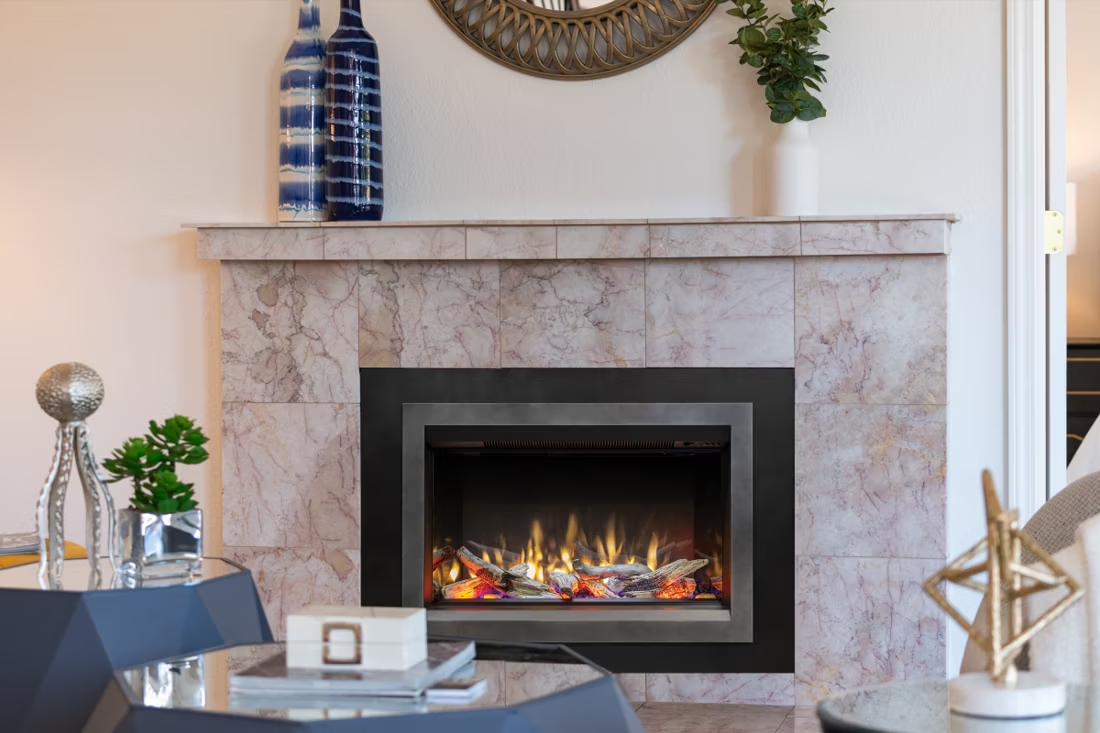
No chimney, no venting, and no wood to haul up a lake road—electric fireplaces are a practical fit for camps and homes across the Adirondack Park. Find the right unit and connect with a trusted local dealer.
Every Project Starts From One of These Five Situations
Instant heat and ambiance, no chimney required.
Essex County sits almost entirely inside the Adirondack Park, and its winters back that up: 7,304 heating degree days and an average winter low around 10°F, with plenty of nights well below that at elevation near Keene, Lake Placid, and the High Peaks. It's a county built around seasonal camps and second homes on Schroon Lake, Lake Champlain, and dozens of smaller lakes, plus year-round households in Elizabethtown, Ticonderoga, and Willsboro. A lot of those camps were never built with a masonry chimney or gas line, which is exactly where electric fireplaces earn their place.
Electric units plug into a standard outlet or a dedicated 20-amp circuit, need no venting or clearance to combustibles beyond what's printed on the unit, and can go into a camp bedroom, a finished basement in Ticonderoga, or a lake-view wall in Lake Placid without touching the building's structure. National Grid serves most of the county's electric load, and while rural lines here do go down in ice storms, that's the honest tradeoff: electric buys convenience and clean ambiance, not storm-proof backup heat. For that reason, most Essex County homeowners run electric as a supplemental or zone-heat unit alongside a wood stove or propane furnace, rather than as their only heat source.
Three steps. No salesperson until you're ready.
Tell us about your project
Your zip code, your situation, and the fuel you're leaning toward—or let the answers point you to one.
See what's actually available
The brands dealers within 100 miles genuinely carry—real options, never a catalog mirage.
Get your dealer & Project Guide
A trusted local dealer, plus the free Project Guide & Parts List that names every component of the job.
Frequently Asked Questions
How much does an electric fireplace installation cost in Essex County?
Most electric fireplace installs in Essex County run $300 to $1,500. A plug-in insert or mantel unit that uses an existing outlet is on the low end—often a same-day job. A built-in wall unit or linear electric fireplace that needs a dedicated 20-amp circuit run by an electrician costs more, and camps in remote parts of the county (around Newcomb, North Hudson, or the back roads off Route 73) can see a modest travel charge added by the electrician or installer. Because there's no venting, chimney, or gas line involved, electric stays well below the cost of a wood, gas, or pellet install in the same home.
Can an electric fireplace heat my whole Essex County home through the winter?
Not realistically, and any honest dealer will tell you the same. With 7,304 heating degree days and winter lows that regularly sit near or below 10°F, the electric resistance heat most fireplace inserts put out—typically capped around 5,000 BTU or 1,500 watts—is built for a single room, not a whole Adirondack house through January and February. Electric fireplaces work well as zone heat for a bedroom, den, or camp living room, or as pure ambiance alongside a furnace or wood stove that carries the real heating load. If you're hoping to heat a whole cabin on electric alone, a local dealer can tell you honestly whether that's feasible for your square footage or whether you need a different primary source.
Do I need a permit to install an electric fireplace in Essex County?
Usually not for the appliance itself. A plug-in or built-in electric fireplace typically doesn't require a burn permit or venting inspection the way a wood or gas unit does, since there's no combustion or chimney involved. You may need an electrical permit through your town's code enforcement office—Elizabethtown, Ticonderoga, Keene, and the other towns in the county each handle this locally—if the install requires new wiring or a dedicated circuit. Because most of Essex County sits inside the Adirondack Park, any exterior structural changes tied to the install can also trigger review by the Adirondack Park Agency, but a straightforward interior electric fireplace generally does not.
Electric vs. wood—which makes more sense for an Essex County camp?
Wood, burned in oak, maple, birch, or ash cut locally (Green Mountain & Finger Lakes NF permits run about $20 per cord, May through October), keeps working when the power doesn't—a real consideration here, since ice storms and downed lines aren't rare in the Adirondacks. Electric fireplaces can't provide backup heat during an outage, full stop. What electric does well is convenience: flip a switch, get instant flame and warmth, with zero ash, zero chimney maintenance, and no wood stacked on the porch. Plenty of Essex County homes run both—a wood stove or insert for real cold-weather heat and outage backup, and an electric unit in a secondary room for easy daily ambiance.
What types of electric fireplaces work best in Adirondack camps without a chimney?
For camps around Schroon Lake, Lake Placid, or the smaller lakes throughout the county that were never built with a masonry fireplace, a built-in wall insert or a linear electric fireplace is the most common fit—both mount into a framed wall cavity with no venting needed. Freestanding electric stoves work well in a cabin great room where you want the look of a wood stove without cutting a hole for a chimney. Mantel-style units are the simplest option for a bedroom or den where you just need a plug-in unit and a surround. A local dealer can walk your specific space and tell you which style fits the wall and electrical service you actually have.
Who provides electric service in Essex County, and does that affect fireplace choice?
National Grid serves most of Essex County's electric load, including the Lake Placid, Ticonderoga, and Elizabethtown areas. Service is generally reliable, but rural lines through the Adirondack Park do go down during ice storms and heavy snow, sometimes for extended stretches in the more remote parts of the county. That's the main reason electric fireplaces here get positioned as supplemental heat or ambiance rather than a whole-home solution—if the power's out, the electric fireplace is out too, which matters a lot more in a county with this many heating degree days than it would somewhere milder.
How much does it cost to run an electric fireplace in Essex County?
Electric fireplaces are inexpensive to operate compared to their upfront cost of ownership relative to combustion appliances. A typical 1,500-watt insert running on National Grid residential rates costs roughly 20 to 30 cents per hour of heater use, or just a few cents per hour if you're running flame effect only with the heater off—a common choice in shoulder-season months when you want ambiance without extra heat. Running one for several hours a day through a full Essex County winter adds a noticeable but modest amount to a monthly electric bill, well below what a comparable amount of propane or heating oil would cost for the same room.
What's the best electric fireplace for a cold Essex County home or camp?
Look for units rated for the room size you're heating, not just the room the display model sits in at the store—a 1,500-watt heater is standard, but coverage claims on the box often assume a well-insulated space, which not every older Adirondack camp has. For year-round homes in Elizabethtown or Ticonderoga, a built-in insert with a strong heater and a realistic room-size rating is worth the extra cost over a bargain unit. For seasonal camps used mainly in summer with occasional shoulder-season weekends, a simpler plug-in model focused on ambiance is usually plenty. A local dealer can match wattage and features to your actual space rather than the marketing numbers.
Electric vs. pellet stove—which is right for my Essex County home?
Pellet stoves, running on brands like Energex, Hamer Pellet Fuel, or Greene Team Pellet Fuel that are common in this region, put out real heat—enough to serve as a primary or near-primary source through a 7,304-HDD winter—but they need electricity to run the auger and blower, so they go down in the same outages that take out an electric fireplace. Electric fireplaces cost less upfront, install in an afternoon with no hopper to fill or ash to empty, but stay limited to zone heat. If you want a genuine heating appliance for a year-round Essex County home, pellet is the stronger contender; if you want low-maintenance ambiance and supplemental warmth in a specific room or camp, electric is the simpler answer.
Do electric fireplaces actually produce heat?
Yes—most put out around 4,800–5,000 BTUs from a standard outlet, which comfortably warms a bedroom, office, or den as a comfort-zone heater. What they won't do is carry a whole house the way wood, gas, or pellet can. Think of electric as ambiance-first with honest supplemental heat: flames on with no heat in July, flames plus warmth in January.
Can I put a TV above my fireplace?
Yes—with an asterisk. Fireplaces are hot and TVs don't like heat. Either put a mantel between them to deflect rising warmth, or choose a fireplace with heat-management technology that creates a cool zone on the wall above—the wall stays around 125 degrees, barely warm, while the room still gets full heat. If you like clean lines and don't want a mantel, heat management is the answer.
Can a fireplace actually lower my heating bill?
Yes—by creating a comfort zone. A furnace heats every square foot of the house just to warm the one room you're in; a gas fireplace on low burns roughly a sixth of the gas a typical furnace does. Set the furnace around 55–60 degrees as a baseline, then heat the rooms your family actually uses. Families who heat this way commonly save $20–$60 a month.
Can I install a fireplace myself?
If you're putting a fire in your house on purpose, it's best to work with an expert. Unless you're genuinely experienced in framing, gas line, vent pipe, and the national code on clearances to combustibles, have a professional do it—and ideally the same company that sells you the fireplace, so warranty, service, and liability all live under one roof.
Stove and Fireplace Dealers in Essex County
Find your electric fireplace in Essex County.
Tell us about your home or camp and we'll match you with a trusted local Essex County dealer and send over a free Project Guide & Parts List—sized right for your space, with the exact parts and your recommended installer.
Find Your Fireplace →