
Consistent Heat for Cortland County's Long, Cold Winters.
With 7,509 heating degree days and winter lows averaging 12°F—on par with Burlington, Vermont—Cortland County homes need heat that doesn't quit. A thermostat-controlled pellet stove or insert delivers that without the woodpile. Find the right unit and connect with a trusted local dealer.
Every Project Starts From One of These Five Situations
Reliable warmth without the woodpile.
Cortland County sits on the edge of the Appalachian Plateau in central New York, with the city of Cortland resting around 1,130 feet in the Tioughnioga River valley and the surrounding towns—Homer, Marathon, McGraw, Truxton, Virgil—climbing into hills that push past 2,000 feet near Labrador Hollow. That elevation gain matters: a heating season that already runs to 7,509 degree days in the valley stretches longer and colder on the ridges. The county's oak, maple, birch, and ash stands have supported wood heat for generations, but not every household wants to fell, split, and stack cordwood every fall.
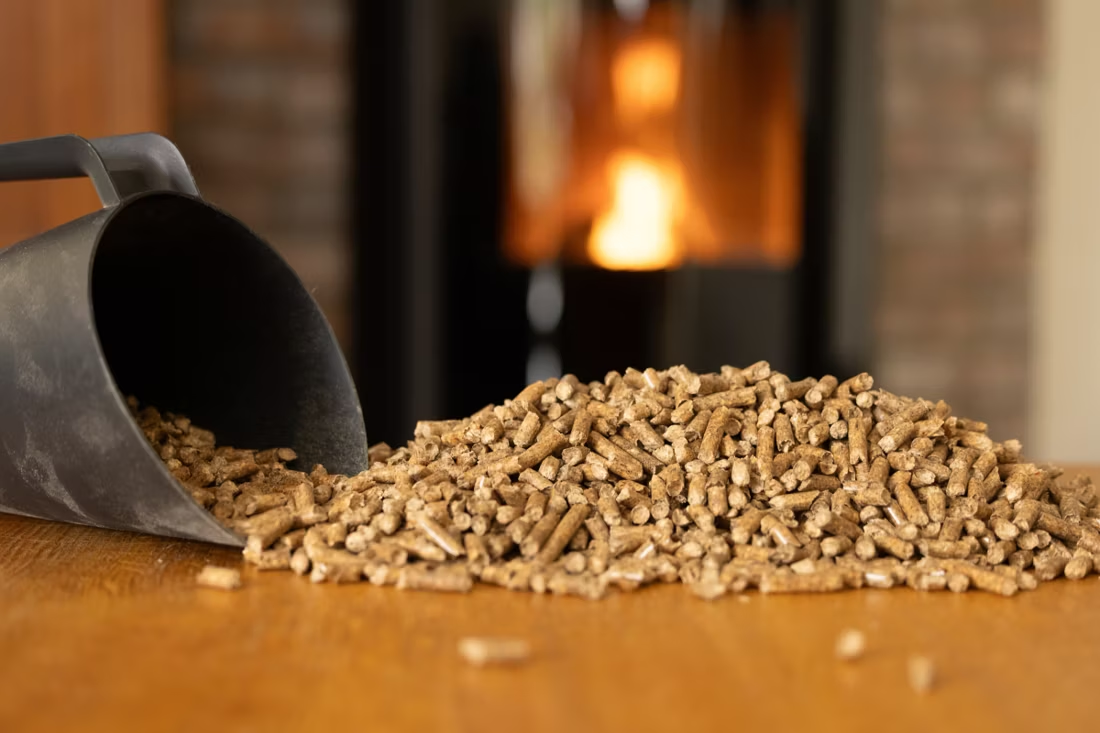
That's where pellet heat has found a steady following here. A hopper-fed pellet stove or insert lights with the press of a button, holds a set temperature automatically, and burns down to almost no ash—a real advantage for SUNY Cortland-area households, retirees, and anyone juggling a commute who still wants a real backup heat source when a Tug Hill-fed lake-effect system knocks out power. Regional pellet brands—Energex, Hamer Pellet Fuel, and Greene Team Pellet Fuel—are stocked at farm and hardware stores throughout the county, so fuel supply isn't a seasonal scramble the way it can be with cordwood.
Three steps. No salesperson until you're ready.
Tell us about your project
Your zip code, your situation, and the fuel you're leaning toward—or let the answers point you to one.
See what's actually available
The brands dealers within 100 miles genuinely carry—real options, never a catalog mirage.
Get your dealer & Project Guide
A trusted local dealer, plus the free Project Guide & Parts List that names every component of the job.
Frequently Asked Questions
How much does a pellet stove or insert installation cost in Cortland County?
A typical pellet stove or insert installation in Cortland County runs $3,500 to $7,000, depending on the unit, whether you're inserting into an existing masonry fireplace, and the length of the wall-vent run. A freestanding stove going into a room with no existing chimney is usually on the lower end since venting is a short horizontal run through an exterior wall. An insert replacing an open fireplace in an older farmhouse near Homer or Marathon can run higher if the existing flue needs a liner or the hearth needs modification to meet clearance requirements. Local dealers will size the job during an in-home visit before quoting a firm number.
What size pellet stove do I need for a Cortland County home?
Sizing depends on square footage, insulation, and whether the stove is your primary or supplemental heat source—but Cortland County's 7,509 heating degree days push sizing toward the larger end of most manufacturers' charts. A stove rated for 1,500 square feet in a milder climate may only comfortably cover 1,100–1,200 square feet here, especially in older farmhouses in Truxton or Virgil with less insulation and higher ceilings. Homes on higher ground toward Labrador Hollow or the hills above McGraw should size up further. A local dealer will walk through your floor plan and insulation before recommending a hopper size and BTU rating.
Do I need a permit to install a pellet stove in Cortland County?
In most cases, yes—a building permit is required for new venting through a wall or roof, and permitting authority runs through whichever jurisdiction the home sits in. The City of Cortland issues its own permits through its building department, while the surrounding towns (Cortlandville, Homer, Marathon, Virgil, and others) each handle permits through their individual code enforcement offices. Most installers who sell and install pellet stoves in the county are familiar with the local offices and pull the permit as part of the job, so you typically don't have to coordinate it yourself.
Where do I get pellets in Cortland County, and how much do they cost?
Pellets are widely available through regional brands including Energex, Hamer Pellet Fuel, and Greene Team Pellet Fuel, sold in 40-pound bags at farm supply and hardware stores across the county and often by the pallet (roughly a ton) for bulk buyers. Expect to pay somewhere in the $250–$320 per ton range depending on brand and whether you buy early in the season or wait until a cold snap drives up demand. Bags need to stay dry—a garage or basement works, but pellets that absorb moisture will jam an auger, so plan storage before your first delivery.
Pellet stove vs. wood stove—which makes more sense here?
Cortland County has plenty of oak, maple, birch, and ash to burn, and a wood stove will outperform a pellet stove during an extended power outage since it needs no electricity at all. A pellet stove trades that off for real convenience: no splitting, no stacking, thermostatic control, and a burn that produces a fraction of the ash. For a household that isn't set up to process cordwood, or that wants heat that runs unattended overnight without babysitting a firebox, pellet is usually the better fit. Some Cortland County homes run both—wood for outage-proof backup, pellet for everyday convenience.
What happens to my pellet stove during a power outage?
Pellet stoves rely on electricity to run the auger, igniter, and combustion blower, so a standard unit shuts down when the power goes out—worth planning for in a county that sees its share of ice storms and lake-effect-driven outages in winter. Two common solutions: a battery backup unit sized for pellet stoves (Cadet and other manufacturers make dedicated backup units that run a stove for a day or more on a single charge), or wiring the stove into a home generator's circuit if you already have one. If backup heat during outages is a priority, mention it to your dealer before you buy—not every stove pairs equally well with battery backup hardware.
How much maintenance does a pellet stove need?
Pellet stoves need more routine attention than a gas fireplace but far less than a wood stove. Plan to empty the ash pan every few days during regular use, clean the burn pot weekly to keep the flame consistent, and vacuum the hopper and exhaust passages monthly during heavy heating months—which in Cortland County can mean six months or more of near-daily use. An annual professional service checks the igniter, gaskets, and blower motor, and most local dealers offer this as a fall tune-up before the coldest stretch of the season sets in.
Which pellet brands are actually available near me in Cortland County?
Energex, Hamer Pellet Fuel, and Greene Team Pellet Fuel all have solid distribution through central New York and are the pellets you'll most commonly find on shelves at local farm and hardware stores. Hamer and Greene Team are regionally produced, which tends to mean more consistent local stock through the winter compared to pellets shipped in from farther away. Ask your dealer which brand they see perform best in their customers' stoves—ash content and BTU output vary enough between brands that it's worth asking rather than guessing.
What's the best pellet stove for Cortland County's climate?
With 7,509 heating degree days and winter lows averaging 12°F, look for pellet stoves and inserts with hopper capacities on the larger side—60 to 80 pounds—so the stove can run through a cold overnight stretch without a refill, along with a BTU output in the 40,000–50,000 range for whole-home or primary heating in an older farmhouse. Brands like Harman, Enviro, and Quadra-Fire are common choices among Cortland County dealers for their cold-climate performance and parts availability. Homes at higher elevation toward Truxton or Virgil should size toward the top of that range; a smaller unit works fine as supplemental heat in a well-insulated newer home in Cortlandville.
Why is my open fireplace making my house colder?
Open fireplaces suck—literally. As the fire burns, it consumes air your furnace already paid to heat and pulls it out through the chimney, so the house is actually colder after the fire goes out than before you lit it. An insert fixes this: it seals the chimney, puts fixed glass across the front, and turns that hole in your house into a real heat source.
Why is a fireplace insert so efficient?
An insert does two things: it seals the chimney completely, so you stop losing air you already paid to heat, and it radiates warmth into the room through the firebox and glass. Most add a heat-exchange fan that pulls cool room air underneath, wraps it around the hot firebox, and pushes it back out warm. Your home is more efficient before you've even lit the first fire.
How much should I budget for a fireplace?
For an average home—covering the fireplace, the vent pipe, and basic installation—a budget between $3,900 and $5,500 gives you a lot of options across wood, gas, and pellet. By the time you add finish work, gas line, and electrical, the average complete installation lands between $5,000 and $12,000 all-in. In a remodel or new build, a good rule is to put about 2.5% of the total project cost toward the fireplace.
Can I install a fireplace myself?
If you're putting a fire in your house on purpose, it's best to work with an expert. Unless you're genuinely experienced in framing, gas line, vent pipe, and the national code on clearances to combustibles, have a professional do it—and ideally the same company that sells you the fireplace, so warranty, service, and liability all live under one roof.
Stove and Fireplace Dealers in Cortland County
Pellet Brands Stocked Around Cortland County
Manufacturers will point you to the nearest stocking dealer.
Find your pellet stove in Cortland County.
Tell us about your home and heating needs, and we'll match you with a trusted local dealer and put together a free Project Guide & Parts List—the exact stove or insert, vent kit, and installation plan for your Cortland County home.
Find Your Fireplace →