
The comfort of a fire—without a chimney to maintain.
Zone heat and real-flame ambiance for Cortland County homes, from the city of Cortland out through Homer, McGraw, and Marathon. No venting, no gas line, no cutting or stacking wood—just a unit sized right for your room and a NYSEG circuit to run it.
Every Project Starts From One of These Five Situations
Reliable warmth for Cortland County's long, cold winters.
Cortland County sits in the hills at the edge of the Finger Lakes region, and its winters are long by any measure—a heating season nearly twice as demanding as milder regions, an average winter low near 12°F, and a heating season that stretches from October into April. Many county homes, especially older farmhouses around Truxton, DeRuyter, and Marathon, still lean on propane, fuel oil, or a wood stove burning local oak, maple, birch, or ash as their primary heat. Electric fireplaces fit into that picture differently—not as the furnace replacement, but as targeted, no-venting-required warmth for a finished basement, a converted sunroom, a SUNY Cortland-area rental, or a bedroom that never quite gets warm enough off the main system.
NYSEG serves electric accounts throughout Cortland County, and running a home entirely on resistance electric heat through a long, demanding winter here gets expensive fast—which is exactly why most electric fireplace installs here are supplemental rather than whole-house. A 1,500-watt insert or wall-mount unit is enough to take the edge off a single room during a cold stretch without asking a furnace or wood stove to work harder, and because there's no flue, no gas line, and often no permit involved for a plug-in unit, it's one of the fastest hearth upgrades available in the county—particularly for condos, apartments, and homes without an existing chimney.
Three steps. No salesperson until you're ready.
Tell us about your project
Your zip code, your situation, and the fuel you're leaning toward—or let the answers point you to one.
See what's actually available
The brands dealers within 100 miles genuinely carry—real options, never a catalog mirage.
Get your dealer & Project Guide
A trusted local dealer, plus the free Project Guide & Parts List that names every component of the job.
Frequently Asked Questions
How much does an electric fireplace installation cost in Cortland County?
A basic plug-in electric fireplace insert or freestanding unit runs $300 to $1,500 installed, and in most cases installation is just setting the unit in place and plugging it into an existing outlet—no electrician required. A wall-mounted or recessed built-in model that needs a dedicated 20-amp circuit typically runs $800 to $3,000 once you add a licensed electrician's time to run new wiring. Full mantel packages with custom surround and trim work can reach $4,000 to $6,000. Because there's no venting or masonry work involved, electric installs in Cortland County are consistently the least expensive hearth project a homeowner can take on.
Can an electric fireplace heat my whole house in Cortland County?
No—and given how long and demanding the county's winters run, with average winter lows near 12°F, no electric fireplace on the market is designed to replace a home's primary heating system here. A typical 1,500-watt unit is built to warm a single room, generally 400 to 1,000 square feet depending on insulation and ceiling height, not an entire house through a stretch of single-digit nights. Most Cortland County homeowners install one to supplement propane, fuel oil, a wood stove, or a heat pump—running it in the room they use most rather than asking it to carry the whole heating load.
Do I need a permit to install an electric fireplace in Cortland County?
Usually not, if you're installing a plug-in insert or freestanding unit that uses an existing outlet—there's no gas line, no venting, and no structural change, so most town and village code offices in Cortland County don't require a permit for that kind of install. If you're adding a built-in unit that requires a new dedicated circuit, that electrical work typically does need a permit through your local town or village code enforcement office, and it should be pulled and inspected by a licensed electrician rather than a handyman. Ask your local dealer whether your specific unit and wiring plan trigger a permit before work starts.
What's the difference between an electric insert, a wall-mount unit, and an electric stove?
An electric insert is built to slide into an existing masonry fireplace opening, giving an old wood-burning firebox a clean, no-mess upgrade without touching the chimney. A wall-mount or built-in unit is designed to be recessed into a wall or set beneath a TV, and usually needs that dedicated circuit mentioned above. A freestanding electric stove looks like a traditional wood or pellet stove but plugs into a standard outlet, making it a good fit for renters or homeowners who want stove styling without any venting work. For a Cortland County home with an existing fireplace opening, an insert is usually the simplest upgrade; for a room with no fireplace at all, a wall-mount or freestanding stove is more common.
Will my electric fireplace work during a power outage?
No—unlike some gas units with battery-backup ignition, an electric fireplace does nothing without power, since the heater, blower, and flame effect all run on household electricity. That matters in Cortland County, where ice storms and heavy lake-effect snow bands occasionally knock out power for a day or more in the rural parts of the county. If backup heat during an outage is a priority, plan on keeping a wood stove, a propane heater rated for indoor use, or a generator-fed system as your fallback—the electric fireplace is for everyday zone heat and ambiance, not storm resilience.
What's the best electric fireplace for Cortland County homes?
For a supplemental-heat role through Cortland County's long winter, look for units with a true 1,400–1,500-watt heater rather than a decorative flame-only model, a thermostat so it can maintain a room temperature rather than just cycling on high, and a realistic flame effect if ambiance matters to you—brands like Dimplex and Napoleon build inserts and wall-mount units with both. For a finished basement or add-on room that runs cool relative to the rest of the house, prioritize wattage and heater coverage; for a living room with an existing fireplace and adequate heat from elsewhere, prioritize flame realism and trim options. A local dealer can walk you through both.
Electric vs. wood—which is right for my Cortland County home?
Wood stoves burning local oak, maple, birch, or ash deliver real heat output, keep working when the power goes out, and are the traditional backbone of rural Cortland County heating—but they require chimney work, wood handling, and annual maintenance. Electric fireplaces install in an afternoon, need zero fuel handling, and are the easiest option for a rental, a condo, or a room without an existing chimney, but they add nothing during an outage and cost more per BTU to run than burning your own split wood. Many county homeowners end up with both: a wood stove for serious winter heat and storm backup, and an electric unit for a bedroom or den where convenience matters more than raw output.
Electric vs. pellet stove—which makes more sense here?
Pellet stoves burning regional brands like Energex, Hamer Pellet Fuel, or Greene Team Pellet Fuel put out considerably more heat than an electric fireplace and can serve as a genuine supplemental or even primary heat source through a Cortland County winter—but they still need electricity to run the auger and blower, so they're just as dependent on grid power as an electric unit during an outage, plus they require venting, a hopper to load, and periodic ash cleanup. Electric fireplaces skip all of that in exchange for lower heat output. If you want serious supplemental heat and don't mind loading a hopper, pellet wins; if you want simple, install-and-forget ambiance with modest zone heat, electric is the easier path.
What does it cost to run an electric fireplace in Cortland County?
At typical NYSEG residential electric rates, a 1,500-watt electric fireplace running on its heater setting costs roughly 15 to 25 cents per hour to operate, depending on current rates and whether it's cycling on a thermostat rather than running full blast continuously. Run a few hours a night in a den or bedroom through a Cortland County winter and you're looking at a modest addition to a monthly bill—noticeably less than heating that same room with electric baseboard alone, since the fireplace is typically zoning a single space rather than fighting whole-house heat loss.
Can I put a TV above my fireplace?
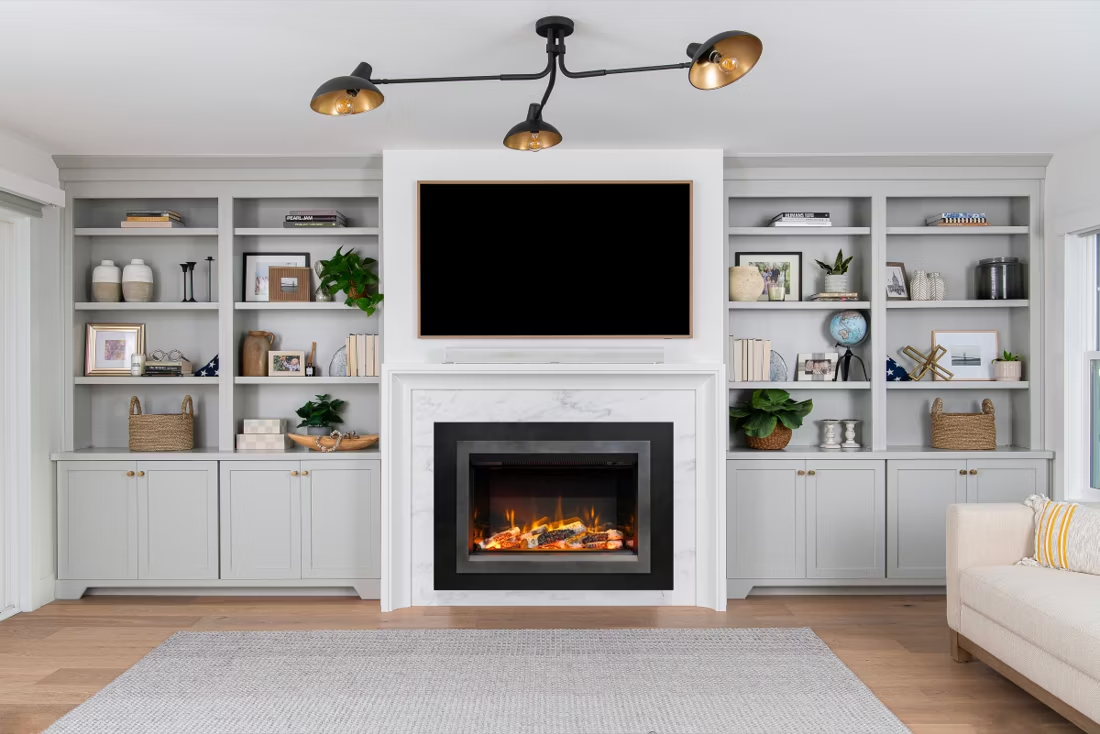
Yes—with an asterisk. Fireplaces are hot and TVs don't like heat. Either put a mantel between them to deflect rising warmth, or choose a fireplace with heat-management technology that creates a cool zone on the wall above—the wall stays around 125 degrees, barely warm, while the room still gets full heat. If you like clean lines and don't want a mantel, heat management is the answer.
How much does an electric fireplace cost to run?
With the heater on, a typical unit draws about 1,500 watts—at average electric rates that's roughly 20 cents an hour. Run the flame effect alone and it costs pennies; the flames are LED-driven and use about as much power as a light bulb. There's no pilot light, no fuel delivery, and essentially no maintenance.
What is an in-home preview and do I need one?
It's a visit where a hearth professional measures your space, confirms the model you picked actually works in your home, and walks the specs—framing, gas line, venting, finish work—before anything is ordered. Some details you just can't know until you see the house. Never make a down payment without one; it's the single most-skipped step that burns buyers.
Does a fireplace add value to my home?
On average, a fireplace adds back to the home about the same amount you spent installing it. Add the monthly savings from heating the rooms you actually use instead of the whole house—often hundreds of dollars a year—and the value case is strong before you even count what a fire does for how your family uses the room.
Stove and Fireplace Dealers in Cortland County
Find your electric fireplace in Cortland County.
Tell us a bit about your room and how you plan to use it, and we'll match you with a trusted local Cortland County dealer and send over a free Project Guide & Parts List—the exact unit, mounting or insert hardware, and circuit requirements for your space.
Find Your Fireplace →