
Pellet Heat Is Rare in Copiague—But Not Impossible.
Natural gas and electric fireplaces dominate this part of Suffolk County, and pellet stoves are a minority choice. If one still makes sense for your home, we'll connect you with a local dealer who can tell you honestly.
Every Project Starts From One of These Five Situations
A mild coastal climate and gas hookups changed the equation.
Copiague sits at 12 feet of elevation on Long Island's South Shore, a short walk from the Great South Bay, in the Town of Babylon. With a moderate heating season and winter lows averaging 25°F, the climate here is noticeably milder than the inland and northern New York winters that made pellet heat a fixture in places like Burlington, VT or Duluth, MN. Homes in Copiague simply don't demand the same intensity of supplemental heat, and that has shaped what homeowners actually install.
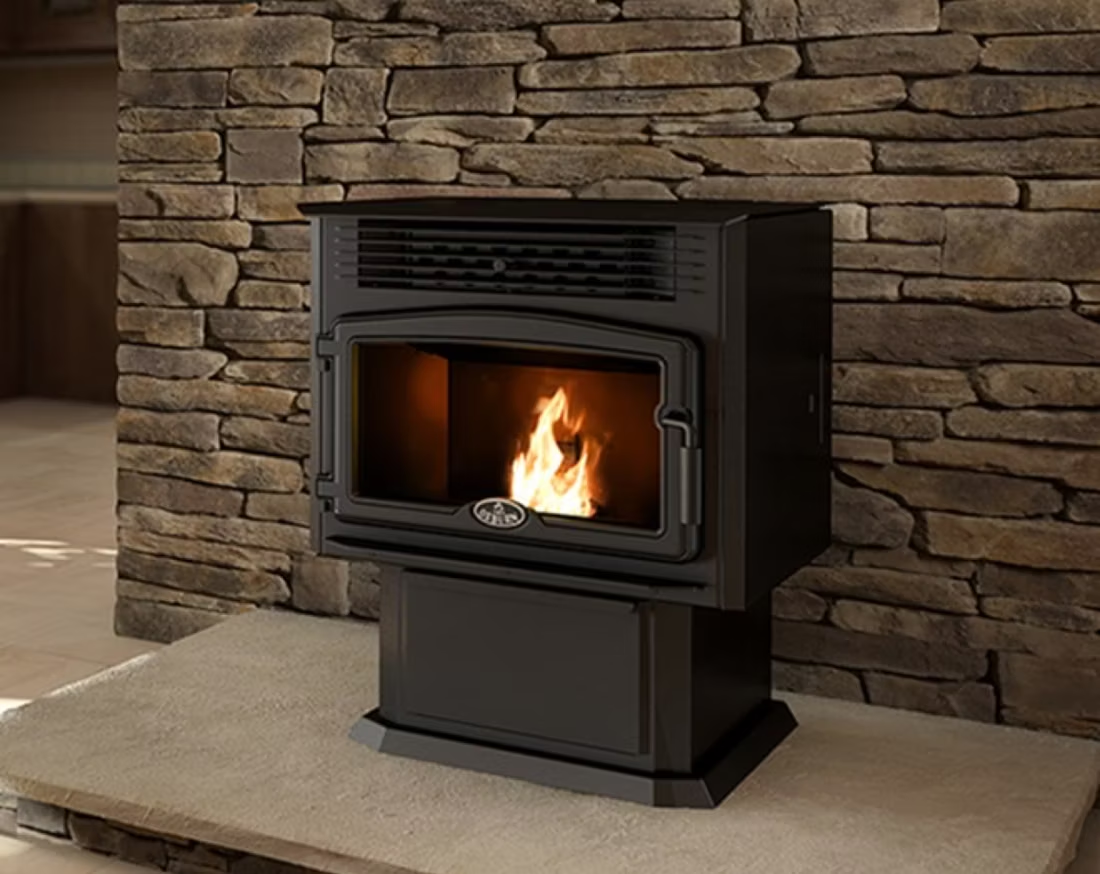
Most Copiague homes are built out with natural gas service or run on electric heat through Long Island Power Authority (LIPA), and gas fireplaces and inserts have become the default upgrade for homeowners looking to add heat or ambiance to a living room. Pellet stoves show up occasionally—in detached garages, workshops, older homes without a gas line, or for homeowners who specifically want the lower ash and higher efficiency pellets offer over cordwood—but local demand is thin enough that few hearth retailers stock pellet units as a primary line. Regional pellet brands like Energex, Hamer Pellet Fuel, and Greene Team Pellet Fuel are available through Long Island suppliers, mostly sourced from mills further upstate, for the homeowners who do go this route.
Three steps. No salesperson until you're ready.
Tell us about your project
Your zip code, your situation, and the fuel you're leaning toward—or let the answers point you to one.
See what's actually available
The brands dealers within 100 miles genuinely carry—real options, never a catalog mirage.
Get your dealer & Project Guide
A trusted local dealer, plus the free Project Guide & Parts List that names every component of the job.
Frequently Asked Questions
Are pellet stoves actually available in Copiague, or is this a niche product here?
They're available, but they're a niche product. Copiague sits in a natural gas service area with mild coastal winters (a moderate heating season, average winter lows around 25°F), so most homeowners here choose a gas fireplace or insert, or run electric heat through LIPA, rather than dealing with a pellet hopper and bagged fuel. A small number of homeowners—often in homes without an existing gas line, in detached garages, or who specifically want the efficiency of a pellet-fed appliance—still install them. If that's you, a vetted local dealer can tell you honestly whether it's worth the extra installation and fuel-sourcing effort versus a gas alternative.
How much does a pellet stove installation cost in Copiague?
Because pellet stoves aren't heavily stocked by South Shore hearth dealers, exact local pricing varies more than it would for gas. Nationally, a pellet stove installation typically runs $3,000 to $6,500 depending on the unit, whether it vents through an existing chimney or needs new through-wall venting, and any electrical work for the hopper and blower. In Copiague, expect your dealer to factor in a bit more for sourcing the unit itself, since it isn't a high-volume item on Long Island the way it is in colder, inland parts of the state.
Where can I buy pellet fuel in Copiague?
Bagged pellets aren't stocked on every hardware store shelf here the way they might be upstate, but regional brands including Energex, Hamer Pellet Fuel, and Greene Team Pellet Fuel are available through Long Island hearth and feed suppliers, usually by special order or seasonal stocking ahead of winter. If you're installing a pellet stove in Copiague, ask your dealer where they source fuel locally and whether they can set up a standing delivery—since demand is lower here, planning ahead for a winter's supply matters more than it would in a market where every hardware store carries pellets year-round.
Do I need a permit to install a pellet stove in Copiague?
Yes. Copiague is an unincorporated hamlet within the Town of Babylon, and new solid-fuel appliance installations—pellet stoves included—require a building permit through the Town of Babylon Building Department. Most hearth retailers who install pellet stoves on Long Island will handle the permit application and inspection scheduling as part of the job, which is worth confirming up front given how few installers in this area do pellet work regularly.
Why do most Copiague homeowners choose gas over pellet?
Gas fireplaces and inserts run on the natural gas line most Copiague homes already have, light with the flip of a switch, and need no fuel storage or hopper refilling. Pellet stoves require bagged fuel storage (usually a ton or more for the season), regular hopper loading, and an electrical outlet to run the auger and blower. In a mild coastal climate where heating demand is moderate and gas infrastructure is already in place, the extra convenience of gas tends to win out for primary living spaces. Pellet still has a place for supplemental heat or for homes without a gas hookup, but it's the exception here rather than the rule.
Will a pellet stove keep working if LIPA power goes out during a nor'easter?
Not on its own. Pellet stoves need electricity to run the auger that feeds fuel and the blower that circulates heat, so a standard unit shuts down the moment power drops—which matters on the South Shore, where LIPA outages after coastal storms and nor'easters can stretch for days. Some homeowners pair a pellet stove with a battery backup or small generator specifically to keep it running through outages. If backup heat during storms is your main goal, it's worth discussing that upfront with your dealer, since a battery-equipped gas unit may serve that purpose more reliably.
What size pellet stove do I need for a typical Copiague home?
Most homes in Copiague are Cape Cods, ranches, and colonials in the 1,200 to 2,200 square foot range, and a mid-size pellet stove rated for 1,500 to 2,000 square feet is usually enough for supplemental heat in a main living area, given the area's moderate winter heating needs. If you're trying to heat a detached garage, workshop, or a smaller add-on space, a compact unit rated under 1,000 square feet is more appropriate and easier to keep fed with fuel. A local dealer will size it based on your actual layout and insulation rather than square footage alone.
Are there dealers near Copiague who install and service pellet stoves?
There are, but they're fewer and farther between than gas or electric fireplace dealers on the South Shore, since pellet demand is lower here than in colder parts of upstate New York. Some Suffolk County hearth retailers carry pellet stoves as a secondary line alongside gas and wood-burning units, and they can typically source parts and service even if the stove itself wasn't purchased locally. This is exactly the kind of fit question we help sort out—we'll match you with a dealer who genuinely carries and services pellet equipment near Copiague, rather than sending you to a shop where it's an afterthought.
Pellet stove vs. electric fireplace—which makes more sense for my Copiague home?
An electric fireplace plugs into a standard outlet, needs no venting or fuel storage, and works well as supplemental heat or ambiance in almost any room—installation typically runs a few hundred to just over a thousand dollars. A pellet stove burns bagged fuel, needs venting and often an electrical circuit for the hopper motor, and delivers more real heat output for a whole room or small living area, but it's a bigger project and a less common one in this market. For most Copiague homeowners prioritizing simplicity and low upfront cost, electric wins. For those who want a genuine heat source with a visible flame and don't mind sourcing fuel, pellet is worth exploring with a local dealer.
Why is a fireplace insert so efficient?
An insert does two things: it seals the chimney completely, so you stop losing air you already paid to heat, and it radiates warmth into the room through the firebox and glass. Most add a heat-exchange fan that pulls cool room air underneath, wraps it around the hot firebox, and pushes it back out warm. Your home is more efficient before you've even lit the first fire.
How often does a pellet stove need cleaning?
A clean pellet stove is a happy pellet stove. Plan on cleaning the burn pot about once a week when you're burning regularly—ash and clinkers gum up the air holes just like a pellet barbecue. Most pellet stove problems trace back to skipped cleaning that nobody explained up front. Some designs make it easy with a trapdoor burn pot: pull a lever and the gunk drops into the ash pan.
Can a fireplace actually lower my heating bill?
Yes—by creating a comfort zone. A furnace heats every square foot of the house just to warm the one room you're in; a gas fireplace on low burns roughly a sixth of the gas a typical furnace does. Set the furnace around 55–60 degrees as a baseline, then heat the rooms your family actually uses. Families who heat this way commonly save $20–$60 a month.
Can I install a fireplace myself?
If you're putting a fire in your house on purpose, it's best to work with an expert. Unless you're genuinely experienced in framing, gas line, vent pipe, and the national code on clearances to combustibles, have a professional do it—and ideally the same company that sells you the fireplace, so warranty, service, and liability all live under one roof.
Nearby Dealers
Hearth shops serving Copiague and the surrounding area.
Pellet Brands Stocked Around Copiague
Manufacturers will point you to the nearest stocking dealer.
Find your pellet stove option in Copiague.
Tell us about your home and we'll give you an honest read on whether pellet heat fits—plus a free Project Guide & Parts List with the exact equipment, vent kit, and a trusted local dealer near Copiague who actually carries and installs pellet stoves.
Find Your Fireplace →