
Electric heat, no chimney required, for Copiague homes.
Zone heat and real ambiance for South Shore homes—without gas lines, wood smoke, or venting. Find the right unit and connect with a trusted local dealer.
Every Project Starts From One of These Five Situations
The easiest fireplace to add to a Long Island home.
Copiague sits low and flat on Long Island's South Shore, just 12 feet above the Great South Bay, in a climate zone (4A) with a solid winter heating season and winter lows averaging in the mid-20s—real winter, but nowhere near the depth of cold you'd find in a place like Burlington, VT or Duluth, MN. Most homes here lean on oil or gas furnaces for whole-house heat, and a growing number of homeowners are adding electric fireplaces to finished basements, primary bedrooms, and living rooms for supplemental warmth and ambiance without touching the existing HVAC system.
Electric makes particular sense on a dense Long Island lot like the ones common in Copiague, where wood-burning setups are rare—there's no nearby public forest land, no cutting permits, and often not enough clearance between houses to make a wood stove practical. Electric units plug into a standard outlet or run on a dedicated circuit depending on the model, and LIPA—the utility serving most of the area—charges a residential rate around 24.6 cents per kWh, higher than the national average. That rate is worth knowing up front: most Copiague homeowners use electric fireplaces for zone heating and evening ambiance rather than as a stand-in for the furnace.
Three steps. No salesperson until you're ready.
Tell us about your project
Your zip code, your situation, and the fuel you're leaning toward—or let the answers point you to one.
See what's actually available
The brands dealers within 100 miles genuinely carry—real options, never a catalog mirage.
Get your dealer & Project Guide
A trusted local dealer, plus the free Project Guide & Parts List that names every component of the job.
Frequently Asked Questions
How much does it cost to install an electric fireplace in Copiague?
Cost depends heavily on the type of unit. A plug-in freestanding electric stove or a drop-in insert that uses an existing 120V outlet typically runs $200 to $800 including labor, since there's no venting, gas line, or chimney work involved. A wall-mounted linear electric fireplace or a built-in unit that needs a new dedicated circuit—common in Copiague's older Cape Cod and ranch-style homes—runs closer to $1,200 to $3,000 once a licensed electrician is involved. Custom mantel surrounds or built-ins with finish carpentry can push past $4,000. A local dealer can give you a firm number after seeing your wall and electrical panel.
Do I need a permit to install an electric fireplace in Copiague?
Most plug-in electric fireplaces don't require a permit since they don't involve gas lines or venting. If your installation calls for a new dedicated circuit or panel work—common for larger built-in units—you'll need an electrical permit through the Town of Babylon Building Department, and the work needs to be done by a licensed electrician. Unlike a wood stove or gas insert, there's no combustion appliance inspection required, which is part of why electric installs in Copiague tend to move faster than gas or wood projects.
Will my electric fireplace still work during a power outage?
No—this is the one real limitation worth knowing going in. Electric fireplaces run entirely on grid power, so if LIPA service goes down during a nor'easter or hurricane (Long Island's South Shore sees its share of both), your electric fireplace goes dark along with everything else. If backup heat during outages matters to you—and on Long Island, it often does—a gas fireplace with battery-backup ignition or a propane unit is worth considering as a second heat source alongside an electric unit you're using for daily ambiance.
Electric vs. gas fireplace—which makes more sense for my Copiague home?
Gas fireplaces (natural gas is widely available in Copiague) deliver real heat output, keep working during power outages with battery-backup ignition, and can serve as genuine supplemental heat on the coldest nights. Electric fireplaces cost far less to install, need no venting or gas line, and can go almost anywhere with an outlet—but they're best treated as zone heat and ambiance rather than a serious BTU source, and they stop working the moment the power does. Many Copiague homeowners choose electric for a bedroom, basement, or secondary living space, and reserve gas for the main living area where real heat output matters.
What's the difference between an electric insert, a wall-mounted unit, and a freestanding electric fireplace?
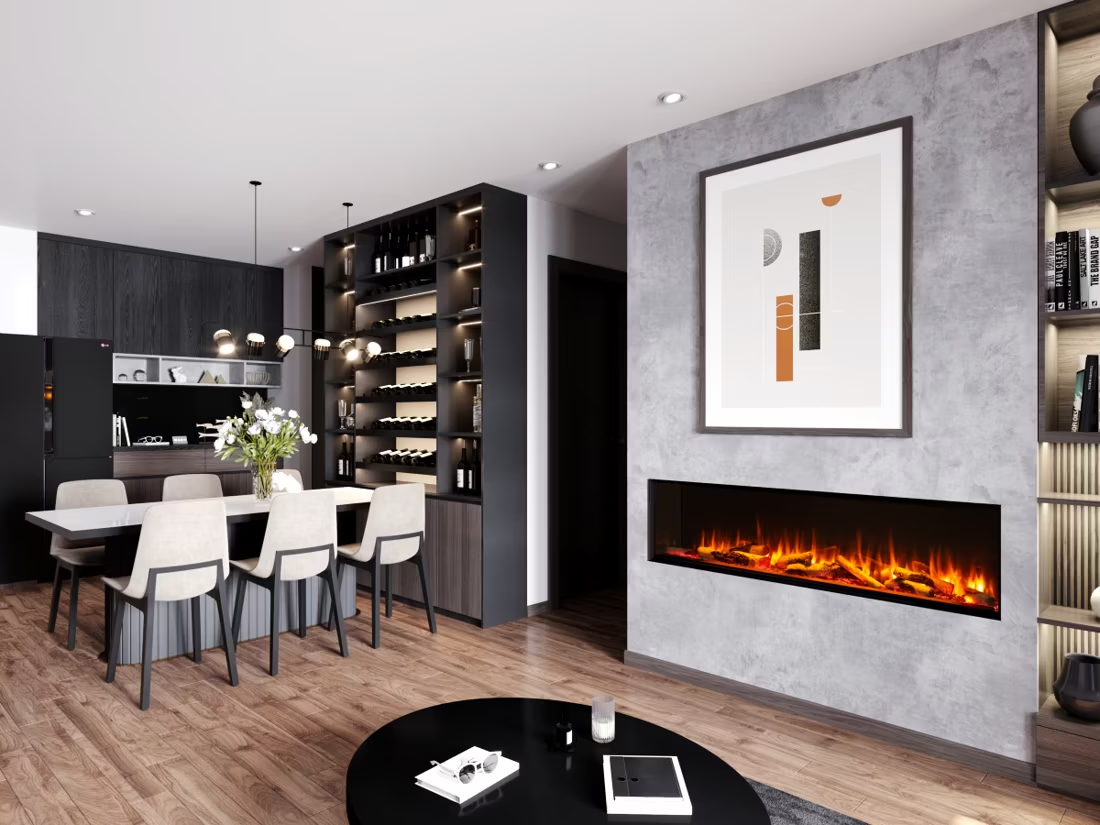
An electric insert drops into an existing masonry or gas fireplace opening, using the shell you already have. A wall-mounted, or 'linear,' electric fireplace is a flush or recessed unit designed to look like a permanent architectural feature—popular in newer Copiague builds and renovated living rooms. A freestanding electric stove is portable, plugs into a standard outlet, and can move room to room, which makes it a good fit for renters or homes where a built-in isn't practical. All three use similar heating element technology—the real difference is how they're mounted and how permanent the installation is.
What does it actually cost to run an electric fireplace in Copiague?
LIPA's residential rate runs about 24.6 cents per kWh—noticeably higher than the national average. A typical 1,500-watt electric fireplace on its heat setting draws 1.5 kWh, so running it for a four-hour evening costs roughly $1.50, or about $45 a month if used nightly. On flame-only mode with the heater switched off, the draw drops to around 100 watts and costs pennies an hour. That LIPA rate is exactly why most homeowners here run electric fireplaces for a few hours of evening ambiance and supplemental warmth rather than as an all-day heat source.
Can an electric fireplace actually heat my home?
Not on its own, and it's not designed to. Copiague sees a solid winter heating season with winter lows averaging in the mid-20s—cold enough that most homes rely on oil or gas furnaces for whole-house heat. A single electric fireplace can comfortably warm one room, typically 400 to 1,000 square feet depending on the unit and insulation, which makes it a solid choice for a chilly finished basement, home office, or bedroom, but it shouldn't replace your furnace. Think of it as targeted, on-demand warmth for the room you're actually sitting in.
Do people install wood-burning fireplaces in Copiague?
Rarely, and for good reason. Copiague sits on small, closely-spaced Long Island lots with no nearby public forest land or cutting permits, so there's neither the space nor the local wood supply that supports wood heat in more rural parts of New York. A small number of older homes still have a masonry fireplace and occasionally burn purchased oak, maple, or ash for atmosphere on a winter evening, but almost nobody here treats wood as a serious heat source. Electric and gas are the practical choices for a Copiague home, which is exactly why this page focuses on electric.
Which electric fireplace is best for a Copiague home?
For most Copiague living rooms, a linear wall-mounted or built-in unit from a brand like Dimplex, Napoleon, or Touchstone gives you a realistic flame effect, a supplemental heater rated for a single room, and a low profile that suits newer open-concept layouts. For older homes with an existing masonry fireplace, an electric insert is often the simplest retrofit—no chimney work, no liner, just a shell that fits the opening you already have. If portability matters, a freestanding electric stove works well in a finished basement or an add-on room. A local dealer can walk you through sizing and features based on your actual space.
Can I put a TV above my fireplace?
Yes—with an asterisk. Fireplaces are hot and TVs don't like heat. Either put a mantel between them to deflect rising warmth, or choose a fireplace with heat-management technology that creates a cool zone on the wall above—the wall stays around 125 degrees, barely warm, while the room still gets full heat. If you like clean lines and don't want a mantel, heat management is the answer.
Does an electric fireplace need a vent or chimney?
No—that's its superpower. An electric fireplace needs a wall and an outlet, period. No vent pipe, no gas line, no clearances to design around, which is why it works in bedrooms, offices, apartments, and walls where venting a gas or wood unit would be impractical or impossible. Installation is typically the simplest and least expensive of any fireplace type.
Can I install a fireplace myself?
If you're putting a fire in your house on purpose, it's best to work with an expert. Unless you're genuinely experienced in framing, gas line, vent pipe, and the national code on clearances to combustibles, have a professional do it—and ideally the same company that sells you the fireplace, so warranty, service, and liability all live under one roof.
How much should I budget for a fireplace?
For an average home—covering the fireplace, the vent pipe, and basic installation—a budget between $3,900 and $5,500 gives you a lot of options across wood, gas, and pellet. By the time you add finish work, gas line, and electrical, the average complete installation lands between $5,000 and $12,000 all-in. In a remodel or new build, a good rule is to put about 2.5% of the total project cost toward the fireplace.
Nearby Dealers
Hearth shops serving Copiague and the surrounding area.
Electric Service in Copiague
An electric fireplace's heater draws about 1,500 watts—pennies per hour at local rates.
Fishers Island Utility Co Inc
Long Island Power Authority
Find your electric fireplace in Copiague.
Tell us a bit about your home and we'll match you with the right electric fireplace or insert—and send you a free Project Guide & Parts List with your recommended local dealer.
Find Your Fireplace →