
Keep Your Family Warm and Safe—No Matter What
Commack runs on natural gas and electric heat, but a small number of homeowners still add a wood stove or insert for backup warmth and ambiance. Here's how it actually works here.
Every Project Starts From One of These Five Situations
A dense Long Island suburb built around gas and electric heat.
Commack sits in Suffolk County at just 144 feet of elevation, with a winter low averaging 24°F and a heating season comparable to spots that see moderate, sustained cold—a real but moderate heating season, nowhere near the extremes of a place like Duluth, MN. Most homes here were built with natural gas or electric baseboard as the primary heat source, and the Town of Huntington and Town of Smithtown building departments that cover Commack's two zip codes see very few new wood-burning appliance permits in a typical year. Lot sizes in this part of Long Island are tight, which limits clearances for chimney chases and outdoor wood storage, and there's no adjacent national forest or BLM land where a homeowner could pull a cutting permit—every stick of firewood here is purchased from a local dealer.
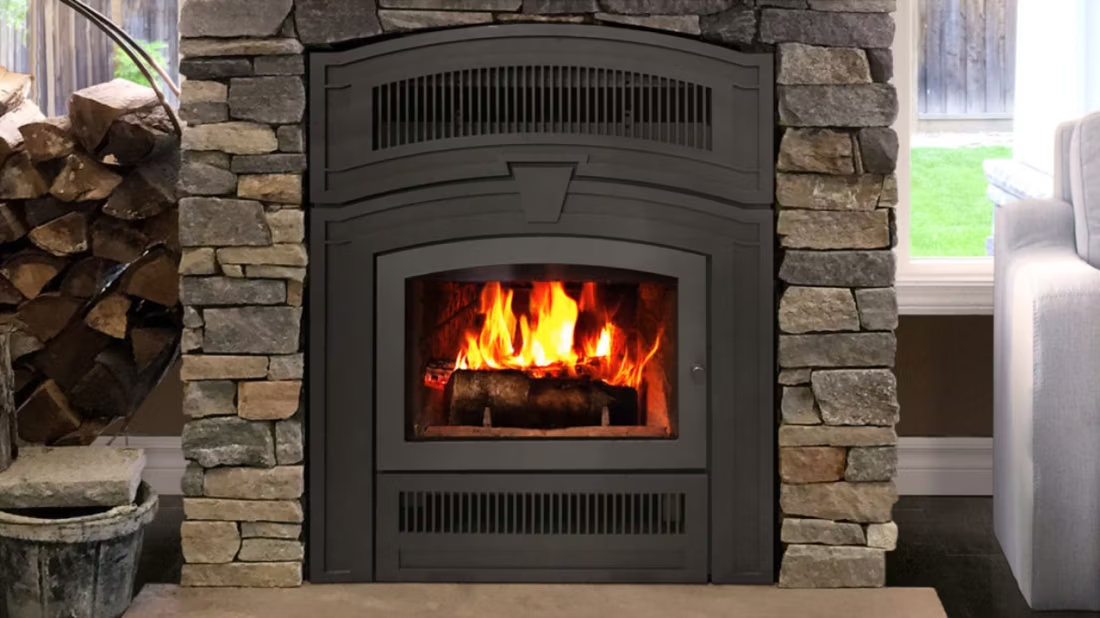
That said, wood isn't absent from Commack. Long Island Power Authority customers are no strangers to multi-day outages after nor'easters and hurricanes, and LIPA's residential rate—among the higher rates in the state—makes some homeowners look at a wood stove as real backup heat rather than just atmosphere. Older Commack colonials and split-levels built in the 1960s and '70s often came with a masonry fireplace that's sat unused for decades; converting that into a working wood insert is the most common wood project we see in this area. If that's your situation, I can match you with a local dealer who installs wood-burning equipment correctly for a Long Island suburban lot and hand you a free planning packet for the project.
Three steps. No salesperson until you're ready.
Tell us about your project
Your zip code, your situation, and the fuel you're leaning toward—or let the answers point you to one.
See what's actually available
The brands dealers within 100 miles genuinely carry—real options, never a catalog mirage.
Get your dealer & Project Guide
A trusted local dealer, plus the free Project Guide & Parts List that names every component of the job.
Frequently Asked Questions
Is wood heat actually common in Commack?
No, and we won't pretend otherwise. Commack is a dense Suffolk County suburb where natural gas and electric heat cover the overwhelming majority of homes. Wood stoves and inserts are installed here, but as a secondary or backup system rather than a primary heat source—usually by homeowners who want protection against Long Island Power Authority outages after storms, or who have an existing masonry fireplace they'd like to make functional again. If you're weighing wood against gas or electric for whole-home heating in Commack, gas or electric is almost always the more practical daily-use answer here.
How much does a wood stove or insert installation cost in Commack?
There isn't a large enough local install market in Commack to quote a hyper-local average, but comparable wood stove and insert installations across the greater New York metro and Long Island typically run $4,000 to $9,000, depending on whether you're inserting into an existing masonry fireplace, running new Class A chimney pipe through a roof, and what hearth pad or clearance work code requires. Converting an existing fireplace into an insert is usually on the lower end since the chimney chase already exists; a freestanding stove in a home with no existing masonry is usually on the higher end. A local dealer will give you a firm number after seeing your home.
Do I need a permit to install a wood stove in Commack?
Yes. Any new wood-burning appliance install requires a building permit through whichever municipal building department covers your address—Town of Huntington or Town of Smithtown, depending on which side of Commack you're on. The stove itself has to meet current EPA 2020 NSPS emissions standards regardless of jurisdiction. Suffolk County has no air quality non-attainment designation, so there's no seasonal burn curtailment to worry about like you'd find in parts of the West—but the permit and inspection step is still required, and most installers handle that paperwork as part of the job.
Where do I get firewood in Commack if there's no forest land nearby?
Unlike wood-heavy regions out West with national forest cutting permits, Long Island has no public timberland near Commack, so all firewood here is purchased, not self-cut. Local suppliers sell seasoned oak, maple, birch, and ash by the cord—oak and maple are the most common and burn longest, which matters if you're using the stove for backup heat during an extended outage. Order seasoned wood (not green) at least six months ahead of when you plan to burn it, since freshly cut hardwood needs a full season to dry out properly.
Why would anyone install a wood stove in Commack when gas and electric are so available?
The most common reason we hear is power resilience. LIPA's grid on Long Island has a track record of extended outages after nor'easters and hurricanes, and a wood stove is one of the few heating appliances that keeps working with zero electricity—no igniter, no blower, no thermostat required. The second most common reason is an existing, unused masonry fireplace: a lot of Commack's older colonials and split-levels have one, and converting it to a working wood insert is a smaller project than most homeowners expect. Ambiance is a real factor too, but for most Commack buyers it's the backup-heat argument that closes the deal.
What's the best wood stove for occasional or backup use in a Commack home?
Since most Commack installs are backup or secondary heat rather than all-winter primary heat, a mid-size EPA-certified stove from a brand like Jøtul, Vermont Castings, or Pacific Energy is usually the right fit—sized for a single main living area rather than whole-home output. If you're converting an existing fireplace rather than adding a freestanding unit, a wood insert from the same manufacturers slots into the masonry opening and uses your existing chimney. A local dealer will size the unit to your specific room, not just your square footage.
How often does a wood stove need chimney service if I only burn occasionally?
Annually, regardless of how much you burn. The CSIA (Chimney Safety Institute of America) recommends a yearly inspection for any wood-burning appliance, and creosote can build up even from light, occasional use—sometimes worse, since a smaller, cooler fire from infrequent burning produces more creosote per hour than a hot, consistent one. For a Commack household using a wood stove mainly for storm backup, schedule the inspection in early fall so the chimney is cleared and ready before the season LIPA outages are most likely.
Should I get a freestanding wood stove or a wood insert for my Commack home?
If your home already has a masonry fireplace—common in Commack's older colonial and split-level housing stock—a wood insert is almost always the better choice. It uses the chimney you already have, dramatically improves heat output over an open hearth, and avoids the framing and clearance work a freestanding stove requires. If your home has no existing fireplace, a freestanding stove is the only option, but expect a more involved install since new Class A chimney pipe has to be run through the roof from scratch.
Wood vs. gas vs. electric—what actually makes sense for a Commack home?
For everyday heating in Commack, gas or electric is the practical choice—both are widely available, code-friendly for this dense a suburb, and don't require fuel storage or ash cleanup. Wood makes sense as a second system: it's the only one of the three that keeps producing heat with the power out, which matters given LIPA's storm-outage history and residential rates as high as $0.38/kWh on parts of the island. Most Commack homeowners who add wood do it alongside an existing gas or electric system rather than instead of one—wood for backup and ambiance, gas or electric for daily comfort.
What's the difference between an insert and a zero-clearance fireplace?
An insert is a fireplace that slides into a pre-existing wood-burning fireplace—if you don't have one, there's nothing to insert it into. A zero-clearance fireplace is built into a framed wall, which makes it the answer for remodels and new construction. Simple test: existing masonry fireplace means insert; blank or framed wall means zero-clearance.
Why is a fireplace insert so efficient?
An insert does two things: it seals the chimney completely, so you stop losing air you already paid to heat, and it radiates warmth into the room through the firebox and glass. Most add a heat-exchange fan that pulls cool room air underneath, wraps it around the hot firebox, and pushes it back out warm. Your home is more efficient before you've even lit the first fire.
How much should I budget for a fireplace?
For an average home—covering the fireplace, the vent pipe, and basic installation—a budget between $3,900 and $5,500 gives you a lot of options across wood, gas, and pellet. By the time you add finish work, gas line, and electrical, the average complete installation lands between $5,000 and $12,000 all-in. In a remodel or new build, a good rule is to put about 2.5% of the total project cost toward the fireplace.
Can I install a fireplace myself?
If you're putting a fire in your house on purpose, it's best to work with an expert. Unless you're genuinely experienced in framing, gas line, vent pipe, and the national code on clearances to combustibles, have a professional do it—and ideally the same company that sells you the fireplace, so warranty, service, and liability all live under one roof.
Nearby Dealers
Hearth shops serving Commack and the surrounding area.
Find your wood fireplace in Commack.
Tell us about your home and whether you're converting an existing fireplace or adding backup heat, and we'll match you with a trusted local dealer plus a free Project Guide & Parts List for your Commack wood project.
Find Your Fireplace →