
A Pellet Stove Isn't the Norm in Commack—But It Still Works.
Natural gas runs most Suffolk County homes, but a small number of Commack homeowners choose pellet for supplemental heat, backup warmth, or a real flame without a chimney. We'll connect you with a local dealer who actually stocks it.
Every Project Starts From One of These Five Situations
Natural gas dominates Long Island heating—pellet is the exception.
Commack sits in Suffolk County within the Town of Huntington, at climate zone 4A with about 5,218 heating degree days and winter lows averaging 24°F—cold enough to heat seriously, but nowhere near the extremes of places like Duluth or Burlington. On Long Island, that heating load is almost universally met with natural gas furnaces and boilers already piped into the neighborhood, not woodlots or bulk-pellet delivery trucks. There's no Forest Service land nearby, no cutting permit office, and none of the rural biomass infrastructure that makes pellet heat a mainstream choice in parts of upstate New York or northern New England. That's why pellet is flagged as a niche fit here rather than a standard one.
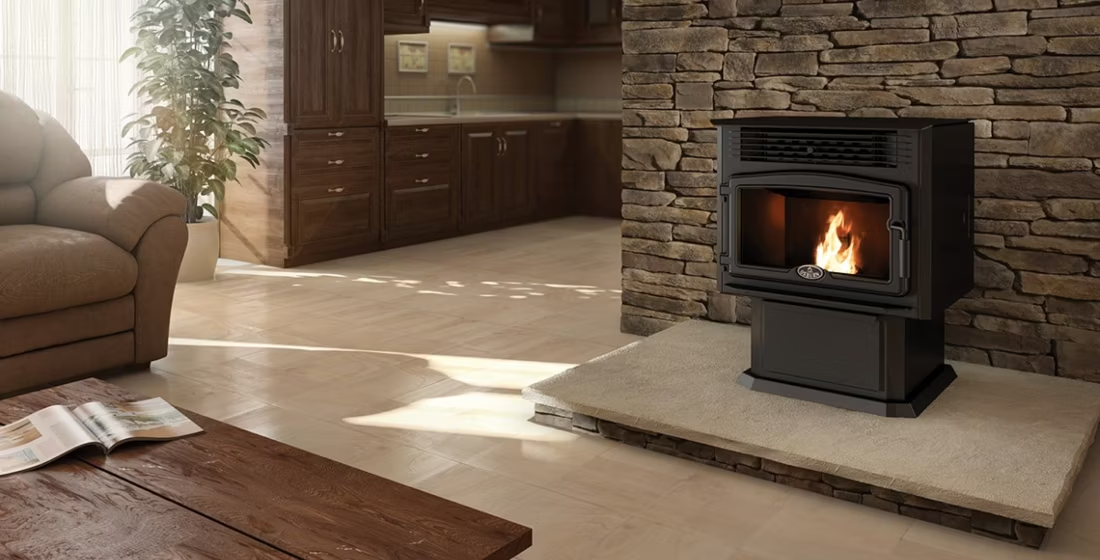
That doesn't mean pellet is off the table. A handful of Commack homeowners install a pellet stove or insert in a finished basement or den for supplemental heat, for backup warmth when Long Island Power Authority service is interrupted during a nor'easter, or simply because they like a visible flame without wood handling or a masonry chimney. LIPA's residential rate runs about 24.6 cents per kWh—well above the national average—so a pellet stove's low electrical draw for the auger and blower can make more sense for zone heating than running electric resistance heaters through a cold snap. Regional bagged-pellet brands like Energex, Hamer Pellet Fuel, and Greene Team Pellet Fuel are sold at Long Island hearth shops and hardware stores, so fuel supply exists even though installation demand is thin.
Three steps. No salesperson until you're ready.
Tell us about your project
Your zip code, your situation, and the fuel you're leaning toward—or let the answers point you to one.
See what's actually available
The brands dealers within 100 miles genuinely carry—real options, never a catalog mirage.
Get your dealer & Project Guide
A trusted local dealer, plus the free Project Guide & Parts List that names every component of the job.
Frequently Asked Questions
How much does a pellet stove installation cost in Commack?
Because pellet stoves are uncommon in Commack, there isn't a deep local pricing history the way there is for gas conversions, but installations here generally track the broader Northeast suburban range: roughly $3,000 to $6,500 for a freestanding stove or insert, including venting through an exterior wall. Homes without an existing masonry fireplace typically land on the lower-to-middle end since there's no chimney liner work involved—just a horizontal vent kit through the wall. A trusted local dealer will give you a firm number after seeing the space.
Is a pellet stove a good fit for a Long Island home, or should I go with gas?
Most Commack homes are already piped for natural gas, which makes a gas fireplace or insert the more conventional upgrade—it's instant, requires no fuel storage, and matches how the rest of the neighborhood heats. A pellet stove makes more sense as a secondary heat source: a finished basement that's colder than the rest of the house, a sunroom addition, or a backup option for winter power outages when you don't want to rely solely on the grid. Few Commack homeowners use pellet as their only heat source, and that's a reasonable read on the local climate and infrastructure.
Do I need a permit to install a pellet stove in Commack?
Yes. Pellet stove installations in Commack go through the Town of Huntington's Building Division, which will require the unit to meet current EPA emissions standards and confirm proper clearances and venting termination points relative to windows, doors, and property lines. Most hearth retailers who install pellet stoves on Long Island handle the permit application and inspection scheduling as part of the job, so you're not coordinating it yourself.
Will my pellet stove still work if LIPA power goes out?
Not without a backup power source. Pellet stoves rely on an electric auger to feed fuel and a blower to distribute heat, so a Long Island Power Authority outage—which can stretch for days after a significant nor'easter—will shut the stove down along with everything else. Homeowners who want pellet heat specifically as storm backup usually pair the stove with a small battery backup unit or portable generator sized for the stove's 100-400 watt draw. If outage-proof heat without any backup equipment is the priority, a wood stove or a gas unit with a standing pilot is a more reliable choice in Commack's climate.
What pellet brands can I actually buy near Commack?
Energex, Hamer Pellet Fuel, and Greene Team Pellet Fuel are the regional brands most commonly stocked at Long Island hearth and hardware retailers, sold in 40-pound bags rather than the bulk-ton deliveries you'd see in more rural pellet markets. Because pellet heat isn't the dominant fuel here, expect to buy bags as needed rather than relying on a single bulk delivery each fall—plan on stocking up before winter demand tightens local supply.
Pellet vs. electric heat—which makes more sense given Long Island's electric rates?
LIPA's residential rate runs about 24.6 cents per kWh, and Fishers Island customers pay closer to 38 cents—both well above the national average. A pellet stove's auger and blower only draw a few hundred watts, so the bulk of your running cost is pellet fuel, not electricity, unlike a portable electric space heater that's pulling 1,500 watts continuously. For a room that needs regular supplemental heat through a Commack winter, pellet fuel costs typically undercut electric resistance heat, even accounting for the stove's own modest power draw.
Where can I buy bagged wood pellets in Commack?
Local hearth shops and larger hardware retailers across Suffolk County typically carry Energex, Hamer, and Greene Team pellets in-season, usually from early fall through the coldest months. Because Commack isn't a high-volume pellet market, availability can tighten during cold snaps when regional demand spikes—buying a few bags early in the season is a common local workaround rather than waiting until a January cold stretch.
How often does a pellet stove need cleaning and maintenance?
Plan on cleaning the burn pot and ash removal weekly during regular use, plus a full annual service—hopper, auger, blower, and venting—before each heating season starts. Pellet stoves don't require the chimney sweeping that wood stoves do, but the mechanical components (auger motor, igniter, blower) do wear and benefit from a yearly professional check. Given how few technicians on Long Island specialize in pellet equipment specifically, it's worth confirming pellet experience with whichever local dealer installs your unit, rather than assuming any hearth service tech covers it.
Pellet vs. gas—which is right for my Commack home?
Gas is the default choice for most Commack homeowners: it's instant, ties into infrastructure already serving the house, and needs no fuel storage or bag-hauling. Pellet offers a real flame and decent heat output at a lower running cost than electric resistance heat, but it requires buying and storing bags, regular ash cleanout, and continuous electricity to operate—a real tradeoff on Long Island where gas service is already at the curb. Most homeowners here choose pellet only when they specifically want a supplemental or backup heat source rather than a primary one, and that's a sound read on the local setup.
Why is a fireplace insert so efficient?
An insert does two things: it seals the chimney completely, so you stop losing air you already paid to heat, and it radiates warmth into the room through the firebox and glass. Most add a heat-exchange fan that pulls cool room air underneath, wraps it around the hot firebox, and pushes it back out warm. Your home is more efficient before you've even lit the first fire.
How often does a pellet stove need cleaning?
A clean pellet stove is a happy pellet stove. Plan on cleaning the burn pot about once a week when you're burning regularly—ash and clinkers gum up the air holes just like a pellet barbecue. Most pellet stove problems trace back to skipped cleaning that nobody explained up front. Some designs make it easy with a trapdoor burn pot: pull a lever and the gunk drops into the ash pan.
Does a fireplace add value to my home?
On average, a fireplace adds back to the home about the same amount you spent installing it. Add the monthly savings from heating the rooms you actually use instead of the whole house—often hundreds of dollars a year—and the value case is strong before you even count what a fire does for how your family uses the room.
Should the dealer who sells my fireplace also install it?
Ideally, yes. A fireplace project involves vent pipe, gas line, electrical, and often tile or stone. Hire three or four separate trades and you own the liability and the game of telephone between them. One company selling and installing means one accountable party, start to finish—ask about factory training, on-time completion records, and what happens if an inspection fails.
Nearby Dealers
Hearth shops serving Commack and the surrounding area.
Pellet Brands Stocked Around Commack
Manufacturers will point you to the nearest stocking dealer.
Find your pellet stove in Commack.
Tell us about your space and how you plan to use it, and we'll match you with a local Long Island dealer who genuinely installs pellet equipment—plus a free Project Guide & Parts List with the exact vent kit and components for your Commack home.
Find Your Fireplace →