
Steady heat for Columbia County's long Hudson Valley winters.
With a long, steady heating season and winter lows around 18°F, Columbia County homes need dependable heat from October through April. A pellet stove gives you thermostat-controlled warmth without the wood-splitting—matched to a vetted local dealer who'll size and install it right.
Every Project Starts From One of These Five Situations
Consistent, low-maintenance heat for a real Northeast winter.
Columbia County sits in climate zone 5A, tucked between the Hudson River and the Berkshire foothills, with a heating season about as long as Madison, WI's. Winters here run cold and consistent rather than extreme, with average lows near 18°F, which is exactly the kind of climate where a pellet stove earns its keep: steady, even heat through a long stretch of cold rather than brief arctic spikes.
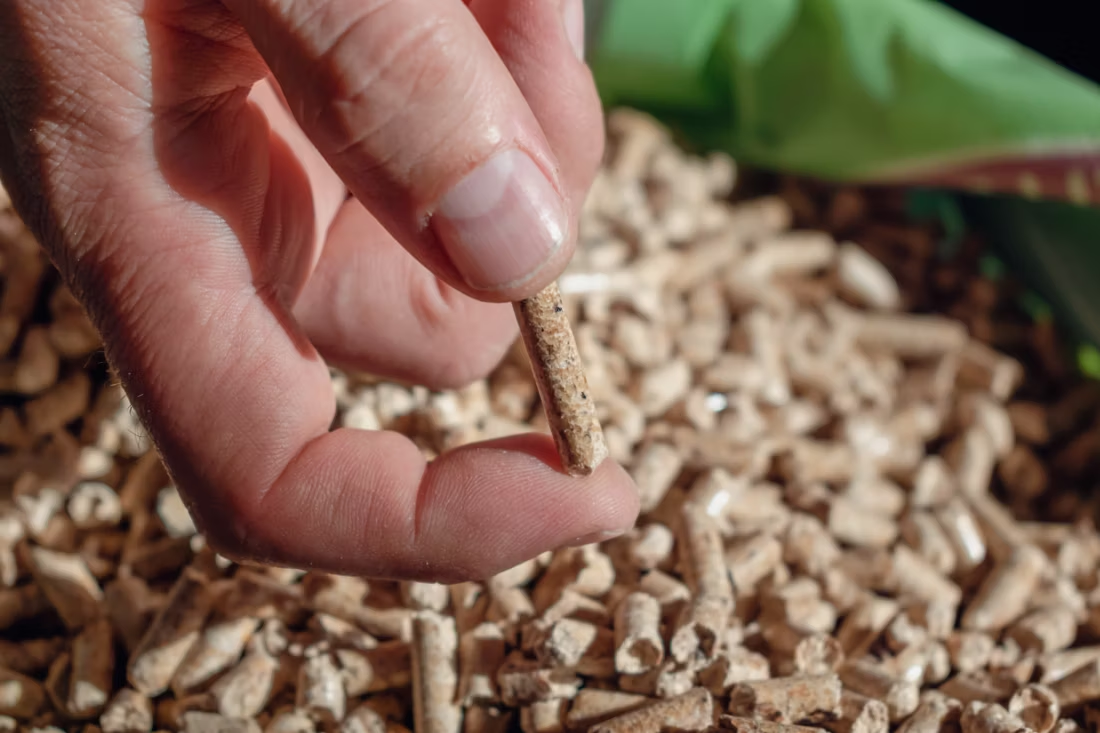
Homeowners across Hudson, Chatham, Kinderhook, and the county's smaller hamlets increasingly choose pellet appliances as either a primary heat source in older farmhouses or a supplemental zone-heat solution alongside oil or propane furnaces. Fuel is easy to come by regionally through brands like Energex, Hamer Pellet Fuel, and Greene Team Pellet Fuel, and Columbia County has no air quality non-attainment restrictions, so there's no curtailment-period concern the way there is in parts of the West. A properly sized pellet stove or insert means less hauling and splitting than a wood setup, cleaner burns, and a thermostat you can actually set and leave.
Three steps. No salesperson until you're ready.
Tell us about your project
Your zip code, your situation, and the fuel you're leaning toward—or let the answers point you to one.
See what's actually available
The brands dealers within 100 miles genuinely carry—real options, never a catalog mirage.
Get your dealer & Project Guide
A trusted local dealer, plus the free Project Guide & Parts List that names every component of the job.
Frequently Asked Questions
How much does a pellet stove installation cost in Columbia County?
A pellet stove or insert installation in Columbia County typically runs $4,500 to $7,500, depending on the unit, whether it's a freestanding stove or an insert going into an existing fireplace, and the venting path required. Inserts going into an existing masonry fireplace with a straightforward vent run tend to land on the lower end. New freestanding installs that require wall penetration for the vent pipe, or electrical work for the auger and blower circuit, push toward the higher end. Local dealers will give you a firm number after seeing your home.
Where can I buy pellet fuel in Columbia County?
Regional brands like Energex, Hamer Pellet Fuel, and Greene Team Pellet Fuel are commonly stocked at hearth retailers and farm supply stores throughout the county, and many dealers who sell and install the stoves also sell pellets by the bag or ton. Buying a full ton (or several) in late summer or early fall, before the first cold snap drives up demand, is the standard local strategy—pellet prices tend to rise once everyone in the Hudson Valley starts heating in October.
Will my pellet stove work if the power goes out?
Not without a backup power source. Pellet stoves rely on an electric auger to feed fuel and a blower to distribute heat, so a power outage stops the stove entirely—a real consideration in Columbia County, where ice storms and heavy nor'easters can knock out power for a day or more in rural parts of the county. A small battery backup or inverter generator sized for the stove's low wattage draw (usually under 100-150 watts) can keep it running through most outages. If backup heat during outages is a top priority, a wood stove that needs no electricity is worth comparing against a pellet unit—many local dealers carry both and can talk through the tradeoff.
What's the difference between a pellet stove and a pellet insert?
A pellet stove is a freestanding unit that sits on its own hearth pad and vents through an exterior wall or existing chimney—it can go almost anywhere with proper clearances. A pellet insert is built to slide into an existing masonry fireplace opening, converting a drafty wood-burning fireplace into a sealed, efficient heat source while reusing the existing chimney chase for venting. For Columbia County's older housing stock—plenty of farmhouses and homes from the 1800s and early 1900s with existing masonry fireplaces—an insert is often the more cost-effective path since it uses infrastructure that's already there.
Do I need a permit to install a pellet stove in Columbia County?
Most municipalities in Columbia County require a building permit for a new pellet stove installation, since it involves venting through a wall or chimney and sometimes new electrical circuits. Permit requirements and fees vary by town and village—Hudson, Chatham, Kinderhook, and the smaller townships each handle it through their own local building department. Most local hearth dealers who install pellet stoves are familiar with the permitting process in their service area and will pull the permit as part of the installation, so it's worth asking upfront rather than handling it yourself.
How big of a pellet stove do I need for my home?
Sizing depends on square footage, ceiling height, insulation quality, and whether the stove is your primary heat or a supplemental zone-heat source. As a rough guide for Columbia County's climate: smaller units (under 1,500 sq ft rated) suit single rooms or well-insulated additions, while mid-size units (1,500-2,500 sq ft rated) handle open living areas in most local homes. Older, less-insulated farmhouses common throughout the county often need a larger-rated stove than the square footage alone would suggest, simply because heat loss is higher through original single-pane windows and uninsulated walls. A local dealer will size your specific home during an in-home visit rather than relying on a generic chart.
How often does a pellet stove need to be cleaned and serviced?
Plan on cleaning the burn pot and ash area every few days during regular use, a deeper glass and hopper cleaning weekly, and a full professional service annually—typically in late summer before the heating season ramps up. The exhaust venting should also be inspected annually, since pellet stoves vent differently than wood stoves and can accumulate fine ash buildup in the pipe over a season of steady Columbia County winter use. Skipping the annual service is the most common cause of feed and ignition problems showing up mid-winter, right when you need the stove most.
Pellet stove vs. wood stove—which is right for my Columbia County home?
Wood stoves burn cordwood—oak, maple, birch, and ash are all common species harvested locally—work with no electricity, and are often cheaper to fuel if you're cutting or buying firewood directly from a local source. Pellet stoves are easier to operate day-to-day (fill the hopper, set the thermostat), burn cleaner with less ash, and don't require splitting or stacking wood, but they need electricity to run and won't function during a power outage without a backup power source. For Columbia County homes with reliable power and a preference for convenience, pellet is often the easier day-to-day choice. For rural properties where winter power outages are more common, or for homeowners who already have a wood supply, a wood stove may make more sense as either the primary unit or a backup alongside a pellet stove.
Is pellet fuel cheaper than heating oil or propane in Columbia County?
Pellets generally cost less per BTU than heating oil or propane, both of which are common whole-house fuels in Columbia County's rural areas without natural gas service. The exact savings depend on current oil and propane prices, which fluctuate seasonally, and on how much of your home the pellet stove is actually heating—a stove used for zone heating in the main living area, with the furnace turned down elsewhere, tends to produce more noticeable savings than a stove used only occasionally for ambiance. Buying pellets in bulk (a full ton or more) ahead of the season from a local dealer or farm supply store typically brings the per-bag cost down further.
What's the difference between an insert and a zero-clearance fireplace?
An insert is a fireplace that slides into a pre-existing wood-burning fireplace—if you don't have one, there's nothing to insert it into. A zero-clearance fireplace is built into a framed wall, which makes it the answer for remodels and new construction. Simple test: existing masonry fireplace means insert; blank or framed wall means zero-clearance.
Why is my open fireplace making my house colder?
Open fireplaces suck—literally. As the fire burns, it consumes air your furnace already paid to heat and pulls it out through the chimney, so the house is actually colder after the fire goes out than before you lit it. An insert fixes this: it seals the chimney, puts fixed glass across the front, and turns that hole in your house into a real heat source.
Can I install a fireplace myself?
If you're putting a fire in your house on purpose, it's best to work with an expert. Unless you're genuinely experienced in framing, gas line, vent pipe, and the national code on clearances to combustibles, have a professional do it—and ideally the same company that sells you the fireplace, so warranty, service, and liability all live under one roof.
Does a fireplace add value to my home?
On average, a fireplace adds back to the home about the same amount you spent installing it. Add the monthly savings from heating the rooms you actually use instead of the whole house—often hundreds of dollars a year—and the value case is strong before you even count what a fire does for how your family uses the room.
Stove and Fireplace Dealers in Columbia County
Pellet Brands Stocked Around Columbia County
Manufacturers will point you to the nearest stocking dealer.
Get matched with a pellet stove dealer in Columbia County.
Tell us about your home and heating goals, and we'll match you with a trusted local dealer and send you a free Project Guide & Parts List—the exact parts, vent kit included, for your pellet project.
Find Your Fireplace →