
Zone heat and ambiance for Columbia County's old housing stock.
From Hudson row houses to farmhouses outside Chatham and Kinderhook, electric fireplaces add instant warmth and glow without touching a chimney or a gas line. Find the right unit and connect with a trusted local dealer.
Every Project Starts From One of These Five Situations
No venting, no permit headaches, real zone heat.
Columbia County sits in climate zone 5A with roughly 5,829 heating degree days a year and winter lows averaging around 18°F—cold enough that supplemental heat matters, but not the deep-freeze territory of a place like Fargo ND or Burlington VT. That middle-of-the-pack cold is exactly where electric fireplaces earn their keep: they're not trying to carry a whole farmhouse through January the way a wood stove or gas insert might, but they're excellent for taking the edge off a chilly bedroom in Hudson, a converted barn outside Ghent, or a drafty upstairs room in one of the county's many pre-war homes.
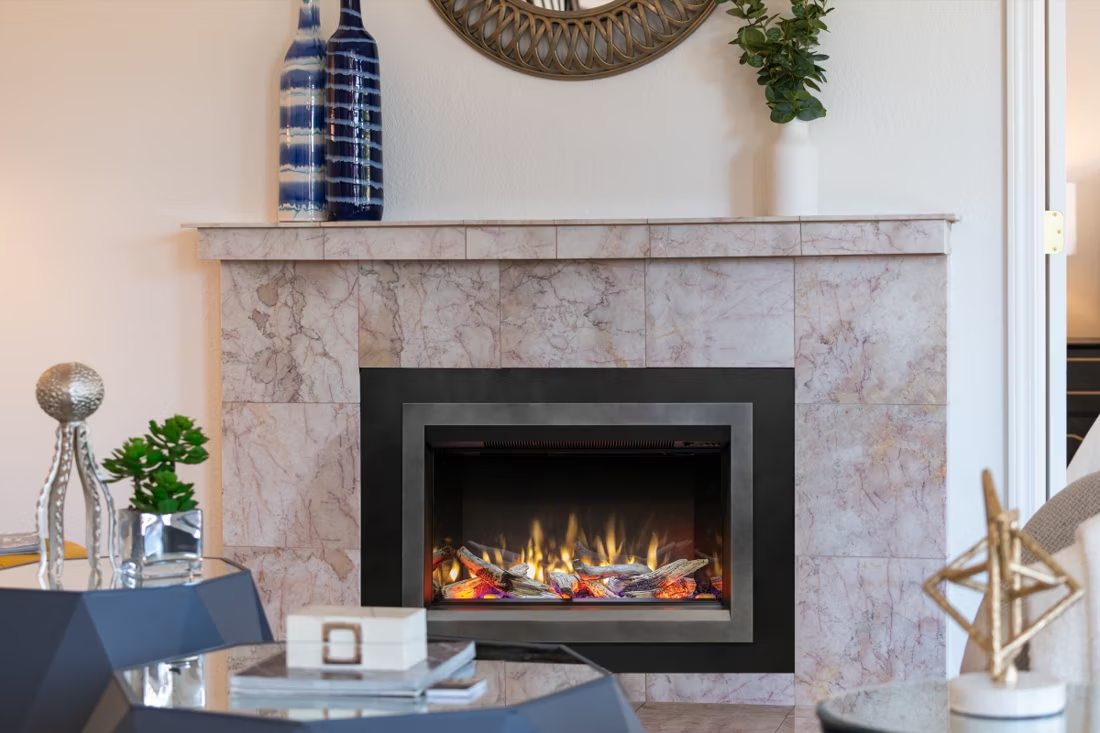
A big part of the appeal here is the housing stock itself. Columbia County has a lot of historic buildings—19th-century row houses in Hudson, farmhouses scattered around Chatham, Kinderhook, and Philmont—many with masonry chimneys that are old, unlined, or simply not worth the expense of relining for a wood or gas appliance. An electric insert drops into that existing fireplace opening without a chimney liner, a gas line, or a building permit for venting, and it still delivers real supplemental heat and the look of a fire. For anyone renting, in a condo, or just not ready to take on masonry work, it's the lowest-friction way to get a fireplace working again.
Three steps. No salesperson until you're ready.
Tell us about your project
Your zip code, your situation, and the fuel you're leaning toward—or let the answers point you to one.
See what's actually available
The brands dealers within 100 miles genuinely carry—real options, never a catalog mirage.
Get your dealer & Project Guide
A trusted local dealer, plus the free Project Guide & Parts List that names every component of the job.
Frequently Asked Questions
How much does an electric fireplace installation cost in Columbia County?
Most electric fireplace and insert installations in Columbia County run $400 to $1,200, which is a fraction of what wood or gas projects cost because there's no venting, no chimney work, and no gas line to run. A basic plug-in insert that slides into an existing fireplace opening sits at the low end. Built-in wall units, or inserts that need a dedicated 120V or 240V circuit run by an electrician, land toward the higher end. Homes in Hudson's older row houses sometimes need minor electrical panel work if the circuit isn't already available, which a local dealer can flag during an in-home look.
Do electric fireplaces actually produce useful heat in a Columbia County winter?
Yes, within their range. Most electric inserts put out around 4,000–5,000 BTU, enough to comfortably heat a single room—a bedroom, den, or home office—but not a whole farmhouse when temperatures drop into the teens, which happens regularly here given the county's average winter low near 18°F. Think of it as targeted zone heat: it can let you turn down the thermostat in the room you're using rather than heating the whole house, which is a real savings on oil or propane bills in an older Columbia County home with mediocre insulation. For whole-home heat during the coldest stretches, a wood or gas appliance is still the better primary source.
Do I need a permit to install an electric fireplace in Columbia County?
Generally no. Because electric units don't require venting or a chimney, most jurisdictions in Columbia County don't require a building permit for a straightforward insert or wall-mount installation. If your installation requires new electrical wiring or a dedicated circuit, an electrician may need to pull an electrical permit through your town's building department—Hudson, Chatham, and Kinderhook each handle this locally. A local dealer can tell you upfront whether your specific installation crosses that line.
Can I put an electric insert into my existing Columbia County fireplace?
In most cases, yes—and it's one of the more common projects local dealers handle here. Columbia County has no shortage of older homes with existing masonry fireplace openings that haven't been used for wood burning in years, often because the flue is unlined or the chimney needs repointing that no one wants to pay for. An electric insert fits into that opening, plugs into a standard or dedicated outlet, and restores the look of a working fire without touching the chimney at all. It's a popular fix for exactly the kind of pre-war housing stock common in Hudson and the surrounding hamlets.
What's the difference between an electric insert and an electric wall-mount unit?
An electric insert is built to slide into an existing fireplace opening, mimicking the look of a traditional firebox—the natural choice for Columbia County's older homes with existing masonry fireplaces. A wall-mount or built-in electric unit is designed for homes without an existing fireplace, and can go into a stud wall, an entertainment center surround, or a custom-framed niche in new construction or a renovated space. Both use the same core heating technology; the choice mostly comes down to whether you're retrofitting an existing opening or creating a fireplace feature from scratch.
Will an electric fireplace work during a power outage in Columbia County?
No—electric fireplaces require power to run both the heater and the flame effect, so they go dark along with everything else during an outage. Columbia County sees its share of winter storm outages, particularly in rural areas outside Hudson served by longer above-ground utility lines. If backup heat during outages is a priority for your household, that's a reason to pair an electric unit (for everyday convenience and zone heat) with a wood stove or a gas appliance with battery-backup ignition elsewhere in the home, rather than relying on electric as your only heat source.
How does an electric fireplace compare to a pellet stove for Columbia County homes?
Pellet stoves, running on regional brands like Energex, Hamer Pellet Fuel, or Greene Team Pellet Fuel, put out real heat—often enough for a whole main living area—but they need venting, a hopper to load, and electricity to run the auger and blower, so they still go down in an outage despite burning fuel. Electric fireplaces skip the venting and fuel handling entirely but only heat a single room and are just as outage-vulnerable. If you want to actually reduce your heating bill on a cold Columbia County night, pellet is the stronger tool; if you want low-cost ambiance and light supplemental heat with zero installation hassle, electric wins.
Are electric fireplaces energy-efficient to run in Columbia County?
Electric heat is 100% efficient at the point of use—every watt becomes heat in the room, unlike combustion appliances that lose some heat up the flue. The tradeoff is that electricity is generally the more expensive fuel per BTU compared to wood or pellets in this part of New York. Used as intended—zone heating a single occupied room while the rest of the house runs cooler—an electric fireplace can meaningfully reduce a Columbia County household's overall heating cost. Used as a whole-house primary heat source, it typically costs more than the alternatives.
Electric vs. gas—which is right for my Columbia County home?
Gas fireplaces and inserts deliver more heat, can be configured for propane where natural gas service isn't available (much of rural Columbia County runs on propane), and with the right ignition system can keep running in a power outage. Electric units cost a fraction to install, need no gas line or venting, and go into almost any room in minutes. For a primary heat source in a farmhouse outside Chatham or Ghent, gas is usually the better fit. For a bedroom, home office, or a historic Hudson fireplace opening you just want glowing again without construction, electric is the simpler and cheaper answer.
Can I put a TV above my fireplace?
Yes—with an asterisk. Fireplaces are hot and TVs don't like heat. Either put a mantel between them to deflect rising warmth, or choose a fireplace with heat-management technology that creates a cool zone on the wall above—the wall stays around 125 degrees, barely warm, while the room still gets full heat. If you like clean lines and don't want a mantel, heat management is the answer.
Do electric fireplaces actually produce heat?
Yes—most put out around 4,800–5,000 BTUs from a standard outlet, which comfortably warms a bedroom, office, or den as a comfort-zone heater. What they won't do is carry a whole house the way wood, gas, or pellet can. Think of electric as ambiance-first with honest supplemental heat: flames on with no heat in July, flames plus warmth in January.
What is an in-home preview and do I need one?
It's a visit where a hearth professional measures your space, confirms the model you picked actually works in your home, and walks the specs—framing, gas line, venting, finish work—before anything is ordered. Some details you just can't know until you see the house. Never make a down payment without one; it's the single most-skipped step that burns buyers.
Can a fireplace actually lower my heating bill?
Yes—by creating a comfort zone. A furnace heats every square foot of the house just to warm the one room you're in; a gas fireplace on low burns roughly a sixth of the gas a typical furnace does. Set the furnace around 55–60 degrees as a baseline, then heat the rooms your family actually uses. Families who heat this way commonly save $20–$60 a month.
Stove and Fireplace Dealers in Columbia County
Get your Columbia County electric fireplace Project Guide & Parts List.
Tell us a bit about your home and we'll put together a free Project Guide & Parts List for your electric fireplace project, matched with a trusted local Columbia County dealer.
Find Your Fireplace →