
Pellet stoves are the exception in a borough built on steam heat.
With a moderate-cold winter climate and winter lows averaging 27°F, the Bronx is a real winter—just not a wood-and-pellet winter. Most of the borough runs on Con Edison steam and gas-fired boilers, and dense multi-family construction leaves little room for a hopper, a vent kit, or a pallet of bagged fuel. Where a pellet stove does make sense—mostly single-family pockets like Riverdale or City Island—I'll match you with a vetted local dealer who knows the FDNY and DOB paperwork cold.
Every Project Starts From One of These Five Situations
A borough of steam radiators, not wood hoppers.
The Bronx sits in climate zone 4A with a moderate-cold winter climate and a 27°F average winter low—genuinely cold, but a fraction of what Buffalo sees at the other end of New York State, where winters run far longer and colder. That milder, moderate-cold profile is one reason pellet heat never took hold here the way it did in rural upstate counties: with roughly 1.47 million residents packed into 42 square miles, the Bronx's housing stock is overwhelmingly multi-family—prewar walk-ups, co-ops, and apartment towers built around shared Con Edison steam risers or gas-fired boiler systems, not standalone chimneys or exterior walls suited to a pellet vent kit.
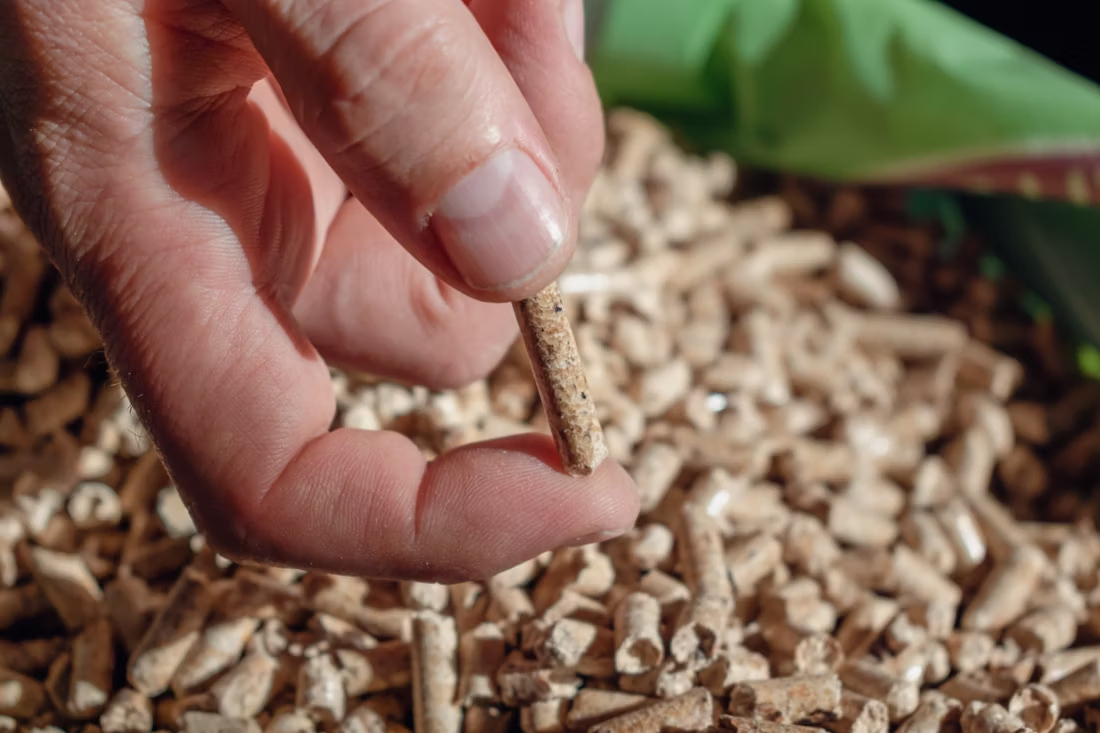
Solid-fuel appliances, pellet included, run into real structural and regulatory friction in that kind of building stock: shared flues, party walls, no basement or garage for a season's worth of 40-pound bags, and co-op or condo boards that simply prohibit solid-fuel stoves outright. Where it does work is the Bronx's detached and semi-detached single-family pockets—Riverdale, Fieldston, City Island, Throggs Neck, Pelham Bay, Country Club, and Schuylerville—where a homeowner has their own exterior wall, a basement for fuel storage, and no board approval standing in the way. Regional bagged pellet brands like Energex, Hamer Pellet Fuel, and Greene Team Pellet Fuel are available through dealers serving the greater NYC and Hudson Valley area, but bulk delivery infrastructure common in rural New York counties simply isn't built out inside the borough itself.
Three steps. No salesperson until you're ready.
Tell us about your project
Your zip code, your situation, and the fuel you're leaning toward—or let the answers point you to one.
See what's actually available
The brands dealers within 100 miles genuinely carry—real options, never a catalog mirage.
Get your dealer & Project Guide
A trusted local dealer, plus the free Project Guide & Parts List that names every component of the job.
Frequently Asked Questions
Can I install a pellet stove in a Bronx apartment or co-op?
In almost all cases, no. Multi-family buildings in the Bronx typically share a single flue system or have none suited to a freestanding solid-fuel appliance, and most co-op and condo proprietary leases prohibit pellet or wood stoves outright due to fire and insurance liability. Even where a unit has an exterior wall, the FDNY's Certificate of Fitness requirements and the building's own board approval process make this a nonstarter for the overwhelming majority of Bronx renters and co-op owners. If you're in a building like this, an electric fireplace insert is almost always the realistic path to supplemental heat and ambiance.
Where in the Bronx do people actually install pellet stoves?
It's concentrated in the borough's detached and semi-detached single-family neighborhoods—Riverdale and Fieldston along the Hudson, City Island and Silver Beach on the water, Throggs Neck, Pelham Bay, Country Club, and Schuylerville. These are the pockets where a homeowner controls their own exterior wall for venting and has a basement or garage to store a season's worth of bagged pellets. Outside those areas, the Bronx's apartment-dominant housing stock makes pellet installations rare enough that most local hearth dealers see only a handful of these jobs a year.
How much does a pellet stove installation cost in the Bronx?
There's no single number to hand you without seeing the home, and pricing here tends to run higher than in less dense parts of New York State because of NYC labor rates, DOB permit fees, and the fire-rated wall penetration work often required to vent through a party wall or masonry exterior. The biggest cost drivers are whether the home already has a usable chimney or exterior wall, whether a dedicated electrical circuit needs to be run for the auger and blower, and hearth pad and clearance requirements. A local dealer will walk the space and give you a firm number as part of your Project Guide.
Do I need a permit to install a pellet stove in the Bronx?
Yes. Any solid-fuel burning appliance in New York City requires a permit through the NYC Department of Buildings, and the installer or homeowner typically needs an FDNY Certificate of Fitness for the appliance type. If you're in a co-op or condo, board approval usually has to happen before DOB paperwork is even filed, since the building's own governing documents often address solid-fuel appliances separately from city code. A local installer experienced with Bronx single-family jobs will know how to sequence board approval, DOB filing, and FDNY sign-off in the right order.
Will a pellet stove keep working if the power goes out?
No—pellet stoves rely on electricity to run the auger that feeds fuel and the blower that circulates heat, so a power outage shuts the unit down unless you add a battery backup, which is an extra cost most homeowners skip. Con Edison's grid in the Bronx is generally reliable, but nor'easters and coastal storms have caused multi-day outages in waterfront neighborhoods like City Island and Throggs Neck before. If backup heat during an outage is a real priority for your household, that's worth discussing with your dealer before you commit to pellet over a gas option with battery-backed ignition.
What pellet fuel is actually available near the Bronx?
Regional brands like Energex, Hamer Pellet Fuel, and Greene Team Pellet Fuel are the names you'll most commonly find through dealers serving the greater New York City and Hudson Valley region. Because the Bronx doesn't have the bulk pellet delivery infrastructure you'd see in a rural upstate county, most Bronx pellet stove owners buy bagged pellets by the pallet from a hearth dealer or big-box supplier in Westchester, Long Island, or New Jersey and store them in a basement or garage—which is itself one more reason pellet stoves stay limited to the borough's single-family pockets.
Does it make sense to install a pellet stove given how most Bronx homes are heated?
For most of the borough, no—the vast majority of Bronx buildings run on Con Edison steam or National Grid gas-fired boilers, systems that are already built into the structure and require no fuel storage or ash handling. A pellet stove only really adds value as supplemental heat or a design feature in a single-family home that already has its own heating system, typically in a finished basement or family room in neighborhoods like Riverdale or Pelham Bay. If you're weighing a first heating appliance for a Bronx home, a gas fireplace or insert tied into existing gas service is usually the simpler, cheaper path.
Pellet stove vs. gas insert—which is more practical for a Bronx home?
Gas wins for most Bronx homeowners. Natural gas service through National Grid is standard across the borough, gas inserts don't require bagged-fuel storage or an auger motor, and permitting a gas appliance doesn't carry the same FDNY solid-fuel scrutiny that a pellet stove does. Pellet still has a niche appeal—some homeowners like the visible flame and the lower reliance on a utility company—but it demands storage space, standby electricity, and DOB/FDNY sign-off that gas installations generally sidestep. For a straightforward heat-and-ambiance upgrade in a Bronx single-family or two-family home, most local dealers will steer you toward gas first.
Are there rebates or incentives for pellet stoves in the Bronx?
New York State runs efficiency incentive programs through NYSERDA that periodically cover high-efficiency heating equipment, and eligibility and appliance categories change from year to year, so it's worth asking your local dealer what currently applies before you buy. Because pellet stoves fall under NYC's solid-fuel appliance rules rather than standard HVAC equipment, incentive eligibility can look different here than it does upstate—another reason to loop your dealer in early so the permit filing and any rebate paperwork move together instead of as an afterthought.
What's the difference between an insert and a zero-clearance fireplace?
An insert is a fireplace that slides into a pre-existing wood-burning fireplace—if you don't have one, there's nothing to insert it into. A zero-clearance fireplace is built into a framed wall, which makes it the answer for remodels and new construction. Simple test: existing masonry fireplace means insert; blank or framed wall means zero-clearance.
Why is my open fireplace making my house colder?
Open fireplaces suck—literally. As the fire burns, it consumes air your furnace already paid to heat and pulls it out through the chimney, so the house is actually colder after the fire goes out than before you lit it. An insert fixes this: it seals the chimney, puts fixed glass across the front, and turns that hole in your house into a real heat source.
Can a fireplace actually lower my heating bill?
Yes—by creating a comfort zone. A furnace heats every square foot of the house just to warm the one room you're in; a gas fireplace on low burns roughly a sixth of the gas a typical furnace does. Set the furnace around 55–60 degrees as a baseline, then heat the rooms your family actually uses. Families who heat this way commonly save $20–$60 a month.
Can I install a fireplace myself?
If you're putting a fire in your house on purpose, it's best to work with an expert. Unless you're genuinely experienced in framing, gas line, vent pipe, and the national code on clearances to combustibles, have a professional do it—and ideally the same company that sells you the fireplace, so warranty, service, and liability all live under one roof.
Pellet Brands Stocked Around Bronx County
Manufacturers will point you to the nearest stocking dealer.
Get your free Project Guide & Parts List for a pellet stove in the Bronx.
Tell me about your home—including whether it's a single-family property with room for fuel storage and venting—and I'll match you with a trusted local dealer and send a free Project Guide & Parts List covering the exact equipment, vent kit, and permitting steps for a pellet project in the Bronx.
Find Your Fireplace →