
Find your fireplace in the Bronx.
Direct-vent fireplaces and plug-in or hardwired units for co-ops, brownstones, and apartment renovations across the Bronx—matched with a local dealer who knows NYC permitting and board approvals.
Every Project Starts From One of These Five Situations
Dense, vertical, and moderate winters across Bronx County.
Bronx County packs 1.47 million residents into roughly 42 square miles—the most densely populated county in New York State outside Manhattan. Housing stock runs from prewar co-ops in Fordham and the Grand Concourse to brick rowhouses in Throggs Neck and detached single-family homes in Riverdale and City Island. Winters are moderate by Northeast standards: 4,583 heating degree days and a 27°F average winter low put the Bronx well below the heating load of a place like Minneapolis or Burlington, but still cold enough that supplemental heat and ambiance both matter from November through March.
What you'll find on this hub: hearth retailers, service technicians, and fuel suppliers covering the whole borough—from Riverdale in the northwest to Throggs Neck and Country Club along the water, up through Pelham Bay and City Island. Gas and electric are the realistic fuel choices here given the borough's building stock and fire code; pick your fuel below to see local dealers, typical costs, and what a board or DOB approval actually involves.
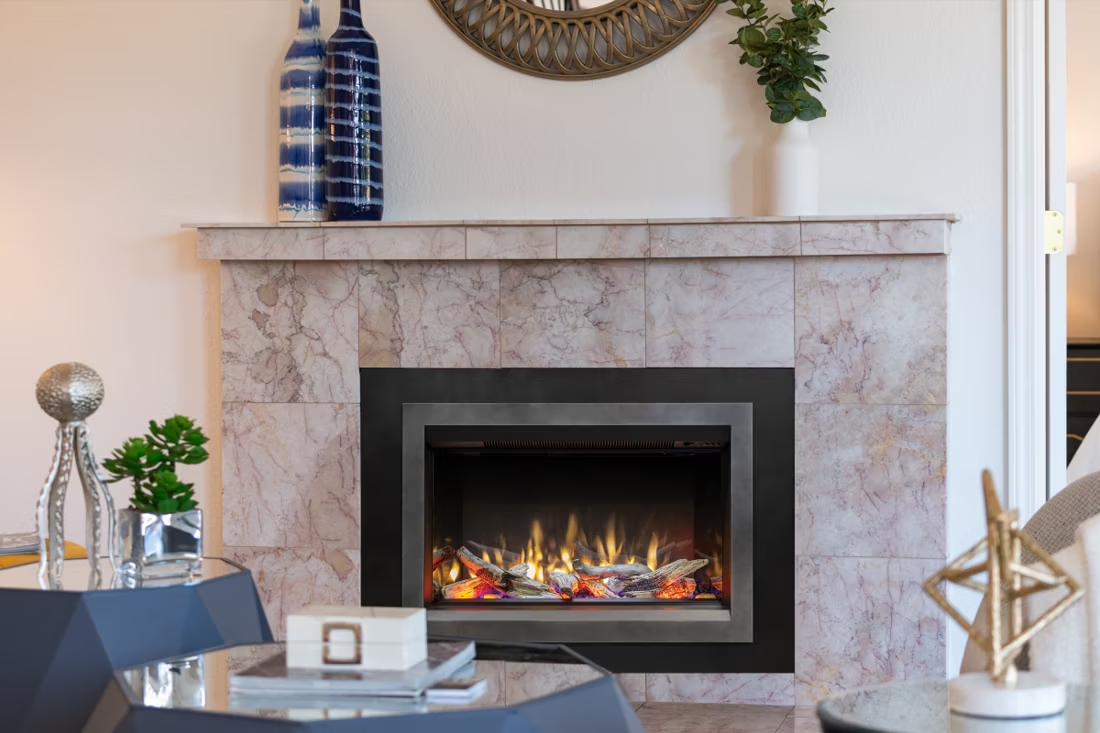
Four fuels. One honest answer for Bronx County.
Three steps. No salesperson until you're ready.
Tell us about your project
Your zip code, your situation, and the fuel you're leaning toward—or let the answers point you to one.
See what's actually available
The brands dealers within 100 miles genuinely carry—real options, never a catalog mirage.
Get your dealer & Project Guide
A trusted local dealer, plus the free Project Guide & Parts List that names every component of the job.
Frequently Asked Questions
Which fuel works best in Bronx County?
For nearly every Bronx home, it comes down to gas or electric. Gas direct-vent fireplaces and inserts are the standard choice in renovated brownstones and townhouses with Con Edison gas service already run to the building—they vent through an exterior wall, don't need a chimney, and give real heat output plus instant on/off control. Electric fireplaces are the dominant choice in co-ops and apartment buildings, where board rules and building structure often rule out any venting at all; a plug-in or hardwired electric insert can go into a wall or existing mantel opening with no permit for the appliance itself. Wood and pellet units are not realistic options for the overwhelming majority of Bronx housing stock—see the next question for why.
Are wood-burning or pellet fireplaces available anywhere in the Bronx?
They're rare, and for good reason. Bronx County is almost entirely multi-family housing—high-rise co-ops, prewar apartment buildings, and attached rowhouses—where FDNY fire code, shared chimney flues, and lack of any storage space for firewood or pellet bags make wood and pellet appliances impractical for nearly every resident. A small number of detached single-family homes in Riverdale, City Island, and parts of Country Club have existing masonry chimneys that could technically support a wood-burning insert, but even there, most owners choose gas or electric for the convenience and to avoid smoke complaints in a dense borough. We don't route wood or pellet fuel content to this hub because there's essentially no local dealer network, permit officer, or wood/pellet supplier serving Bronx addresses—that infrastructure sits in the Hudson Valley and Westchester, not here.
Do I need a permit to install a fireplace in Bronx County?
Usually yes for gas, usually no for electric. Gas fireplace and insert installations require a permit through the NYC Department of Buildings, plus FDNY sign-off on the gas connection and venting since a licensed master plumber or gas-fitter has to do that work. If you live in a co-op or condo, the building's board or managing agent typically requires its own approval on top of the city permit—get that in writing before a dealer schedules installation. Electric fireplaces generally don't need a DOB permit unless the installation involves a new dedicated circuit or in-wall wiring beyond a standard outlet; even then, it's a much lighter lift than a gas venting job. Most Bronx hearth retailers who work regularly in co-ops know this process and can walk you through both the city and building approvals.
Can one local dealer handle both gas and electric fireplace installs?
Yes—most hearth retailers serving Bronx County carry both gas and electric lines, since those are the two fuels that actually fit the borough's housing stock. A dealer who regularly installs direct-vent gas fireplaces in Riverdale brownstones will typically also stock electric wall-mount and insert units for co-op clients down the street in Fordham or Kingsbridge. If you're not sure which fuel fits your building—especially if you're waiting on board approval—ask the dealer to walk through both options before you commit, since the venting requirement is the main thing that decides it.
How does fireplace installation work in a Bronx co-op or apartment building?
It starts with your proprietary lease or condo bylaws, not the fireplace itself. Most boards require an alteration agreement, proof of licensed-contractor insurance, and sometimes a structural engineer's letter before any gas line or venting work happens—this is on top of the DOB permit and FDNY inspection. Electric installations move faster since there's no venting or gas line involved, but a board may still want to approve a new wall opening or dedicated circuit. Dealers who work regularly in Bronx co-ops (as opposed to only single-family markets) know to build board approval time into the project schedule—plan on 4-8 weeks from signed contract to installed gas fireplace in a managed building, versus 1-3 weeks for a straightforward electric insert.
What's the typical cost range for fireplace installation in Bronx County?
Gas fireplace or insert: $5,500-$12,000 installed, with the higher end driven by new gas line runs or venting through multiple floors in a rowhouse or brownstone. Electric fireplace: $250-$3,500 for the unit itself, plus $0 for true plug-in models or $500-$1,500 in labor for a hardwired wall insert or built-in. Co-op and condo jobs often run 10-20% higher than one-family-home installs in the borough once board-required insurance certificates and engineer letters are factored in. See the county + fuel pages above for retailer-specific pricing.
Does a fireplace add value to my home?
On average, a fireplace adds back to the home about the same amount you spent installing it. Add the monthly savings from heating the rooms you actually use instead of the whole house—often hundreds of dollars a year—and the value case is strong before you even count what a fire does for how your family uses the room.
How much should I budget for a fireplace?
For an average home—covering the fireplace, the vent pipe, and basic installation—a budget between $3,900 and $5,500 gives you a lot of options across wood, gas, and pellet. By the time you add finish work, gas line, and electrical, the average complete installation lands between $5,000 and $12,000 all-in. In a remodel or new build, a good rule is to put about 2.5% of the total project cost toward the fireplace.
Can I install a fireplace myself?
If you're putting a fire in your house on purpose, it's best to work with an expert. Unless you're genuinely experienced in framing, gas line, vent pipe, and the national code on clearances to combustibles, have a professional do it—and ideally the same company that sells you the fireplace, so warranty, service, and liability all live under one roof.
Wood, gas, pellet, or electric—how do I choose?
Match the fuel to your life, not the other way around. Wood: lowest fuel cost and total power-outage independence, but you're hauling and stacking. Gas: press a button, set a thermostat, no maintenance to speak of. Pellet: wood economics with automatic feeding, in exchange for weekly cleaning and a need for electricity. Electric: plugs in anywhere with honest supplemental heat. Nobody regrets the fuel that fits how they actually live.
Stove and Fireplace Dealers in Bronx County
Listings include WhyFire partner dealers, dealers we have verified as authorized for the brands we recommend, and established local businesses that carry hearth products. Every listing shows which one it is. The ones marked Preferred run on WhyFire's software, so they can show you real pricing and book your appointment right here. No manufacturer pays for placement. How we verify dealers →
Big Apple Fireplaces
All Shore Appliance
Flue Tech
County Woodstoves Inc
Costello's Hearth & Spa - Garden City Park
The Valley Fireplace
Westchester Fireplace
Mcnamara Fireplace And Stove
Fireplace And Outdoor Living
L&r Fireplace & Barbecue
D & D Design Center
Harris Hearth And Home
Kjb Fireplaces
Light N Grid
Nordic Stove And Fireplace Center
Get matched with a Bronx fireplace dealer.
Tell us your fuel, your building type, and your neighborhood, and we'll send a free Project Guide & Parts List—the exact parts, vent kit if needed, and a recommended local dealer for your Bronx project.
Find Your Fireplace →