
Keep Your Family Warm and Safe—No Matter What
From the Rio Grande valley floor in Los Lunas and Belen up to the east mesa near Tomé, pinyon and juniper have heated Valencia County homes for generations. Find the right stove or insert, and connect with a trusted local dealer.
Every Project Starts From One of These Five Situations
A high desert tradition along the Rio Grande.
Valencia County sits in the Rio Grande Valley south of Albuquerque, with the valley floor running around 4,800 to 5,000 feet through Los Lunas, Bosque Farms, Belen, and Peralta, and elevation climbing toward the east mesa and the Manzano foothills near Tomé and Rio Communities. Winters here are milder than the mountain towns up north—average winter lows sit around 19°F and the county sees a moderate winter heating season overall—but valley nights still dip into the teens, and it gets noticeably colder once you're up on the mesa. Wood heat has long been part of daily life here, not as a novelty but as a practical way to take the edge off a high desert winter.
That tradition is tied directly to what grows nearby: pinyon, juniper, and ponderosa pine are the common local species, and pinyon in particular is prized for its dense, aromatic burn. Self-cut firewood is affordable through the Cibola National Forest, which issues cutting permits from May through October for $5 to $20 per cord—a big part of why wood remains a first choice for supplemental and, in some rural households, primary heat. The one seasonal caution is wildfire smoke: during high fire-risk stretches in late summer and fall, regional smoke can settle into the valley, which is worth factoring into how and when you burn.
Firewood Cutting Permits Near Valencia County
Three steps. No salesperson until you're ready.
Tell us about your project
Your zip code, your situation, and the fuel you're leaning toward—or let the answers point you to one.
See what's actually available
The brands dealers within 100 miles genuinely carry—real options, never a catalog mirage.
Get your dealer & Project Guide
A trusted local dealer, plus the free Project Guide & Parts List that names every component of the job.
Frequently Asked Questions
How much does a wood stove installation cost in Valencia County?
Most wood stove and insert installations in Valencia County land somewhere between $3,000 and $7,500, depending on the unit, whether you're installing into an existing masonry fireplace or starting from scratch, and how much chimney or hearth work is involved. Installing into an existing fireplace opening in Los Lunas or Belen tends to run toward the lower end since the chimney is already in place. New construction or homes without an existing flue—more common on the east mesa near Tomé—cost more once Class A chimney pipe and roof penetration are added. Get a firm number from a local dealer after they've walked your specific setup.
What size wood stove do I need for my home in Valencia County?
Sizing depends on square footage, ceiling height, insulation, and whether the stove is your main heat source or a supplement. Valencia County's winters are milder than the mountain communities up north—19°F average lows and a moderate winter heating season overall—so many valley homes in Los Lunas, Belen, or Bosque Farms do fine with a small to mid-size stove used for zone heating in the main living area. Homes higher up on the east mesa or with drafty older construction typically need to size up. A local dealer will look at your actual floor plan and elevation rather than go off square footage alone—worth doing before you buy, since an oversized stove smolders and builds creosote, and an undersized one won't keep up on the coldest nights.
Where can I find a certified wood stove installer near me?
Look for installers with NFI (National Fireplace Institute) or CSIA (Chimney Safety Institute of America) certification—both indicate real training in wood-burning appliance installation, not just general contracting experience. Trusted local dealers serving Valencia County cover Los Lunas, Belen, Bosque Farms, Peralta, and the Rio Communities area, and most handle the sale and install together, which keeps warranty coverage and code compliance in one hand. Skip a general handyman for wood-burning work—improper clearances and venting are the leading cause of chimney fires, and it's not a place to cut corners in a high desert county where afternoon winds can turn a small chimney fire into a serious problem fast.
Wood stove or wood insert—what's the difference?
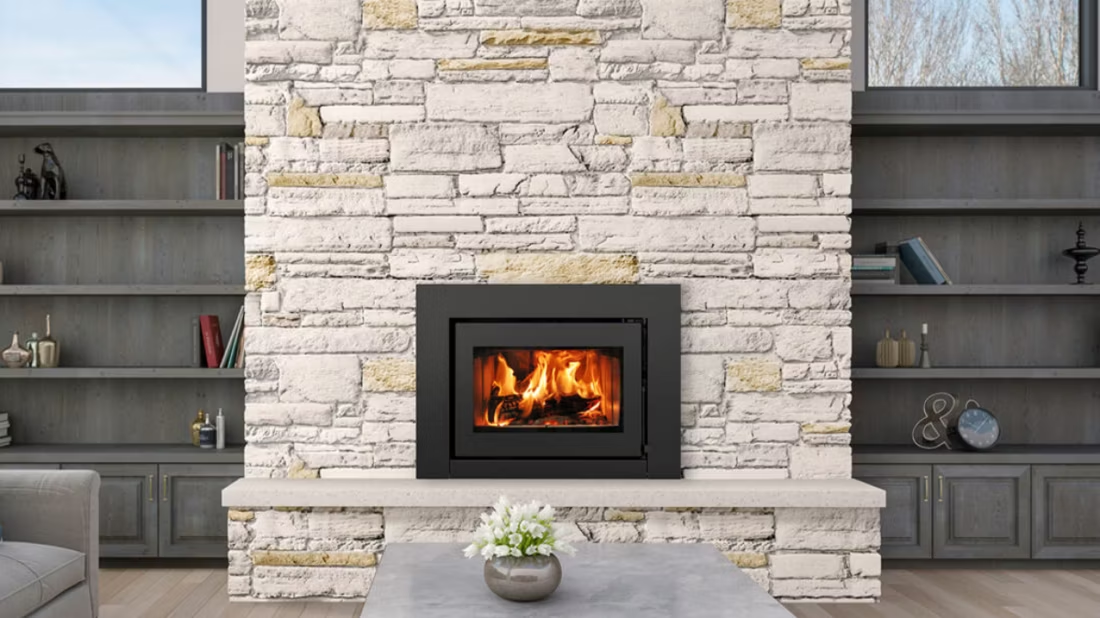
A wood stove is freestanding, sits on its own hearth pad, and can go almost anywhere in a room with the right clearances. A wood insert slides into an existing masonry fireplace and uses that chimney, turning a drafty open hearth into a sealed, high-efficiency heat source. Plenty of older homes in Belen and Los Lunas already have a masonry fireplace that was built for looks more than heat—an insert is usually the better upgrade there. Homes without an existing fireplace, or newer builds out toward Rio Communities, are generally better matched to a freestanding stove.
Do I need a permit to install a wood stove in Valencia County?
Yes—a new wood stove or insert installation requires a building permit, filed through the local building department for your jurisdiction (the county for unincorporated areas, or the city building department if you're inside Los Lunas or Belen city limits). The stove itself needs to meet current EPA emissions standards. Most local dealers handle the permit paperwork as part of the installation, so it's rarely something homeowners have to sort out themselves. Separately, if you're cutting your own firewood on public land, permits for the Cibola National Forest run May through October and cost $5 to $20 per cord—no permit is needed just to burn wood you already have on hand, though it's worth checking for smoke advisories during high wildfire-risk stretches.
What's the best wood stove for Valencia County's climate?
Given the region's milder winters—average lows around 19°F and a moderate winter heating season overall—most Valencia County homes do well with a mid-size, non-catalytic stove from a brand like Pacific Energy or Lopi, sized for zone heating rather than a 24-hour, single-digit-night burn cycle. If you're up on the east mesa or want a stove that can run as near-primary heat through cold snaps, a catalytic model that extends burn time is worth the extra cost. Pinyon and juniper—the most common local firewood—burn hot and dense, so whatever stove you choose, make sure your dealer accounts for that fuel when sizing the firebox and setting expectations on burn time.
How often should my chimney be inspected in Valencia County?
An annual inspection is the standard recommendation from the CSIA for any wood-burning appliance, and it's a good habit for Valencia County homes regardless of how often the stove gets used—late summer, before the fall wildfire-smoke season and before the first cold nights hit, is a practical time to schedule it. Pinyon and juniper both produce more resin and creosote buildup than some hardwoods, so households burning several cords a winter should keep an eye on buildup between scheduled cleanings rather than waiting a full year if they're heavy users.
Where does firewood in Valencia County come from, and what species are common?
Pinyon, juniper, and ponderosa pine are the firewood species you'll see most often around Valencia County—pinyon in particular is a local favorite for its aromatic, dense burn. Self-cutting on public land is an option through the Cibola National Forest, which issues cutting permits from May through October at $5 to $20 per cord, a big draw for rural households in areas like Peralta and Tomé who cut their own supply. For homeowners who'd rather buy, local and regional firewood sellers stock the same species, typically sold by the cord.
Wood stove vs. pellet stove—which makes more sense in Valencia County?
Wood stoves run on cordwood, work without electricity, and pair naturally with the pinyon and juniper that are already common and affordable to source locally, including self-cut firewood from the Cibola National Forest. Pellet stoves burn compressed pellets from regional suppliers like Forest Energy or Lignetics, are easier to load and run on a thermostat, and produce less ash—but they need electricity for the auger and blower, so they won't help during a power outage. For rural Valencia County households where self-sufficiency and backup heat matter, wood tends to be the better fit. For homes in Los Lunas or Belen that want low-maintenance convenience and have reliable power, pellet is a solid alternative worth comparing with a local dealer.
Why is my open fireplace making my house colder?
Open fireplaces suck—literally. As the fire burns, it consumes air your furnace already paid to heat and pulls it out through the chimney, so the house is actually colder after the fire goes out than before you lit it. An insert fixes this: it seals the chimney, puts fixed glass across the front, and turns that hole in your house into a real heat source.
Why is a fireplace insert so efficient?
An insert does two things: it seals the chimney completely, so you stop losing air you already paid to heat, and it radiates warmth into the room through the firebox and glass. Most add a heat-exchange fan that pulls cool room air underneath, wraps it around the hot firebox, and pushes it back out warm. Your home is more efficient before you've even lit the first fire.
Can I install a fireplace myself?
If you're putting a fire in your house on purpose, it's best to work with an expert. Unless you're genuinely experienced in framing, gas line, vent pipe, and the national code on clearances to combustibles, have a professional do it—and ideally the same company that sells you the fireplace, so warranty, service, and liability all live under one roof.
Does a fireplace add value to my home?
On average, a fireplace adds back to the home about the same amount you spent installing it. Add the monthly savings from heating the rooms you actually use instead of the whole house—often hundreds of dollars a year—and the value case is strong before you even count what a fire does for how your family uses the room.
Stove and Fireplace Dealers in Valencia County
Start your wood heat project in Valencia County.
Tell us about your home and we'll put together a free Project Guide & Parts List—the right stove or insert, the vent kit it needs, and a trusted local dealer to install it.
Find Your Fireplace →