
Reliable gas heat for Valencia County's high desert winters.
From Los Lunas and Belen down through Bosque Farms, Tomé, and the Rio Communities, gas fireplaces deliver instant, smoke-free warmth for the Rio Grande Valley's cold nights. Find the right unit and get matched with a trusted local dealer.
Every Project Starts From One of These Five Situations
Consistent heat without the smoke or the woodpile.
Valencia County sits in the Rio Grande Valley just south of Albuquerque, with most communities—Los Lunas, Belen, Bosque Farms, Peralta, Tomé—sitting around 4,800 to 5,000 feet in elevation. With winters comparable to places like Amarillo, TX and a Climate Zone 4B designation, winters here are real but not extreme: average lows hover around 19°F, with occasional colder snaps that push well below that. It's cold enough that a heating strategy matters from November through March, but mild enough that many homeowners want heat that turns on and off without the daily work of tending a fire.
Natural gas service through New Mexico Gas Company reaches most of Los Lunas and Belen, the county's two population centers, while more rural stretches—Tomé, Jarales, Bosque, and parts of the Rio Communities—typically run on propane delivered by regional suppliers. Either fuel path works well for a fireplace or insert. Gas has also become a popular choice specifically because it burns clean: during summer wildfire smoke advisories that affect the valley, a sealed gas unit gives households a way to enjoy fire without adding to indoor or outdoor smoke concerns, something wood-burning neighbors have to think about more carefully.
Three steps. No salesperson until you're ready.
Tell us about your project
Your zip code, your situation, and the fuel you're leaning toward—or let the answers point you to one.
See what's actually available
The brands dealers within 100 miles genuinely carry—real options, never a catalog mirage.
Get your dealer & Project Guide
A trusted local dealer, plus the free Project Guide & Parts List that names every component of the job.
Frequently Asked Questions
How much does a gas fireplace installation cost in Valencia County?
Costs vary based on the unit, the venting path, and whether gas line work is needed, but a typical direct-vent gas fireplace or insert installation in Valencia County generally falls somewhere between $3,500 and $9,000. Homes in Los Lunas or Belen with existing natural gas service and a straightforward insert into an existing fireplace tend to land on the lower end. Rural properties in Tomé, Bosque, or the Rio Communities that need a new propane tank set or a longer gas line run typically land higher. A local dealer will give you a firm number after seeing the space in person.
Can I convert my existing fireplace to gas?
Yes, and it's one of the more common projects in this part of the valley, since a lot of Valencia County homes have older masonry or traditional adobe-style kiva fireplaces that were never particularly efficient. In most cases a gas insert goes into the existing firebox and vents through a stainless liner run up the old chimney, or through a direct-vent kit where a chimney isn't practical. The insert preserves the look of the original fireplace while giving you real, controllable heat instead of a mostly decorative opening. Whether you're on natural gas through NMGC or on propane, your dealer will set the insert up for the fuel you actually have.
Do I need natural gas, or can I run a gas fireplace on propane?
Either works fine. If you're in Los Lunas or Belen and already have natural gas service from New Mexico Gas Company for your water heater or range, adding a fireplace on the same line is usually the simplest path. If you're out in Tomé, Jarales, Bosque Farms, or one of the Rio Communities where natural gas mains don't reach, propane is the standard option—either from an existing tank or a new tank set by a local propane supplier. Most gas fireplace models can be configured for either fuel; the orifice and regulator just need to match what you're running.
Will my gas fireplace still work if the power goes out?
Most direct-vent gas fireplaces with intermittent pilot ignition (IPI) include a battery backup, so the unit keeps lighting on demand even with no power to the house—just remember to check the batteries occasionally, since they're easy to forget until you need them. Some manufacturers, including Valor, go a step further with pilot-generated electricity, so there's no battery to maintain at all. For valley homes where wind events or summer storms occasionally knock out power for a stretch, that kind of self-sufficient ignition is worth asking your local dealer about.
What's the difference between a gas fireplace, insert, and stove?
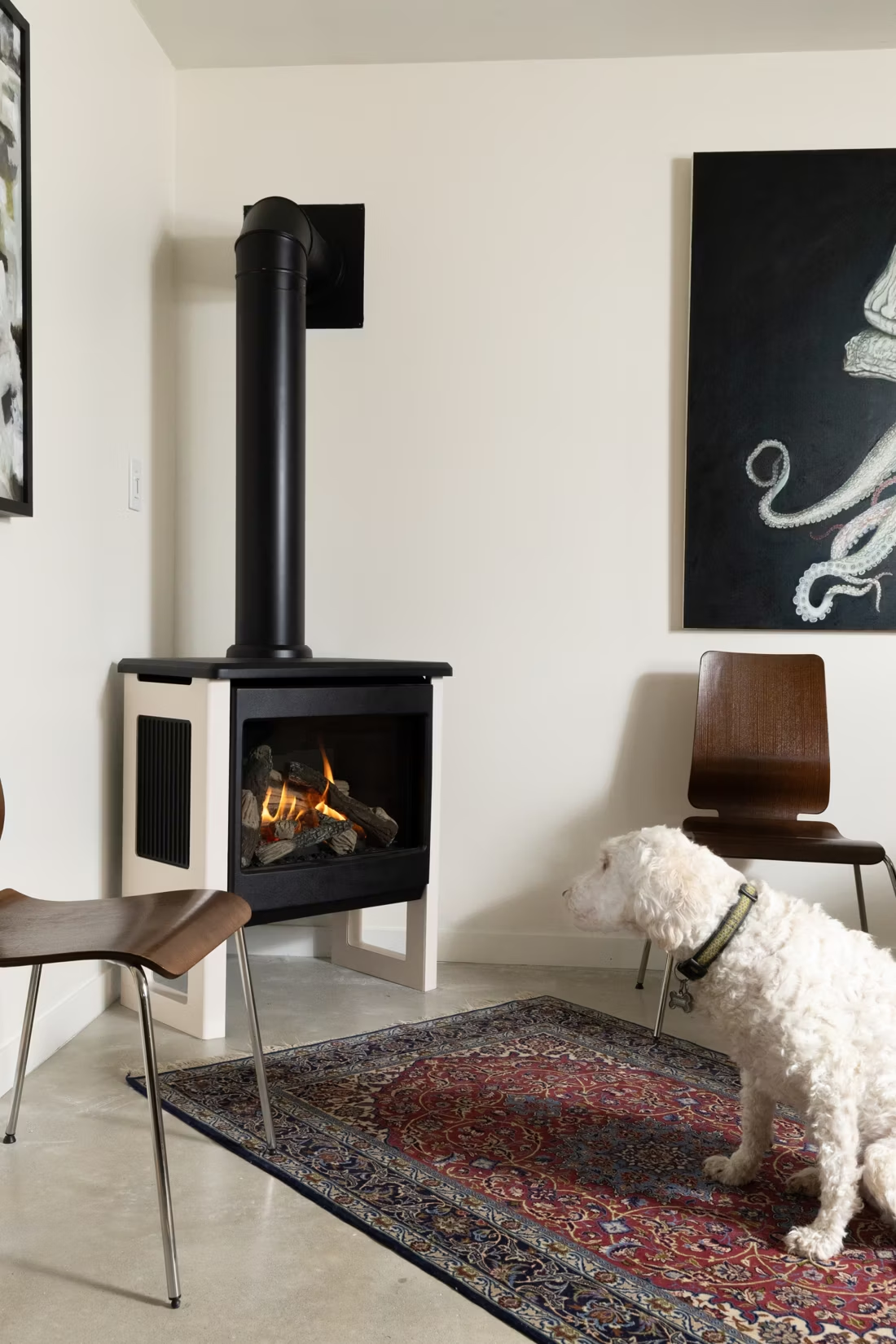
A gas fireplace is a fully built-in unit framed into a wall, typically used in new construction or larger remodels. A gas insert is built to slide into an existing fireplace opening—including the older masonry and adobe-style kiva fireboxes common in older Valencia County homes—turning a decorative hearth into a real heat source. A gas stove is a freestanding cabinet-style unit that sits on the floor and vents like a stove, useful in rooms without an existing fireplace. Most homeowners here with an existing firebox go with an insert; those building new or adding heat to a room without a hearth usually go with a built-in fireplace or a freestanding stove.
Do I need a permit to install a gas fireplace in Valencia County?
Generally yes. Inside Los Lunas or Belen city limits, permits are issued through the respective city building department; in unincorporated parts of the county—Tomé, Bosque Farms, Peralta, the Rio Communities—permits run through the Valencia County building division. Gas line work specifically needs a licensed gas-fitter, which is one reason it's worth going through an established hearth dealer rather than a general handyman: they coordinate the gas line, venting, and inspection sign-off as one job instead of leaving you to manage separate trades.
Should I get a vented or vent-free gas fireplace?
Vented units—direct-vent or B-vent—draw combustion air from outside and exhaust it back outside through a sealed system, so nothing from the fire ends up in your living space. Vent-free units burn directly into the room and are legal in New Mexico under specific room-sizing and ventilation rules, but they do release some moisture and combustion byproducts indoors. Given how often the valley already deals with wildfire smoke advisories in late spring and summer, most local dealers steer homeowners toward sealed, direct-vent units for the cleaner indoor air, especially in smaller or tightly sealed homes.
How often does a gas fireplace need to be serviced?
An annual inspection is the standard recommendation for any gas-burning appliance, including inserts and direct-vent fireplaces. A technician checks the burner, pilot assembly, venting, and gas connections, and cleans the glass and interior—a straightforward visit that typically runs $125 to $200 in this area. It's a smaller job than wood chimney sweeping, but skipping it is how minor issues like a dirty pilot or a failing thermocouple turn into a no-heat call in the middle of a cold spell.
Gas vs. wood—which makes more sense for a Valencia County home?
Wood is still a legitimate option here—pinyon, juniper, and ponderosa pine are all common locally, and Cibola National Forest issues cutting permits for $5 to $20 per cord during the May-to-October season. But wood also means dealing with smoke, and Valencia County already sees wildfire smoke advisories in the warmer months that make homeowners more conscious of what's going into the air. Gas skips that entirely: no ash, no smoke, and heat that switches on instantly whether it's a cold January morning in Los Lunas or a chilly evening out in Tomé. For most valley homes prioritizing convenience and cleaner air, gas is the more practical daily-use choice, though plenty of households keep a wood stove or fireplace as backup heat and ambiance alongside it.
Is my gas fireplace wasting gas?
If it was installed more than 15 years ago, probably. Older gas fireplaces keep a standing pilot light burning all the time, and that little flame can cost a couple hundred dollars a year. Newer models use pilot-on-demand ignition—the pilot lights only when you use the fireplace and goes out when you turn it off.
Can I put a TV above my fireplace?
Yes—with an asterisk. Fireplaces are hot and TVs don't like heat. Either put a mantel between them to deflect rising warmth, or choose a fireplace with heat-management technology that creates a cool zone on the wall above—the wall stays around 125 degrees, barely warm, while the room still gets full heat. If you like clean lines and don't want a mantel, heat management is the answer.
What is an in-home preview and do I need one?
It's a visit where a hearth professional measures your space, confirms the model you picked actually works in your home, and walks the specs—framing, gas line, venting, finish work—before anything is ordered. Some details you just can't know until you see the house. Never make a down payment without one; it's the single most-skipped step that burns buyers.
How much should I budget for a fireplace?
For an average home—covering the fireplace, the vent pipe, and basic installation—a budget between $3,900 and $5,500 gives you a lot of options across wood, gas, and pellet. By the time you add finish work, gas line, and electrical, the average complete installation lands between $5,000 and $12,000 all-in. In a remodel or new build, a good rule is to put about 2.5% of the total project cost toward the fireplace.
Stove and Fireplace Dealers in Valencia County
Find your gas fireplace in Valencia County.
Tell us a bit about your home in Valencia County and we'll match you with a trusted local dealer and send over a free Project Guide & Parts List—the exact parts, including the vent kit, for your gas fireplace or insert project.
Find Your Fireplace →