
Find the right pellet stove for Union County's high plains.
Steady, thermostat-controlled heat for Clayton, Grenville, and the ranches spread across Union County's open grassland. I'll match you with a trusted local dealer and a free parts list for your install.
Every Project Starts From One of These Five Situations
A clean-burning option for a county with more sky than shelter.
Union County sits on the high plains of northeastern New Mexico, where the land runs flat and open from Clayton up to the Colorado and Oklahoma lines. With a winter heating load comparable to parts of the upper Midwest and winter lows averaging 21°F, it's a genuinely cold county—similar in heating demand to those northern regions, though without the humidity—but the defining feature here isn't just the cold, it's the wind. Constant, sustained wind across the caprock makes precise, consistent heat appealing in a way that an open hearth can't always match. A pellet stove's enclosed combustion and thermostat control hold a steady temperature regardless of what's happening outside the walls.
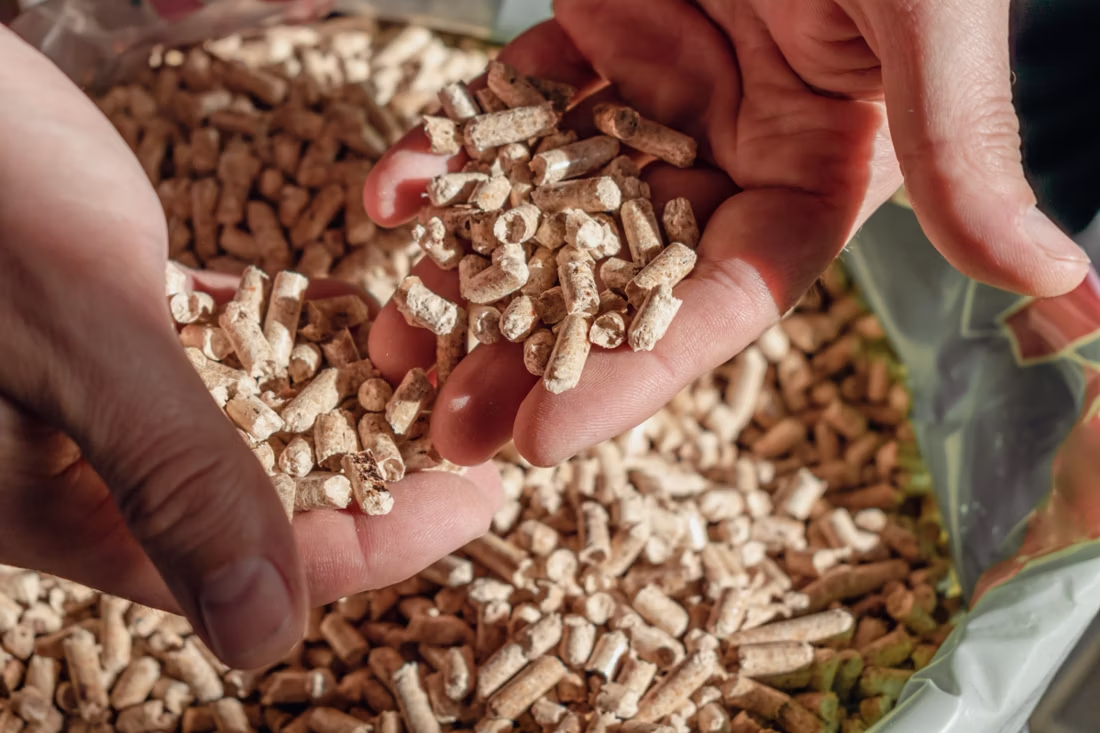
Union County has limited natural gas infrastructure outside of Clayton, and much of the county's rural housing stock—old ranch homes, ag outbuildings converted to living space, ADUs on working spreads—relies on propane, wood, or electric resistance heat. Pellet stoves fill a useful gap: cleaner-burning than an open wood fire, with none of the ash and smoke concerns during the wildfire-smoke-prone dry months, and pellets from regional suppliers like Forest Energy and Lignetics are generally easier to source and store on a ranch than to cut, split, and haul cordwood every year. For a county this sparsely populated—just over 3,000 residents spread across roughly 3,800 square miles—having a heat source that doesn't depend on a wood supply chain or a full propane delivery route matters.
Three steps. No salesperson until you're ready.
Tell us about your project
Your zip code, your situation, and the fuel you're leaning toward—or let the answers point you to one.
See what's actually available
The brands dealers within 100 miles genuinely carry—real options, never a catalog mirage.
Get your dealer & Project Guide
A trusted local dealer, plus the free Project Guide & Parts List that names every component of the job.
Frequently Asked Questions
How much does a pellet stove installation cost in Union County?
Pellet stove installations in Union County typically run in line with national averages, generally $2,500 to $6,000 depending on the unit, whether you're venting through an existing masonry chimney or need a new through-wall vent kit, and whether you need electrical work run for the auger and blower. Rural properties outside Clayton—out toward Grenville, Amistad, or Sedan—sometimes see a modest travel charge added by installers based in Clayton or coming from neighboring counties. A local dealer will give you a firm number after seeing the install site.
Will a pellet stove work if the power goes out?
Not without a backup plan. Pellet stoves rely on electricity to run the auger that feeds pellets and the blower that circulates heat, so a power outage stops the stove. This matters in Union County, where high-plains wind events and winter storms can knock out rural electric service for hours at a time. Some homeowners pair a pellet stove with a small battery backup or generator sized for the stove's low draw (most units pull under 500 watts), which keeps the unit running through a typical outage. If backup heat during outages is your top priority, a wood stove that needs no electricity is worth comparing before you decide.
What size pellet stove do I need for my Union County home?
Sizing depends on square footage, ceiling height, and how tight the building envelope is. Older ranch houses and converted outbuildings around Union County often have less insulation than a newer build, so they tend to need a slightly larger unit than the square footage alone would suggest. As a general guide: smaller units (up to 1,000 sq ft) suit a single large room or a small cabin, mid-size units (1,000-2,000 sq ft) cover most main living areas, and larger units (2,000+ sq ft) can serve as a home's primary heat source in a well-sealed house. A local dealer can size your space accurately during an in-home visit—it's worth getting right, since an undersized stove won't keep up on the coldest nights and an oversized one cycles more than it should.
Where can I buy pellets in Union County?
Pellets aren't stocked on every corner in a county this rural, but regional brands like Forest Energy and Lignetics are commonly carried by hearth dealers and farm supply stores serving the area, often sold by the ton or by the pallet (roughly 50 forty-pound bags). Because Union County is sparsely populated and spread out, it's worth buying pellets by the ton before the season starts rather than picking up bags as needed—this also protects against price swings and keeps you from running out during a stretch of bad weather when driving into Clayton isn't practical. Plan on dry, covered storage; pellets that absorb moisture swell and jam the auger.
Do I need a permit to install a pellet stove in Union County?
Most pellet stove installations require a building permit, issued through the Union County building office for unincorporated areas or through the City of Clayton for in-town installs. Permitting confirms the venting is sized correctly and clearances to combustibles are met. Most local dealers handle the permit paperwork as part of the installation, so you generally don't have to navigate it yourself. Pellet stoves are also exempt from the kind of wood-smoke curtailment restrictions that apply to open wood burning in some New Mexico jurisdictions, which is a point in their favor during wildfire-smoke advisory periods.
How often does a pellet stove need maintenance?
Pellet stoves need more frequent attention than a gas unit but less than a wood-burning chimney system. Plan on emptying the ash pan every few days to weekly depending on use, cleaning the burn pot and glass regularly, and having the unit professionally serviced once a year—typically before the start of the heating season in early fall. Annual service includes cleaning the exhaust venting, checking the auger motor, and inspecting gaskets and seals. For a Union County home running the stove as primary heat through a long, windy winter, staying on top of this schedule keeps the auger from jamming and the unit burning efficiently.
What's the difference between a pellet stove and a pellet insert?
A pellet stove is a freestanding unit that sits on its own hearth pad and vents through a wall or existing chimney—it can go almost anywhere with the right clearances. A pellet insert is built to slide into an existing masonry fireplace opening, converting an old wood-burning fireplace into a pellet-fed unit while using the existing chimney as a chase for the vent liner. For Union County ranch houses with an existing masonry fireplace that's rarely used because tending a wood fire is impractical day to day, an insert is often the more efficient upgrade. Homes without an existing fireplace opening are better suited to a freestanding stove.
Is a pellet stove a good fit for a rural Union County property?
For many rural Union County homes, yes—with the caveat about power outages noted above. Pellet stoves offer more consistent, thermostat-regulated heat than an open wood fire, which suits the constant wind exposure common across the caprock and open plains here. They also avoid the annual cutting-and-hauling cycle that wood heat requires, which matters on working ranches where time during the growing and calving seasons is scarce. The tradeoff is dependency on both electricity and a purchased fuel supply, so homes far from Clayton should factor in stocking enough pellets ahead of winter and having a backup power plan for the stove's electronics.
Pellet vs. wood stove—which is right for my Union County home?
Wood stoves burn pinyon, juniper, or ponderosa pine cut locally, need no electricity, and provide reliable backup heat during power outages—a real consideration given how often high-plains wind can take down rural electric lines here. Pellet stoves offer more consistent, lower-maintenance heat, cleaner burning with less ash, and easier fuel handling, since a bag of pellets is simpler to store and load than split cordwood, but they stop working without power. For a primary residence relying on wood you cut yourself, wood often makes sense. For a convenience-focused install where consistent heat output matters more than off-grid resilience, pellet is usually the better fit. Local dealers carry both and can walk through the tradeoffs for your specific property.
Why is my open fireplace making my house colder?
Open fireplaces suck—literally. As the fire burns, it consumes air your furnace already paid to heat and pulls it out through the chimney, so the house is actually colder after the fire goes out than before you lit it. An insert fixes this: it seals the chimney, puts fixed glass across the front, and turns that hole in your house into a real heat source.
Why is a fireplace insert so efficient?
An insert does two things: it seals the chimney completely, so you stop losing air you already paid to heat, and it radiates warmth into the room through the firebox and glass. Most add a heat-exchange fan that pulls cool room air underneath, wraps it around the hot firebox, and pushes it back out warm. Your home is more efficient before you've even lit the first fire.
Does a fireplace add value to my home?
On average, a fireplace adds back to the home about the same amount you spent installing it. Add the monthly savings from heating the rooms you actually use instead of the whole house—often hundreds of dollars a year—and the value case is strong before you even count what a fire does for how your family uses the room.
What is an in-home preview and do I need one?
It's a visit where a hearth professional measures your space, confirms the model you picked actually works in your home, and walks the specs—framing, gas line, venting, finish work—before anything is ordered. Some details you just can't know until you see the house. Never make a down payment without one; it's the single most-skipped step that burns buyers.
Pellet Brands Stocked Around Union County
Manufacturers will point you to the nearest stocking dealer.
Find your pellet stove in Union County.
Tell me a bit about your home and I'll match you with a trusted local dealer and send over your free Project Guide & Parts List—the exact parts, including the vent kit, for your pellet install in Union County.
Find Your Fireplace →