
Warm up Union County without a woodpile or a chimney.
Union County's high plains winters average 21°F lows across a long, demanding heating season—real cold, but not Bismarck ND cold. For ranch homes, manufactured housing, and second rooms across the county, an electric fireplace adds heat and ambiance with no venting, no gas line, and no smoke during wildfire season.
Every Project Starts From One of These Five Situations
Simple heat for the high plains, no venting required.
Union County sits in New Mexico's far northeast corner, a stretch of shortgrass prairie and grassland around the Kiowa National Grassland with roughly 3,090 residents spread across a county larger than several New England states combined. Clayton anchors the county seat; the rest is ranch country and small communities like Des Moines, Grenville, and Amistad. Winters here run cold—climate zone 4B, a 21°F average winter low, and a long, demanding heating season—but the county's real air-quality headache isn't winter inversion, it's wildfire smoke off the grasslands during dry, windy stretches. That single fact shapes a lot of heating decisions locally: households that want supplemental warmth without adding another smoke source often land on electric.
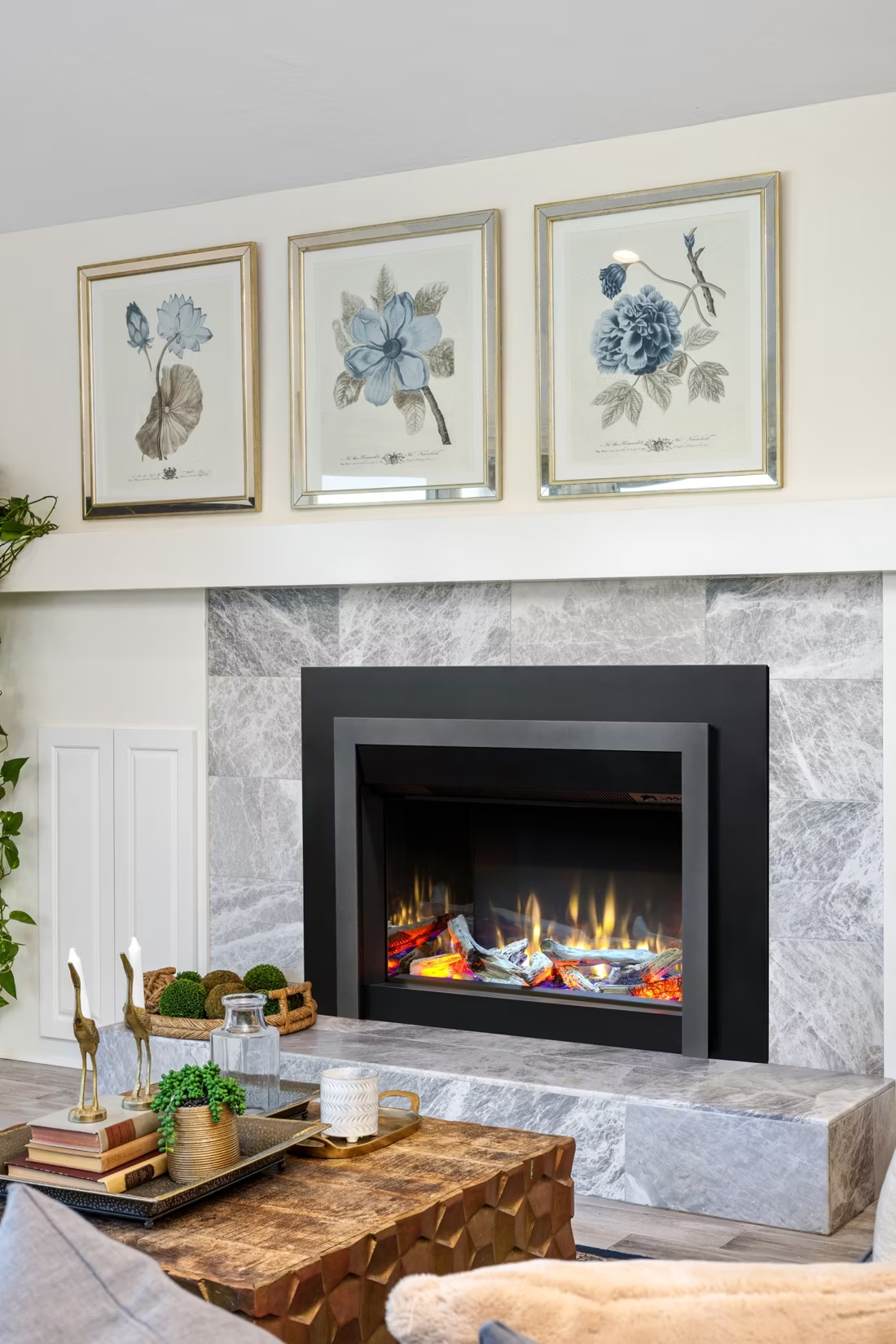
Electric fireplaces and inserts skip the chimney, gas line, and combustion venting altogether, which matters in a county where a hearth remodel or a masonry chimney retrofit isn't always practical—especially in the manufactured and double-wide homes common on rural Union County properties. Plug-in freestanding units and hardwired wall inserts both work off the existing electrical service most homes already have, no new utility hookup needed. Wood and pellet heat still matter here too—pinyon, juniper, and ponderosa pine are the common local firewood species, and regional pellet brands like Forest Energy and Lignetics are available—but for a low-maintenance, zero-smoke room heater or ambiance piece, electric is the straightforward option.
Three steps. No salesperson until you're ready.
Tell us about your project
Your zip code, your situation, and the fuel you're leaning toward—or let the answers point you to one.
See what's actually available
The brands dealers within 100 miles genuinely carry—real options, never a catalog mirage.
Get your dealer & Project Guide
A trusted local dealer, plus the free Project Guide & Parts List that names every component of the job.
Frequently Asked Questions
How much does an electric fireplace installation cost in Union County?
Plug-in freestanding electric fireplaces and stoves typically run $150 to $700 for the unit itself, with no installation cost beyond finding an outlet—most owners set them up themselves. Built-in wall-mounted or recessed electric fireplaces run higher, generally $1,200 to $3,500 installed, once framing, a dedicated circuit, and finish trim are factored in. Electric inserts that slide into an existing masonry fireplace opening in an older Clayton-area home run somewhere in between, often $800 to $2,500 depending on size and whether new wiring is needed. Because there's no chimney or gas venting involved, electric is consistently the least expensive hearth option available to Union County homeowners.
Do I need a permit to install an electric fireplace in Union County?
In most cases, no—a plug-in unit that runs off a standard outlet doesn't trigger a permit anywhere in the county. If you're having a licensed electrician run a new dedicated circuit for a built-in or hardwired unit, that electrical work does need a permit. Union County doesn't run its own local building department for most unincorporated areas, so electrical permitting for rural properties typically goes through the New Mexico Construction Industries Division rather than a county office. Any electrician doing hardwired hearth work should already be pulling that permit as a matter of course.
Will an electric fireplace still work if the power goes out?
No—electric fireplaces stop working the moment the grid does, and that's worth planning around in Union County, where wildfire-driven line shutoffs and storm outages happen on the high plains grid that serves ranch properties. If you want heat that survives an outage, pair an electric fireplace (for daily convenience and ambiance) with a wood stove or propane appliance as backup, or plan for a generator to cover the electric unit's fan and heater during an extended outage. A lot of local households run this exact combination—electric for easy daily use, something combustion-based in reserve.
What's the difference between an electric fireplace, insert, and stove?
An electric fireplace is usually a built-in or wall-mounted unit designed to look like a framed fireplace opening—common in newer construction or remodels. An electric insert is sized to slide into an existing masonry fireplace opening, useful for older Clayton homes with a fireplace that's rarely used or drafty. An electric stove is a freestanding cabinet-style unit that mimics a wood stove's footprint without any of the venting or clearance requirements a real wood stove needs. All three run off standard household power and use the same basic heating-element-plus-LED-flame technology—the choice comes down to your room's layout and whether you're filling an existing opening or adding heat somewhere new.
How much does it cost to run an electric fireplace day to day?
Most electric fireplaces have two settings: flame-only (a few watts, essentially the cost of a light bulb) and flame-plus-heat, which draws a 1,500-watt heating element similar to a space heater. Running the heater setting for several hours a night through a cold Union County stretch adds a modest but noticeable amount to your electric bill—real numbers depend on your local rate, but it's a fraction of what heating an entire home electrically would cost, since these units are designed to warm one room, not replace your furnace.
Is an electric fireplace a good fit for a manufactured or double-wide home?
Yes—this is actually one of the strongest use cases in Union County, where manufactured and double-wide housing is common on rural properties. Electric units generate no combustion byproducts, need no clearance to combustibles beyond what any space heater requires, and don't involve cutting a chimney penetration through a manufactured home's roof or walls, which can complicate warranty and structural concerns. A zero-clearance electric insert or wall-mount unit installs cleanly in most manufactured home living rooms without any of the structural work a wood or gas appliance would require.
Electric vs. wood or pellet—which makes more sense here?
Wood heat has deep roots in Union County, with pinyon, juniper, and ponderosa pine all cut locally, and pellet stoves from brands like Forest Energy and Lignetics are available regionally as a cleaner-burning alternative. Both put out real, whole-room heat and work as backup during outages. Electric puts out less heat per unit (it's a supplemental or ambiance appliance, not a furnace replacement) but produces zero smoke—a real consideration in a county where wildfire smoke is already the dominant air-quality concern for months of the year. Many households here use wood or pellet as primary or backup heat and add electric in a bedroom, sunroom, or den where convenience matters more than heat output.
How much space will an electric fireplace actually heat?
Most electric fireplace heating elements put out roughly 4,000 to 5,000 BTUs, similar to a good space heater—enough to comfortably warm a single room of 300 to 400 square feet, not a whole house. Given Union County's long, demanding heating season and 21°F average winter lows, that makes electric a strong supplemental or zone-heating choice, but not a standalone solution for a whole home in the coldest stretches of winter. Think of it as heating the room you're actually sitting in rather than the whole structure.
Where can I find someone to install an electric fireplace near me in Union County?
With just over 3,000 people spread across the county, Union County doesn't have a dedicated hearth retailer in every town—dealers and electricians serving the area often work out of Clayton or travel in from nearby Raton, Trinidad, or Amarillo. That's exactly the kind of gap Find My Fireplace is built to close: rather than guessing which retailer actually covers rural Union County, we match you with a trusted local dealer who genuinely services your address and can size the right unit for your home.
Can I put a TV above my fireplace?
Yes—with an asterisk. Fireplaces are hot and TVs don't like heat. Either put a mantel between them to deflect rising warmth, or choose a fireplace with heat-management technology that creates a cool zone on the wall above—the wall stays around 125 degrees, barely warm, while the room still gets full heat. If you like clean lines and don't want a mantel, heat management is the answer.
Do electric fireplaces actually produce heat?
Yes—most put out around 4,800–5,000 BTUs from a standard outlet, which comfortably warms a bedroom, office, or den as a comfort-zone heater. What they won't do is carry a whole house the way wood, gas, or pellet can. Think of electric as ambiance-first with honest supplemental heat: flames on with no heat in July, flames plus warmth in January.
Can I install a fireplace myself?
If you're putting a fire in your house on purpose, it's best to work with an expert. Unless you're genuinely experienced in framing, gas line, vent pipe, and the national code on clearances to combustibles, have a professional do it—and ideally the same company that sells you the fireplace, so warranty, service, and liability all live under one roof.
How much should I budget for a fireplace?
For an average home—covering the fireplace, the vent pipe, and basic installation—a budget between $3,900 and $5,500 gives you a lot of options across wood, gas, and pellet. By the time you add finish work, gas line, and electrical, the average complete installation lands between $5,000 and $12,000 all-in. In a remodel or new build, a good rule is to put about 2.5% of the total project cost toward the fireplace.
Find your electric fireplace in Union County.
Tell us about your home and we'll match you with a trusted local dealer who covers Union County, plus a free Project Guide & Parts List—the exact unit, mounting, and circuit specs for your electric fireplace project.'
Find Your Fireplace →