
Keep Your Family Warm and Safe—No Matter What
From Moriarty to Mountainair, pinyon and juniper cordwood have heated Torrance County homes for generations. Get matched with a trusted local dealer who can size, permit, and install the right stove or insert for your place.
Every Project Starts From One of These Five Situations
A high desert county where wood heat is the default, not the exception.
Torrance County sits on New Mexico's high plains east of the Manzano Mountains, with elevations running from around 6,000 feet near Moriarty up past 7,000 feet toward Mountainair. Winter lows average 15°F, and the county logs nearly 5,900 heating degree days a year—a cold-climate profile closer to Fargo, ND than to most of the Southwest. Homes here are spread out, rural, and often a long way from the nearest utility line, which is exactly the setting where a wood stove earns its keep.
Pinyon, juniper, and ponderosa pine are the wood species most Torrance County households burn, much of it self-cut under low-cost permits from the Cibola National Forest or the Santa Fe National Forest during the May-to-October cutting season. Wildfire smoke is a seasonal concern in this part of New Mexico, which makes a modern EPA-certified stove—burning hotter and cleaner than an old smoke-dragon—worth the upgrade even for households that have burned wood for decades. A properly sized stove also means real backup heat when a winter storm knocks out power on the plains, which happens more than county residents would like.
Firewood Cutting Permits Near Torrance County
Three steps. No salesperson until you're ready.
Tell us about your project
Your zip code, your situation, and the fuel you're leaning toward—or let the answers point you to one.
See what's actually available
The brands dealers within 100 miles genuinely carry—real options, never a catalog mirage.
Get your dealer & Project Guide
A trusted local dealer, plus the free Project Guide & Parts List that names every component of the job.
Frequently Asked Questions
How much does a wood stove installation cost in Torrance County?
Most wood stove installations in Torrance County run in the standard national range once you factor in the stove, hearth pad, and Class A chimney pipe—typically $4,500 to $9,000. Homes without an existing masonry chimney, which is common in the county's newer manufactured and site-built rural homes, tend to land toward the higher end because of full chimney construction. Rural properties around Willard, Encino, or outside Mountainair may see a modest travel charge added by installers coming from Moriarty or Albuquerque-based shops. A local dealer can give you a firm number after seeing your home's layout and roofline.
What size wood stove do I need for a Torrance County home?
Sizing depends on square footage, insulation, and elevation as much as anything else. At 6,000 to 7,000+ feet, colder overnight temperatures and thinner air mean Torrance County homes often need a stove sized a notch above what a lower-elevation home of the same square footage would use. Small stoves suit cabins and single rooms up to about 1,000 square feet; medium stoves cover most main living areas up to 2,000 square feet; large stoves are needed for bigger, less-insulated homes that rely on wood as primary heat through the coldest months. A local dealer will size your home for free rather than guess from a chart.
Where can I find certified wood stove installers near me in Torrance County?
Look for installers with NFI (National Fireplace Institute) or CSIA (Chimney Safety Institute of America) certification—both indicate real training on clearances, venting, and code compliance for wood-burning appliances. Because Torrance County is rural and spread between Moriarty, Estancia, and Mountainair, most certified installers cover the whole county but may charge a small travel fee for the more remote stretches. Avoid a handyman install for a wood stove—improper clearance or venting work is the leading cause of residential chimney fires, and it's the one place in this project not worth cutting a corner.
What's the difference between a wood stove and a wood insert for my Torrance County home?
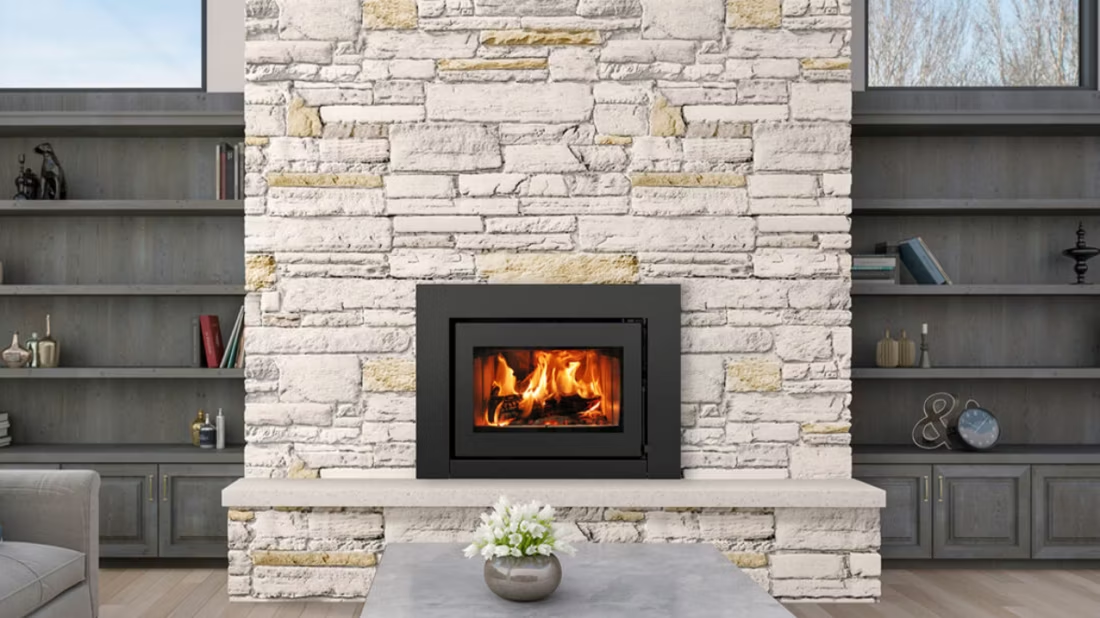
A wood stove is a freestanding unit on its own hearth pad, vented through new or existing chimney pipe—it works in nearly any home, including manufactured homes common in the county with proper clearance kits. A wood insert slides into an existing masonry fireplace and turns a drafty, inefficient opening into a sealed, high-output heat source using the chimney you already have. If your Torrance County home has an older open masonry fireplace, an insert is usually the better upgrade; if you're heating a shop, cabin, or a home without an existing chimney, a freestanding stove is the more practical route.
Do I need a permit to install a wood stove in Torrance County?
Yes—new wood stove installations require a building permit, and the unit itself needs to meet current EPA emissions standards. Most local dealers handle the permitting paperwork as part of the installation so it isn't left to the homeowner. Separately, if you plan to cut your own firewood on public land, that's a different permit entirely—issued through the Cibola National Forest or Santa Fe National Forest ranger district offices, typically $5 to $20 per cord during the May-to-October cutting season.
What's the best wood stove for Torrance County's climate?
With winter lows averaging 15°F and elevation working against you on cold nights, a catalytic stove from a brand like Blaze King can hold a long, even burn overnight—useful for homes that lean on wood as primary heat through the winter. Homes burning mostly pinyon and juniper, which are dense but burn faster than softer woods, benefit from a stove with a solid secondary burn system to get full efficiency out of each load. For supplemental heat in a smaller room, a non-catalytic stove from Lopi or Pacific Energy is a simpler, lower-cost option. A local dealer can match a specific model to your wood supply and square footage.
How often should my chimney be inspected in Torrance County?
An annual inspection before burning season starts, typically in late summer, is the standard recommendation from the CSIA for any wood-burning appliance in regular use. Households in Torrance County that lean on wood as their main heat source through the cold months—common in rural parts of the county—may need a mid-season cleaning if creosote builds up faster than expected, particularly when burning pinyon or juniper, which can run pitchy. Given how spread out the county is, don't wait until you smell smoke to schedule the sweep; rural response times matter if a chimney fire does start.
Where can I get firewood in Torrance County?
Plenty of Torrance County households cut their own—permits through the Cibola National Forest or Santa Fe National Forest run about $5 to $20 per cord and are valid May through October, and pinyon, juniper, and ponderosa pine are all available on nearby public land. For those who'd rather buy, local sellers around Moriarty and Estancia advertise seasoned cordwood, generally priced by the cord (a stacked 4×4×8-foot pile). Given the wildfire smoke concerns that come with dry New Mexico summers and falls, well-seasoned wood that burns hot and clean matters more here than in wetter climates—green or wet wood produces more visible smoke and more creosote.
Wood stove vs. pellet stove—which is right for a Torrance County home?
Wood stoves run on cordwood you can cut yourself under a low-cost Forest Service permit, and they keep working without electricity—a real advantage in a rural county where winter storms can knock out power for a stretch. Pellet stoves, using bagged pellets from brands like Forest Energy or Lignetics available regionally, are more convenient to load and burn cleaner, but the auger and blower need electricity, so they go dark in an outage unless paired with a battery backup. For Torrance County's rural, storm-prone stretches, wood is often the more resilient primary choice; pellet stoves suit homes closer to town with reliable power who want more convenience day to day.
Why won't my new wood stove get going like my old one?
New wood stoves are 70%+ efficient, so far less heat goes up the flue—which also means less draft to get a fire established. The rule: build a genuinely hot fire for about 45 minutes before you choke it down. Skip that and you get smoke in the room, creosote in the chimney, and a fire that never takes off. Most performance complaints trace straight back to this.
Why is my open fireplace making my house colder?
Open fireplaces suck—literally. As the fire burns, it consumes air your furnace already paid to heat and pulls it out through the chimney, so the house is actually colder after the fire goes out than before you lit it. An insert fixes this: it seals the chimney, puts fixed glass across the front, and turns that hole in your house into a real heat source.
What is an in-home preview and do I need one?
It's a visit where a hearth professional measures your space, confirms the model you picked actually works in your home, and walks the specs—framing, gas line, venting, finish work—before anything is ordered. Some details you just can't know until you see the house. Never make a down payment without one; it's the single most-skipped step that burns buyers.
Can a fireplace actually lower my heating bill?
Yes—by creating a comfort zone. A furnace heats every square foot of the house just to warm the one room you're in; a gas fireplace on low burns roughly a sixth of the gas a typical furnace does. Set the furnace around 55–60 degrees as a baseline, then heat the rooms your family actually uses. Families who heat this way commonly save $20–$60 a month.
Get your Torrance County wood project mapped out.
Tell us about your home and we'll put together a free Project Guide & Parts List—the right stove or insert, the vent kit it needs, and a trusted local dealer who can install it correctly.
Find Your Fireplace →