
Reliable heat for Torrance County's high desert winters.
From Moriarty to Estancia to Mountainair, Torrance County's ranch and valley homes deal with wind-driven cold and long distances to town. A pellet stove sized right for your house means steady, automated heat without a woodpile to manage. We'll match you with a trusted local dealer who can size and install it correctly.
Every Project Starts From One of These Five Situations
Convenience that matches the pace of high desert life.
Torrance County sits on the high plains east of the Sandias and Manzanos, with most of its 7,459 residents spread across the Estancia Valley and the I-40 corridor towns of Moriarty, Estancia, Mountainair, Willard, and Encino. Elevations run 6,000 to 6,500 feet, average winter lows sit around 15°F, and the county racks up a heating season nearly as long as Buffalo, New York's. The land is piñon-juniper woodland with scattered ponderosa pine at higher ground, which has historically made cordwood the default heat source out here. But properties are large, town is often a 20-to-40 minute drive, and a lot of households are looking for heat that doesn't require a chainsaw and a truck every weekend.
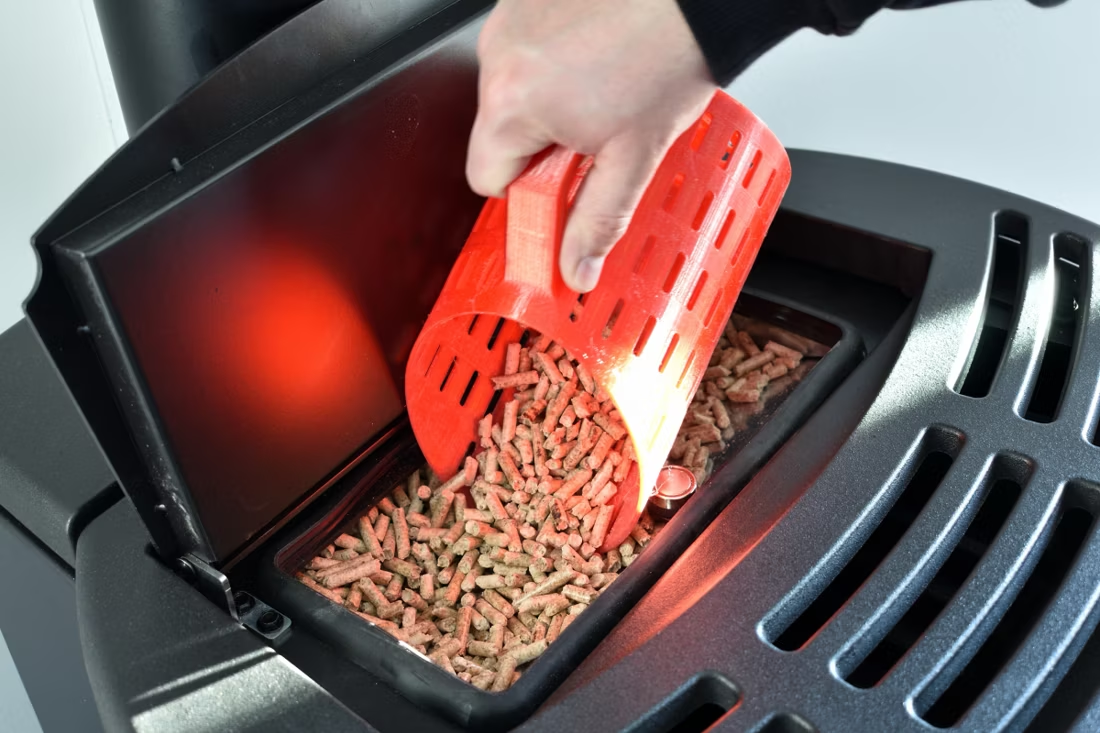
That's where pellet stoves fit in. Regional pellet brands like Forest Energy and Lignetics are stocked through hardware and feed stores along the I-40 corridor, so fuel supply isn't the obstacle it can be in more remote parts of New Mexico. Pellet heat also sidesteps the county's recurring wildfire smoke concerns—a hopper-fed pellet stove burns cleaner and produces far less visible smoke than an open wood fire, which matters during dry, high-fire-danger stretches when open burning gets discouraged. For Torrance County homes that want set-it-and-forget-it warmth on cold nights without giving up on self-sufficiency, a properly sized pellet stove is a practical middle ground between a wood stove and a propane furnace.
Three steps. No salesperson until you're ready.
Tell us about your project
Your zip code, your situation, and the fuel you're leaning toward—or let the answers point you to one.
See what's actually available
The brands dealers within 100 miles genuinely carry—real options, never a catalog mirage.
Get your dealer & Project Guide
A trusted local dealer, plus the free Project Guide & Parts List that names every component of the job.
Frequently Asked Questions
How much does a pellet stove installation cost in Torrance County?
A typical pellet stove installation runs roughly $3,000 to $6,000 depending on the unit, whether you're venting through an existing wall or running new pipe, and whether the install is a freestanding stove or an insert into an existing fireplace. Rural properties around Willard, Encino, or outlying parts of the Estancia Valley sometimes see a modest travel charge added to the quote since dealers are based along the Moriarty-to-Mountainair corridor. A local dealer can give you a firm number after seeing your home and existing venting situation.
What size pellet stove do I need for my home?
Sizing depends on square footage, insulation quality, and how much wind exposure your home has—a real factor in the open Estancia Valley, where older manufactured and site-built homes often have less insulation than newer construction. As a rough guide: smaller stoves (under 1,000 sq ft) suit a single large room or a compact home, while medium and larger units handle multi-room living spaces or homes used for primary heat. Homes at the higher elevations near Mountainair, closer to the Manzano foothills, generally need a bit more capacity than valley-floor homes of the same size. A local dealer will size this correctly during an in-home visit rather than going off square footage alone.
Where can I find certified pellet stove installers near me?
Look for installers with NFI (National Fireplace Institute) certification, which covers proper venting, clearances, and combustion-air requirements for pellet appliances. Dealers serving Torrance County are generally based in or near Moriarty and cover the Estancia Valley and Mountainair corridor as part of their regular service area; homes further out toward Encino or Willard may see a small travel fee. Installing a pellet stove yourself is possible on some models, but venting mistakes are the most common cause of poor draft and nuisance shutoffs, so most homeowners here have a dealer handle it.
Pellet stove vs. wood stove—which makes more sense in Torrance County?
Wood stoves burn cordwood cut locally—piñon, juniper, and ponderosa pine are the common species, and low-cost cutting permits are available through the Cibola and Santa Fe National Forests during the May-through-October season, typically $5 to $20 per cord. Wood also keeps working without electricity, which matters given how exposed the Estancia Valley is to high-wind events that can knock out power. Pellet stoves trade that off for convenience: no splitting or hauling wood, a thermostat-controlled burn, and cleaner exhaust—but they need household electricity to run the auger and blower, so they go dark in an outage unless you've got a generator or battery backup. Many Torrance County households land on wood for backup heat and a pellet stove for daily convenience.
Do I need a permit to install a pellet stove in Torrance County?
Yes—a new pellet stove installation typically requires a building permit through the Torrance County Building Department for anything outside city or village limits, and the unit must be an EPA-certified appliance. Most local dealers handle the permit paperwork as part of the installation, so you generally don't have to file it yourself. There's no permit needed to simply operate a pellet stove once it's installed and inspected.
What's the best pellet stove for Torrance County's climate?
With average winter lows around 15°F and steady wind across the open valley, a mid-to-large hopper stove that can hold a consistent burn overnight is worth the upgrade over a bare-minimum unit—running a small stove flat-out on the coldest nights shortens its life and wastes fuel. Look for models rated for your square footage with some margin, and ask your local dealer which units perform well with pellets from Forest Energy or Lignetics, both of which are regularly stocked along the I-40 corridor. Homes at the higher elevations near Mountainair should size up slightly compared to valley-floor homes of the same footprint.
Where can I buy pellets in Torrance County?
Forest Energy and Lignetics pellets are the two regional brands most commonly stocked at hardware and feed stores along the Moriarty-Estancia-Mountainair corridor. Prices fluctuate by season, but buying a full ton or more ahead of winter usually beats picking up bags as you go, and it's worth confirming a store's restock schedule before burning season starts, since demand along I-40 can outpace supply during a hard winter. Your local dealer can usually point you toward the most reliable nearby supplier when you buy your stove.
Does wildfire smoke affect pellet stove use in Torrance County?
Torrance County sees periodic wildfire smoke concerns during dry, high-fire-danger stretches, and that's actually one place pellet stoves have an advantage over open wood burning—they produce a cleaner, more complete combustion with far less visible smoke output. That said, if regional smoke levels are already poor from a nearby wildfire, it's still good practice to limit any combustion appliance use and keep an eye on local air quality advisories, even with a clean-burning pellet unit.
Will my pellet stove work during a power outage?
Not without backup power. Pellet stoves rely on an electric auger to feed fuel and a blower to distribute heat, so they shut down when the power does—a real consideration in Torrance County, where wind events across the open Estancia Valley can knock out electricity for hours or longer. Some homeowners pair a pellet stove with a small backup battery system or generator specifically to keep it running through outages; others keep a wood stove or propane heater as a true off-grid backup. Ask your local dealer about battery-backup-compatible models if outage resilience matters to you.
What's the difference between an insert and a zero-clearance fireplace?
An insert is a fireplace that slides into a pre-existing wood-burning fireplace—if you don't have one, there's nothing to insert it into. A zero-clearance fireplace is built into a framed wall, which makes it the answer for remodels and new construction. Simple test: existing masonry fireplace means insert; blank or framed wall means zero-clearance.
How often does a pellet stove need cleaning?
A clean pellet stove is a happy pellet stove. Plan on cleaning the burn pot about once a week when you're burning regularly—ash and clinkers gum up the air holes just like a pellet barbecue. Most pellet stove problems trace back to skipped cleaning that nobody explained up front. Some designs make it easy with a trapdoor burn pot: pull a lever and the gunk drops into the ash pan.
Can a fireplace actually lower my heating bill?
Yes—by creating a comfort zone. A furnace heats every square foot of the house just to warm the one room you're in; a gas fireplace on low burns roughly a sixth of the gas a typical furnace does. Set the furnace around 55–60 degrees as a baseline, then heat the rooms your family actually uses. Families who heat this way commonly save $20–$60 a month.
Can I install a fireplace myself?
If you're putting a fire in your house on purpose, it's best to work with an expert. Unless you're genuinely experienced in framing, gas line, vent pipe, and the national code on clearances to combustibles, have a professional do it—and ideally the same company that sells you the fireplace, so warranty, service, and liability all live under one roof.
Pellet Brands Stocked Around Torrance County
Manufacturers will point you to the nearest stocking dealer.
Find your pellet stove in Torrance County.
Tell us a bit about your home and we'll match you with a trusted local dealer and a free Project Guide & Parts List—the right pellet stove or insert for your Torrance County home, plus the parts and vent kit it'll take to install it correctly.
Find Your Fireplace →