
Clean-burning heat for the high plains of Roosevelt County.
From Portales out across the flat farm and ranch country of the Llano Estacado, pellet stoves offer steady, low-maintenance heat without depending on firewood hauled in from the mountains. Find the right unit and connect with a trusted local dealer.
Every Project Starts From One of These Five Situations
A convenient fit for treeless high-plains living.
Roosevelt County sits on the Llano Estacado—the flat, wind-swept tableland of eastern New Mexico anchored by Portales and Eastern New Mexico University. Winters here are moderate compared to the northern mountains: climate zone 4B, average winter lows around 26°F, and roughly 3,434 heating degree days a season—nowhere close to the totals you'd see in a place like Bismarck ND or International Falls MN, but enough that older farmhouses and drafty ranch homes still need real supplemental heat through December and January, especially with the wind that comes off the plains.
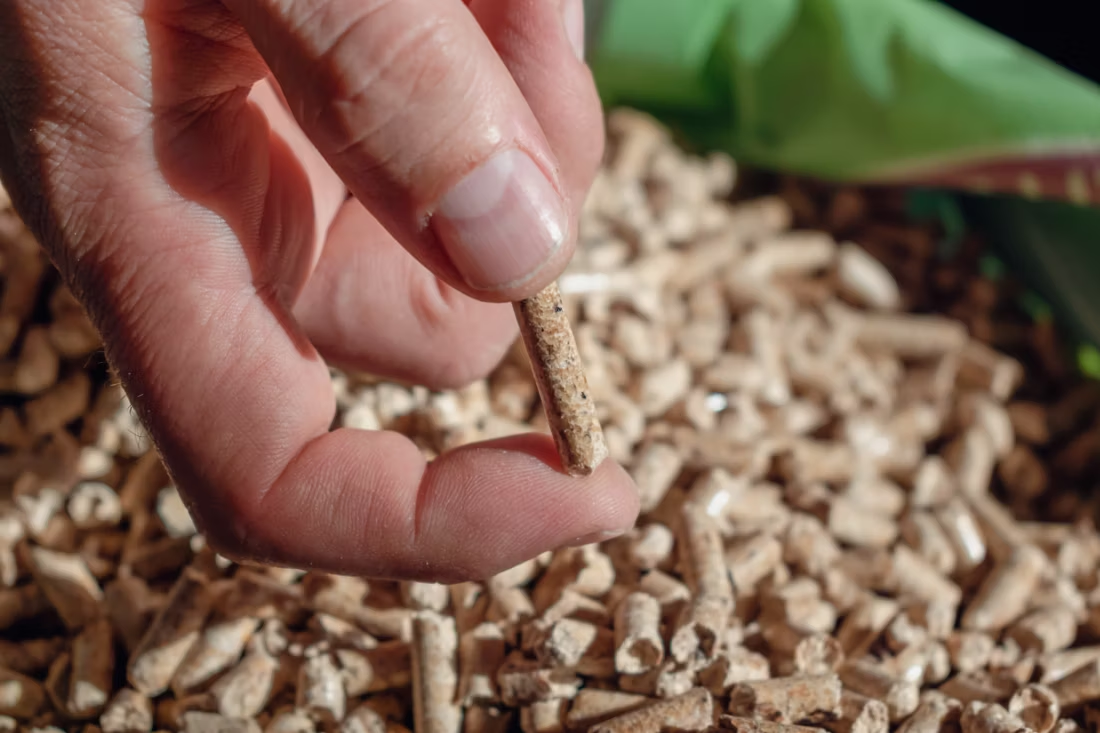
Unlike forested parts of New Mexico, Roosevelt County itself has little standing timber—the pinyon, juniper, and ponderosa pine that local wood burners rely on typically gets trucked in from the Sacramento or Manzano mountains, hours away. That makes bagged pellet fuel from brands like Forest Energy and Lignetics a genuinely practical alternative: it's manufactured off-site, stocked locally, and doesn't require anyone to haul cordwood across the county. Pellet stoves also burn clean enough to stay usable during the wildfire smoke advisories that periodically settle over the plains in dry, windy stretches—a real consideration here that open wood burning doesn't share.
Three steps. No salesperson until you're ready.
Tell us about your project
Your zip code, your situation, and the fuel you're leaning toward—or let the answers point you to one.
See what's actually available
The brands dealers within 100 miles genuinely carry—real options, never a catalog mirage.
Get your dealer & Project Guide
A trusted local dealer, plus the free Project Guide & Parts List that names every component of the job.
Frequently Asked Questions
How much does a pellet stove installation cost in Roosevelt County?
Most pellet stove installations run in the $3,500 to $6,500 range depending on the unit, whether it's a freestanding stove or an insert going into an existing fireplace, and how much wall penetration and venting work is involved. A pellet insert going into a masonry fireplace you already have is usually on the lower end since it reuses the existing opening. A freestanding stove in a room without a chimney—common in the ranch-style homes around Portales—runs a bit higher once wall venting and a hearth pad are added. Local dealers will give you a firm number after seeing the room, but pellet installs are almost always simpler and cheaper than wood, since the venting is smaller-diameter and doesn't require a full masonry chimney.
What size pellet stove do I need for a Roosevelt County home?
With average winter lows around 26°F and a moderate heating season by New Mexico standards, most homes in Roosevelt County do fine with a small to mid-size pellet stove used as zone heat for the main living area, rather than a large unit sized to carry the whole house. Older farmhouses on the outskirts of Portales or out toward the county line—often less insulated and more exposed to plains wind—sometimes benefit from a larger hopper and higher max BTU output to keep pace on the coldest, windiest nights. A local dealer can size the unit correctly based on your square footage and how drafty the house actually is, which matters more out here than the raw degree-day numbers suggest.
Where can I find pellet stove dealers and installers near Roosevelt County?
Roosevelt County is a small, rural market, so the closest hearth dealers with certified installers are sometimes in Clovis or over the Texas line in Lubbock, with some willing to travel into Portales and the surrounding county for installs. When you're comparing options, ask specifically whether the installer is familiar with pellet venting in high-wind conditions—improperly placed wall-vent terminations can get pressured by plains wind and cause nuisance shutdowns or smoke backdrafting into the room. A dealer who's installed pellet units in this part of eastern New Mexico before will already account for that in the vent placement.
Pellet stove vs. wood stove—which makes more sense in Roosevelt County?
Wood stoves burn pinyon, juniper, and ponderosa pine, but that cordwood generally has to be trucked in from mountain country well outside the county, which adds cost and means you're dependent on a supplier rather than a nearby forest. Wood stoves also work without electricity, which matters if you're worried about winter power outages. Pellet stoves need electricity to run the auger and blower, but the fuel itself—bagged pellets from Forest Energy or Lignetics—is easier to source locally, store cleanly in a garage or shed, and load without splitting or stacking cordwood. For most in-town Portales homes with reliable power, pellet tends to be the more convenient choice; for rural properties where outages run longer, some homeowners keep a wood-burning option as backup.
Where can I buy pellet fuel in Roosevelt County?
Forest Energy and Lignetics are the two brands most commonly stocked by hearth dealers and farm and ranch supply retailers serving this part of eastern New Mexico. Pricing moves with fuel and freight costs since the pellets are manufactured elsewhere and trucked in, so it's worth calling ahead in early fall to check current per-ton pricing and confirm stock before the first cold snap—rural retailers here don't always carry large reserve inventory the way bigger markets do. Buying a season's supply early, rather than waiting for a cold spell, tends to get better selection.
Do I need a permit to install a pellet stove in Roosevelt County?
Most jurisdictions, including Roosevelt County's building department, require a permit for a new solid-fuel appliance installation, even though pellet stoves have simpler venting requirements than wood stoves and typically don't need a full masonry chimney. Expect the permit to cover the appliance clearances, the wall or roof vent termination, and the hearth pad if one is required. Most local installers fold this into the installation process, so it's rarely something the homeowner has to manage directly—but it's worth confirming before work starts, especially if you're installing yourself.
How much maintenance does a pellet stove need?
Pellet stoves need more frequent light maintenance than wood stoves but far less than an annual chimney sweep. Plan on emptying the ash pan every few days during regular use, cleaning the burn pot and heat exchanger tubes every couple of weeks, and having the unit professionally serviced once a year—checking the auger, exhaust blower, gaskets, and venting. On the high plains, it's also worth having your installer double-check the exterior vent cap periodically, since blowing dust and wind-driven debris common to this part of New Mexico can occasionally affect airflow at the termination point.
Can I run my pellet stove during a wildfire smoke advisory?
Generally yes. Air quality concerns in Roosevelt County are tied mainly to regional wildfire smoke rather than winter wood-smoke inversions, and pellet stoves burn substantially cleaner than open wood fires or uncertified wood stoves. Most jurisdictions that restrict wood burning during smoke events exempt EPA-certified pellet appliances specifically because of their low particulate output. If a smoke advisory is in effect locally, it's still worth confirming the specific rule with the county, but pellet heat is typically one of the least restricted solid-fuel options during those periods.
Pellet stove vs. propane heater—which is right for my Roosevelt County home?
Propane is common as a heating fuel in rural parts of eastern New Mexico where natural gas lines don't reach, and a propane heater or fireplace offers instant on-off convenience with no fuel loading. A pellet stove requires more hands-on involvement—filling the hopper, emptying ash—but delivers a real visible flame, doesn't depend on a propane delivery schedule or tank refill, and often costs less to run per BTU when pellet prices are favorable. For homeowners who want a genuine fire and don't mind the extra step of managing fuel, pellet wins; for those who want zero maintenance and already have a propane tank in place, propane is usually simpler. A local dealer can walk through the cost comparison for your specific home.
Why is my open fireplace making my house colder?
Open fireplaces suck—literally. As the fire burns, it consumes air your furnace already paid to heat and pulls it out through the chimney, so the house is actually colder after the fire goes out than before you lit it. An insert fixes this: it seals the chimney, puts fixed glass across the front, and turns that hole in your house into a real heat source.
How often does a pellet stove need cleaning?
A clean pellet stove is a happy pellet stove. Plan on cleaning the burn pot about once a week when you're burning regularly—ash and clinkers gum up the air holes just like a pellet barbecue. Most pellet stove problems trace back to skipped cleaning that nobody explained up front. Some designs make it easy with a trapdoor burn pot: pull a lever and the gunk drops into the ash pan.
How much should I budget for a fireplace?
For an average home—covering the fireplace, the vent pipe, and basic installation—a budget between $3,900 and $5,500 gives you a lot of options across wood, gas, and pellet. By the time you add finish work, gas line, and electrical, the average complete installation lands between $5,000 and $12,000 all-in. In a remodel or new build, a good rule is to put about 2.5% of the total project cost toward the fireplace.
Can a fireplace actually lower my heating bill?
Yes—by creating a comfort zone. A furnace heats every square foot of the house just to warm the one room you're in; a gas fireplace on low burns roughly a sixth of the gas a typical furnace does. Set the furnace around 55–60 degrees as a baseline, then heat the rooms your family actually uses. Families who heat this way commonly save $20–$60 a month.
Pellet Brands Stocked Around Roosevelt County
Manufacturers will point you to the nearest stocking dealer.
Find your pellet stove in Roosevelt County.
Tell us a bit about your home and we'll put together a free Project Guide & Parts List—the right pellet stove or insert, the vent kit it needs, and a trusted local dealer near Portales who can install it correctly.
Find Your Fireplace →