
Add heat and ambiance to any room in Roosevelt County.
No gas line, no chimney, no cutting permits—just plug-in or hardwired warmth for Portales, Elida, Dora, and the surrounding plains. Find the right unit and connect with a trusted local dealer.
Every Project Starts From One of These Five Situations
Mild winters, modest heating loads, and an easy installation.
Roosevelt County sits on the Eastern New Mexico plains at around 4,000 feet, with a Climate Zone 4B classification and a fairly mild winter heating load—a fraction of what a place like Bismarck, ND sees. Average winter lows hover around 26°F, which means most homes here need supplemental heat for cold nights rather than a primary heating system that has to carry the whole season. That's exactly the niche electric fireplaces fill well: real, visible flame effect and genuine zone heat for a bedroom, den, or manufactured home addition, without the chimney, gas line, or wood supply that a full combustion appliance requires.
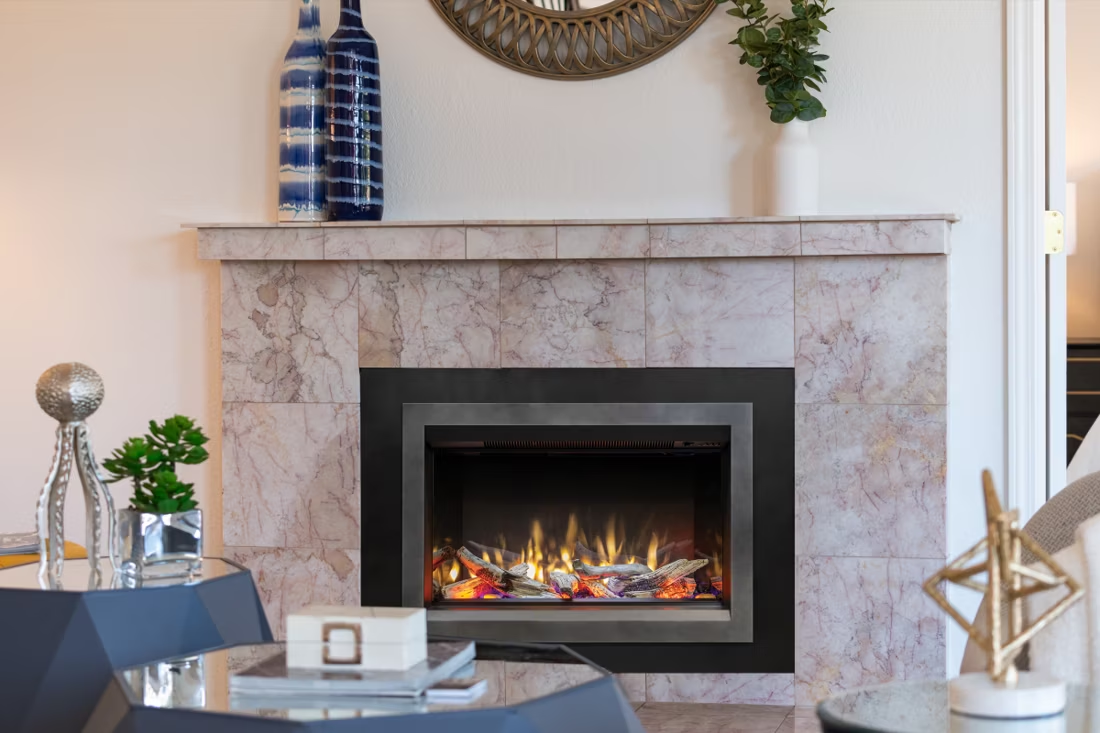
Wood heat still has a real following here—pinyon, juniper, and ponderosa pine are all locally available, and the county sees periodic wildfire smoke concerns that make some households think twice about additional smoke sources. Electric sidesteps that entirely: no combustion, no emissions, no wood to split or store. For a rental property in Portales, a guest room in Elida, or a manufactured home in Dora where venting a gas or wood appliance would be difficult or costly, an electric insert or built-in unit is often the simplest way to get real supplemental warmth and the look of a fireplace without touching the roofline or gas meter.
Three steps. No salesperson until you're ready.
Tell us about your project
Your zip code, your situation, and the fuel you're leaning toward—or let the answers point you to one.
See what's actually available
The brands dealers within 100 miles genuinely carry—real options, never a catalog mirage.
Get your dealer & Project Guide
A trusted local dealer, plus the free Project Guide & Parts List that names every component of the job.
Frequently Asked Questions
How much does an electric fireplace installation cost in Roosevelt County?
Most electric fireplace projects in Roosevelt County run $400 to $1,200 installed. A plug-in insert or wall-mounted unit on the low end simply needs a standard 120V outlet, which many homes already have near the intended location. A built-in electric fireplace or a unit requiring a dedicated 240V circuit runs toward the higher end, since it involves an electrician running new wiring—a straightforward job for local electricians serving Portales and the surrounding county, but one that adds labor cost. There's no chimney, venting, or gas line work involved either way, which keeps electric installs well below wood, gas, or pellet install costs in the county.
Do I need a permit to install an electric fireplace in Roosevelt County?
In most cases, no separate building permit is needed for a plug-in electric fireplace or insert—it's treated like any other appliance. If your installation requires a new dedicated circuit or panel work, that electrical work should be done by a licensed electrician and may require an electrical permit depending on the scope, particularly for manufactured homes in the county where panel capacity can be limited. Ask your installer whether your specific unit and home setup requires sign-off; for a straightforward plug-in insert, it typically doesn't.
Will an electric fireplace actually heat my room, or is it just for looks?
Most electric fireplaces sold today include a real heating element—typically 1,500 watts, which is enough to noticeably warm a bedroom, den, or small living area, roughly 400 to 1,000 square feet depending on insulation and ceiling height. Given Roosevelt County's mild winter lows (averaging around 26°F) and a fairly light winter heating load overall, an electric unit is often plenty for supplemental heat in a single room, even though it won't replace a central furnace for the whole house. The flame effect can also be run independently of the heater, so you get the ambiance in warmer months without the heat output.
What's the difference between an electric fireplace, insert, and wall-mounted unit?
An electric fireplace is typically a built-in or freestanding cabinet-style unit designed to look like a traditional hearth. An electric insert is sized to slide into an existing masonry or wood-burning fireplace opening, which is a common upgrade for older Roosevelt County homes with an unused or underperforming wood fireplace. A wall-mounted unit hangs flush like a flat-screen TV and is popular in newer construction or smaller rooms where floor space matters. All three plug into a standard outlet in most models, though larger built-ins sometimes need a dedicated circuit.
Can an electric fireplace replace my wood-burning fireplace?
An electric insert can go directly into your existing wood fireplace opening, which is a popular retrofit for county homeowners who want to stop cutting and hauling pinyon, juniper, or ponderosa pine but keep the existing mantel and surround. It won't provide the same total heat output as a wood stove during a hard freeze, but given Roosevelt County's relatively mild winter profile, most households find the electric insert's heat output more than adequate for the handful of genuinely cold nights each year. It also eliminates any wildfire-smoke-season concerns about adding combustion smoke to the airshed.
Do electric fireplaces work during a power outage?
No—electric fireplaces require power to operate, both for the heater and the flame effect, so they won't function during an outage. For Roosevelt County homes that want backup heat during winter storms or grid disruptions, a wood stove or a gas unit with battery-backup ignition is the better complementary choice. Many local homeowners pair an electric fireplace in a main living space for everyday convenience with a wood stove elsewhere in the home as a backup heat source.
How much does it cost to run an electric fireplace in Roosevelt County?
A typical 1,500-watt electric fireplace run on high costs roughly 15 to 25 cents an hour to operate, depending on your electric rate—running it a few hours an evening through a mild Roosevelt County winter adds a modest amount to a monthly bill, well below the fuel cost of running a whole-home electric furnace continuously. Since most units let you run the flame effect without the heater, you can also enjoy the visual ambiance for pennies an hour without drawing the full heating load.
Where can I buy an electric fireplace in Roosevelt County?
Local hearth and appliance retailers serving Portales and the surrounding county carry electric fireplace inserts and built-ins and can advise on sizing for your specific room and circuit setup. Big-box retailers also carry electric units, but a local dealer will typically size the unit to your room correctly, confirm whether your home's wiring supports it as-is, and handle installation if a dedicated circuit is needed—details that matter more in older county homes and manufactured housing than a big-box return policy can fix.
Electric vs. gas fireplace—which is right for my Roosevelt County home?
Electric fireplaces cost less upfront, install almost anywhere without gas lines or venting, and produce zero emissions—a real advantage given the county's periodic wildfire smoke concerns. Gas fireplaces cost more to install but deliver higher heat output and, with the right ignition system, can run during a power outage. For a bedroom, den, or secondary living space where you want warmth and ambiance without touching gas lines or venting, electric is usually the simpler and cheaper choice. For a primary living space where you want gas-furnace-level heat output or outage-ready backup heat, a gas unit is worth the extra installation cost.
Can I put a TV above my fireplace?
Yes—with an asterisk. Fireplaces are hot and TVs don't like heat. Either put a mantel between them to deflect rising warmth, or choose a fireplace with heat-management technology that creates a cool zone on the wall above—the wall stays around 125 degrees, barely warm, while the room still gets full heat. If you like clean lines and don't want a mantel, heat management is the answer.
What fireplace styles should I know before shopping?
Four cover most of the market: screen-front traditional (mesh front, open feel, fits craftsman homes), traditional door set (the classic look you grew up with), modern linear (wide, low, the statement piece for entertaining), and clean face contemporary (no trim—your tile or stone runs right to the fire's edge). Walk in knowing those four terms and you're ahead of most buyers.
Can a fireplace actually lower my heating bill?
Yes—by creating a comfort zone. A furnace heats every square foot of the house just to warm the one room you're in; a gas fireplace on low burns roughly a sixth of the gas a typical furnace does. Set the furnace around 55–60 degrees as a baseline, then heat the rooms your family actually uses. Families who heat this way commonly save $20–$60 a month.
How much should I budget for a fireplace?
For an average home—covering the fireplace, the vent pipe, and basic installation—a budget between $3,900 and $5,500 gives you a lot of options across wood, gas, and pellet. By the time you add finish work, gas line, and electrical, the average complete installation lands between $5,000 and $12,000 all-in. In a remodel or new build, a good rule is to put about 2.5% of the total project cost toward the fireplace.
Find your electric fireplace in Roosevelt County.
Tell us a bit about your home and we'll match you with the right electric fireplace or insert—and connect you with a trusted local dealer who can confirm your wiring and installation needs.
Find Your Fireplace →