
Warm, clean heat for Grants, Milan, and the high desert around Mount Taylor.
Cibola County runs cold and dry—with a long, demanding heating season at elevations around 6,460 feet in Grants and higher toward Mount Taylor. A properly sized pellet stove handles it with a fraction of the smoke and upkeep of a wood-burning setup.
Every Project Starts From One of These Five Situations
Clean-burning heat that keeps up with high-desert winters.
Cibola County stretches from Grants and Milan up the slopes of Mount Taylor and out to the Pueblo of Acoma and Pueblo of Laguna—a spread of high desert terrain sitting mostly above 6,000 feet. With an average winter low near 15°F and a heating season comparable to Bozeman, Montana, the climate here is closer to that Montana town than most of New Mexico's Rio Grande valley. Cordwood from the surrounding Cibola National Forest—pinyon, juniper, and ponderosa pine—has heated homes here for generations, and cutting permits run $5 to $20 per cord through the Forest Service between May and October.
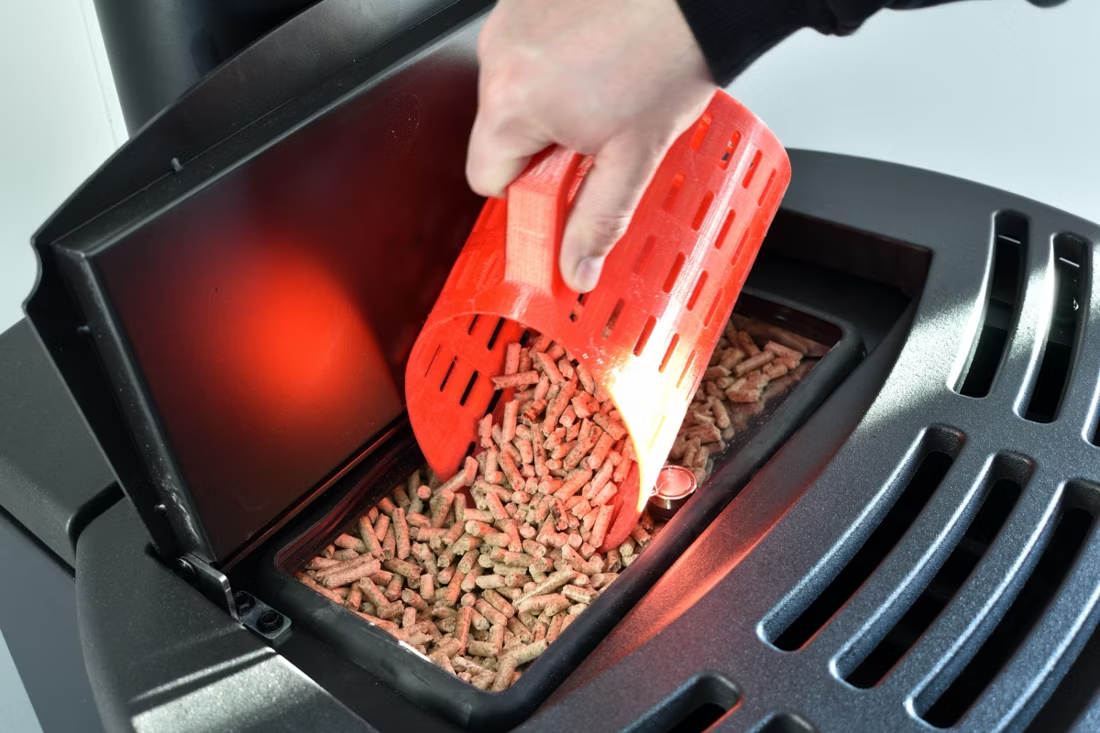
Pellet stoves have found a real foothold alongside that wood-burning tradition, and for good reason. Wildfire smoke is a recurring air quality concern across this part of New Mexico, and pellet appliances burn far cleaner than an open wood stove, with none of the smoke management that comes with curing and stacking cordwood. They also handle altitude better than a natural-draft wood stove—a pellet stove's powered exhaust blower doesn't struggle for draft the way an old-fashioned chimney can at 6,500 feet and higher. Regional pellet brands like Forest Energy and Lignetics are stocked by dealers serving the county, which keeps fuel local and reasonably priced rather than trucked in from out of state.
Three steps. No salesperson until you're ready.
Tell us about your project
Your zip code, your situation, and the fuel you're leaning toward—or let the answers point you to one.
See what's actually available
The brands dealers within 100 miles genuinely carry—real options, never a catalog mirage.
Get your dealer & Project Guide
A trusted local dealer, plus the free Project Guide & Parts List that names every component of the job.
Frequently Asked Questions
How much does a pellet stove installation cost in Cibola County?
Most pellet stove installations in Cibola County run in the $3,000 to $6,000 range, depending on the unit, whether you need a hearth pad, and how far the vent pipe has to run through an exterior wall. Converting an existing masonry fireplace to a pellet insert typically lands toward the higher end of that range because of the venting adapter work involved. Because pellet stoves need a standard 120V outlet nearby, homes without existing wiring in the right spot may need a small electrical add-on. A local dealer will give you a firm number after seeing your space—costs can shift a bit for homes further out toward Acoma, Laguna, or the base of Mount Taylor where delivery and travel factor in.
What size pellet stove do I need for my home in Cibola County?
Sizing depends on square footage, insulation, and ceiling height, but Cibola County's elevation and cold winters push most homes toward the mid-to-large end of the sizing chart. A small unit (rated for 1,000-1,300 sq ft) suits a single room or a compact home in Grants or Milan; a medium unit handles most standard-size homes up to around 2,000 sq ft; larger homes, especially older ones with less insulation, may need a unit rated above that. Homes at higher elevation on the flanks of Mount Taylor lose heat faster than homes down in the valley, so a local dealer will often size up slightly for those addresses. A free in-home consultation from one of our matched dealers is the most reliable way to get this right.
Pellet stove vs. wood stove—which makes more sense in Cibola County?
Wood has deep roots here—pinyon, juniper, and ponderosa pine are all available through Cibola National Forest cutting permits for $5 to $20 per cord between May and October, and a wood stove keeps working without electricity, which matters if you're out toward Acoma, Laguna, or the more remote stretches of the county. Pellet stoves trade that off-grid independence for convenience and cleaner burning: no cutting, splitting, or stacking, a hopper that runs for 24 hours or more on a load, and noticeably less smoke output—a real plus given how often wildfire smoke affects air quality here in dry summers and falls. If you want set-it-and-forget-it heat and don't mind needing power to run it, pellet is the easier day-to-day choice. If backup heat during outages matters more to you, wood stays relevant.
Will my pellet stove work during a power outage?
No—pellet stoves rely on an electric auger to feed fuel and a blower for combustion air and exhaust, so they stop working when the power goes out. This is worth thinking through in Cibola County, where outages in the more rural stretches served by Continental Divide Electric Cooperative can run longer than in town. Some homeowners pair a pellet stove with a small battery backup or a portable generator sized to run the unit's low electrical draw during a storm. If uninterrupted heat during outages is a priority for your specific address, ask your local dealer whether a wood stove or a battery-backed setup makes more sense for your situation.
Where can I buy pellets in Cibola County, and what do they cost?
Forest Energy and Lignetics are the two regional pellet brands most commonly stocked by dealers and hardware suppliers serving Grants, Milan, and the surrounding county. Premium hardwood and softwood pellets typically run in the $250 to $350 per ton range in this part of New Mexico, though pricing can shift with fuel costs and seasonal demand. Buying a full ton or more ahead of the winter season, rather than by the bag as you go, is usually the more economical route—and worth planning for given how far some Cibola County addresses sit from the nearest supplier.
Do I need a permit to install a pellet stove in Cibola County?
Yes—a building permit is required for a new pellet stove installation, issued through the Cibola County Building Department for addresses outside city limits, or through the City of Grants for installations within town. Pellet stove permitting is usually simpler than wood stove permitting because the venting is smaller-diameter and doesn't require masonry chimney work—most installs vent directly through an exterior wall. Most local dealers include the permit as part of the installation and handle the inspection process for you.
How much maintenance does a pellet stove need?
Pellet stoves need regular but light upkeep: emptying the ash pan every few days during heavy use, cleaning the burn pot and glass weekly, and vacuuming the hopper and exhaust venting a few times each season. Plan on a professional inspection and deeper cleaning once a year, ideally before the season starts in late summer or early fall. Compared to a wood stove and chimney, the maintenance load is considerably lighter—no annual chimney sweep required, since there's no masonry flue to worry about.
Does elevation in Cibola County affect how a pellet stove performs?
Less than you'd think, and that's actually a point in pellet's favor here. Grants and Milan sit around 6,460 feet, with parts of the county climbing much higher toward Mount Taylor. Wood stoves that rely on natural chimney draft can struggle to draw properly at that altitude, especially on cold, still mornings. Pellet stoves use a powered combustion blower rather than relying on natural draft, so altitude has minimal effect on how well they burn. Some manufacturers do recommend a specific high-altitude control kit or adjustment above certain elevations—ask your local dealer whether your model needs one for your specific address.
Pellet vs. propane—which is the better fit for my Cibola County home?
Most of Cibola County outside city limits runs on propane rather than natural gas, so the practical comparison here is often pellet versus propane rather than pellet versus piped gas. Propane fireplaces give you instant on-off heat with no fuel handling, but you're tied to tank deliveries and propane pricing, which can spike in cold months. A pellet stove requires more hands-on involvement—loading the hopper, emptying ash—but the fuel is generally more stable in price and burns cleanly enough to matter in a county where wildfire smoke already affects air quality several months a year. Many households here run pellet as their main heat source and keep a propane or wood appliance as backup.
What's the difference between an insert and a zero-clearance fireplace?
An insert is a fireplace that slides into a pre-existing wood-burning fireplace—if you don't have one, there's nothing to insert it into. A zero-clearance fireplace is built into a framed wall, which makes it the answer for remodels and new construction. Simple test: existing masonry fireplace means insert; blank or framed wall means zero-clearance.
Why is a fireplace insert so efficient?
An insert does two things: it seals the chimney completely, so you stop losing air you already paid to heat, and it radiates warmth into the room through the firebox and glass. Most add a heat-exchange fan that pulls cool room air underneath, wraps it around the hot firebox, and pushes it back out warm. Your home is more efficient before you've even lit the first fire.
Does a fireplace add value to my home?
On average, a fireplace adds back to the home about the same amount you spent installing it. Add the monthly savings from heating the rooms you actually use instead of the whole house—often hundreds of dollars a year—and the value case is strong before you even count what a fire does for how your family uses the room.
Can I install a fireplace myself?
If you're putting a fire in your house on purpose, it's best to work with an expert. Unless you're genuinely experienced in framing, gas line, vent pipe, and the national code on clearances to combustibles, have a professional do it—and ideally the same company that sells you the fireplace, so warranty, service, and liability all live under one roof.
Pellet Brands Stocked Around Cibola County
Manufacturers will point you to the nearest stocking dealer.
Find your pellet stove in Cibola County.
Tell us about your home in Grants, Milan, or anywhere else in Cibola County, and we'll put together a free Project Guide & Parts List—the exact stove, venting, and parts your project needs—and match you with a trusted local dealer who can install it right.
Find Your Fireplace →