
Heat that holds up on the high plains of Cibola County.
Wood, gas, pellet, and electric fireplace resources for every community in Cibola County—from Grants and Milan to Bluewater and the Acoma and Laguna Pueblo areas. Find the right unit and connect with a trusted local hearth retailer.
Every Project Starts From One of These Five Situations
Piñon country at 6,500 feet, with real winter to plan for.
Cibola County sits on the high plains of west-central New Mexico, most of it above 6,400 feet, with the Zuni and San Mateo Mountains rising well beyond that. Winter lows average around 15°F, and with a long, cold heating season, the season is closer to Fargo, ND than to the rest of the desert Southwest most people picture when they think of New Mexico. Piñon and juniper—the same low, twisted trees that shape the mesa landscape here—are also the region's signature firewood, prized for a hot, aromatic burn, alongside ponderosa pine from higher elevations. Cibola National Forest issues personal-use fuelwood permits, and cutting your own piñon or juniper is still a normal part of how many households in the county heat their homes.
What you'll find on this hub: hearth retailers, service technicians, and fuel suppliers covering Grants, Milan, Bluewater, San Rafael, and the Pueblo of Acoma and Pueblo of Laguna communities. Pick your fuel below to drill into specifics—local dealers, installation costs, recommended units, and permit details for your project. Whether you're heating a Route 66-era house in Grants or a place out toward the Zuni Mountains, this is the starting point.
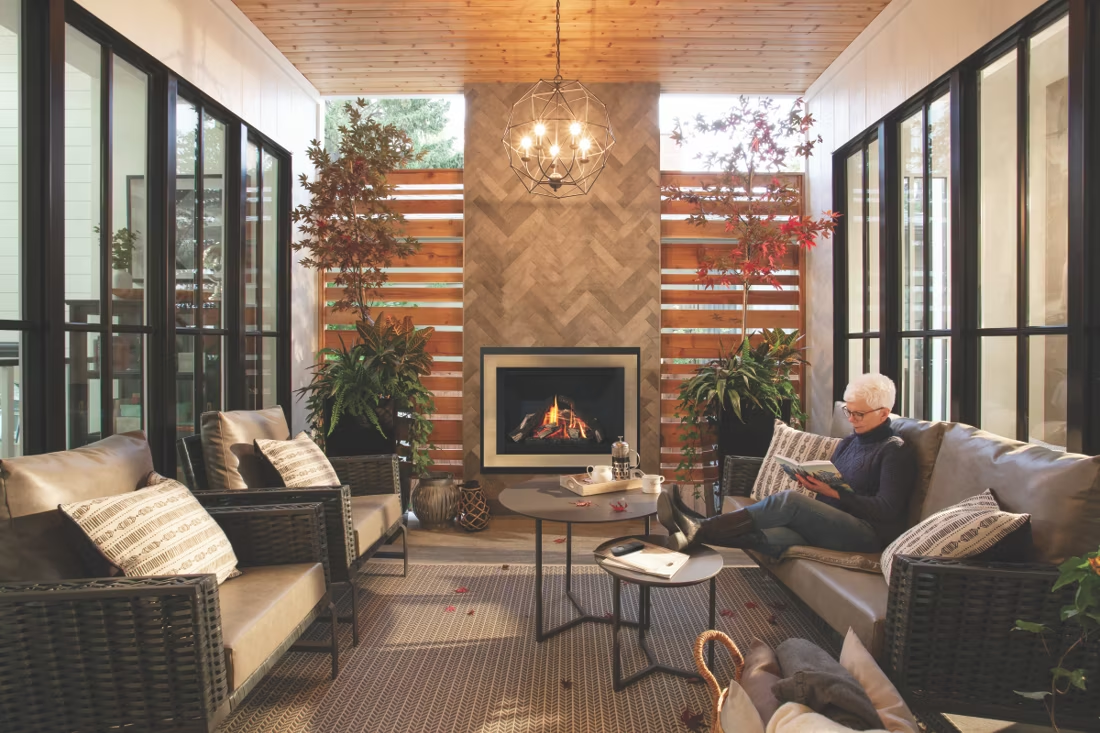
Four fuels. One honest answer for Cibola County.
Three steps. No salesperson until you're ready.
Tell us about your project
Your zip code, your situation, and the fuel you're leaning toward—or let the answers point you to one.
See what's actually available
The brands dealers within 100 miles genuinely carry—real options, never a catalog mirage.
Get your dealer & Project Guide
A trusted local dealer, plus the free Project Guide & Parts List that names every component of the job.
Frequently Asked Questions
Which fuel works best in Cibola County?
It depends on the home and the household. Wood is the traditional heating fuel here—piñon and juniper are abundant on Cibola National Forest land, permits are inexpensive, and a well-built wood stove or insert handles the county's long, demanding heating season without much trouble. Propane is the practical convenience choice for most of the county, since natural gas service is limited outside Grants and Milan—instant heat with no wood-hauling. Pellet stoves are a solid middle ground: less labor than cutting and splitting piñon, and regional brands like Forest Energy and Lignetics keep fuel reasonably accessible along the I-40 corridor. Electric fireplaces work well as supplemental heat in bedrooms or additions, but at 6,400+ feet with average winter lows around 15°F, they're not a realistic primary heat source. Many households here run wood or pellet as the main heater with propane or electric backup in secondary rooms.
Do I need a permit to install a fireplace in Cibola County?
Generally yes for any fuel-burning appliance. New wood stoves, wood inserts, gas fireplaces, gas inserts, and pellet stoves typically require a building permit, and gas installations also need a licensed gas-fitter and separate gas line inspection. Within Grants and Milan, permits are handled by the respective city building department; in unincorporated Cibola County, they go through the county. If you're cutting your own firewood on Cibola National Forest land, that's a separate personal-use fuelwood permit from the Forest Service, unrelated to the building permit for the stove itself. Electric fireplace installs usually skip the permit unless it's a hardwired built-in with new circuit work. Most local retailers handle the building permit paperwork as part of a full installation.
Is wildfire smoke a concern for wood burning in Cibola County?
It can be, seasonally rather than as a daily restriction. Cibola County's forested elevations—the Zuni and San Mateo Mountains, and the Cibola National Forest lands that ring much of the county—are subject to wildfire risk in dry years, and smoke from regional fires can affect air quality for days or weeks during summer and early fall, well outside the winter heating season. There's no formal winter wood-burning curtailment program in Cibola County comparable to what you'd see in a nonattainment basin, but it's worth checking New Mexico Environment Department air quality advisories during fire season, and keeping an eye on Forest Service fire restrictions before doing any outdoor burning tied to firewood prep.
Can one local hearth retailer handle all four fuel types?
Coverage varies more in a county this size than in a metro area—Cibola County doesn't have the retailer density of Albuquerque, so some households end up working with a Grants-based dealer for wood and pellet, and a separate propane or gas specialist for gas appliances. If a retailer on the county page lists all four fuels, that's worth noting, since it means you can compare wood, gas, pellet, and electric side by side with one dealer rather than coordinating multiple installers. If you're near the Bluewater or Milan side of the county, it's also worth checking whether an Albuquerque-area retailer serves your address, since some multi-fuel dealers extend their service radius out along I-40.
How does installation and service work for rural parts of Cibola County?
Most retailers and technicians are based in or near Grants and travel out to Milan, Bluewater, San Rafael, and the more remote stretches toward the Zuni Mountains and the Pueblo of Acoma and Pueblo of Laguna lands. Expect a modest travel fee for service calls outside the Grants-Milan core, and plan on longer lead times for installation scheduling in peak fall months (September–November), when demand for wood and pellet stove hookups spikes ahead of the cold. Booking chimney sweeps and gas inspections in late summer, before the piñon-cutting season ramps up, tends to get you on the calendar faster than waiting until the first cold snap.
What's the typical cost range for fireplace installation across all fuel types in Cibola County?
Costs track fairly closely with the wider Southwest region, adjusted for the county's rural service distances. Wood stove or insert: roughly $4,000–$8,500 for a typical retrofit, more if new masonry chimney work is required. Gas fireplace, insert, or stove: about $4,000–$10,000, with propane conversions often landing on the lower end when an existing gas line or tank setup is already in place. Pellet stove or insert: typically $4,200–$7,000 installed. Electric fireplace: $200–$3,000 for the unit itself, plus $400–$1,200 in labor for anything beyond a simple plug-in placement. See the county + fuel pages above for cost detail tied to specific local retailers.
How much should I budget for a fireplace?
For an average home—covering the fireplace, the vent pipe, and basic installation—a budget between $3,900 and $5,500 gives you a lot of options across wood, gas, and pellet. By the time you add finish work, gas line, and electrical, the average complete installation lands between $5,000 and $12,000 all-in. In a remodel or new build, a good rule is to put about 2.5% of the total project cost toward the fireplace.
Can a fireplace actually lower my heating bill?
Yes—by creating a comfort zone. A furnace heats every square foot of the house just to warm the one room you're in; a gas fireplace on low burns roughly a sixth of the gas a typical furnace does. Set the furnace around 55–60 degrees as a baseline, then heat the rooms your family actually uses. Families who heat this way commonly save $20–$60 a month.
What is an in-home preview and do I need one?
It's a visit where a hearth professional measures your space, confirms the model you picked actually works in your home, and walks the specs—framing, gas line, venting, finish work—before anything is ordered. Some details you just can't know until you see the house. Never make a down payment without one; it's the single most-skipped step that burns buyers.
Wood, gas, pellet, or electric—how do I choose?
Match the fuel to your life, not the other way around. Wood: lowest fuel cost and total power-outage independence, but you're hauling and stacking. Gas: press a button, set a thermostat, no maintenance to speak of. Pellet: wood economics with automatic feeding, in exchange for weekly cleaning and a need for electricity. Electric: plugs in anywhere with honest supplemental heat. Nobody regrets the fuel that fits how they actually live.
Stove and Fireplace Dealers in Cibola County
Listings include WhyFire partner dealers, dealers we have verified as authorized for the brands we recommend, and established local businesses that carry hearth products. Every listing shows which one it is. The ones marked Preferred run on WhyFire's software, so they can show you real pricing and book your appointment right here. No manufacturer pays for placement. How we verify dealers →
Castle Furniture
Kinney Brick
Raks Building Supply
Builders Materials Inc.
Banker Insulation
Mountain West Sales, Inc.
Navajo Tractor Sales Inc
Western Building Supply
HeatSource
Raks Building Supply
Find your fireplace in Cibola County.
Pick your fuel below and I'll match you with a trusted local dealer and send over a free Project Guide & Parts List—the exact parts, including the vent kit, and the recommended installer for your Cibola County project.
Find Your Fireplace →