
Keep Your Family Warm and Safe—No Matter What
Pinyon and juniper cordwood have kept homes warm in this corner of New Mexico for generations. Find the right stove or insert, and get matched with a trusted local dealer.
Every Project Starts From One of These Five Situations
Wood heat runs deep in the Four Corners.
Center Point sits at 5,740 feet on the high desert plateau of San Juan County, where winter lows average 17°F and the region racks up a heating season on par with mountain-town Montana—a climate that shares more with Bozeman, MT than with the rest of the Southwest most people picture. Like Bozeman, MT, the combination of elevation, dry air, and clear cold nights means a stove has to actually perform, not just look good in the living room.
This is small-town country—Center Point's population sits under 3,000—and wood heat has stayed practical here for a simple reason: the fuel is close by. Pinyon, juniper, and ponderosa pine grow throughout the surrounding forest land, and a Forest Service cutting permit through San Juan National Forest runs $5 to $20 per cord during the May-through-October season. Pinyon in particular burns hot and aromatic, a favorite for anyone who's spent a winter in the Basin. A properly sized, EPA-certified stove or insert turns that local wood into steady, radiant heat—and keeps a home warm even when winter weather takes out the power lines that snake across this stretch of New Mexico.
Firewood Cutting Permits Near Center Point
Three steps. No salesperson until you're ready.
Tell us about your project
Your zip code, your situation, and the fuel you're leaning toward—or let the answers point you to one.
See what's actually available
The brands dealers within 100 miles genuinely carry—real options, never a catalog mirage.
Get your dealer & Project Guide
A trusted local dealer, plus the free Project Guide & Parts List that names every component of the job.
Frequently Asked Questions
How much does a wood stove installation cost in Center Point?
Costs depend heavily on whether you're installing into an existing masonry fireplace, running new Class A chimney pipe through a roof, or starting from scratch in a home with no existing flue. Homes with an existing chimney generally see the lowest total cost since the insert can use venting that's already in place; new construction or homes without a chimney run higher once pipe, roof flashing, and a code-compliant hearth pad are added. A local dealer will walk your home and give you a firm number—venting path and hearth clearances are the two variables that move the price most in a place like Center Point, where many homes are older adobe or manufactured construction with non-standard wall and roof framing.
What size wood stove do I need for a home in Center Point?
With average winter lows around 17°F and a heating season on par with mountain-town Montana, most Center Point homes need a mid-to-large stove rather than a small supplemental unit, especially if wood is your primary heat source rather than a backup to electric baseboard. Older homes with less insulation and higher ceilings will run toward the larger end of a dealer's sizing chart. Square footage is only part of the equation—a local retailer will also factor in your home's construction, window count, and whether the stove needs to carry the whole house through a cold snap or just take the edge off one room.
Where can I find a certified wood stove installer near Center Point?
Look for NFI (National Fireplace Institute) or CSIA (Chimney Safety Institute of America) certification—credentials that confirm proper training in clearances, venting, and code compliance for solid-fuel appliances. Given how rural this part of San Juan County is, installers may travel from Farmington or Aztec to handle jobs in Center Point; that's normal here and doesn't mean lower quality work. What matters is that whoever installs your stove pulls the required county permit and signs off on the final inspection—skipping that step is common with unlicensed handyman installs and it's the single biggest factor in wood-stove-related house fires.
Should I get a wood stove or a wood insert?
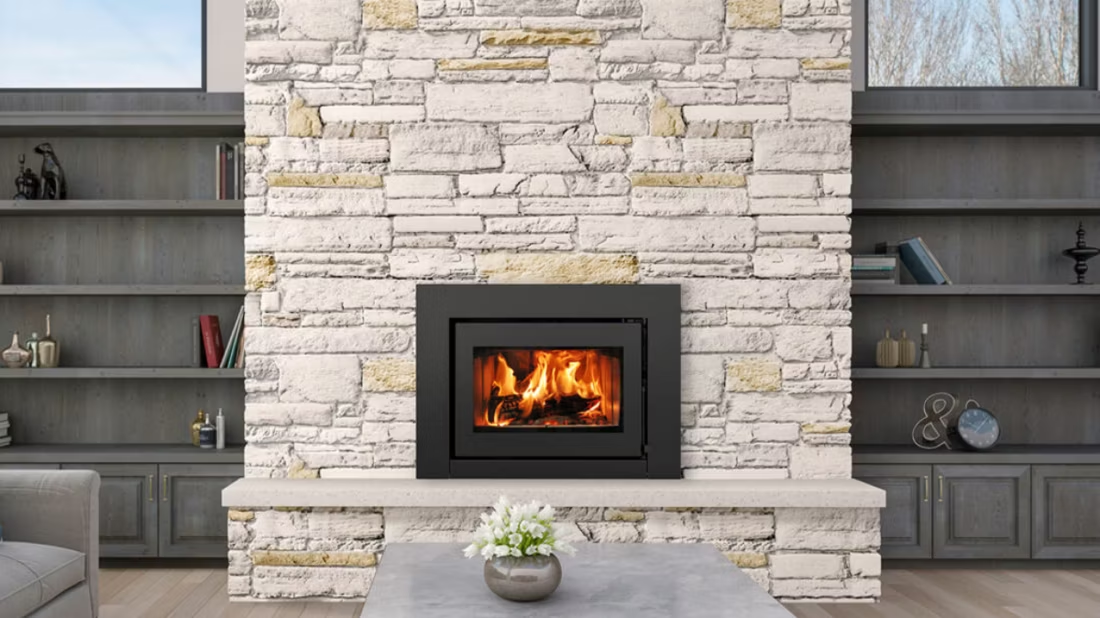
A freestanding wood stove sits on a hearth pad and vents through new or existing chimney pipe—it works in homes with no existing fireplace, which describes a lot of newer construction and manufactured homes around Center Point. A wood insert is built to slide into an existing masonry fireplace opening, using that chimney (typically with a stainless liner) as the vent path. If your home already has a traditional fireplace, an insert usually delivers far more usable heat than the open hearth ever did, without changing the footprint of the room. If you're starting from an empty wall, a freestanding stove gives you more flexibility on placement.
Do I need a permit to install a wood stove in Center Point?
New wood-burning appliance installations require a building permit through San Juan County, and the unit itself needs to meet current EPA emissions standards. Unlike parts of the Southwest that sit in official non-attainment zones, San Juan County's primary air quality concern is seasonal wildfire smoke rather than winter wood-smoke inversions, so you generally won't run into the kind of curtailment-day burning restrictions common in more urban basins. Still, check current county rules before you install, and keep an eye on regional air quality advisories during dry, smoky stretches in late summer.
What's the best wood stove for Center Point's climate?
With winter lows regularly in the teens and dense local fuel like pinyon and juniper readily available, a mid-to-large steel or cast-iron stove with a long secondary-burn or catalytic combustion system is a strong fit—catalytic models from brands like Blaze King can hold a fire well past 12 hours on a load of dense pinyon, which matters on the coldest overnight stretches. Non-catalytic stoves from Lopi or Pacific Energy are a solid, lower-maintenance option for homes using wood as supplemental rather than sole heat. A local dealer can match the stove to your specific wood supply and how many hours a day you actually plan to run it.
How often should my chimney be swept in Center Point?
CSIA guidelines call for at least one inspection per year, and homes here that lean on wood as a significant heat source through a long cold season should plan on a full sweep before burning season starts, typically in early fall. Pinyon and juniper both carry more resin than softer woods like fir, which can mean faster creosote buildup if the wood isn't well-seasoned—six months to a year of drying after cutting is worth the wait. If you're burning green or partially seasoned wood cut on a fresh Forest Service permit, check the flue more often the first season.
Where can I get firewood in Center Point?
San Juan National Forest issues personal-use cutting permits for $5 to $20 per cord during the May-through-October season, and pinyon, juniper, and ponderosa pine are the three species you'll find most often on a load. Pinyon is prized locally for its heat output and scent; juniper burns hot but fast; ponderosa splits easier and is a good all-around choice for a long overnight burn. Plan your cutting trips before the October close of season—permits aren't available to fill gaps once winter sets in, so most households stock their woodpile well ahead of the first hard freeze.
Wood stove or pellet stove—which makes sense in Center Point?
Wood stoves run on cordwood you can cut yourself under a San Juan National Forest permit, and they keep working during a power outage—a real consideration out here where Jemez Mountains Electric Cooperative service lines run through remote, weather-exposed terrain. Pellet stoves, using regional bagged pellets from brands like Forest Energy or Lignetics, are more convenient day to day and burn cleaner, but the auger and blower need electricity, so a pellet stove goes dark in the same outage a wood stove would ride through. For a primary or backup heat source in a rural home like most in Center Point, wood tends to be the more resilient choice; pellet works well as a clean, low-maintenance option for households with dependable power and easy pellet delivery access.
Why is my open fireplace making my house colder?
Open fireplaces suck—literally. As the fire burns, it consumes air your furnace already paid to heat and pulls it out through the chimney, so the house is actually colder after the fire goes out than before you lit it. An insert fixes this: it seals the chimney, puts fixed glass across the front, and turns that hole in your house into a real heat source.
What's the difference between an insert and a zero-clearance fireplace?
An insert is a fireplace that slides into a pre-existing wood-burning fireplace—if you don't have one, there's nothing to insert it into. A zero-clearance fireplace is built into a framed wall, which makes it the answer for remodels and new construction. Simple test: existing masonry fireplace means insert; blank or framed wall means zero-clearance.
Can a fireplace actually lower my heating bill?
Yes—by creating a comfort zone. A furnace heats every square foot of the house just to warm the one room you're in; a gas fireplace on low burns roughly a sixth of the gas a typical furnace does. Set the furnace around 55–60 degrees as a baseline, then heat the rooms your family actually uses. Families who heat this way commonly save $20–$60 a month.
Does a fireplace add value to my home?
On average, a fireplace adds back to the home about the same amount you spent installing it. Add the monthly savings from heating the rooms you actually use instead of the whole house—often hundreds of dollars a year—and the value case is strong before you even count what a fire does for how your family uses the room.
Nearby Dealers
Hearth shops serving Center Point and the surrounding area. Every listing shows whether it is a WhyFire partner, a dealer we have verified as authorized for the brands we recommend, or a local business carrying hearth products. No manufacturer pays for placement. How we verify dealers →
Bob's Fireplace
San Juan Hearth
Find your wood fireplace in Center Point.
Tell us about your home and we'll put together a free Project Guide & Parts List—the right stove or insert, the exact vent kit for your setup, and a trusted local dealer in the San Juan County area who can install it.
Find Your Fireplace →