
Reliable Heat That Runs Itself Through San Juan County Winters.
Thermostat-controlled pellet heat for the high desert cold around Center Point, without the daily wood-hauling. Find the right stove and connect with a trusted local dealer.
Every Project Starts From One of These Five Situations
Consistent heat, without the woodpile.
At 5,740 feet on the San Juan County plateau, Center Point sees winter lows averaging around 17°F and a cold season with a heating load comparable to a typical Helena, Montana winter, if a bit drier. Local homes have long burned pinyon, juniper, and ponderosa pine for heat, and that tradition is still very much alive here. But wildfire smoke has become a recurring regional concern in the interior Southwest, and pellet stoves burn dramatically cleaner than open wood combustion—a real consideration on smoke-advisory days when everyone in the valley is running a wood stove at once.
Center Point doesn't show piped natural gas service, so most households choose between propane, wood, electric resistance heat, and pellet. Pellet splits the difference well: it's cleaner-burning than cordwood, cheaper to run than baseboard electric on Jemez Mountains Electric Cooperative's residential rate of about 15.4 cents per kWh, and it skips the delivery-and-tank dependency that comes with propane. Regional pellet supply from Forest Energy and Lignetics is sold through hearth dealers and farm/hardware stores across the Four Corners area, so fuel isn't hard to come by even in a small town like this.
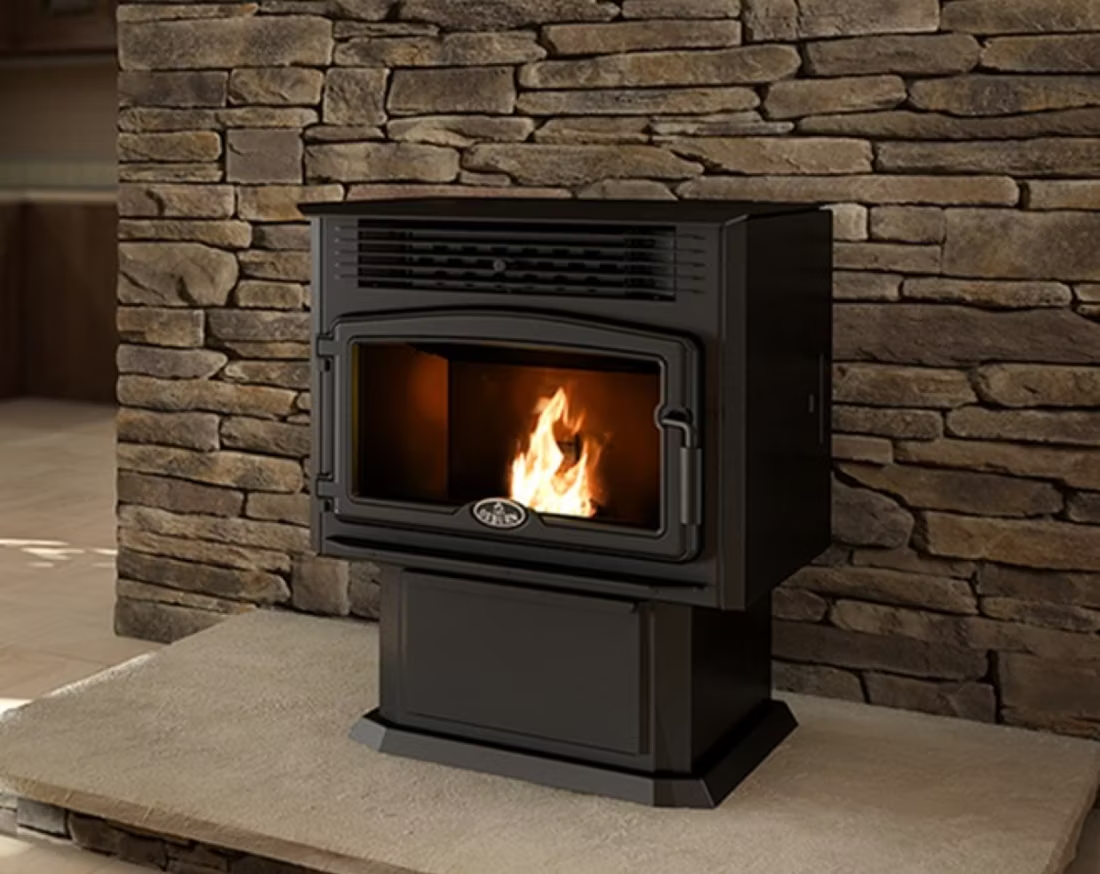
Three steps. No salesperson until you're ready.
Tell us about your project
Your zip code, your situation, and the fuel you're leaning toward—or let the answers point you to one.
See what's actually available
The brands dealers within 100 miles genuinely carry—real options, never a catalog mirage.
Get your dealer & Project Guide
A trusted local dealer, plus the free Project Guide & Parts List that names every component of the job.
Frequently Asked Questions
How much does a pellet stove installation cost in Center Point?
There isn't a single number that fits every home here—cost depends on the stove model, whether you need a new hearth pad or floor protection to meet clearance requirements, and whether there's already a 110V outlet near the install location for the auger and blower motor. Homes converting an existing wood-burning fireplace to a pellet insert typically see lower costs than a fresh freestanding install requiring new venting through an exterior wall. A local dealer serving San Juan County can walk your specific space and give you a firm number—that's part of what the free Project Guide connects you to.
Do pellet stoves work during a power outage?
Not without backup power. Pellet stoves rely on an electric auger to feed fuel and a blower to circulate heat, so they shut down when the grid does. That matters in Center Point, where service runs through Jemez Mountains Electric Cooperative and rural co-op lines can take longer to restore after a winter storm than in-town utility grids. Many households here pair a pellet stove with a small battery backup unit or a portable generator so the stove can keep running through an extended outage—worth asking your local dealer about if outages are a concern on your line.
What pellet brands are available near Center Point?
Forest Energy and Lignetics are the two regional pellet manufacturers most commonly stocked by dealers serving the Four Corners area, including San Juan County. Both make hardwood and softwood blends suited to residential stoves. Availability can be tighter in a small town like Center Point than in a larger market, so it's worth confirming with your dealer what they keep in stock year-round versus what needs to be pre-ordered before peak heating season.
How does pellet heat compare to burning pinyon or juniper?
Cordwood cut locally—pinyon, juniper, and ponderosa pine are the standard species around San Juan County—is cheap if you're willing to cut it yourself. A San Juan National Forest personal-use permit runs $5 to $20 per cord and is valid May through October. Pellet fuel costs more per BTU but requires none of that labor, produces far less smoke and ash, and burns at a steadier rate since the auger meters fuel automatically instead of you feeding a firebox by hand. On heavy wildfire-smoke days, pellet stoves are also the cleaner-burning choice, which matters more here than in wetter climates.
Do I need a permit to install a pellet stove in Center Point?
Most likely, yes—new solid-fuel appliance installations, including pellet stoves, generally require a building permit through the San Juan County building department, along with inspection of the venting once it's installed. Requirements can vary depending on whether you're installing a freestanding stove versus a fireplace insert, and whether the home is inside town limits. Your installer should pull the permit as part of the job; it's worth confirming that's included before you sign a quote.
What size pellet stove do I need for my home?
Sizing depends on square footage, ceiling height, and how well-insulated the home is—older homes in San Juan County with single-pane windows and less insulation lose heat faster and often need more output than the square footage alone would suggest. Small units (under 1,000 sq ft) work for a single room or a small home used as supplemental heat; medium units (1,000–1,800 sq ft) cover most main living areas; larger units can serve as primary heat for bigger or leakier homes. A local dealer will size the unit to your actual space rather than a general rule of thumb—oversizing leads to short-cycling, and undersizing means running the stove on high constantly during the coldest stretches.
Pellet vs. propane—which makes more sense in Center Point?
With no piped natural gas service in the area, propane is the common alternative to pellet for many Center Point homes. Propane requires a tank, a delivery contract, and prices that fluctuate with regional supply—costs that can spike in a hard winter when everyone's ordering at once. A pellet stove sidesteps the tank and delivery schedule entirely; you buy bags of pellets as needed from a local dealer or feed store. Propane systems can also tie into whole-home ducted heat more easily, while pellet stoves are better suited to heating a main living area or supplementing an existing system. Many households here run both.
How much maintenance does a pellet stove need?
Less than a wood stove, but it's not zero. Plan on emptying the ash pan every few days during regular use, cleaning the burn pot weekly to keep it from clogging, and wiping the glass as needed. Once a year, before the heating season starts, the hopper, auger, and venting should get a full inspection and cleaning—soot and creosote can still build up in the vent pipe even though pellet stoves burn cleaner than cordwood. A local dealer or hearth service tech can handle the annual service if you'd rather not do it yourself.
Pellet stove vs. wood stove—which is right for my Center Point home?
Wood stoves burn free or low-cost fuel if you're willing to cut your own pinyon, juniper, or ponderosa pine under a San Juan National Forest permit, and they keep working with no electricity at all—a real advantage during a co-op power outage. Pellet stoves trade that off for convenience and cleaner burning: load the hopper, set the thermostat, and walk away, with far less smoke on the wildfire-smoke-advisory days that hit this region most summers and some winters. If backup heat during outages matters most, wood has the edge. If day-to-day convenience and lower emissions matter more, pellet is usually the better fit. A local dealer can walk you through both if you're not sure.
How often does a pellet stove need cleaning?
A clean pellet stove is a happy pellet stove. Plan on cleaning the burn pot about once a week when you're burning regularly—ash and clinkers gum up the air holes just like a pellet barbecue. Most pellet stove problems trace back to skipped cleaning that nobody explained up front. Some designs make it easy with a trapdoor burn pot: pull a lever and the gunk drops into the ash pan.
What's the difference between an insert and a zero-clearance fireplace?
An insert is a fireplace that slides into a pre-existing wood-burning fireplace—if you don't have one, there's nothing to insert it into. A zero-clearance fireplace is built into a framed wall, which makes it the answer for remodels and new construction. Simple test: existing masonry fireplace means insert; blank or framed wall means zero-clearance.
What is an in-home preview and do I need one?
It's a visit where a hearth professional measures your space, confirms the model you picked actually works in your home, and walks the specs—framing, gas line, venting, finish work—before anything is ordered. Some details you just can't know until you see the house. Never make a down payment without one; it's the single most-skipped step that burns buyers.
Does a fireplace add value to my home?
On average, a fireplace adds back to the home about the same amount you spent installing it. Add the monthly savings from heating the rooms you actually use instead of the whole house—often hundreds of dollars a year—and the value case is strong before you even count what a fire does for how your family uses the room.
Nearby Dealers
Hearth shops serving Center Point and the surrounding area. Every listing shows whether it is a WhyFire partner, a dealer we have verified as authorized for the brands we recommend, or a local business carrying hearth products. No manufacturer pays for placement. How we verify dealers →
Bob's Fireplace
San Juan Hearth
Pellet Brands Stocked Around Center Point
Manufacturers will point you to the nearest stocking dealer.
Find your pellet stove in Center Point.
Tell us a bit about your home and we'll put together a free Project Guide & Parts List—the right pellet stove, the vent kit you'll need, and a trusted local dealer near Center Point to install it.
Find Your Fireplace →