
Clean-burning heat for one of the least populated counties in America.
From Reserve to Quemado to Glenwood, Catron County runs on self-sufficiency. A pellet stove gives you steady, low-smoke heat without the hauling—and a local dealer who knows what actually works out here.
Every Project Starts From One of These Five Situations
A cleaner alternative to wood, without giving up warmth.
Catron County covers nearly 6,929 square miles—the largest county in New Mexico—but is home to only about 1,776 people, making it one of the most sparsely populated counties in the continental United States at under 0.3 residents per square mile. Most of the county sits in or borders the Gila National Forest, with towns like Reserve (the county seat), Quemado, Glenwood, Datil, and Aragon strung out along US-60 and NM-12. Elevations climb from around 5,500 feet in the Quemado valley to over 10,000 feet in the Mogollon Mountains, and a hardware store or big-box retailer is often more than an hour's drive away, whichever direction you head.
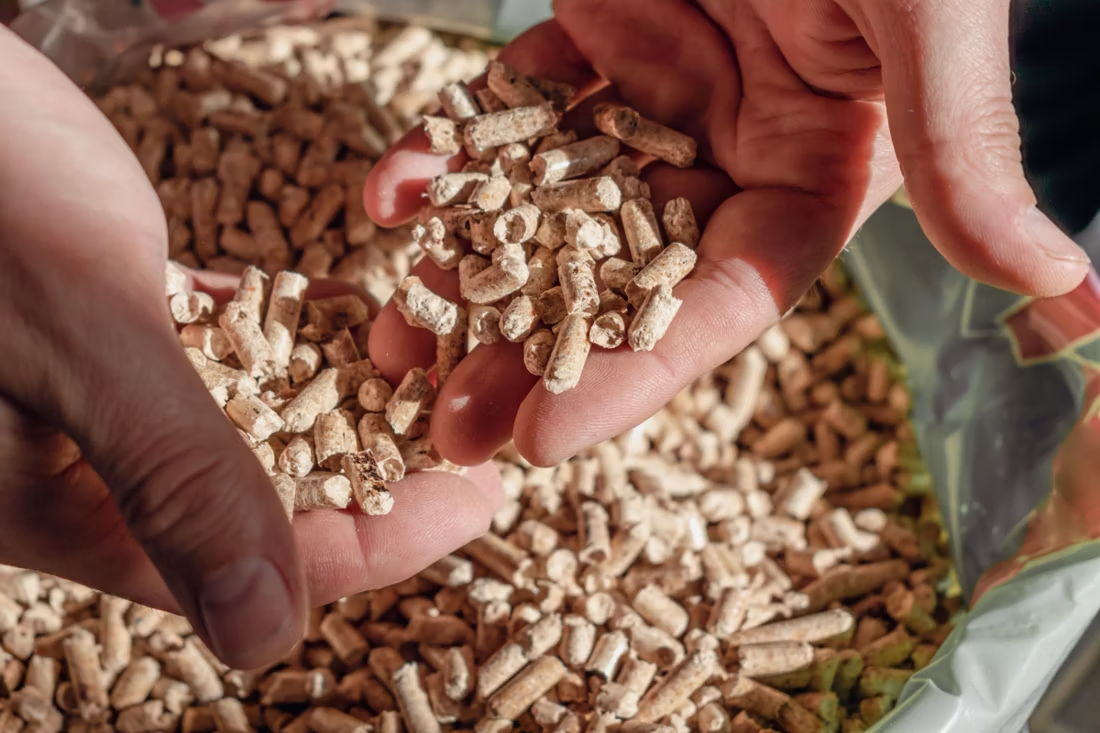
Wood heat runs deep here—pinyon, juniper, and ponderosa pine blanket the surrounding forest land, and cutting your own firewood through the Gila National Forest is a long-standing local practice. But wildfire smoke advisories tied to forest conditions and fire management have made a lot of households rethink an open wood stove. Pellet stoves burning fuel from regional suppliers like Forest Energy and Lignetics put out far less visible smoke and more consistent heat than cordwood, which matters when air quality advisories are in effect. The one thing to plan around: pellet stoves need electricity to run the auger and blower, and rural electric service in Catron County can go down during winter storms—so a battery backup or small generator is worth budgeting for alongside the stove.
Three steps. No salesperson until you're ready.
Tell us about your project
Your zip code, your situation, and the fuel you're leaning toward—or let the answers point you to one.
See what's actually available
The brands dealers within 100 miles genuinely carry—real options, never a catalog mirage.
Get your dealer & Project Guide
A trusted local dealer, plus the free Project Guide & Parts List that names every component of the job.
Frequently Asked Questions
How much does a pellet stove installation cost in Catron County?
Most pellet stove installations run in the $3,000 to $6,000 range nationally, and that's a reasonable starting point for Catron County, though your final number depends on the unit, venting path, and whether hearth pad work is needed. Because there's no hearth retailer based inside the county, installers typically come from Silver City or Socorro—both roughly 90 minutes away—and that travel time is usually reflected in the quote. Ask any dealer you're considering whether their estimate already includes the trip out, so you're not surprised later.
What size pellet stove do I need for a Catron County home?
Sizing depends on square footage, insulation, and ceiling height, but elevation matters here too—a home in the Quemado valley around 5,500 feet heats differently than one tucked into the Mogollon foothills above 8,000 feet. Older adobe and frame homes around Reserve and Glenwood often have less insulation than newer construction, which pushes sizing up a notch even at similar square footage. A local dealer can size your space properly during an in-home visit; undersizing is the most common mistake in a county with hard winter nights at elevation.
Where can I find a certified pellet stove installer near Catron County?
Look for NFI (National Fireplace Institute) certification—it's the credential that indicates real training on pellet appliance venting, clearances, and electrical hookup, not just a sales background. Because Catron County has no dealer of its own, most certified installers work out of Silver City or Socorro and schedule county routes in advance, so plan your project a few weeks out rather than expecting next-day service. Avoid a DIY install or a general handyman for the venting and electrical work—pellet stoves have specific intake and exhaust requirements that a general contractor often gets wrong.
Is a pellet stove a good fit given Catron County's wildfire smoke concerns?
Yes, and it's one of the more practical reasons households in Catron County are moving toward pellet heat. When forest conditions push wildfire smoke into the valleys, or when regional air quality advisories go up, a pellet stove burns far cleaner and produces noticeably less visible smoke than an open wood stove burning local pinyon or juniper. It's not a replacement for staying informed on active fire and smoke advisories, but it does mean your own heating source isn't adding to the problem on bad-air days.
Do I need a permit to install a pellet stove in Catron County?
Catron County doesn't run a large centralized building department the way denser counties do, but a permit is still generally expected for a new solid-fuel appliance installation, and the stove itself needs to meet current EPA certification standards. Most installers coming out from Silver City or Socorro are familiar with the county's process and will handle the paperwork as part of the job rather than leaving it to you. If you're doing a self-install in a very remote part of the county, it's worth a call to the county office first—it's a quick check that avoids problems at resale.
Does the pellet brand matter, and are Forest Energy and Lignetics good options?
Forest Energy and Lignetics are pellet fuel manufacturers—they make the bagged pellets you burn, not the stove itself—and both are sold through regional feed, ranch supply, and hardware stores that serve Catron County. Fuel quality does matter: low-ash, low-moisture pellets from an established regional brand burn cleaner and leave less residue in the auger and burn pot than bargain pellets. As for the stove itself, established manufacturers like Harman, Quadra-Fire, and Englander all have models suited to this climate—a local dealer will match the stove to your home and confirm which pellet brands run well in it.
Will my pellet stove work during a power outage?
No—pellet stoves rely on electricity to run the hopper auger, combustion blower, and igniter, so they shut down when the power does. That's a real consideration in Catron County, where rural electric service can go down during winter storms and restoration can take longer than in town. If your pellet stove is meant to be a primary heat source rather than a supplement, plan for a small generator or battery backup system sized to keep the stove running, and keep that plan in mind when comparing pellet against a wood stove that needs no power at all.
Where can I buy pellet fuel in Catron County, and how much should I keep on hand?
There's no dedicated pellet retailer inside Catron County, so most households buy Forest Energy or Lignetics pellets through hardware and feed stores in Silver City, Socorro, or Springerville, Arizona, and either haul them back by truck or arrange a bulk delivery. Given how far the nearest supply point is, it's worth stocking a full season's worth—often a ton or more depending on how much you rely on the stove—before the first hard snow closes in on US-60 or NM-12. Running out mid-winter in Catron County isn't a quick errand to fix.
Pellet vs. wood—which makes more sense for a Catron County home?
Wood is free or nearly free if you're cutting your own pinyon, juniper, or ponderosa pine off Gila National Forest land, works without electricity, and fits the self-sufficient way a lot of Catron County households already operate. Pellet stoves trade that self-sufficiency for convenience and cleaner burning—less visible smoke, more consistent heat output, and easier day-to-day operation—which matters on days when wildfire-smoke advisories are already straining local air quality. Many households here end up with both: wood as the resilient backup that doesn't care if the power's out, pellet as the cleaner-burning daily driver when the grid is up and air quality is a concern.
What's the difference between an insert and a zero-clearance fireplace?
An insert is a fireplace that slides into a pre-existing wood-burning fireplace—if you don't have one, there's nothing to insert it into. A zero-clearance fireplace is built into a framed wall, which makes it the answer for remodels and new construction. Simple test: existing masonry fireplace means insert; blank or framed wall means zero-clearance.
How often does a pellet stove need cleaning?
A clean pellet stove is a happy pellet stove. Plan on cleaning the burn pot about once a week when you're burning regularly—ash and clinkers gum up the air holes just like a pellet barbecue. Most pellet stove problems trace back to skipped cleaning that nobody explained up front. Some designs make it easy with a trapdoor burn pot: pull a lever and the gunk drops into the ash pan.
Does a fireplace add value to my home?
On average, a fireplace adds back to the home about the same amount you spent installing it. Add the monthly savings from heating the rooms you actually use instead of the whole house—often hundreds of dollars a year—and the value case is strong before you even count what a fire does for how your family uses the room.
What is an in-home preview and do I need one?
It's a visit where a hearth professional measures your space, confirms the model you picked actually works in your home, and walks the specs—framing, gas line, venting, finish work—before anything is ordered. Some details you just can't know until you see the house. Never make a down payment without one; it's the single most-skipped step that burns buyers.
Pellet Brands Stocked Around Catron County
Manufacturers will point you to the nearest stocking dealer.
Find your pellet stove in Catron County.
Tell us about your home and we'll match you with a trusted local dealer serving Catron County, and send over a free Project Guide & Parts List—the stove, vent kit, and install plan sized for your place, before anyone drives out.
Find Your Fireplace →